
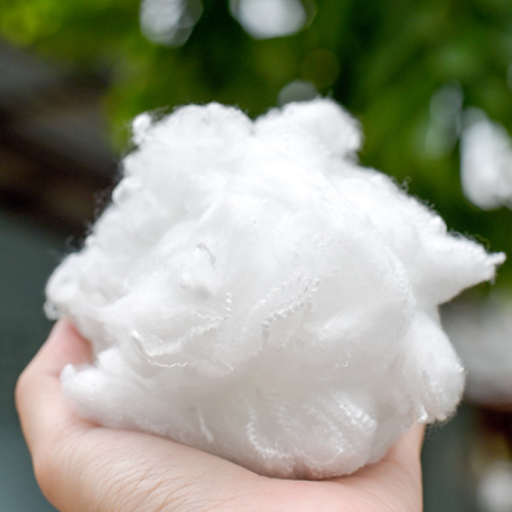
Polyester staple fibre (PSF) represents a cornerstone of modern material technology, a synthetic marvel born from sophisticated chemical engineering. Unlike continuous filament polyester, PSF consists of discrete, cut lengths of polyester fibres, designed to mimic the feel and processability of natural fibres like cotton or wool. Its ubiquity across industries, from apparel and home furnishings to automotive and construction, underscores its versatile properties and the technological advancements that have refined its production and application over decades. Understanding PSF involves delving into the intricate processes of polymerization, extrusion, and fibre cutting, revealing a material that consistently pushes boundaries in performance, durability, and cost-effectiveness.
The Engineering Behind Synthetic Fibres
The creation of polyester staple fibre is a testament to the precision and innovation inherent in polymer science and manufacturing technology. It begins not with a natural resource, but with a highly controlled chemical reaction that transforms petroleum-derived compounds into polyethylene terephthalate (PET), the same polymer used in plastic bottles. This journey from crude oil derivatives to a finely engineered fibre showcases a remarkable technological pipeline.
From PET Pellets to Fine Filaments
The foundational material for PSF is typically PET in chip or pellet form. These chips are meticulously dried to remove any moisture, which could degrade the polymer during subsequent processing. They are then melted at high temperatures, forming a viscous liquid that is ready for extrusion. This molten polymer is forced through a spinneret, a device equipped with numerous tiny nozzles, creating a multitude of continuous filaments. The diameter and shape of these filaments can be precisely controlled by the spinneret’s design and the extrusion speed, allowing manufacturers to tailor the fibre’s characteristics for specific end uses. This precision engineering at the microscopic level is a key technological advantage, enabling customization that is difficult to achieve with natural fibres.
Key Chemical and Mechanical Processes
Following extrusion, the nascent polyester filaments undergo several critical stages that imbue them with their final properties as staple fibres.
First, the freshly spun filaments are cooled rapidly, often in an air quench, solidifying them. This cooling process is carefully managed to optimize the fibre’s crystalline structure.
Next, the continuous filaments are drawn, or stretched, significantly. This mechanical process aligns the polymer chains within the fibre, dramatically increasing its tensile strength, tenacity, and dimensional stability. The degree of drawing is a critical technological parameter, directly influencing the fibre’s strength and elongation properties.
After drawing, the filaments are typically crimped, a mechanical process that introduces waves or bends into the fibres. This crimp is essential for giving PSF bulk, resilience, and the ability to interlock with other fibres during spinning, mimicking the natural crimp found in wool. Without crimp, PSF would be too smooth to process efficiently on conventional textile machinery and would result in flat, non-voluminous products.
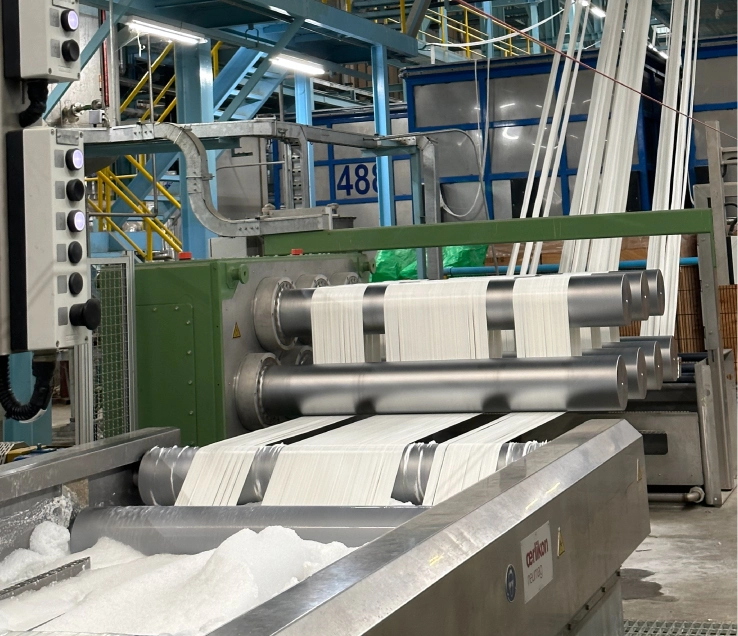
Finally, the continuous crimped filaments are cut into specific, predetermined lengths, typically ranging from a few millimetres to several centimetres. This cutting process transforms the continuous filament into the discrete, individual “staple” fibres that are the defining characteristic of PSF, ready for blending and spinning into yarns. Each of these steps, from polymerization purity to precise cutting, is a technologically sophisticated operation, requiring advanced machinery and strict quality control to ensure consistent fibre performance.
Unpacking the Technological Superiority of PSF
The widespread adoption of polyester staple fibre in countless applications is not merely due to its synthetic origin but largely attributable to its technologically superior performance attributes. These properties are engineered into the fibre during its manufacturing process, giving it distinct advantages over many traditional materials.
Inherent Material Properties and Performance
PSF boasts an impressive array of performance characteristics that make it highly desirable across various sectors. It exhibits exceptional strength and durability, resisting tearing, stretching, and abrasion far better than many natural fibres. This inherent robustness contributes to the longevity of products made with PSF, from durable apparel to resilient industrial textiles.
Another significant technological advantage is its resistance to shrinkage and stretching, even when wet. This dimensional stability ensures that fabrics and products maintain their shape and size over time and through repeated washing cycles, a critical factor for both consumer goods and technical textiles.
PSF is also highly resilient and resistant to wrinkling, thanks to its engineered molecular structure and crimp, which allows fabrics to recover their shape quickly. This property significantly reduces the need for ironing, offering convenience and energy savings.
Furthermore, polyester fibres are inherently hydrophobic, meaning they repel water. This characteristic contributes to quick-drying fabrics and makes PSF resistant to mildew, moths, and many chemicals, enhancing its suitability for outdoor gear, medical textiles, and protective clothing. Its colourfastness is also superior, retaining dyes vibrantly even after prolonged exposure to light and washing, a result of the polymer’s chemical inertness and stable structure. These engineered properties collectively position PSF as a high-performance material capable of meeting stringent application demands.
Versatility Across Modern Industries
The versatility of PSF is a direct consequence of its customizable properties and robust performance. In the apparel industry, it’s blended with cotton, wool, or other fibres to enhance durability, wrinkle resistance, and shape retention in garments ranging from everyday wear to athletic apparel. For home furnishings, PSF is prized for its resilience, stain resistance, and ease of care, finding its way into upholstery, carpets, drapes, and bedding. Its use in nonwoven fabrics is particularly broad, leveraging its strength and thermal bonding capabilities to create everything from wipes and filters to geotextiles and automotive interiors. The ability to precisely control fibre length, denier (thickness), and crimp allows manufacturers to tailor PSF for specific applications, whether it’s for ultra-soft fillings in pillows or robust reinforcement in composite materials. This adaptability, facilitated by advanced fibre engineering, makes PSF an indispensable component across a vast spectrum of modern manufacturing.
Applications in Advanced Technology and Beyond
Polyester staple fibre’s technological impact extends far beyond conventional textiles, finding critical roles in cutting-edge applications and supporting industrial innovation. Its engineered properties make it suitable for environments and functions where other materials might fail.
Textiles, Composites, and Industrial Innovations
In technical textiles, PSF is a preferred material for its strength, chemical resistance, and UV stability. It’s used in geotextiles for civil engineering projects, providing stabilization and filtration in roads, dams, and landfills. In the automotive sector, PSF features prominently in car seat fabrics, headliners, and sound insulation, chosen for its durability, flame resistance, and aesthetic versatility. Its application in filtration media is crucial, leveraging its precise fibre diameter and pore structure to create efficient filters for air, water, and industrial processes.
Beyond traditional textile structures, PSF is increasingly vital in composite materials. When combined with resins, it can reinforce plastics, providing enhanced strength and impact resistance in various components, from consumer goods to industrial equipment. Its integration into insulation materials, both thermal and acoustic, benefits from its bulk, resilience, and resistance to moisture, making it a key element in energy-efficient buildings and appliances. The ability to engineer PSF with specific surface treatments, anti-microbial properties, or flame retardants further expands its utility in highly specialized and technologically demanding applications.
Role in Modern Manufacturing and Product Design
PSF plays a significant role in modern manufacturing by enabling efficient, large-scale production of high-performance materials. Its consistent quality and predictable properties allow for automated processing on high-speed machinery, reducing manufacturing costs and improving output. In product design, the versatility of PSF offers designers a broad palette of textures, densities, and performance characteristics. From creating ultra-soft, hypoallergenic fillings for bedding to rigid, durable nonwovens for structural applications, PSF provides the underlying material science for diverse product functionalities. Its role is often unseen but critical, forming the backbone of products that require a balance of strength, resilience, and specific tactile or functional attributes. The continuous refinement of PSF manufacturing processes also allows for greater resource efficiency and reduced environmental impact, aligning with contemporary demands for sustainable product development.
Sustainability and Future Tech Trends in PSF
The narrative of polyester staple fibre is continuously evolving, with significant technological efforts focused on enhancing its environmental profile and exploring novel functionalities. The industry is actively pursuing innovations that address circularity and higher performance.
The Recycled PET Revolution
One of the most significant technological advancements in the PSF sector is the widespread adoption of recycled PSF (rPSF). This involves transforming post-consumer PET bottles and other PET waste into new polyester fibres. The process involves collecting, sorting, cleaning, and then melting down the PET waste, which is then re-extruded into fibres. This circular approach not only diverts plastic waste from landfills and oceans but also significantly reduces the demand for virgin petroleum resources and lowers energy consumption compared to producing new PET from scratch. The technology for producing high-quality rPSF has advanced to a point where its performance characteristics are comparable to, and often indistinguishable from, virgin PSF, making it a sustainable choice for a wide array of applications without compromising quality or durability. This recycling technology embodies a critical step towards a more sustainable materials economy.

Innovations in Fibre Engineering
The future of polyester staple fibre is marked by ongoing technological innovation aimed at creating advanced functionalities and improving sustainability. Research and development are focused on bio-based polyesters, exploring alternatives to petroleum-derived raw materials, which could further reduce the carbon footprint of PSF production. Smart fibres are another area of intense interest, with efforts to embed conductive properties, sensors, or phase-change materials into PSF for applications in wearable technology, health monitoring, and adaptive textiles.
Advances in nanotechnology are also being applied to PSF, allowing for the creation of fibres with enhanced strength, UV resistance, or self-cleaning properties at the molecular level. Furthermore, improved dyeing and finishing technologies are being developed to reduce water and chemical usage in the post-production stages. These technological trends highlight a commitment to not only making PSF more environmentally responsible but also expanding its capabilities and integrating it into the next generation of high-tech materials and products, solidifying its position as a dynamic and indispensable component of modern material science.