
The term “mass market paperback” on Amazon refers to a specific type of book format, distinguished primarily by its small physical size, lower production cost, and consequently, a significantly lower retail price point compared to trade paperbacks or hardcovers. From a financial and business perspective, understanding the mass market paperback is crucial for authors, publishers, and booksellers as it represents a distinct strategy for market penetration, revenue generation, and audience reach within the vast ecosystem of online book sales. It is a format designed for widespread distribution and high volume sales, optimizing for accessibility and affordability, which directly impacts its economic model and profitability.

The Economics of Accessibility: Defining the Mass Market Paperback
The existence of the mass market paperback is a testament to the publishing industry’s historical pursuit of broader readership and more efficient distribution channels. Its very design is an economic choice, aimed at minimizing production costs to maximize market reach.
Origins and Purpose: A Strategy for Broad Reach
The mass market paperback originated in the mid-20th century as a revolutionary concept to make books more affordable and accessible to the general public. Publishers sought a format that could be easily distributed not just in traditional bookstores, but also in supermarkets, drugstores, airports, and newsstands. This strategy was predicated on the financial model of achieving high sales volumes at a lower individual unit profit. It enabled publishers to tap into a “mass market” of casual readers who might be deterred by the higher prices of hardcovers or larger trade paperbacks. For authors, it represented an opportunity for their stories to reach an unprecedented number of readers, often after an initial hardcover run had capitalized on early demand and higher price points. The financial goal was clear: unlock new revenue streams through a broader consumer base.
Key Characteristics and Production Costs
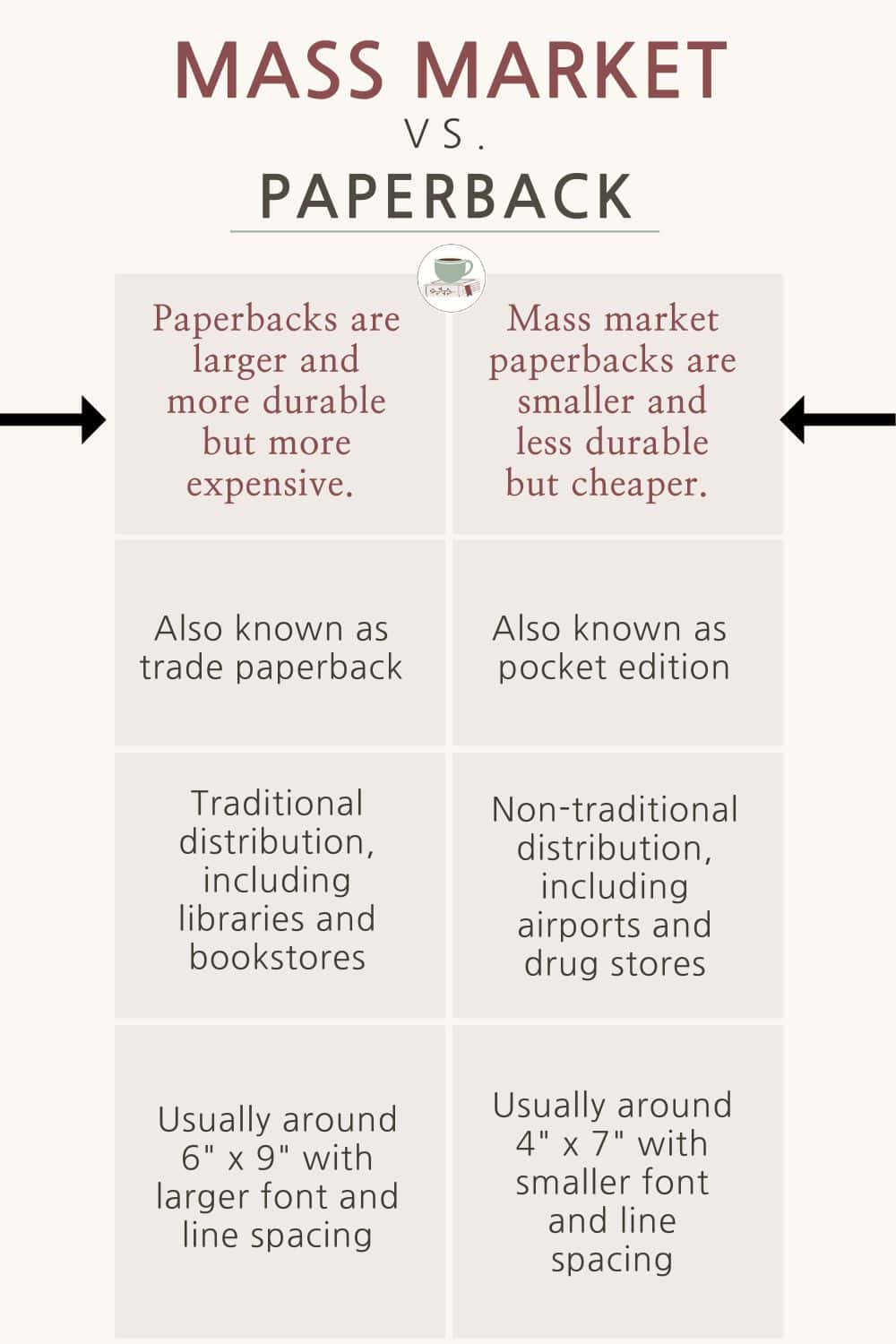
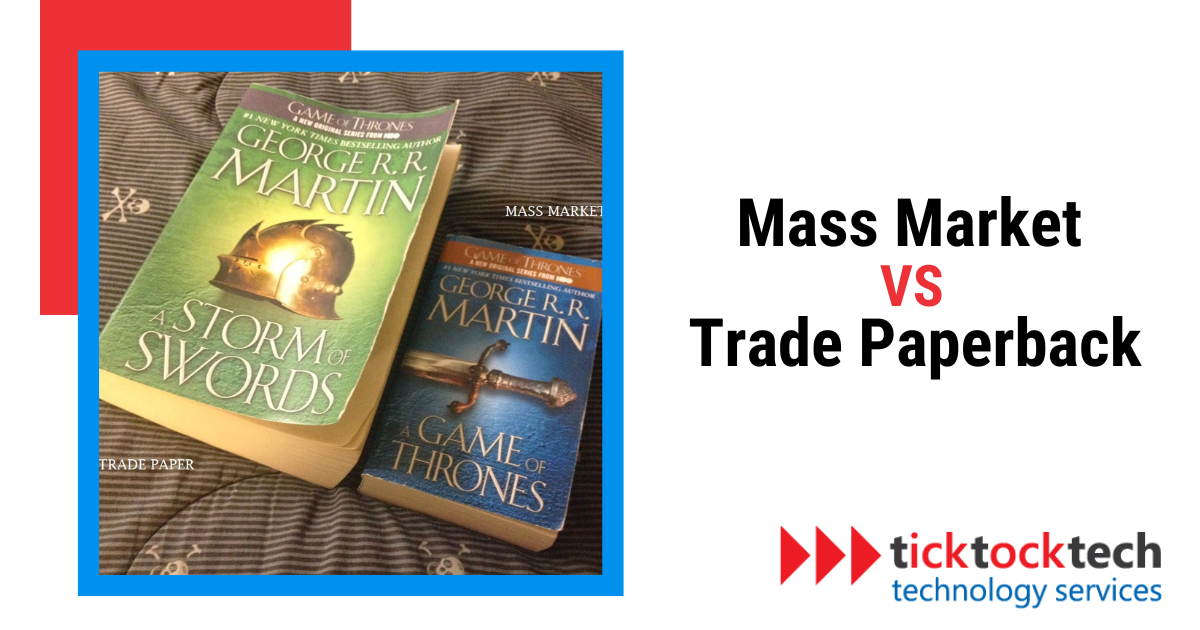
The defining features of a mass market paperback are direct consequences of its cost-saving production strategy. These books typically measure around 4.25 x 6.87 inches, making them smaller than standard trade paperbacks (which are often 5.5 x 8.5 inches or larger). This smaller size directly reduces paper consumption per unit. They are characterized by a lower-quality, often thinner, and more acidic paper stock, which is less expensive to procure. The binding is almost exclusively “perfect bound,” using adhesive to hold the pages and cover together. While cost-effective, this binding method is generally less durable than the sewn bindings found in many hardcovers or premium trade paperbacks, leading to a shorter lifespan for the book.
These physical attributes collectively drive down manufacturing expenses. Reduced material costs (paper, ink, cover stock) combined with streamlined printing processes for high volumes result in a significantly lower unit production cost compared to other formats. This cost-efficiency is the bedrock of the mass market paperback’s financial viability, allowing for its characteristic low retail price point, which typically ranges from $7.99 to $9.99, sometimes even lower for promotional editions. This low cost per unit is fundamental to the format’s profitability model, where volume compensates for smaller individual margins.
Amazon’s Role in the Mass Market Ecosystem
Amazon, as the world’s largest online retailer, has profoundly reshaped the landscape for all book formats, and the mass market paperback is no exception. Its vast infrastructure and market dominance play a critical role in how these books are distributed, priced, and ultimately, how they generate revenue for the publishing industry.
Distribution Power and Market Penetration
Amazon’s unrivaled fulfillment network and global reach have provided mass market paperbacks with an unprecedented avenue for distribution. Traditionally, mass market books relied on physical racks in diverse retail outlets. While this still exists, Amazon supplements this by offering virtually limitless “shelf space” and the ability to ship these low-cost books directly to consumers’ doorsteps, even in remote areas. This expands the definition of “mass market” beyond physical storefronts to a global online audience. For publishers, this means access to a broader customer base without the complex logistics and slotting fees associated with diverse brick-and-mortar retailers. The efficiency of Amazon’s supply chain also helps in maintaining the low unit cost, as it can leverage economies of scale in warehousing and shipping.
Pricing Strategies and Competitive Advantage
The typical low price point of mass market paperbacks aligns perfectly with Amazon’s competitive pricing model. Amazon’s algorithms often favor lower-priced items in search results or promotional placements, potentially enhancing the discoverability of mass market titles. Publishers and authors must carefully consider the delicate balance between competitive pricing and maintaining acceptable profit margins when listing these books on Amazon. While the per-unit profit might be smaller, Amazon’s capacity for high-volume sales means that even a modest royalty or wholesale margin per book can aggregate into substantial overall revenue.
Comparing profit margins across different formats sold on Amazon reveals the distinct financial model of mass market paperbacks. For publishers, wholesale agreements with Amazon for mass market titles are often designed for high volume, with a focus on moving units. For authors, royalty rates on mass market paperbacks tend to be lower percentages of the lower list price, making it imperative that the book sells in large quantities to generate meaningful income. This contrasts with higher percentage royalties often offered on higher-priced digital formats or even trade paperbacks.
Implications for Authors and Publishers
For traditional publishers, the mass market paperback remains a critical component of their financial strategy, especially for bestsellers or established series. It serves as a second or third wave of monetization after the initial hardcover and/or trade paperback releases, allowing them to extract maximum value from a property. The lower price point can also reignite interest in an older title or capitalize on a surge in popularity from a media adaptation.
For independent authors, directly producing a “true” mass market paperback (with the distinct dimensions and paper quality) is challenging due to the high print run requirements for economic viability. However, many indie authors leverage Amazon’s print-on-demand services (like Kindle Direct Publishing) to offer standard-sized paperbacks at competitive prices, sometimes mimicking the affordability strategy of mass market. While not technically “mass market” in the traditional sense, these low-cost indie paperbacks compete directly for the same budget-conscious reader segment, requiring similar considerations regarding pricing, promotion, and volume to achieve financial success.
Profitability and Revenue Streams: A Deep Dive
The financial success of a mass market paperback program hinges on a deep understanding of its unique economic structure, which prioritizes volume over high per-unit margins. This structure influences everything from royalty payments to marketing investments.
Understanding Royalty Structures and Wholesale Models
For authors signed with traditional publishers, mass market paperback royalties are typically among the lowest percentage rates offered, often ranging from 4% to 8% of the list price. Given the already low list price (e.g., $8.99), the per-unit income for an author can be quite modest (e.g., $0.36 to $0.72 per copy). This underscores the absolute necessity of high sales volume for an author to earn significant income from this format.
Publishers, in turn, sell mass market paperbacks to Amazon (and other retailers) at a wholesale discount, which can range from 50% to 60% off the list price. After manufacturing costs and other overheads, the publisher’s per-unit profit margin is also relatively slim. Their financial model relies on selling hundreds of thousands, if not millions, of copies to achieve substantial overall profit. This high-volume, low-margin approach is central to the mass market paperback’s contribution to a publisher’s bottom line.
Volume vs. Margin: The Mass Market Paradox
The core financial strategy of the mass market paperback is a classic example of “volume over margin.” Unlike hardcovers, which aim for higher per-unit profit from a smaller, early-adopter audience, mass market paperbacks target the widest possible audience with an appealingly low price. This means that while each sale generates less profit individually for both author and publisher, the sheer scale of potential sales can lead to significant cumulative revenue. A robust mass market run might involve a print order of tens or hundreds of thousands of copies initially. Achieving a positive return on investment (ROI) necessitates selling a substantial portion of these copies. This financial paradox demands meticulous forecasting, efficient inventory management, and a strong understanding of market demand.
Marketing Investment and Return (ROI)
Marketing strategies for mass market paperbacks are often more constrained by budget per unit compared to other formats. Publishers frequently rely on the established brand of a bestselling author, the popularity of a series, or a strong media tie-in (like a movie or TV show adaptation) to drive sales without needing extensive, expensive individual book campaigns. Point-of-sale displays in physical retail are crucial, but on Amazon, marketing might involve leveraging Amazon Ads, being featured in promotional emails, or benefiting from algorithmic recommendations based on reader behavior. The ROI for marketing spend on a mass market title is measured by its ability to significantly boost volume. A small, targeted marketing push that drives thousands of additional sales can be more financially impactful than a large campaign for a higher-priced book that yields fewer conversions.
Strategic Considerations for the Modern Publisher and Author
In an evolving publishing landscape, where digital formats compete for reader attention and physical retail dynamics shift, the strategic deployment of mass market paperbacks requires careful business acumen.
When to Opt for Mass Market: A Business Decision
The decision to publish a book in mass market paperback format is a deliberate business choice. It is most financially viable for titles that have already proven their popularity, typically through strong hardcover or trade paperback sales. Popular genres like romance, thrillers, science fiction, and fantasy, which often have dedicated, high-volume readerships, are ideal candidates. Mass market paperbacks often serve as a subsequent release, designed to capture a wider audience once the initial demand at higher price points has been satisfied. It’s a strategy to extend the life cycle and revenue potential of a title. Publishers also consider market saturation and price elasticity; if a segment of the market is highly price-sensitive, a mass market edition can unlock new sales.
The Future of Mass Market in a Digital Age
The rise of eBooks and audiobooks, which offer even lower price points and instant accessibility, has introduced new competitive pressures on the mass market paperback. Digital formats often boast higher per-unit author royalties (e.g., 70% of list price on Amazon KDP for eBooks in certain price ranges) and lower production costs for publishers. However, the physical mass market paperback continues to hold its own for several reasons. Many readers still prefer a physical book, especially for casual reading, travel, or as an affordable collectible. The physical presence in retail spaces, even if diminished, still offers visibility. Amazon’s efficiency in delivering physical books rapidly and affordably helps to sustain this format’s relevance. While its financial model is continually being evaluated against digital alternatives, the mass market paperback remains a significant revenue driver for many publishers, catering to a specific demographic and fulfilling a distinct role in the overall book market strategy, even as the “mass market” increasingly encompasses both physical and digital channels.
aViewFromTheCave is a participant in the Amazon Services LLC Associates Program, an affiliate advertising program designed to provide a means for sites to earn advertising fees by advertising and linking to Amazon.com. Amazon, the Amazon logo, AmazonSupply, and the AmazonSupply logo are trademarks of Amazon.com, Inc. or its affiliates. As an Amazon Associate we earn affiliate commissions from qualifying purchases.