
The sun, an omnipresent beacon of light and warmth, fuels life on Earth and serves as an enduring subject of human fascination. While its celestial role as the ultimate energy provider is universally recognized, the fundamental mechanism driving this colossal power plant offers profound insights, particularly for advancements in terrestrial technology. The sun’s energy source is not merely an astronomical curiosity; it represents a cosmic blueprint for potentially limitless, clean power on Earth, pushing the boundaries of engineering, software, and materials science in our relentless pursuit of sustainable energy solutions. Understanding the sun’s engine—nuclear fusion—is pivotal, not just for astrophysics, but for informing the next generation of energy technologies that could redefine human civilization.
The Cosmic Blueprint: Solar Fusion as a Technological Inspiration
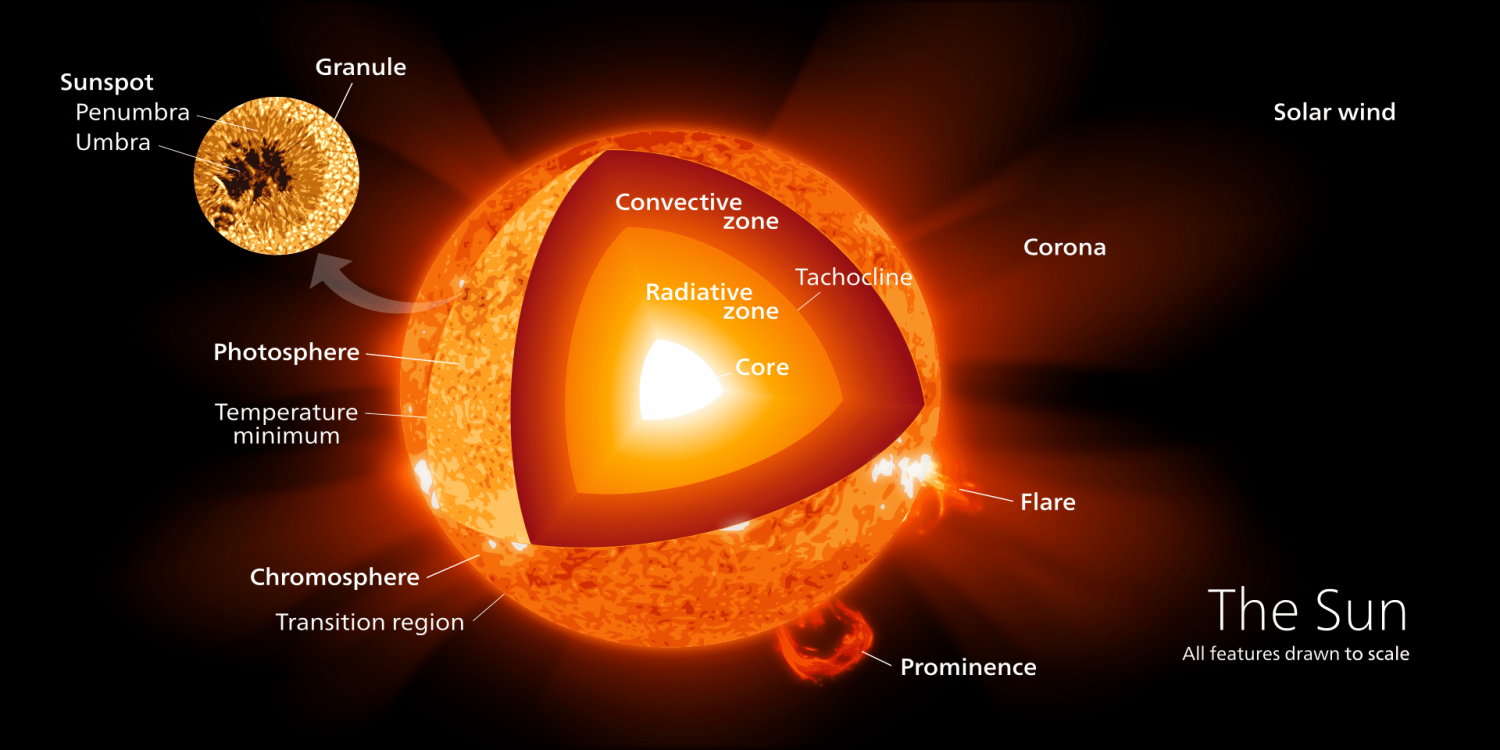
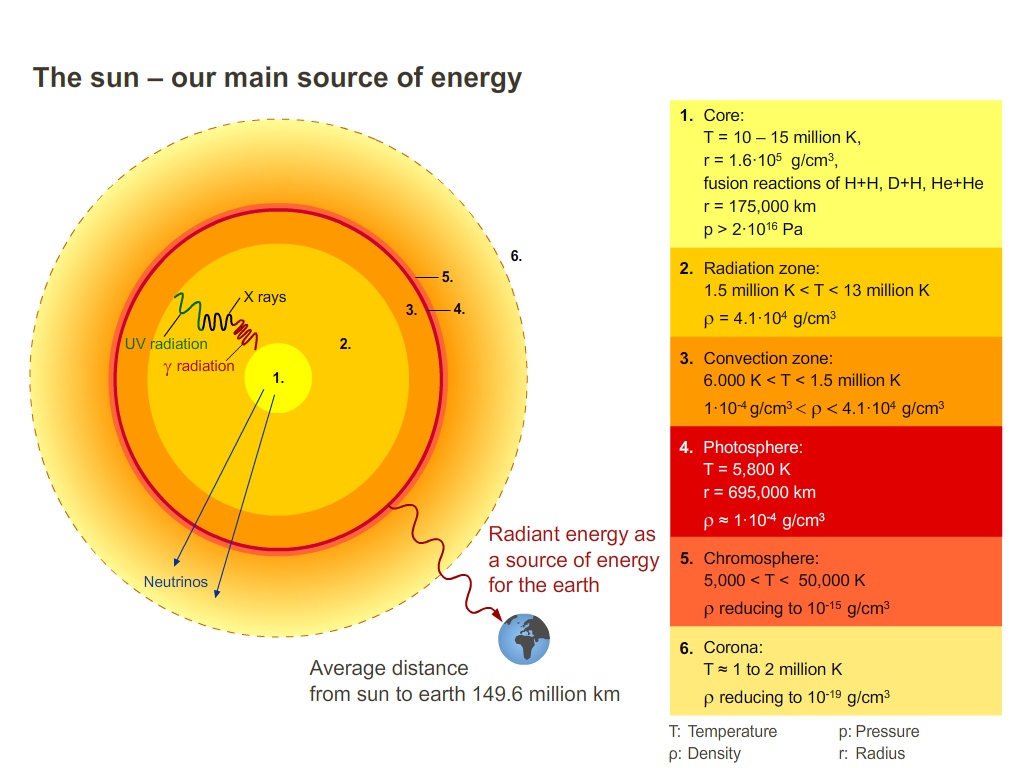
At its core, the sun is a massive, natural fusion reactor, converting hydrogen into helium through a process that releases immense amounts of energy. This process, primarily the proton-proton chain reaction, occurs in the sun’s incredibly dense and hot core, where temperatures reach approximately 15 million degrees Celsius and pressures are hundreds of billions of times greater than Earth’s atmospheric pressure. Under these extreme conditions, hydrogen nuclei (protons) overcome their natural electrostatic repulsion and fuse, forming heavier helium nuclei. The slight mass difference between the initial hydrogen and the resulting helium is converted directly into energy, as described by Einstein’s famous equation, E=mc². Every second, the sun converts about 600 million tons of hydrogen into helium, releasing an energy output equivalent to billions of nuclear bombs.
This stellar phenomenon is not just an astrophysical marvel; it is the ultimate example of energy generation—clean, powerful, and sustained over billions of years. For decades, scientists and engineers worldwide have looked to the sun as the definitive model for a terrestrial energy source. The quest for controlled nuclear fusion on Earth represents humanity’s most ambitious technological endeavor to replicate the sun’s power, promising an energy future free from fossil fuels, greenhouse gas emissions, and long-lived radioactive waste. The scientific principles governing the sun’s energy output are now driving innovations across numerous tech sectors, from advanced computing and AI to material science and robotics, as we strive to confine and control plasma hotter than the sun’s core.
Technological Frontlines: Engineering the Stars on Earth
Replicating the sun’s fusion process on Earth is an immense technological challenge, demanding breakthroughs across multiple disciplines. Unlike the sun, which relies on its immense gravity to confine and compress its plasma, terrestrial fusion reactors must use powerful magnetic fields or inertial confinement to achieve and sustain the extreme conditions necessary for fusion reactions. These requirements push the limits of current technological capabilities.
Advanced Materials and Extreme Environments
The first major frontier is the development of advanced materials capable of withstanding the unprecedented conditions within a fusion reactor. The plasma inside a tokamak (a toroidal vacuum vessel for magnetic confinement fusion) can reach temperatures exceeding 100 million degrees Celsius—ten times hotter than the sun’s core. Materials for the reactor’s inner wall, known as the “first wall,” must endure intense neutron bombardment, high heat flux, and plasma erosion, all while maintaining structural integrity over long periods. Research into novel alloys, ceramics, and composite materials is critical, with a focus on low-activation materials that produce minimal radioactive waste. Superconducting magnets, which generate the powerful magnetic fields required for plasma confinement, demand materials capable of high current densities at cryogenic temperatures, often close to absolute zero. The engineering of these materials and the complex cooling systems they require is at the cutting edge of material science and cryogenic technology.
Software, AI, and Simulation in Fusion Research
The complexity of controlling and optimizing a fusion plasma is staggering, making advanced computing and artificial intelligence indispensable tools. Plasma behavior is inherently turbulent and non-linear, making it incredibly difficult to predict and control. Sophisticated simulation software, often running on supercomputers, is used to model plasma dynamics, magnetic field configurations, and material interactions. These simulations allow researchers to test designs, optimize operational parameters, and predict potential instabilities before ever building physical prototypes.
Artificial intelligence and machine learning are rapidly transforming fusion research. AI algorithms are being developed to analyze vast datasets from experimental fusion devices, identifying patterns and correlations that human researchers might miss. Machine learning models are trained to predict plasma disruptions, enabling real-time adjustments to prevent costly shutdowns. Furthermore, AI is being explored for optimizing control systems, allowing reactors to operate more efficiently and robustly. From predicting material degradation to optimizing diagnostic systems and designing new reactor components, AI and software engineering are critical to accelerating the path to viable fusion energy. The data analytics required to process information from thousands of sensors in a fusion experiment represent a Big Data challenge demanding cutting-edge solutions.
Powering Tomorrow: The Economic and Societal Impact of Terrestrial Fusion
The successful development of controlled nuclear fusion would represent a paradigm shift in global energy production, with profound economic and societal implications. By harnessing a process akin to the sun’s, humanity could unlock an energy source that is virtually limitless, environmentally benign, and inherently safe.
The Promise of Abundant, Clean Energy
Fusion power offers a compelling vision for the future. Its primary fuel source, deuterium, can be readily extracted from seawater, making it available to every nation on Earth for millennia. Tritium, the other fuel component, can be bred within the reactor from lithium, a widely available element. This abundance and widespread availability would eliminate geopolitical dependencies on specific fuel-rich regions, fostering greater energy security and stability worldwide. Furthermore, fusion reactors produce no carbon emissions or atmospheric pollutants, addressing the urgent challenge of climate change. Unlike nuclear fission, fusion reactions are inherently safe, with no risk of a meltdown and producing only short-lived radioactive waste, significantly reducing long-term environmental concerns. The promise of clean, abundant, and safe energy is a powerful driver for continued investment in this technology.
Investment and Innovation Landscape
Recognizing this transformative potential, governments and private investors are pouring significant resources into fusion research and development. Large international collaborations like ITER (International Thermonuclear Experimental Reactor) in France are building massive experimental devices aimed at demonstrating net energy gain from fusion. Simultaneously, a burgeoning ecosystem of private fusion companies is emerging, leveraging innovative approaches and agile development cycles to accelerate commercialization. These private ventures are attracting billions in capital, fostering competition, and driving technological innovation at an unprecedented pace. From compact stellarators to advanced tokamak designs and inertial confinement systems, the variety of approaches highlights a vibrant and dynamic technological landscape. This investment is not just in physics experiments but in the entire technological ecosystem that supports fusion: advanced manufacturing, robotics for remote maintenance, high-power electronics, and sophisticated data infrastructure.
The Road Ahead: Challenges and Breakthroughs
Despite significant progress, the path to commercial fusion energy is still fraught with complex challenges. However, continuous breakthroughs in technology and scientific understanding keep the vision alive and increasingly within reach.
Overcoming Engineering Hurdles
Key engineering challenges include designing reactor components that can withstand the intense neutron flux, managing the heat exhaust, and developing reliable tritium breeding blankets. Remote maintenance systems, utilizing advanced robotics and AI, are crucial for operating and servicing components within the harsh radioactive environment of a fusion power plant. The sheer scale and precision required for assembling and maintaining these complex machines demand innovative solutions in automation and control engineering. Furthermore, the development of robust and efficient power conversion systems that can reliably extract energy from the hot plasma and convert it into electricity remains an area of active research. Each of these challenges represents a significant technological hurdle, pushing the boundaries of what is currently possible.
International Collaboration and Private Sector Momentum
The global nature of fusion research, exemplified by ITER, facilitates knowledge sharing and collaborative problem-solving, accelerating progress. This collaborative spirit, combined with the agility and entrepreneurial drive of the private sector, is creating a powerful synergy. Private companies are exploring novel confinement schemes, compact designs, and faster development timelines, often integrating AI and advanced manufacturing techniques from their inception. Breakthroughs in high-temperature superconducting magnets, for instance, are enabling smaller, more powerful reactor designs. Advances in laser technology are revolutionizing inertial confinement approaches. As these various technological strands converge, the scientific and engineering communities are steadily closing in on the goal of delivering a stable, economically viable fusion power plant, bringing the sun’s energy source to Earth. The ultimate prize is an inexhaustible, clean energy future, meticulously engineered by human ingenuity, inspired by the stars.
aViewFromTheCave is a participant in the Amazon Services LLC Associates Program, an affiliate advertising program designed to provide a means for sites to earn advertising fees by advertising and linking to Amazon.com. Amazon, the Amazon logo, AmazonSupply, and the AmazonSupply logo are trademarks of Amazon.com, Inc. or its affiliates. As an Amazon Associate we earn affiliate commissions from qualifying purchases.