
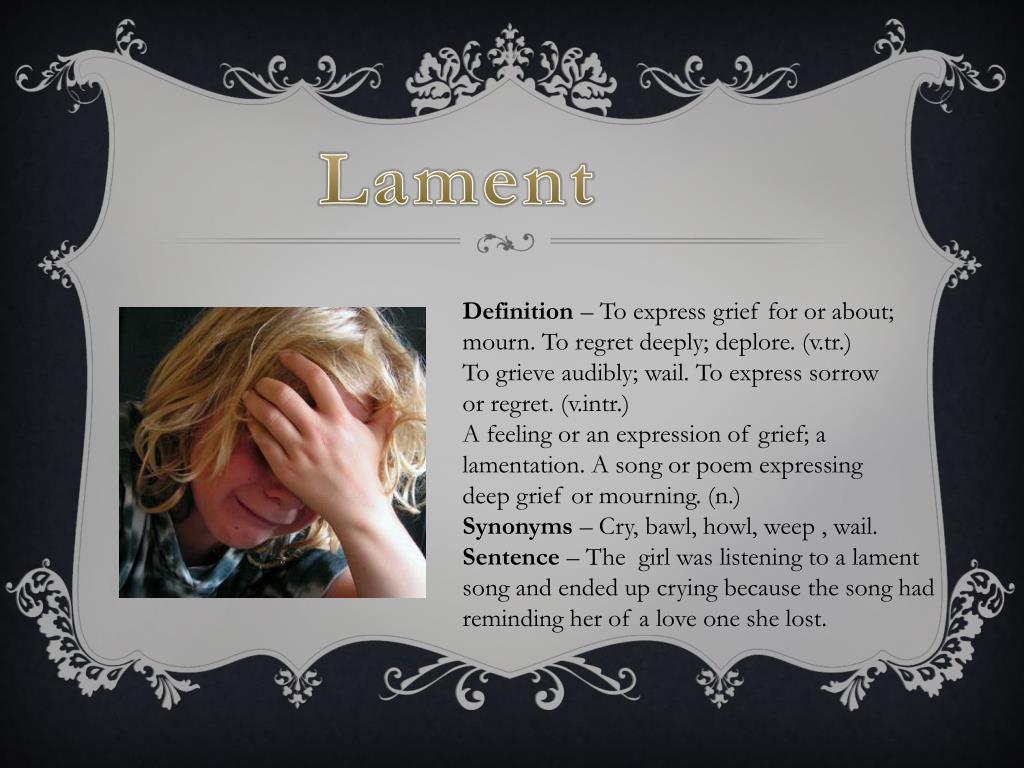
Lamenting, at its core, is the poignant expression of grief, sorrow, or regret, often articulated through mournful sounds, words, or actions. It is a deeply human response to loss, disappointment, or perceived injustice. While the act of lamenting transcends specific contexts, its manifestations and implications within the realm of personal and business finance are particularly profound, influencing individual behaviors, market sentiment, and strategic decisions. Understanding lamenting in a financial context involves recognizing its emotional underpinnings, its potential to either paralyze or galvanize action, and the strategies for navigating its powerful currents.
The Emotional Core of Financial Lament
In finance, lamenting often arises from tangible or intangible losses, missed opportunities, or unfavorable outcomes that clash with expectations. It is not merely sadness but a more active, often vocal, expression of distress over a situation that feels regrettable or irredeemable.

Loss Aversion and Regret
A cornerstone of behavioral finance, loss aversion describes the psychological phenomenon where individuals feel the pain of losses more acutely than the pleasure of equivalent gains. This inherent bias makes financial losses fertile ground for lamenting. When an investment sours, a market crashes, or a business venture fails, the regret is often palpable. This isn’t just about the numerical value lost; it encompasses the lost potential, the time invested, and the shattered expectations. Investors might lament not selling an asset at its peak, or bitterly regret a speculative investment that evaporated. Businesses, too, can lament significant write-downs, failed product launches, or lost market share, leading to internal or public expressions of sorrow and strategic reevaluation. The act of lamenting here serves as an emotional processing mechanism, however painful, for the often-unavoidable realities of financial risk and volatility.
The Weight of Missed Opportunities
Beyond direct losses, lamenting also frequently stems from missed opportunities. This form of financial regret can be particularly insidious because it involves imagining an alternative, more prosperous reality that was within grasp but not seized. An individual might lament not investing in a booming stock years ago, not starting a profitable side hustle sooner, or not buying real estate before prices soared. For entrepreneurs, lamenting might revolve around failing to pivot a business in time, passing on a crucial partnership, or underestimating a competitor’s innovation. These “what if” scenarios, though hypothetical, can generate significant emotional distress, colored by envy or self-reproach. This form of lament is less about an active loss and more about the perceived forfeiture of future wealth or success, often fueling analysis paralysis in future decision-making, as individuals or businesses become overly cautious to avoid future regrets.
Lamenting as a Catalyst or a Quagmire in Finance
The expression of financial sorrow or regret can manifest in two fundamentally different ways: as a productive force leading to growth and learning, or as a destructive cycle perpetuating inaction and further decline.
Productive Lament: Learning from Mistakes
When channeled constructively, lamenting can be a powerful catalyst for financial improvement. Acknowledging and expressing regret over a poor investment, a mismanaged budget, or a business blunder can be the first step towards a more disciplined and informed approach. This productive form of lament involves a period of reflection where the emotional pain of the loss is processed, but then swiftly transitions into analytical inquiry. What went wrong? What could have been done differently? What lessons can be extracted from this experience? For individuals, this might lead to revising investment strategies, seeking professional financial advice, or re-evaluating spending habits. For businesses, productive lament over a failed project could instigate a rigorous post-mortem analysis, leading to improved risk management protocols, better market research, or a more agile development process. It transforms the bitter taste of regret into the fuel for future resilience and strategic adaptation.
Destructive Lament: Paralysis and Avoidance
Conversely, lamenting can devolve into a destructive cycle that hinders financial progress. This occurs when the emotional distress of loss or regret becomes overwhelming, leading to paralysis, avoidance, or irrational decision-making. An individual might become so consumed by the regret of past investment losses that they withdraw entirely from the market, missing out on subsequent recovery periods. They might avoid looking at their bank statements or engaging with financial planning, effectively burying their head in the sand. For businesses, destructive lament can manifest as an inability to move past a significant failure, leading to stagnation, loss of innovation, and a culture of fear. Decision-makers might become overly risk-averse, shying away from necessary investments or strategic pivots that carry any perceived risk. This form of lamenting becomes a quagmire, trapping individuals and organizations in a cycle of negativity and preventing them from taking the proactive steps required to rebuild or recover. It underscores the importance of not just feeling the emotion, but actively processing and moving beyond it.
Navigating Economic Downturns with Prudence, Not Just Lament
Economic downturns, recessions, and market corrections are prime periods for widespread financial lamenting. The collective experience of falling asset values, job losses, and economic uncertainty can trigger a cascade of regret, fear, and sorrow across individuals and businesses alike.
The Market Cycle and Emotional Responses
Financial markets operate in cycles, characterized by periods of expansion, peak, contraction, and trough. During periods of contraction, asset values decline, and economic news is often bleak. This environment naturally fosters lament. Investors lament portfolio losses, businesses lament decreased revenues and rising costs, and employees lament job insecurity. The pervasive negative sentiment can amplify the act of lamenting, potentially leading to herd mentality selling or irrational withdrawal from investments at the worst possible time. Understanding that market downturns are an inherent part of the economic cycle, rather than an isolated catastrophe, is crucial. It helps temper the emotional responses, including lament, and encourages a more rational, long-term perspective. The definition of lamenting here extends to a shared, collective expression of financial distress, often influencing market sentiment.
Strategic Responses to Financial Setbacks
Rather than succumbing entirely to lament during economic hardships, a strategic financial approach emphasizes proactive measures. For individuals, this includes reinforcing emergency funds, diversifying investment portfolios, and reviewing expenditure. The lament over past missteps or current losses can be reframed into a motivation for greater financial discipline and resilience. For businesses, strategic responses involve cost optimization, cash flow management, identifying new revenue streams, and maintaining a lean operational structure. Leaders might lament declining sales or tightening credit, but effective leadership requires converting this sorrow into decisive action plans. This might mean making difficult but necessary decisions, such as restructuring or temporarily reducing workforce, to ensure long-term viability. The goal is to move beyond the initial emotional response to a calculated, forward-looking strategy that mitigates further damage and positions for recovery.
From Lament to Action: Rebuilding Financial Resilience
The journey from the deep emotion of lament to concrete financial action is critical for establishing and maintaining robust financial health, whether for an individual or an enterprise.
Acknowledging and Processing Financial Grief
The first step in moving beyond destructive lament is to acknowledge and process the financial grief. This means allowing oneself to feel the disappointment, anger, or sadness without letting it define future actions. For individuals, this might involve candid conversations with a financial advisor, family members, or trusted peers. Understanding that financial setbacks are often a part of the journey, and not solely a reflection of personal failure, can be liberating. For businesses, it involves transparent communication with stakeholders, accepting the reality of a loss or failure, and avoiding the temptation to gloss over or deny the problems. This phase is about emotional hygiene, clearing the mental space required for rational decision-making.

Implementing Forward-Looking Financial Strategies
Once the initial emotional processing of lament is complete, the focus must shift entirely to implementing forward-looking financial strategies. This is where the lessons learned from past regrets truly pay dividends. For personal finance, this could involve:
- Revising a budget: Based on a clear understanding of past overspending or under-saving.
- Diversifying investments: To mitigate future concentrated losses.
- Setting realistic financial goals: Informed by a more nuanced understanding of market volatility and personal risk tolerance.
- Building a stronger emergency fund: To weather future unforeseen events without severe distress.
For business finance, this transformation from lament to action might entail:
- Overhauling risk management frameworks: To prevent recurrence of past failures.
- Investing in innovation: To develop new products or services that can future-proof the business.
- Optimizing capital allocation: Ensuring resources are directed to high-potential areas.
- Fostering a culture of continuous learning: Where mistakes are seen as opportunities for improvement, not just reasons for regret.
Ultimately, while lamenting is a natural and often necessary emotional response to financial loss or disappointment, its definition within a financial context extends to its powerful impact on behavior. The ability to move through lament, extract its lessons, and translate regret into proactive, strategic financial management is a hallmark of financial resilience and long-term success.
aViewFromTheCave is a participant in the Amazon Services LLC Associates Program, an affiliate advertising program designed to provide a means for sites to earn advertising fees by advertising and linking to Amazon.com. Amazon, the Amazon logo, AmazonSupply, and the AmazonSupply logo are trademarks of Amazon.com, Inc. or its affiliates. As an Amazon Associate we earn affiliate commissions from qualifying purchases.