
The concept of power is fundamental across various scientific and engineering disciplines, particularly within the vast realm of technology. From the smallest microchip in a smartphone to the colossal energy demands of a data center powering artificial intelligence, understanding how power is defined, measured, and applied is crucial. In essence, a power formula provides a mathematical relationship to quantify the rate at which energy is transferred or converted. While the specific variables might change depending on the context – be it electrical, mechanical, or even computational – the underlying principle remains the same: power is energy over time. Delving into these formulas illuminates the core mechanics behind every gadget, system, and technological advancement we encounter daily.
Understanding Electrical Power in Technology
In the context of technology, electrical power is perhaps the most ubiquitous and critical form of power. It dictates how electronic devices operate, how much energy they consume, and their overall performance. Electrical power refers to the rate at which electrical energy is converted into another form, such as heat, light, or mechanical energy. Its measurement is vital for designing circuits, optimizing device efficiency, and ensuring the stable operation of all electronic systems.
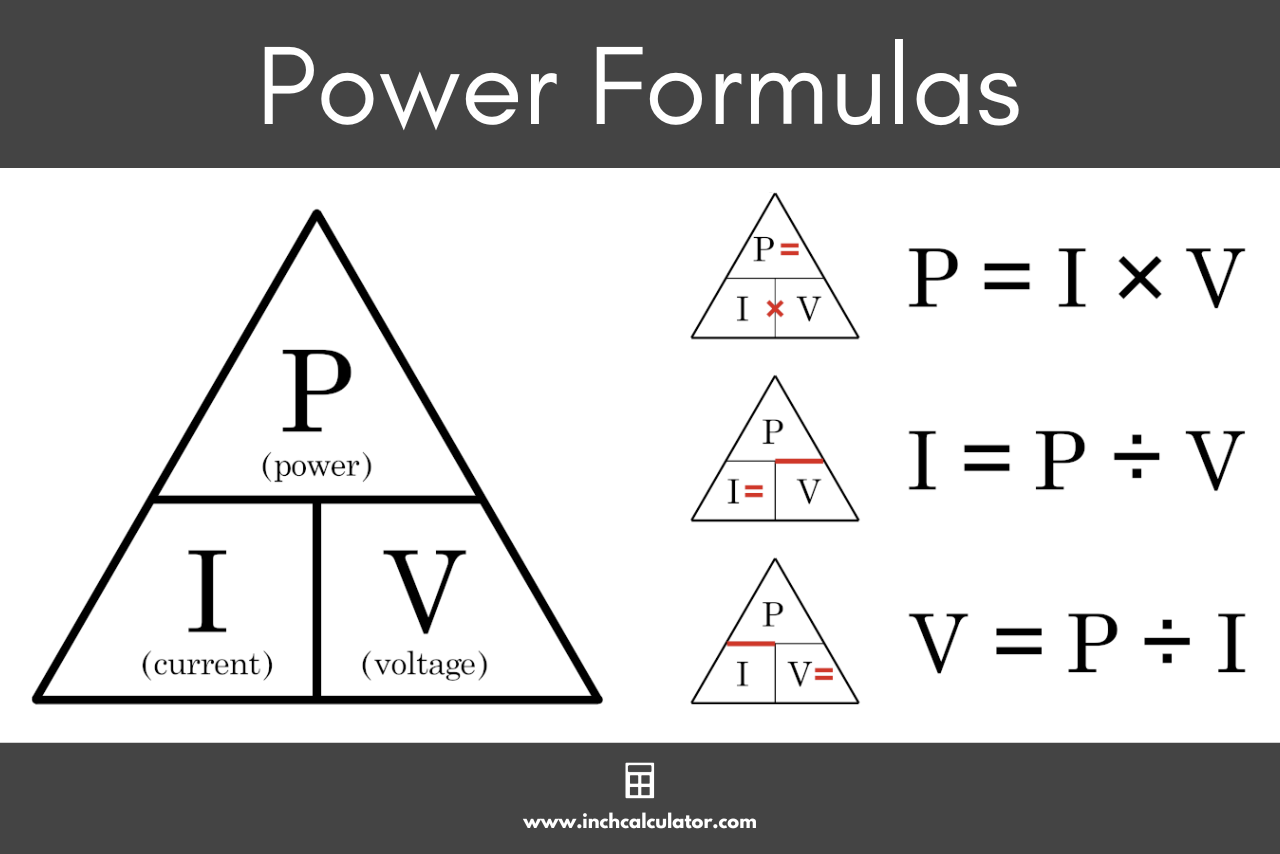
The Fundamental Formula: P = VI
The most basic and widely recognized formula for electrical power in a DC (Direct Current) circuit is:
P = VI
Where:
- P represents Power, measured in Watts (W).
- V represents Voltage (potential difference), measured in Volts (V).
- I represents Current (flow of charge), measured in Amperes (A).
This formula states that the power consumed by an electrical component is directly proportional to both the voltage across it and the current flowing through it. For instance, if a component operates at 12 Volts and draws 2 Amperes of current, it consumes 24 Watts of power. This simple relationship forms the bedrock for understanding power consumption in everything from LED lights to the processors in our computers. In AC (Alternating Current) circuits, this formula represents instantaneous power, and for average power, factors like the power factor (cosine of the phase angle between voltage and current) must be considered, leading to P = VI cos(φ). However, for many basic tech applications and component ratings, P = VI provides a useful initial approximation.
Power in Resistive Circuits: P = I²R and P = V²/R
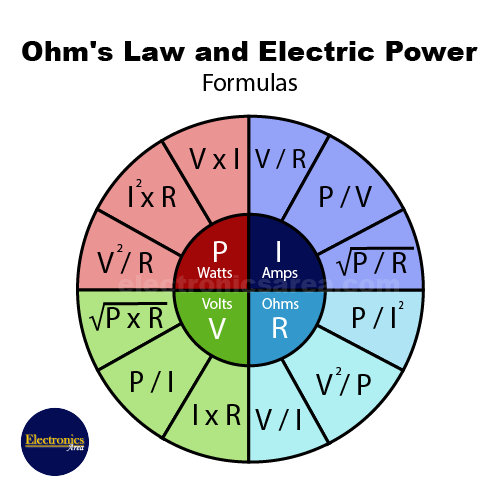
When dealing with circuits containing resistance, Ohm’s Law (V = IR) can be integrated with the fundamental power formula to derive two additional, equally important expressions for electrical power. These are particularly useful when not all three variables (V, I, R) are known.
Using P = VI and substituting V = IR, we get:
P = (IR) * I
P = I²R
Where:
- P is Power in Watts.
- I is Current in Amperes.
- R is Resistance in Ohms (Ω).
This formula highlights that power dissipated as heat in a resistor is proportional to the square of the current flowing through it and the resistance itself. This is critical for thermal management in electronic devices, as excessive power dissipation can lead to overheating and component failure.
Alternatively, substituting I = V/R into P = VI gives us:
P = V * (V/R)
P = V²/R
Where:
- P is Power in Watts.
- V is Voltage in Volts.
- R is Resistance in Ohms.
This formula is valuable when the voltage across a component and its resistance are known, but the current is not. It illustrates that for a given resistance, doubling the voltage will quadruple the power dissipated. These derivations underscore the interconnectedness of electrical quantities and provide engineers with versatile tools for circuit analysis and design.
Mechanical Power: Energy Transfer in Systems
While electrical power dominates much of the digital landscape, mechanical power is equally vital, underpinning many physical systems within technology, from robotics and automation to hard drive motors and cooling fans. Mechanical power refers to the rate at which work is done or energy is transferred by mechanical means.
Work, Time, and Force: P = W/t and P = Fv
The foundational definition of power, across all forms, is the rate at which work is performed:
P = W/t
Where:
- P is Power, typically measured in Watts (W) or horsepower (hp).
- W is Work done, measured in Joules (J). Work is defined as force multiplied by displacement (W = Fd).
- t is Time, measured in seconds (s).
This formula is universally applicable. If a robot arm lifts a component (doing work against gravity) in a certain amount of time, this formula quantifies the mechanical power exerted by the arm. For example, lifting a 10 kg object (requiring ~98 J of work over 1 meter) in 2 seconds would require 49 Watts of power.
Another crucial mechanical power formula, especially when dealing with constant motion, relates power directly to force and velocity:

P = Fv
Where:
- P is Power in Watts.
- F is Force applied, measured in Newtons (N).
- v is Velocity, measured in meters per second (m/s).
This formula is derived from P = W/t, where W = Fd. Substituting this, P = Fd/t. Since d/t is velocity (v), we arrive at P = Fv. This is particularly useful in analyzing the power requirements of motors driving constant speed mechanisms, such as conveyor belts, robotic actuators, or even the power required to propel a drone at a certain speed against air resistance. Understanding mechanical power is essential for designing efficient robotic systems, optimizing industrial automation, and developing high-performance tech hardware.
Why Power Formulas Matter in Modern Tech
The implications of understanding power formulas extend far beyond theoretical physics; they are central to the development, efficiency, and sustainability of modern technology. Every decision in hardware design, software optimization, and infrastructure planning hinges on these fundamental principles.
Energy Efficiency and Gadget Performance
For consumer electronics, power formulas are critical for balancing performance with battery life and thermal management. Engineers use P = VI, P = I²R, and P = V²/R to:
- Design efficient power supplies: Ensuring that components receive stable and appropriate power while minimizing energy loss.
- Optimize battery life: By understanding the power consumption of each component, designers can select appropriate battery capacities and implement power-saving features.
- Manage heat dissipation: As devices become more powerful, managing the heat generated (often quantified by I²R losses) is paramount to prevent damage and ensure reliable operation. From smartphones to laptops, efficient power management directly translates to better user experience and device longevity.
Data Centers and AI Infrastructure
The massive computational demands of data centers and AI training models underscore the critical importance of power formulas on an industrial scale.
- Power consumption: Data centers consume vast amounts of electrical power. Understanding P = VI is essential for calculating total power draw, planning grid connections, and managing operational costs.
- Cooling requirements: A significant portion of a data center’s power consumption goes towards cooling the servers, which generate substantial heat (I²R losses). Accurate power calculations inform the design of sophisticated cooling systems.
- Energy efficiency initiatives: With increasing environmental concerns, optimizing the Power Usage Effectiveness (PUE) of data centers relies heavily on precise power measurement and management, driven by these foundational formulas.
Renewable Energy and Smart Grids
The transition to renewable energy sources and the development of smart grids are heavily reliant on sophisticated power management.
- Inverter design: Solar panels and wind turbines often generate DC power that needs to be converted to AC for grid compatibility. Power formulas are crucial for designing efficient inverters that minimize conversion losses.
- Grid stability: Smart grids aim to balance supply and demand dynamically. Understanding power flow (often involving AC power concepts like apparent, reactive, and real power) is essential for maintaining grid stability and integrating intermittent renewable sources.
- Electric vehicles: The entire ecosystem of electric vehicles, from battery charging to motor efficiency, is based on the principles of electrical and mechanical power.
Practical Applications and Calculations
Beyond theoretical understanding, power formulas are applied daily in various practical scenarios within the tech industry.
Sizing Power Supplies and Components
When building or repairing electronic devices, knowing the power requirements of components is vital for selecting the correct power supply. If a circuit requires 5V and draws 0.5A, a power supply capable of providing at least 2.5W (P=VI) is needed. Undersized power supplies can lead to instability, while oversized ones might be inefficient or unnecessarily expensive. Similarly, choosing the right resistor involves calculating the power it will dissipate (P = I²R or P = V²/R) to ensure it doesn’t overheat and burn out.
Optimizing Battery Life
For battery-powered devices, power formulas directly inform battery life calculations. If a device consumes an average power of 100mW (0.1W) and uses a 3.7V battery with a capacity of 2000mAh (milliampere-hours), we can estimate its operational time. First, convert mAh to Wh: 2000mAh * 3.7V = 7400mWh = 7.4Wh. Then, divide the total energy by the power consumption: 7.4Wh / 0.1W = 74 hours. Such calculations guide product design and help users understand device endurance.
Understanding Power Consumption Metrics
Modern tech often presents power consumption in various units, such as Watts, kilowatts (kW), or even Joules per second. Understanding these metrics requires familiarity with power formulas. For example, a CPU rated at 65W TDP (Thermal Design Power) indicates the maximum heat it’s expected to dissipate, a direct application of power calculation to thermal management. Similarly, energy bills are measured in kilowatt-hours (kWh), which is a unit of energy (Power x Time), not pure power, highlighting the importance of distinguishing between the two.
Beyond the Basics: Advanced Power Concepts
While P=VI and P=W/t form the bedrock, advanced technological applications, especially involving AC circuits, introduce more nuanced power concepts.
Apparent, Reactive, and Real Power (AC Circuits)
In AC circuits, particularly prevalent in power grids and many high-power electronic systems, power is not as straightforward as in DC.
- Real Power (P): This is the actual power consumed or utilized by the load, doing useful work (e.g., generating heat, light, or mechanical motion). It’s measured in Watts (W).
- Reactive Power (Q): This power oscillates between the source and the load, stored and released by inductive (e.g., motors, transformers) and capacitive components. It doesn’t do useful work but is necessary for the operation of these components. Measured in Volt-Ampere Reactive (VAR).
- Apparent Power (S): This is the total power flowing in the circuit, which is the vector sum of real and reactive power. It’s measured in Volt-Amperes (VA).
The relationship is often expressed as S² = P² + Q². Understanding these distinctions is critical for designing efficient AC power systems, managing power factor correction, and optimizing industrial electrical infrastructure.
From basic circuit design to complex grid management, the “power formula” is not a singular equation but a family of interconnected relationships that define how energy is utilized in the technological world. Mastering these formulas is an indispensable skill for anyone involved in the innovation, development, or maintenance of technology.
aViewFromTheCave is a participant in the Amazon Services LLC Associates Program, an affiliate advertising program designed to provide a means for sites to earn advertising fees by advertising and linking to Amazon.com. Amazon, the Amazon logo, AmazonSupply, and the AmazonSupply logo are trademarks of Amazon.com, Inc. or its affiliates. As an Amazon Associate we earn affiliate commissions from qualifying purchases.