
In the vast landscape of data management, PostgreSQL stands as a beacon of reliability, power, and extensibility. Often referred to simply as Postgres, it is an advanced, open-source relational database management system (RDBMS) that has garnered immense respect and widespread adoption across various industries. Far from being just another database, PostgreSQL represents a sophisticated and robust solution for storing, managing, and retrieving complex datasets, underpinning everything from small personal projects to large-scale enterprise applications.
At its core, PostgreSQL adheres strictly to the ACID properties (Atomicity, Consistency, Isolation, Durability), ensuring data integrity and reliability, which are paramount in any critical system. Its development began more than three decades ago at the University of California, Berkeley, and it has since evolved into a mature and feature-rich system maintained by a dedicated global community of developers. This collaborative, open-source model has been instrumental in its continuous improvement, making it a competitive and often superior alternative to proprietary database systems.
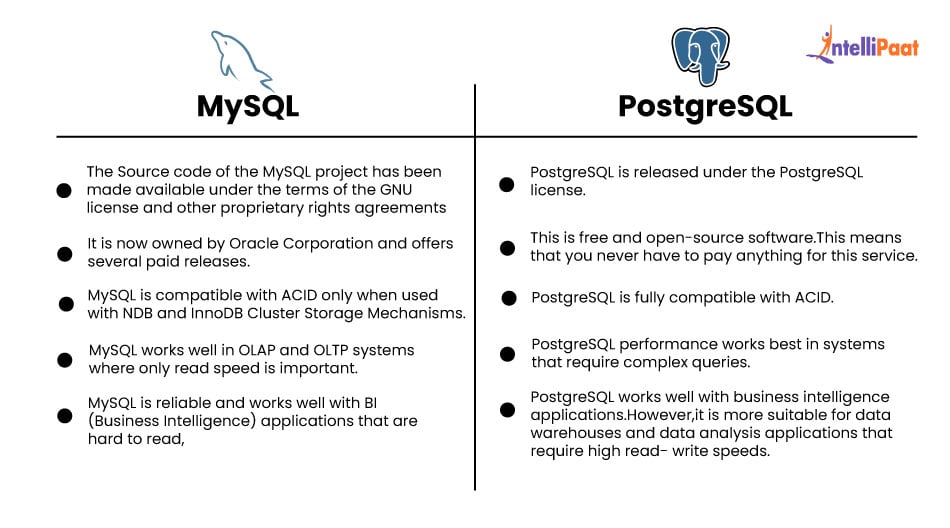
The Foundational Power of Relational Databases
To understand PostgreSQL’s significance, it’s essential to grasp the fundamental concept of a relational database. A relational database organizes data into one or more tables (or “relations”) of rows and columns, with unique keys used to identify each row. These tables can then be linked, or “related,” to each other based on common data fields, allowing for complex queries and efficient data retrieval. This structured approach, formalized by Edgar F. Codd in 1970, provides a clear, logical, and robust way to manage information.
A Brief History and Evolution
The journey of PostgreSQL began in 1986 as the POSTGRES project at Berkeley, led by Professor Michael Stonebraker. Its goal was to address the limitations of existing database systems at the time. After several years of active development and research, the project transitioned into its open-source phase in 1996, adopting the name PostgreSQL 6.0 to reflect its support for SQL (Structured Query Language).
Since then, PostgreSQL has seen continuous, vibrant development, with new versions released annually, each bringing performance enhancements, new features, and improved security. This long history of academic research coupled with community-driven practical development has endowed PostgreSQL with a unique blend of theoretical soundness and real-world applicability, making it a highly advanced and resilient system.
Relational vs. NoSQL: Where PostgreSQL Stands
In contemporary data architecture discussions, the contrast between relational databases (SQL databases) and NoSQL databases often arises. While NoSQL databases (like MongoDB, Cassandra, or Redis) are designed for specific data models and scalability needs, often sacrificing some traditional relational features, PostgreSQL firmly sits within the relational camp. It excels where structured data, strict consistency, complex queries, and ACID compliance are non-negotiable requirements.
However, PostgreSQL is not static in its capabilities. It has significantly evolved to incorporate features that bridge the gap with NoSQL databases, such as support for JSON, JSONB, XML, and key-value pair data types. This hybrid capability allows developers to leverage the best of both worlds: the robust transactional integrity of a relational database combined with the flexibility to handle semi-structured and unstructured data, making it a versatile choice for modern application development.
Key Features and Advantages of PostgreSQL
PostgreSQL’s popularity stems from a rich set of features that provide significant advantages over many other database systems. These characteristics make it a go-to choice for developers, data architects, and enterprises seeking a powerful and flexible data management solution.
Robustness and Data Integrity
At the forefront of PostgreSQL’s strengths is its unwavering commitment to data integrity. It enforces this through various mechanisms:
- ACID Compliance: Guarantees that transactions are processed reliably, preventing data corruption even in the event of system failures.
- Referential Integrity: Supports foreign keys, ensuring that relationships between tables are maintained accurately.
- Sophisticated Locking Mechanisms: Manages concurrent access effectively, allowing multiple users to interact with the database without conflict.
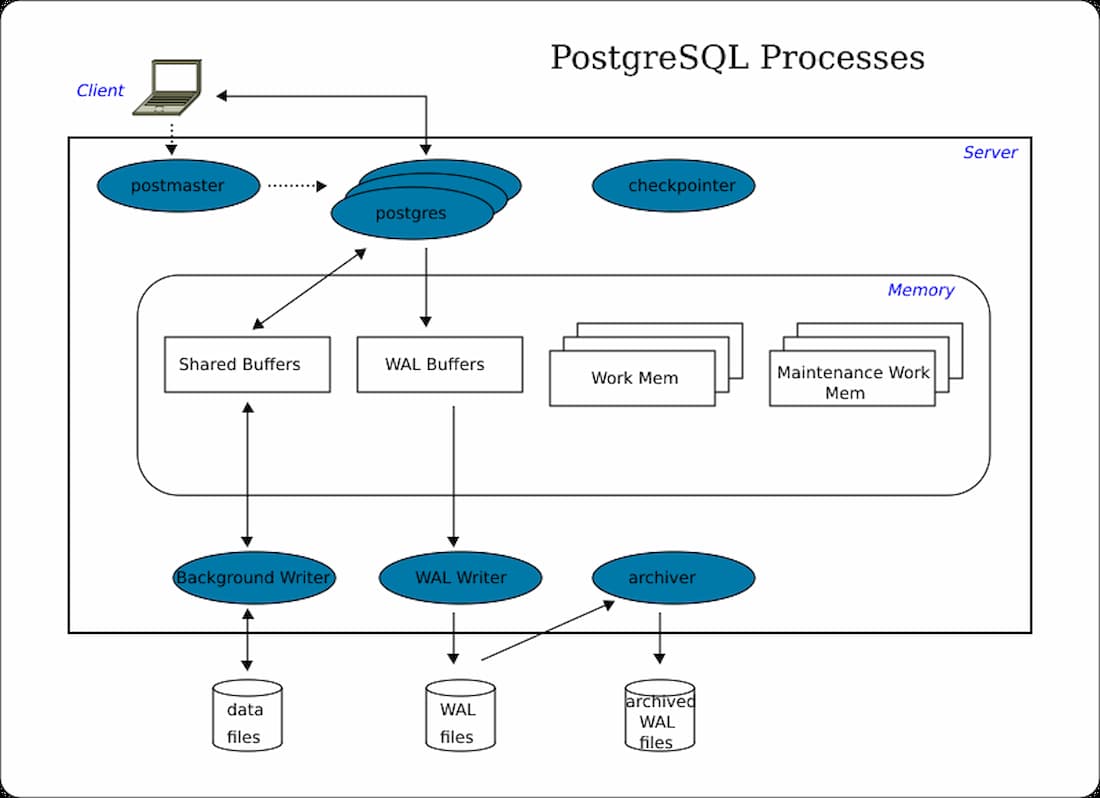
- Write-Ahead Logging (WAL): Provides transaction durability and robust recovery mechanisms, ensuring that no committed data is lost.
Extensibility and Customization
One of PostgreSQL’s most distinguishing features is its extensibility. It is designed to be highly customizable, allowing users to define their own:
- Data Types: Create custom data types to perfectly match application requirements.
- Functions and Operators: Implement custom functions in various programming languages (PL/pgSQL, PL/Python, PL/Java, PL/R, etc.) and define new operators.
- Index Types: Support different indexing strategies beyond the standard B-tree, such as GIN, GiST, SP-GiST, BRIN, and covering indexes, to optimize specific query patterns.
- Procedural Languages: Execute code directly within the database server.
- Foreign Data Wrappers (FDW): Connect to other data sources (like MySQL, Oracle, or even NoSQL databases) and query them as if they were local PostgreSQL tables, facilitating data federation.
This level of extensibility allows developers to tailor the database precisely to their needs, pushing the boundaries of what a traditional RDBMS can do.
Concurrency and Performance
PostgreSQL employs a sophisticated multi-version concurrency control (MVCC) system. MVCC allows multiple transactions to access the same data simultaneously without locking each other out. Each transaction operates on a consistent snapshot of the data, minimizing contention and improving overall performance, especially in highly concurrent environments like busy web applications. Furthermore, the continuous development efforts focus on query planner optimizations, parallel query execution, and efficient resource management, consistently enhancing its speed and responsiveness.
Open Source and Community Support
Being open source, PostgreSQL offers significant benefits:
- No Licensing Costs: This dramatically reduces the total cost of ownership, making it accessible to startups and large enterprises alike.
- Transparency: The source code is publicly available for inspection, auditing, and modification.
- Vibrant Community: A large, active, and supportive global community contributes to its development, provides excellent documentation, and offers free support through forums and mailing lists. This collective effort ensures rapid bug fixes, frequent updates, and a wealth of shared knowledge.
Use Cases and Industry Adoption
PostgreSQL’s versatility and robustness have led to its adoption across a wide spectrum of applications and industries.
Web Applications and SaaS
Due to its reliability, transactional integrity, and ability to handle complex data, PostgreSQL is a favored backend for web applications and Software-as-a-Service (SaaS) platforms. Frameworks like Django (Python) and Ruby on Rails seamlessly integrate with PostgreSQL, making it a common choice for content management systems, e-commerce platforms, and social networking sites.
Geospatial Data and Analytics
With the PostGIS extension, PostgreSQL transforms into a powerful geospatial database, capable of storing, querying, and analyzing geographic information system (GIS) data. This makes it indispensable for mapping applications, location-based services, urban planning, environmental monitoring, and other geocentric projects.
Data Warehousing and Business Intelligence
PostgreSQL’s ability to handle large datasets, complex queries, and its extensibility make it suitable for data warehousing and business intelligence (BI) solutions. Its support for various indexing strategies and advanced analytical functions allows organizations to extract valuable insights from their operational data, driving informed decision-making.
Enterprise Solutions
Many large enterprises rely on PostgreSQL for mission-critical applications where data integrity, security, and scalability are paramount. Its enterprise-grade features, including replication, high availability, and robust backup/restore capabilities, ensure continuous operation and data protection. Financial institutions, government agencies, and manufacturing companies often choose PostgreSQL for their core systems.
Getting Started with PostgreSQL
Embarking on your journey with PostgreSQL is straightforward, thanks to its extensive documentation and supportive community.
Installation and Setup
PostgreSQL can be installed on virtually any operating system, including Linux, Windows, and macOS. Official installers and package managers simplify the process. For instance, on Debian/Ubuntu, sudo apt install postgresql will get you started, while Windows users can leverage the enterpriseDB installer. Cloud providers like AWS (RDS and Aurora), Google Cloud (Cloud SQL), and Azure (Azure Database for PostgreSQL) also offer managed PostgreSQL services, abstracting away much of the infrastructure management.
Basic Commands and Operations
Once installed, you interact with PostgreSQL primarily through SQL. The psql command-line utility is the go-to tool for administering databases, running queries, and managing users. You can create databases, define tables with various data types, insert, update, delete records, and perform complex joins and aggregations to retrieve specific information. Learning basic SQL commands is the first step to harnessing PostgreSQL’s power.
Ecosystem and Tools
Beyond psql, a rich ecosystem of tools supports PostgreSQL:
- GUI Clients: pgAdmin is a popular open-source graphical administration and development tool for PostgreSQL, offering a user-friendly interface for database management. Other options include DBeaver, DataGrip, and Azure Data Studio.
- ORMs: Object-Relational Mappers (ORMs) like SQLAlchemy (Python), Hibernate (Java), and Entity Framework (.NET) allow developers to interact with PostgreSQL using their preferred programming language constructs rather than raw SQL, streamlining application development.
- Monitoring Tools: Various tools exist for monitoring PostgreSQL performance, health, and activity, ranging from built-in statistics collectors to third-party solutions.
In conclusion, PostgreSQL is more than just a database; it is a testament to the power of open-source collaboration and continuous innovation. Its blend of mature RDBMS features, extensibility, robust data integrity, and a thriving community makes it a compelling choice for any project requiring reliable and flexible data management. Whether you are building a small web application, managing vast geospatial datasets, or powering enterprise-level solutions, PostgreSQL offers a powerful, cost-effective, and future-proof foundation.
aViewFromTheCave is a participant in the Amazon Services LLC Associates Program, an affiliate advertising program designed to provide a means for sites to earn advertising fees by advertising and linking to Amazon.com. Amazon, the Amazon logo, AmazonSupply, and the AmazonSupply logo are trademarks of Amazon.com, Inc. or its affiliates. As an Amazon Associate we earn affiliate commissions from qualifying purchases.