
The term “ligand in chemistry” might, at first glance, appear to belong exclusively to the realm of pure scientific inquiry, confined to textbooks and laboratory research. However, a deeper exploration reveals that understanding ligands is not just academic; it is fundamental to the very fabric of modern technology. From the screens of our smartphones to life-saving pharmaceuticals and the quest for sustainable energy, ligands serve as the unseen architects, dictating the properties and performance of countless advanced materials, computational tools, and biotechnological innovations. In essence, a ligand is a molecule or ion that binds to a central metal atom or ion, forming a coordination complex. This seemingly simple interaction, however, unleashes a cascade of functional possibilities that are continually harnessed and refined through cutting-edge technological advancements.
The Foundational Role of Ligands in Technological Systems
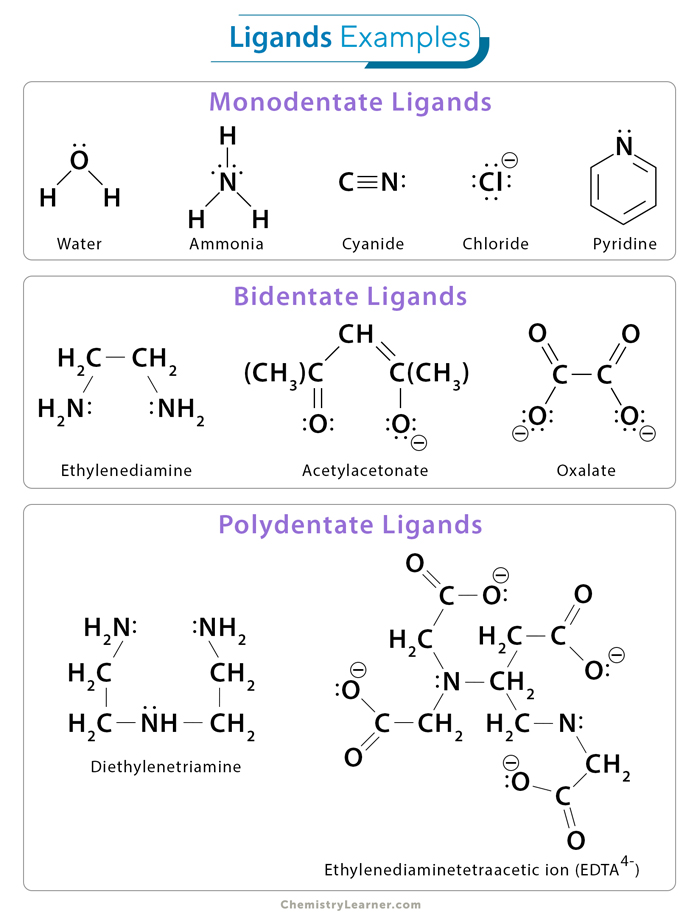
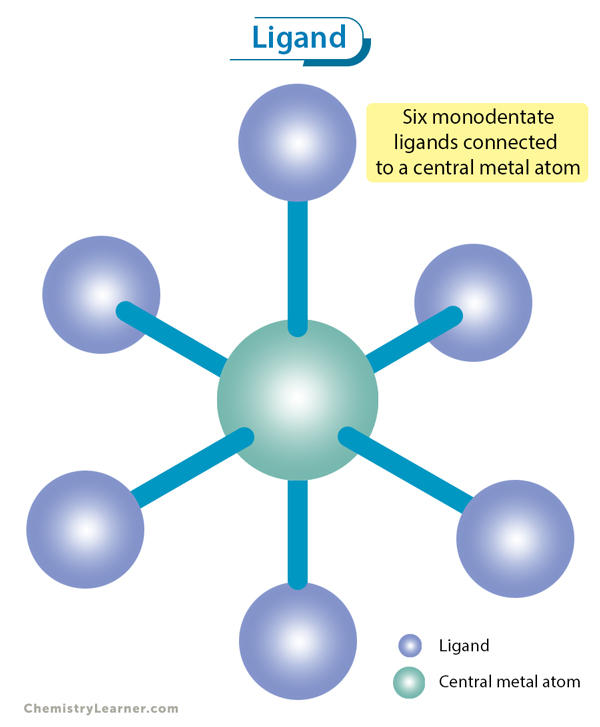
At its core, a ligand’s power stems from its ability to form precise, selective bonds with central atoms, often metals. This binding interaction isn’t random; it’s governed by specific electronic and structural properties that can be meticulously designed and optimized. Ligands can be small molecules, ions, or even complex proteins, and their binding capacity can range from a single point of attachment (monodentate) to multiple points (multidentate or chelating ligands), significantly enhancing the stability and unique characteristics of the resulting complex.
The technological significance of ligands lies in this ability to precisely control the environment around a central atom. By modifying the ligand, engineers and chemists can fine-tune properties such as reactivity, electronic conductivity, light absorption, and biological affinity. This level of control is paramount for developing materials with specific functions, enabling everything from the efficient catalysis of industrial reactions to the targeted delivery of drugs within the human body. As technology progresses, the rational design and synthesis of new ligands, often aided by sophisticated computational methods, has become a cornerstone of innovation across diverse sectors.
Ligands as Architects of Advanced Materials and Functional Gadgets
The materials that form the backbone of our digital and physical world often owe their existence and superior performance to the judicious application of specific ligands. Their ability to influence structure and reactivity makes them indispensable in creating next-generation components.
Crafting High-Performance Semiconductors and Optoelectronics
In the realm of microelectronics and display technology, ligands play a critical role in controlling the synthesis and properties of nanoparticles. Quantum dots (QDs), for instance, are tiny semiconductor nanocrystals whose unique optical and electronic properties are heavily dependent on their size, shape, and surface chemistry. Ligands capping these quantum dots precisely control their growth, prevent aggregation, and dictate their luminescence characteristics, making them essential for high-definition QLED displays, advanced solar cells, and even biomedical imaging agents. Similarly, in the synthesis of precursor materials for thin-film deposition in semiconductor fabrication, ligands ensure the purity and precise molecular architecture required for integrated circuits. Metal-organic frameworks (MOFs), crystalline porous materials where metal ions are connected by organic ligands, offer unparalleled surface areas and tunable pore sizes, finding applications in gas storage, separation technologies, and advanced sensors vital for environmental monitoring and industrial processes.
Enhancing Energy Storage and Conversion
The global drive for sustainable energy solutions heavily relies on advanced materials, where ligands are key enablers. In battery technology, particularly for next-generation lithium-ion and solid-state batteries, ligands are explored for their role in stabilizing electrolytes, suppressing dendrite formation, and improving overall charge-discharge efficiency and lifespan. For fuel cells, ligands form the active sites of catalysts, dramatically improving the efficiency of converting chemical energy into electrical energy, thereby reducing reliance on fossil fuels. Furthermore, in solar energy harvesting, light-absorbing dyes—which are essentially specialized ligands—are central to dye-sensitized solar cells (DSSCs), capturing sunlight and converting it into electricity with increasing efficiency.
Precision in Sensing and Imaging Technologies
Modern diagnostic and imaging tools frequently leverage the highly specific binding capabilities of ligands. Biosensors, designed to detect minute quantities of specific biological molecules (e.g., glucose, pathogens), often rely on ligands that selectively bind to the target analyte, triggering a measurable signal. In medical imaging, particularly Magnetic Resonance Imaging (MRI), contrast agents often consist of metal ions (like Gadolinium) complexed with specific ligands. These ligands are meticulously designed to enhance the magnetic properties of the central metal, target specific tissues or disease markers, and ensure biocompatibility, thereby providing clearer, more diagnostic images.
Driving Pharmaceutical Innovation Through Ligand-Enabled Drug Design
The pharmaceutical industry represents one of the most significant technological beneficiaries of ligand chemistry. The vast majority of drugs are, in essence, carefully designed ligands engineered to interact with specific biological targets.
The Lock-and-Key Principle in Targeted Therapies
Many therapeutic compounds function by binding to specific proteins—receptors on cell surfaces, enzymes within cells, or nucleic acids—much like a key fits into a lock. These drugs are specialized ligands. By binding to a target, the ligand can either activate a biological pathway (e.g., agonists) or inhibit it (e.g., antagonists or enzyme inhibitors), thus modulating disease processes. This “lock-and-key” specificity is crucial for effective treatment and minimizing off-target side effects, a hallmark of precision medicine. The complexity of designing such highly selective ligands necessitates sophisticated understanding of molecular interactions, a field now heavily augmented by computational tools.
Accelerating Drug Discovery with High-Throughput Screening and Lead Optimization
The journey from a promising chemical compound to an approved drug is arduous and costly. Ligand chemistry, empowered by technology, has revolutionized this process. High-throughput screening (HTS) involves automated robotic systems rapidly testing millions of potential ligand candidates against a biological target. Once “hit” compounds are identified, ligand optimization processes—involving systematic chemical modifications and iterative testing—are employed to enhance binding affinity, selectivity, metabolic stability, and other pharmacokinetic properties. This iterative design-synthesize-test cycle is fundamentally a technological pipeline, leveraging advanced robotics, sophisticated analytical instruments, and robust data management systems.
Developing Novel Diagnostics and Biotechnology Tools
Beyond therapeutics, ligands are integral to modern diagnostics and biotechnology. Immunoassays like ELISA, widely used for detecting disease markers or infections, rely on specific ligand-antibody interactions. In cutting-edge genetic engineering, the CRISPR-Cas system, a revolutionary gene-editing technology, employs guide RNAs as ligands that precisely direct the Cas enzyme to specific DNA sequences, enabling highly targeted genetic modifications. This biotechnological marvel highlights how fundamental ligand chemistry underpins transformative tools in medicine and research.
Computational Chemistry and AI: Accelerating Ligand Discovery and Optimization
The sheer complexity and vast chemical space of potential ligands make purely experimental discovery prohibitively slow and expensive. This is where computational chemistry and artificial intelligence have emerged as game-changers, representing a pinnacle of technological integration in chemical science.
In Silico Ligand Design and Virtual Screening
Computational methods allow scientists to design and evaluate ligands in silico (via computer simulations) before ever synthesizing them in a laboratory. Molecular docking software, for instance, predicts the preferred orientation and binding affinity of a ligand to a receptor protein, essentially performing virtual screening of millions of compounds in hours. Molecular dynamics simulations provide insights into the flexibility of ligand-protein complexes, how they move and interact over time, offering a more realistic picture than static models. These powerful software tools drastically reduce the number of compounds that need to be experimentally synthesized and tested, accelerating the discovery pipeline.
Leveraging Artificial Intelligence and Machine Learning
Artificial intelligence (AI) and machine learning (ML) are transforming ligand discovery. AI algorithms can be trained on vast datasets of known ligands, their structures, and their biological activities. These models can then predict novel ligand structures with desired properties, identify complex patterns that human minds might miss, and even generate entirely new molecular designs (de novo design). Generative AI, for example, is being used to create entirely novel chemical entities optimized for specific targets, pushing the boundaries of what’s possible in drug design and materials science. This shift from purely empirical experimentation to data-driven, rational design represents a profound technological leap.
The Interplay of Software Tools and Big Data Analytics
The success of computational ligand design hinges on sophisticated software tools and robust big data analytics. Specialized software suites (e.g., Schrödinger, OpenEye, Rosetta) provide platforms for molecular modeling, simulation, and data visualization. The immense volume of data generated from both computational predictions and experimental validation requires powerful data analytics tools to identify trends, optimize models, and guide further research. This synergy between advanced algorithms, high-performance computing, and chemical expertise is a defining characteristic of modern ligand-enabled innovation.
The Future Landscape of Ligand-Enabled Technologies
The journey of ligands from fundamental chemical entities to indispensable technological components is far from over. The future promises even more profound integrations and applications, driven by continued advancements in computation, automation, and interdisciplinary collaboration.
Personalization and Precision Across Industries
The ability to design highly specific ligands will usher in an era of greater personalization. In medicine, this means tailored drugs with fewer side effects for individual patients based on their genetic makeup. In materials science, it implies custom-designed materials with exact properties for niche applications, from aerospace to consumer electronics. Sensors will become more accurate and selective, enabling real-time, precise monitoring of everything from environmental pollutants to personal health metrics.
Addressing Grand Challenges with Smart Ligands
Ligands are poised to play a crucial role in tackling some of humanity’s most pressing challenges. For climate change, innovative ligands within MOFs could enable highly efficient carbon capture and sequestration technologies. New catalytic ligands will drive sustainable chemical manufacturing processes, reducing energy consumption and waste. Research into responsive materials, where ligands allow materials to adapt to their environment (e.g., self-healing polymers or smart textiles), will open doors to entirely new classes of adaptive technologies.

The Evolving Interface of Chemistry, Data Science, and Engineering
The future of ligand-enabled technologies lies at the vibrant intersection of chemistry, data science, and engineering. The demand for professionals fluent in both chemical principles and computational methodologies will continue to grow. A continuous feedback loop between experimental validation (driven by advanced robotics and automation) and computational prediction (powered by AI and ML) will be crucial for accelerating discovery and innovation. As we increasingly understand and manipulate these fundamental molecular interactions, ligands will continue to be a silent yet powerful force, shaping the technological landscape and pushing the boundaries of what is possible.
aViewFromTheCave is a participant in the Amazon Services LLC Associates Program, an affiliate advertising program designed to provide a means for sites to earn advertising fees by advertising and linking to Amazon.com. Amazon, the Amazon logo, AmazonSupply, and the AmazonSupply logo are trademarks of Amazon.com, Inc. or its affiliates. As an Amazon Associate we earn affiliate commissions from qualifying purchases.