
The Foundational Blueprint for Artificial Intelligence
Understanding human intelligence is not merely an academic pursuit; it is the fundamental compass guiding the development and evolution of artificial intelligence (AI). For decades, engineers and computer scientists have strived to replicate, augment, or even surpass the cognitive capabilities inherent in humans. To truly grasp the potential and limitations of AI tools, software, and systems, one must first confront the intricate nature of the intelligence they aim to emulate. Human intelligence, in this context, serves as both the ultimate benchmark and the primary source of inspiration for advanced technological innovation.

Beyond Computation: Defining Human Cognition
At its core, human intelligence transcends mere computational speed or data processing capacity, areas where modern AI often outperforms its biological counterpart. Instead, it encompasses a rich tapestry of cognitive functions:
- Abstract Reasoning: The ability to understand complex concepts, solve problems without direct experience, and make logical inferences. This often involves manipulating symbols and ideas that have no physical referent.
- Creativity and Innovation: Generating novel ideas, solutions, or artistic expressions. Unlike algorithms that often recombine existing data, human creativity can introduce entirely new paradigms.
- Emotional Intelligence: Recognizing, understanding, and managing one’s own emotions, as well as influencing the emotions of others. This crucial aspect facilitates complex social interactions and ethical decision-making, areas where AI is still rudimentary.
- Intuition: The capacity to acquire knowledge without conscious reasoning, often referred to as a “gut feeling.” This rapid, often subconscious processing of vast amounts of experience allows for quick judgments in complex situations.
- Generalization and Transfer Learning: The remarkable ability to learn a new skill or concept in one domain and apply that learning effectively to an entirely different, previously unseen domain. This adaptability is a hallmark of human cognition, contrasting with most narrow AI systems.
These qualities collectively define human intelligence as a dynamic, adaptable, and multifaceted system, providing a robust framework against which the capabilities of any AI system are inevitably measured. It highlights that the aspiration for AI is not just to perform tasks, but potentially to understand, create, and adapt in ways that mirror human flexibility.
The Biological Operating System vs. Algorithmic Structures
The fundamental architectural differences between human intelligence and artificial intelligence underscore the challenges and opportunities in AI development. The human brain, a biological “operating system,” operates on electrochemical signals, featuring an unparalleled level of plasticity and self-organization. Its billions of neurons and trillions of synapses form a highly interconnected, constantly evolving network that learns continuously throughout life. New connections form, old ones strengthen or weaken, and entire neural pathways can reconfigure in response to experience, trauma, or new knowledge. This organic, distributed processing allows for parallel computation and remarkable energy efficiency.
In contrast, artificial intelligence, particularly current deep learning models, relies on algorithmic structures executed on silicon-based hardware. Artificial neural networks (ANNs), inspired by biological neurons, consist of layers of interconnected nodes that process data through mathematical functions. While ANNs can achieve impressive feats in pattern recognition, classification, and prediction, their architecture is largely fixed post-training, and their “learning” is often data-intensive and computationally expensive. They lack the intrinsic plasticity and self-repairing mechanisms of the biological brain. The learning paradigm is fundamentally different: the human brain learns from sparse, multimodal, real-world interactions, whereas ANNs typically require vast, labeled datasets to generalize effectively within a specific domain. Bridging this gap remains a significant frontier in AI research, pushing for more biologically plausible neural network architectures and more efficient learning algorithms.
Benchmarking AI: Why Human Intelligence Remains the Gold Standard
The journey of AI has been a continuous process of setting and meeting benchmarks, with human intelligence consistently serving as the ultimate reference point. From game-playing algorithms to natural language processing, the objective often centers on achieving “human-level performance” or surpassing it in specific tasks. However, the multifaceted nature of human intelligence reveals areas where AI still operates far from the gold standard.
Tackling Unstructured Problems and Common Sense
One of the most persistent challenges for AI tools is navigating unstructured problems and applying common-sense reasoning. Humans effortlessly interpret nuanced social cues, understand implicit meanings in conversations, and adapt to unpredictable real-world scenarios. We make decisions based on incomplete information, drawing on a vast repository of common-sense knowledge about how the world works – physics, causality, social norms, and intentions.
Current AI systems, while excelling in highly structured domains (e.g., chess, image recognition), struggle significantly when faced with ambiguity or novelty outside their training data. For example, a self-driving car might flawlessly navigate pre-mapped urban environments but falter dramatically when confronted with an unprecedented combination of debris, weather, and human behavior. This “common-sense gap” highlights that intelligence isn’t just about processing data; it’s about understanding the world in a flexible, intuitive, and broadly applicable way. Developing AI that can infer meaning, reason causally, and apply knowledge across diverse contexts remains a critical area of research, often drawing on insights from cognitive science.
General Intelligence vs. Narrow AI
The distinction between Artificial General Intelligence (AGI) and Artificial Narrow Intelligence (ANI) is crucial when discussing human intelligence as a benchmark. Virtually all AI deployed today, from recommendation algorithms to medical diagnostic tools, falls under ANI. These systems are designed to perform specific tasks exceedingly well, often surpassing human capabilities within their narrow domain. They can identify objects in images with incredible accuracy, translate languages, or predict stock market trends.
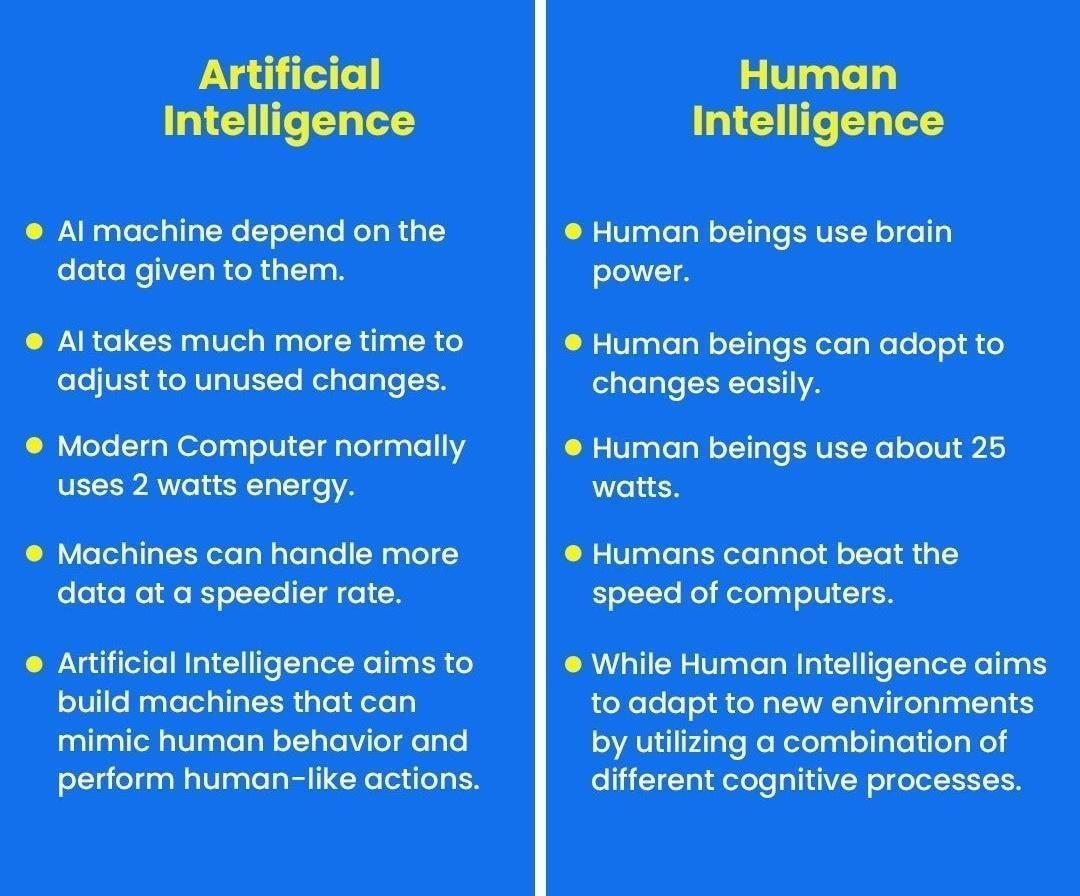
However, ANI systems lack the adaptability and versatility of human intelligence. An AI trained to play chess cannot then perform surgery or write a novel without extensive retraining or redesign. Human intelligence, by definition, is general intelligence. We can learn a new language, then pivot to learn a musical instrument, then master a new sport, all while managing our personal lives and engaging in complex problem-solving across vastly different areas. The pursuit of AGI—AI that can understand, learn, and apply its intelligence across a wide range of tasks, much like a human—is the holy grail of AI research. It requires breakthroughs not just in computational power, but in understanding the fundamental mechanisms of human learning, reasoning, and consciousness, which are still largely mysteries.
Fueling Innovation: Leveraging Insights for Next-Gen AI
The continuous study of human intelligence directly informs and accelerates advancements in AI. By deconstructing how humans perceive, learn, decide, and create, researchers gain invaluable insights that translate into more sophisticated algorithms, more robust software, and more effective AI tools.
Mimicking Neural Pathways: The Rise of Deep Learning
One of the most profound impacts of understanding human intelligence on AI has been the development of deep learning. Inspired by the hierarchical processing of information in the human brain’s visual cortex, artificial neural networks (ANNs) were conceived to process complex patterns. Early ANNs struggled, but with advancements in computational power, vast datasets, and new algorithmic techniques (like backpropagation and convolutional layers), deep learning has revolutionized fields like computer vision, natural language processing, and speech recognition.
The architecture of deep neural networks, with their multiple layers, mirrors the brain’s ability to extract increasingly abstract features from raw sensory input. For instance, in an image recognition task, early layers might detect edges and simple shapes, while deeper layers combine these into more complex features like eyes, noses, or entire faces. This biologically inspired approach has enabled AI systems to achieve unprecedented levels of performance in tasks that once seemed uniquely human, demonstrating the power of cross-disciplinary inspiration.
Human-in-the-Loop and Explainable AI (XAI)
As AI systems become more autonomous and integrated into critical applications (e.g., healthcare, finance, defense), the imperative to maintain human oversight and ensure transparency grows. This leads to the concept of “human-in-the-loop” AI, where human intelligence is actively involved in training, validating, and monitoring AI systems. Humans provide feedback to improve algorithms, correct errors, and ensure ethical alignment, leveraging their intuition, contextual understanding, and common sense to guide AI.
Complementary to this is Explainable AI (XAI), a burgeoning field focused on developing AI models whose decisions can be understood and interpreted by humans. Unlike “black box” models that offer predictions without clear rationale, XAI aims to provide insights into how an AI arrived at a particular conclusion. This is crucial for building trust, debugging systems, ensuring fairness, and complying with regulatory requirements. XAI draws heavily on cognitive science, seeking to make AI outputs more intelligible by aligning them with human cognitive processes for explanation and justification.
The Converging Future: Augmentation and Synthetic Cognition
The ongoing dialogue between human intelligence and artificial intelligence is not merely about replication but about synergy and evolution. As technology advances, the boundaries blur, paving the way for systems that both augment human capabilities and explore new forms of synthetic cognition.
Human-AI Synergy: Enhancing Capabilities
The future of intelligence is increasingly envisioned as a partnership between humans and AI. Rather than replacing human intelligence, AI tools are designed to extend and enhance our cognitive capabilities. This “human-AI synergy” manifests in various forms:
- Cognitive Augmentation: Brain-computer interfaces (BCIs) allow direct communication between the brain and external devices, potentially restoring lost function or enhancing existing cognitive abilities. AI-powered prosthetics respond to neural signals, while neurofeedback systems train brain activity for improved focus or memory.
- Decision Support Systems: AI algorithms analyze vast datasets, identify patterns, and offer insights that humans might miss, aiding in complex decision-making in fields like medicine, finance, and logistics. This empowers humans with better information and foresight.
- Creative Collaboration: AI tools assist artists, musicians, and writers by generating new ideas, suggesting stylistic elements, or even co-creating content, acting as a digital muse or collaborator rather than a replacement.
- Intelligent Assistants: From personal assistants on smartphones to sophisticated enterprise AI, these tools offload mundane tasks, manage schedules, and retrieve information, freeing up human cognitive resources for higher-level thinking and problem-solving.
This convergence points towards a future where technology amplifies human potential, creating an intelligent ecosystem where biological and artificial intelligence complement each other’s strengths.
Ethical Imperatives and Digital Security in a Hybrid World
As human and artificial intelligence increasingly intertwine, critical ethical and digital security considerations come to the forefront. The development of AI that processes, emulates, or interfaces with human cognition demands robust frameworks for:
- Data Privacy: Protecting the vast amounts of personal and cognitive data that fuel AI systems, ensuring its secure handling, anonymization, and ethical use. This includes biometric data, behavioral patterns, and potentially even neural data from BCIs.
- Algorithmic Bias: Addressing inherent biases in AI models that can arise from biased training data or flawed algorithms, ensuring fairness and equity in AI-driven decisions that impact human lives. Mitigating bias requires continuous human oversight and sophisticated software testing.
- Security of AI Systems: Protecting AI models from adversarial attacks, data poisoning, and manipulation. The integrity of AI that acts on human-like intelligence is paramount for public trust and operational reliability, requiring advanced digital security protocols.
- Responsible AI Development: Establishing clear ethical guidelines for the creation and deployment of AI, considering its societal impact, potential for misuse, and ensuring human values are embedded in its design. This encompasses the long-term implications of synthetic cognition and its integration into human society.
Navigating these challenges requires a concerted effort across technology, policy, and ethics, ensuring that the advancement of AI contributes positively to human well-being and security in an increasingly intelligent world.
aViewFromTheCave is a participant in the Amazon Services LLC Associates Program, an affiliate advertising program designed to provide a means for sites to earn advertising fees by advertising and linking to Amazon.com. Amazon, the Amazon logo, AmazonSupply, and the AmazonSupply logo are trademarks of Amazon.com, Inc. or its affiliates. As an Amazon Associate we earn affiliate commissions from qualifying purchases.