
Understanding Gross Domestic Product (GDP)
Gross Domestic Product (GDP) stands as one of the most fundamental and widely used indicators of a nation’s economic health and size. Simply put, GDP represents the total monetary value of all finished goods and services produced within a country’s borders in a specific time period, typically a quarter or a year. It acts as a comprehensive scorecard for economic performance, capturing the pulse of production, consumption, and investment.
Defining GDP and Its Components
GDP is calculated using several approaches, but the most common one, the expenditure approach, aggregates four primary components:
- Consumption (C): This is the largest component, encompassing all private household spending on goods and services, from groceries and clothing to healthcare and education. It reflects consumer confidence and purchasing power.
- Investment (I): This includes business spending on capital goods (like machinery and factories), residential construction, and changes in inventories. It signifies future productive capacity and business confidence.
- Government Spending (G): This covers government expenditures on goods and services, such as defense, infrastructure projects, and public employee salaries. It can be a significant economic driver, especially during downturns.
- Net Exports (NX): This is the value of a country’s total exports minus its total imports. A positive net export value (trade surplus) adds to GDP, while a negative value (trade deficit) subtracts from it. For export-driven economies like South Korea, this component is particularly crucial.

Mathematically, this is expressed as: GDP = C + I + G + (X – M), where X is exports and M is imports.
Why GDP Matters for Investors and Businesses
For investors, businesses, and policymakers, GDP data provides critical insights. A rising GDP generally signals a healthy, growing economy, which can translate into higher corporate profits, more jobs, and increased consumer spending. Conversely, a declining GDP (especially two consecutive quarters of decline, known as a recession) indicates economic contraction, often leading to job losses, reduced investment, and market instability.
Investors closely monitor GDP reports for clues about market trends, interest rate policies, and potential investment opportunities. High GDP growth can attract foreign direct investment, bolstering a nation’s currency and stock market. Businesses use GDP figures to forecast demand, plan production levels, and make strategic expansion decisions. Understanding a country’s GDP trajectory is essential for risk assessment and capital allocation, influencing everything from bond yields to equity valuations and the strength of a nation’s currency.
South Korea’s Economic Journey: From War to Prosperity
South Korea’s economic transformation over the past seven decades is often cited as one of the most remarkable development success stories in modern history. From the ashes of the Korean War in the early 1950s, it has rapidly evolved into a global economic powerhouse, dubbed the “Miracle on the Han River.”
The “Miracle on the Han River”
In the immediate post-war period, South Korea was among the poorest countries in the world. Its per capita GDP was comparable to that of less developed nations in Africa and Asia. However, through a series of ambitious and often state-led economic policies, the nation embarked on an aggressive path of industrialization and export-oriented growth. The government strategically nurtured key industries, initially focusing on light manufacturing (textiles, footwear) and later shifting towards heavy and chemical industries (steel, shipbuilding, petrochemicals).
This export-driven strategy involved significant investment in education and infrastructure, fostering a highly skilled workforce and efficient supply chains. Protectionist policies shielded nascent domestic industries, while aggressive export promotion incentivized companies to compete globally. This concerted effort laid the foundation for sustained, rapid economic expansion that dramatically improved living standards and integrated South Korea into the global economy.
Key Industries Driving Growth
South Korea’s economic success is deeply intertwined with its dominant industries, which have consistently propelled its GDP growth.
- Semiconductors: South Korea is a global leader in semiconductor manufacturing, with companies like Samsung Electronics and SK Hynix dominating the memory chip market (DRAM and NAND flash). This sector is a critical component of the global digital economy and a major contributor to national exports and R&D.
- Automotive: Hyundai Motor Group (including Kia) is a global automotive giant, known for its innovative designs, quality, and competitive pricing. The industry is a cornerstone of South Korea’s manufacturing base and export revenues.
- Electronics: Beyond semiconductors, South Korea excels in consumer electronics, including smartphones, televisions, and home appliances, largely dominated by Samsung and LG. These products have a strong international presence and contribute significantly to the country’s trade surplus.
- Shipbuilding: Historically, South Korea has been a world leader in shipbuilding, constructing everything from oil tankers to LNG carriers and container ships, though the industry faces cyclical challenges.
- Chemicals: The petrochemical industry also plays a vital role, supporting manufacturing across various sectors.
The Role of Chaebols
A distinctive feature of the South Korean economy is the prominence of “chaebols” – large, family-controlled conglomerates that have played a pivotal role in the nation’s industrialization and economic growth. Companies like Samsung, Hyundai, LG, and SK Group are prime examples. These diversified business groups span numerous industries, from electronics and finance to construction and heavy industry.
While controversial at times due to their immense influence and perceived anti-competitive practices, chaebols have been instrumental in driving innovation, securing global market share, and mobilizing capital for large-scale projects. They have been key players in the export-led growth model, often acting as national champions in international markets, contributing substantially to South Korea’s GDP and global economic footprint.
Analyzing South Korea’s Recent GDP Performance
South Korea’s GDP performance has historically been characterized by robust growth, albeit with periods of volatility influenced by global economic cycles and internal structural adjustments. Understanding its recent trajectory provides crucial insights for investors and businesses.
Current GDP Figures and Growth Rates
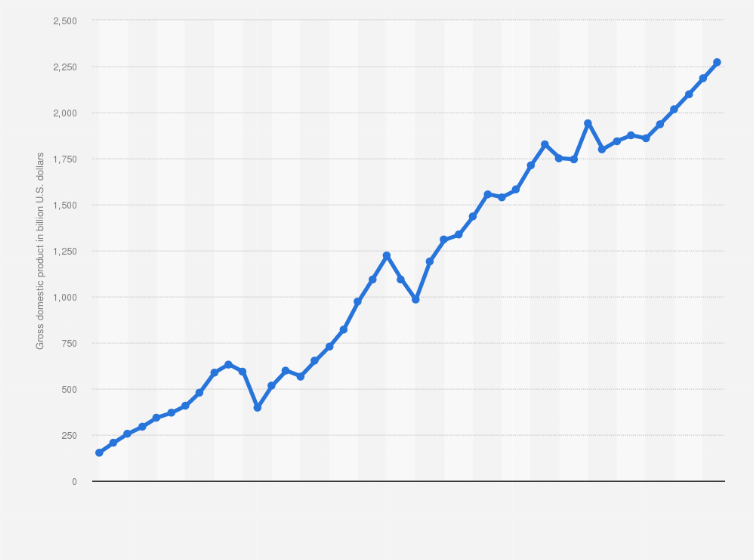
As a major global trading nation and advanced economy, South Korea’s GDP figures are closely watched. In recent years, its nominal GDP has hovered around the $1.7 trillion to $1.8 trillion mark, placing it among the top 10-15 largest economies worldwide. When considering GDP per capita, South Korea ranks as a high-income country, reflecting its advanced industrial and technological base and high standard of living.
Growth rates have seen fluctuations. For instance, following the initial shock of the COVID-19 pandemic, South Korea demonstrated resilience, experiencing a rebound. In 2021, the economy grew by approximately 4.1%, driven by strong exports and recovering domestic demand. However, 2022 saw a moderation to around 2.6%, and projections for 2023 and 2024 often indicate further deceleration, potentially in the 1% to 2% range, reflecting global economic headwinds, elevated inflation, and higher interest rates. These figures compare to a pre-pandemic average growth rate of around 2-3% for mature economies, positioning South Korea as a stable but slowing advanced economy.
Factors Influencing Growth (and Challenges)
Several key factors shape South Korea’s GDP trajectory, presenting both opportunities and significant challenges:
- Global Trade Dynamics: As an export-dependent economy, global trade volumes and supply chain stability are paramount. Slowdowns in major economies (e.g., China, US, EU) or geopolitical tensions (e.g., Russia-Ukraine war, US-China trade disputes) directly impact South Korean exports, particularly in semiconductors and electronics.
- Technological Innovation: Continued investment in R&D and leadership in cutting-edge technologies (AI, biotech, quantum computing) are vital for maintaining competitive advantage and driving future growth. South Korea’s technological prowess remains a significant growth driver.
- Demographic Shifts: South Korea faces one of the world’s most rapidly aging populations and lowest birth rates. This demographic challenge poses long-term risks, including a shrinking workforce, increased welfare costs, and potentially constrained domestic consumption, which could dampen future GDP growth.
- Domestic Consumption: While exports are a primary driver, fostering stronger domestic consumption is increasingly important for balanced growth. Factors like household debt levels, real wage growth, and consumer confidence play a significant role.
- Inflation and Interest Rates: Like many economies, South Korea has grappled with elevated inflation in recent years, prompting the Bank of Korea to raise interest rates. Tighter monetary policy, while necessary to tame inflation, can cool economic activity by increasing borrowing costs for businesses and consumers.
- Geopolitical Tensions: The ongoing geopolitical situation on the Korean Peninsula and regional power dynamics continue to present a background risk, potentially impacting investor confidence and economic stability.
The Structure of South Korea’s GDP
Understanding the composition of South Korea’s GDP—which sectors contribute most and what drives demand—offers deeper insights into its economic strengths and vulnerabilities.
Sectoral Contributions
South Korea’s economy has largely shifted from an agricultural base to a highly industrialized and service-oriented structure:
- Manufacturing: This sector remains the backbone of the South Korean economy, accounting for a significant portion of GDP (often over 25%) and a large share of employment. Key manufacturing industries include semiconductors, automobiles, chemicals, machinery, and shipbuilding. The high value-added nature of these products drives substantial export revenue.
- Services: The services sector is the largest contributor to GDP, typically comprising over 50%. This includes a diverse range of activities such as finance, real estate, retail, healthcare, education, and information and communication technology (ICT). As the economy matures, the services sector is expected to continue growing in importance, though productivity growth in some service sub-sectors remains a focus for policymakers.
- Agriculture and Fisheries: This sector now accounts for a very small percentage of GDP (typically less than 2%), reflecting the country’s rapid industrialization and urbanization.
Drivers of Demand
While the sectoral contributions show what is produced, the drivers of demand explain who is buying these goods and services:
- Exports: Exports are arguably the most critical driver of South Korea’s GDP. The nation’s economic model is fundamentally export-led, relying heavily on global demand for its high-tech and industrial products. Companies like Samsung and Hyundai thrive on international markets, and fluctuations in global trade have a direct and often significant impact on South Korea’s economic performance.
- Domestic Consumption (Private Consumption): Household spending is the largest component of domestic demand. A robust consumer market is essential for stable economic growth, particularly as external demand can be volatile. Government policies often aim to boost domestic consumption through various incentives, but challenges such as high household debt and slow wage growth can temper this component.
- Investment (Gross Fixed Capital Formation): Business investment in new equipment, factories, and R&D is crucial for enhancing productivity and future growth potential. Government investment in infrastructure and public works also contributes significantly to this category.
- Government Spending: Government expenditure on public services, administration, and social welfare programs provides a steady baseline for demand and can be used as a counter-cyclical tool during economic downturns.
The balance between these drivers, especially between external demand (exports) and internal demand (consumption and investment), is a key focus for economists and policymakers in South Korea.
Future Outlook and Financial Implications
South Korea’s economic future is poised at a critical juncture, navigating complex global dynamics and persistent domestic challenges. Understanding this outlook is vital for anyone considering financial engagement with the nation.
Projections and Potential Challenges
Economic forecasts for South Korea typically project moderate growth in the near to medium term, in line with other advanced economies, often in the 1% to 2.5% range. However, this trajectory is subject to several significant challenges:
- Aging Population and Declining Workforce: This is arguably the most formidable long-term hurdle. A rapidly shrinking working-age population could lead to slower potential growth, increased pressure on social welfare systems, and reduced domestic dynamism. Policies to increase labor force participation (especially among women and older adults) and encourage higher birth rates are crucial but have shown limited impact so far.
- Slowing Global Trade and Protectionism: As global trade growth potentially moderates and protectionist sentiments rise in major economies, South Korea’s export-reliant model faces increasing headwinds. Diversifying export markets and deepening regional trade agreements could mitigate some risks.
- Intensifying Global Competition: In key industries like semiconductors and electric vehicles, competition from China, the US, and European nations is intensifying. Continuous innovation and strategic investment are required to maintain South Korea’s competitive edge.
- Household Debt: High levels of household debt remain a concern, potentially constraining consumer spending and posing risks to financial stability, particularly in a rising interest rate environment.
- Geopolitical Risks: The persistent tensions with North Korea and broader geopolitical shifts in Northeast Asia can introduce uncertainty and affect investor confidence.
Opportunities for Investment and Business
Despite the challenges, South Korea offers significant opportunities, particularly in specific sectors:
- Advanced Technologies: The country’s strong foundation in R&D, highly skilled workforce, and government support for innovation make it fertile ground for investment in artificial intelligence, biotechnology, quantum computing, robotics, and future mobility solutions. Venture capital and private equity firms continue to find robust opportunities in these high-growth areas.
- Digital Transformation: South Korea is a leader in digitalization, creating opportunities in cloud computing, cybersecurity, big data analytics, and digital services across various industries, from manufacturing to finance.
- Green Energy and ESG: With a growing global focus on climate change, South Korea is investing heavily in renewable energy, electric vehicle infrastructure, and sustainable technologies. This creates avenues for investment in green bonds, clean energy projects, and companies with strong Environmental, Social, and Governance (ESG) credentials.
- Healthcare and Biotech: An aging population also creates demand for advanced healthcare services, pharmaceuticals, and medical devices, driving growth in the biotech and healthcare sectors.

Impact on Personal Finance and Investing
The overall health of South Korea’s GDP has direct implications for individual financial well-being and investment strategies:
- Job Market: A growing GDP generally leads to a stronger job market, higher wages, and lower unemployment rates, benefiting personal income and career prospects. Conversely, economic slowdowns can tighten the labor market.
- Stock Market: The performance of the Korean stock market (KOSPI and KOSDAQ) is closely correlated with economic growth. Healthy GDP figures tend to support corporate earnings, leading to higher stock valuations. Investors seeking exposure to high-tech manufacturing and emerging technologies often consider South Korean equities.
- Real Estate: GDP growth and demographic trends influence real estate markets. While an aging population can dampen demand in the long term, strong economic fundamentals can support property values in key urban centers.
- Currency (Korean Won): A robust economy and strong export performance typically support the value of the Korean Won (KRW). International investors often consider the economic outlook when making currency-related decisions.
- Savings and Retirement: Stable GDP growth provides a more secure environment for personal savings, retirement planning, and long-term financial security, as it underpins the health of financial institutions and government fiscal capacity.
In essence, South Korea’s GDP is not just an abstract economic number; it is a critical barometer that reflects the nation’s journey, its current state of financial health, and its potential future trajectory, with tangible impacts on every aspect of money and finance within its borders and beyond.
aViewFromTheCave is a participant in the Amazon Services LLC Associates Program, an affiliate advertising program designed to provide a means for sites to earn advertising fees by advertising and linking to Amazon.com. Amazon, the Amazon logo, AmazonSupply, and the AmazonSupply logo are trademarks of Amazon.com, Inc. or its affiliates. As an Amazon Associate we earn affiliate commissions from qualifying purchases.