
In the dynamic world of business and finance, understanding how consumers and producers react to changes in market conditions is paramount. Among the most critical economic concepts for any enterprise, large or small, is the “elasticity of price.” At its core, price elasticity measures the responsiveness of quantity demanded or quantity supplied to a change in price. It is a fundamental metric that empowers businesses to make informed decisions about pricing strategies, revenue forecasting, product development, and market positioning, directly impacting their bottom line. For financial strategists and entrepreneurs alike, grasping this concept moves beyond mere academic understanding; it becomes a powerful analytical tool for navigating competitive landscapes and optimizing financial performance.
Understanding Price Elasticity of Demand (PED)
The most commonly discussed form of price elasticity is Price Elasticity of Demand (PED), which quantifies the degree to which the quantity demanded of a good or service changes in response to a change in its price. For businesses, knowing their product’s PED is like having a compass in a complex market, guiding their pricing strategy to maximize revenue and profit.
The Formula and Interpretation
The Price Elasticity of Demand is calculated using a straightforward formula:
PED = (Percentage Change in Quantity Demanded) / (Percentage Change in Price)
The result of this calculation categorizes products into different elasticity segments:
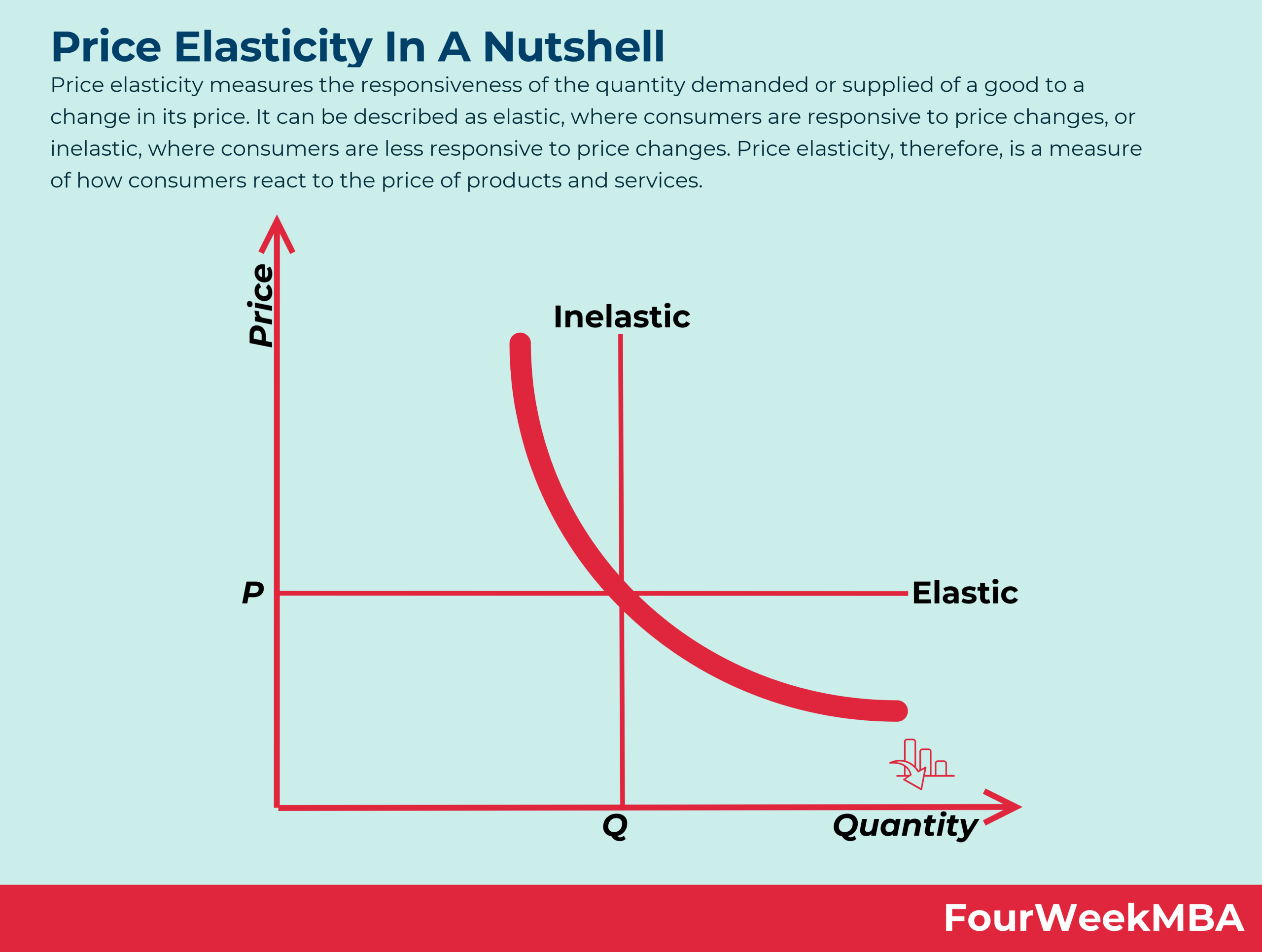
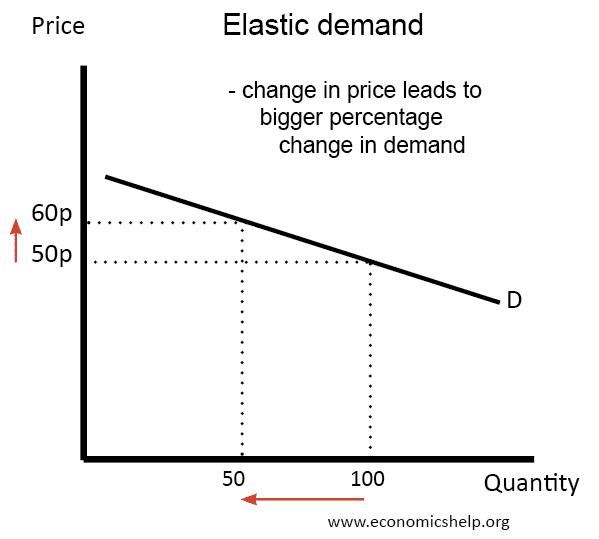
- Elastic Demand (PED > 1): When the absolute value of PED is greater than 1, demand is considered elastic. This means that a small percentage change in price leads to a proportionately larger percentage change in the quantity demanded. For instance, if a 10% price increase results in a 20% drop in sales, the product has elastic demand. Products with many substitutes, such as designer clothing or certain restaurant meals, often exhibit elastic demand.
- Inelastic Demand (PED < 1): If the absolute value of PED is less than 1, demand is inelastic. In this scenario, a percentage change in price leads to a proportionately smaller percentage change in the quantity demanded. If a 10% price increase only causes a 5% decrease in sales, demand is inelastic. Essential goods with few substitutes, like life-saving medications or basic utilities, typically have inelastic demand.
- Unitary Elastic Demand (PED = 1): When the absolute value of PED equals 1, demand is unitary elastic. The percentage change in quantity demanded is exactly equal to the percentage change in price.
- Perfectly Elastic Demand (PED = infinity): A theoretical extreme where any increase in price causes the quantity demanded to fall to zero, and even a tiny decrease in price causes demand to become infinite. This might be approximated in perfectly competitive markets.
- Perfectly Inelastic Demand (PED = 0): Another theoretical extreme where the quantity demanded does not change at all, regardless of the price. This applies to goods that are absolutely essential and have no substitutes, a rarity in real markets.
Factors Influencing PED
Several key factors determine whether a product’s demand will be elastic or inelastic:
- Availability of Substitutes: The more substitutes available for a product, the more elastic its demand tends to be. Consumers can easily switch to a cheaper alternative if the price of their preferred product rises. Conversely, unique products with few substitutes tend to have inelastic demand.
- Necessity vs. Luxury: Necessities, such as staple foods or basic housing, generally have inelastic demand because consumers will purchase them regardless of moderate price changes. Luxury goods, like high-end electronics or exotic vacations, are typically elastic because consumers can forgo them if prices become too high.
- Proportion of Income: Products that represent a significant portion of a consumer’s income tend to have more elastic demand. A 10% price increase on a car is noticed far more than a 10% increase on a box of matches.
- Time Horizon: Demand tends to be more elastic in the long run than in the short run. In the short term, consumers might be locked into certain habits or lack immediate alternatives. Over a longer period, they have more time to find substitutes, adjust their behavior, or adapt to new technologies.
- Brand Loyalty: Strong brand loyalty can make demand more inelastic. Consumers deeply committed to a particular brand may be less sensitive to price increases than those who view products as interchangeable commodities.
The Strategic Importance of PED for Businesses
Understanding PED is not merely an academic exercise; it forms the bedrock of strategic financial and marketing decisions for any business.
Pricing Decisions
The most direct application of PED is in setting prices.
- For elastic products, a slight price reduction can lead to a substantial increase in sales volume, potentially boosting total revenue. Conversely, a price increase could lead to a significant drop in sales, reducing revenue. Businesses in highly competitive markets with elastic products often engage in price wars or focus on cost leadership.
- For inelastic products, businesses have more leeway to increase prices without experiencing a dramatic fall in demand. This can be a significant source of increased revenue and profit margins. However, extreme price hikes on inelastic goods, particularly necessities, can lead to public backlash and regulatory scrutiny. Businesses with inelastic products might focus on value-added features or premium branding.
- Price discrimination, where different prices are charged to different customer segments for the same product, is often based on varying elasticities among those segments. Airlines and software companies frequently employ this strategy.
Revenue Forecasting and Budgeting
Accurate revenue forecasting is critical for financial planning, inventory management, and resource allocation. By understanding PED, businesses can predict how potential price changes will impact their sales volumes and, consequently, their total revenue. This allows for more precise budgeting, enables better cash flow management, and helps in setting realistic financial targets. A business planning a price promotion needs to estimate how much additional volume will be generated to offset the lower per-unit revenue, a calculation heavily reliant on PED.
Product Development and Marketing
PED insights can also guide product development and marketing strategies.
- When demand is highly elastic, businesses may invest in differentiating their products through unique features, superior quality, or enhanced customer service to make them less susceptible to price competition. The goal is to create perceived value and build brand loyalty, thereby making demand less elastic.
- Marketing campaigns can be designed to highlight the unique benefits or essential nature of a product, aiming to shift consumer perception and reduce price sensitivity. For example, marketing a product as a “must-have innovation” rather than a “commodity” can influence its elasticity.
- Understanding different elasticities across market segments allows businesses to tailor their product offerings and marketing messages to specific consumer groups, maximizing their appeal and profitability.
Beyond Demand: Price Elasticity of Supply (PES)
While PED focuses on the consumer side, Price Elasticity of Supply (PES) is equally vital for businesses, particularly for those involved in manufacturing and production.
Definition and Formula
Price Elasticity of Supply measures how responsive the quantity supplied of a good or service is to a change in its market price.
PES = (Percentage Change in Quantity Supplied) / (Percentage Change in Price)
- Elastic Supply (PES > 1): Producers can significantly increase or decrease supply in response to price changes.
- Inelastic Supply (PES < 1): Producers struggle to adjust supply quickly, even with substantial price changes.
Factors Influencing PES
Several factors dictate a product’s PES:
- Availability of Inputs: If raw materials, labor, and other production inputs are readily available and can be easily scaled up or down, supply will be more elastic. Industries requiring specialized inputs or facing labor shortages will have less elastic supply.
- Time Horizon: Supply is generally more elastic in the long run than in the short run. In the short term, producers might be limited by existing factory capacity, contracts, or machinery. Over a longer period, they can build new factories, hire more staff, or develop new production methods to respond to price changes.
- Storage Capacity: Products that can be easily stored without spoilage (e.g., non-perishable goods) tend to have more elastic supply, as producers can hold inventory when prices are low and release it when prices rise.
- Production Capacity and Flexibility: Industries with excess capacity or highly flexible production processes can more easily adjust their output, leading to more elastic supply. Conversely, industries operating at full capacity or with rigid production lines will have inelastic supply.
Practical Applications and Common Misconceptions
Applying elasticity concepts effectively requires careful calculation and an awareness of their limitations.
Real-World Examples
- Gasoline: In the short run, gasoline demand is relatively inelastic because people need to commute and travel. However, in the long run, as prices remain high, consumers might buy more fuel-efficient cars, use public transport, or relocate, making demand more elastic.
- Luxury Cars: Demand for luxury vehicles is typically highly elastic. A significant price cut could attract many new buyers, while a price hike could deter them.
- Generic Medicines: Many generic drugs exhibit highly inelastic demand, as they are often necessities with few direct substitutes, especially if a patient’s health depends on them.
- Software Subscriptions: For essential business software, demand can be somewhat inelastic in the short term, but as competitors emerge and alternatives improve, it can become more elastic over time.
Calculating and Estimating Elasticity
While the formula is simple, obtaining accurate data for calculation can be complex. Businesses often use:
- Historical Sales Data: Analyzing past sales volumes in relation to price changes.
- Market Research: Surveys and focus groups can gauge consumer sensitivity.
- A/B Testing: Running experiments by offering different prices to different customer segments.
- Econometric Modeling: Sophisticated statistical techniques to isolate the impact of price from other variables.

Common Pitfalls
Several misconceptions can undermine the effective use of price elasticity:
- Assuming Constant Elasticity: Elasticity is not constant across all price ranges or market conditions. A product might be inelastic at low prices but become elastic as its price rises significantly.
- Ignoring Cross-Price Elasticity: This measures how the demand for one good changes in response to a change in the price of another good (e.g., substitutes or complements). Businesses must consider competitor pricing and the impact on their own products.
- Not Considering Income Elasticity: This measures how demand changes with consumer income levels. During economic downturns, even necessities can become more price-sensitive if incomes fall.
- Focusing Solely on Price: While crucial, price is just one factor influencing consumer behavior. Product quality, brand reputation, marketing, and external economic conditions also play significant roles.
In conclusion, understanding price elasticity, both of demand and supply, is a cornerstone of sound business finance. It provides a quantitative framework for anticipating market reactions to price adjustments, guiding strategic decisions that maximize revenue, optimize resource allocation, and sustain competitive advantage in an ever-evolving marketplace. Mastering this concept allows businesses to move beyond guesswork, making data-driven choices that directly influence their financial health and long-term success.
aViewFromTheCave is a participant in the Amazon Services LLC Associates Program, an affiliate advertising program designed to provide a means for sites to earn advertising fees by advertising and linking to Amazon.com. Amazon, the Amazon logo, AmazonSupply, and the AmazonSupply logo are trademarks of Amazon.com, Inc. or its affiliates. As an Amazon Associate we earn affiliate commissions from qualifying purchases.