
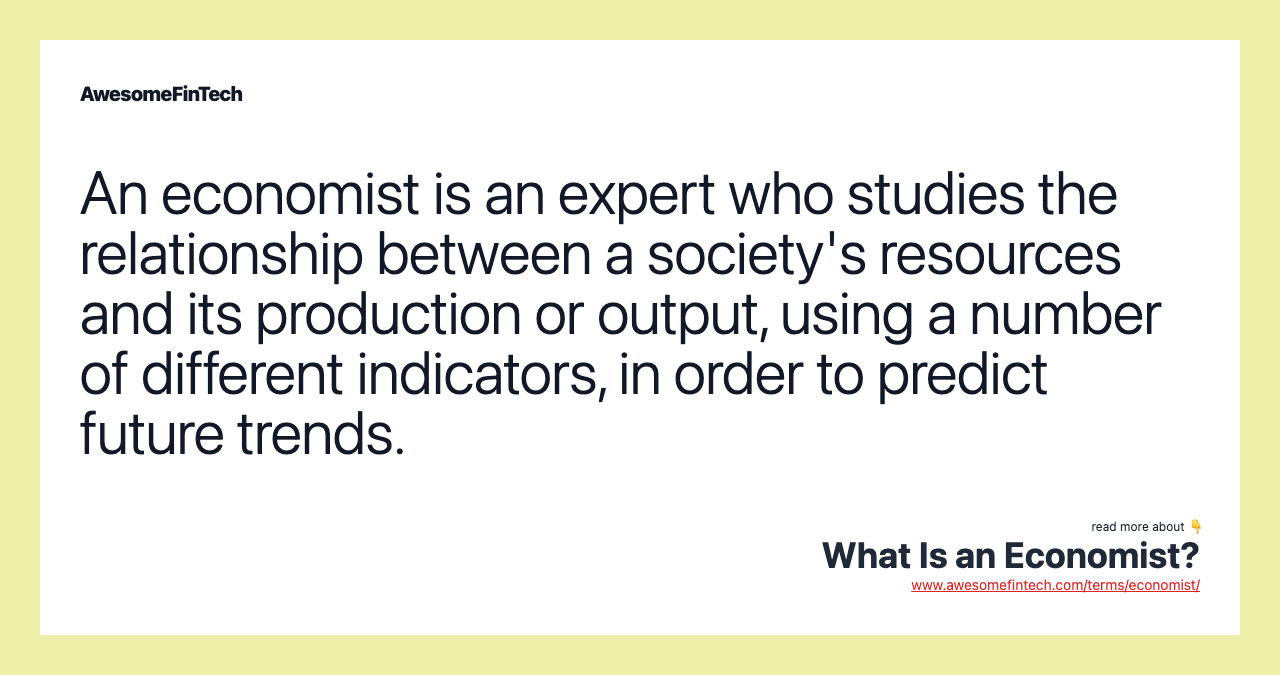
An economist is a professional dedicated to studying the production, distribution, and consumption of goods and services. At its core, the discipline of economics seeks to understand how individuals, businesses, governments, and nations make choices about allocating resources to satisfy their wants and needs, and how these choices impact financial systems and prosperity. Far from being confined to ivory towers, economists play a critical, often understated, role in shaping financial markets, business strategies, government policies, and even personal money management. Their work directly influences everything from interest rates and inflation to investment opportunities and the cost of living.
The Core Role of an Economist
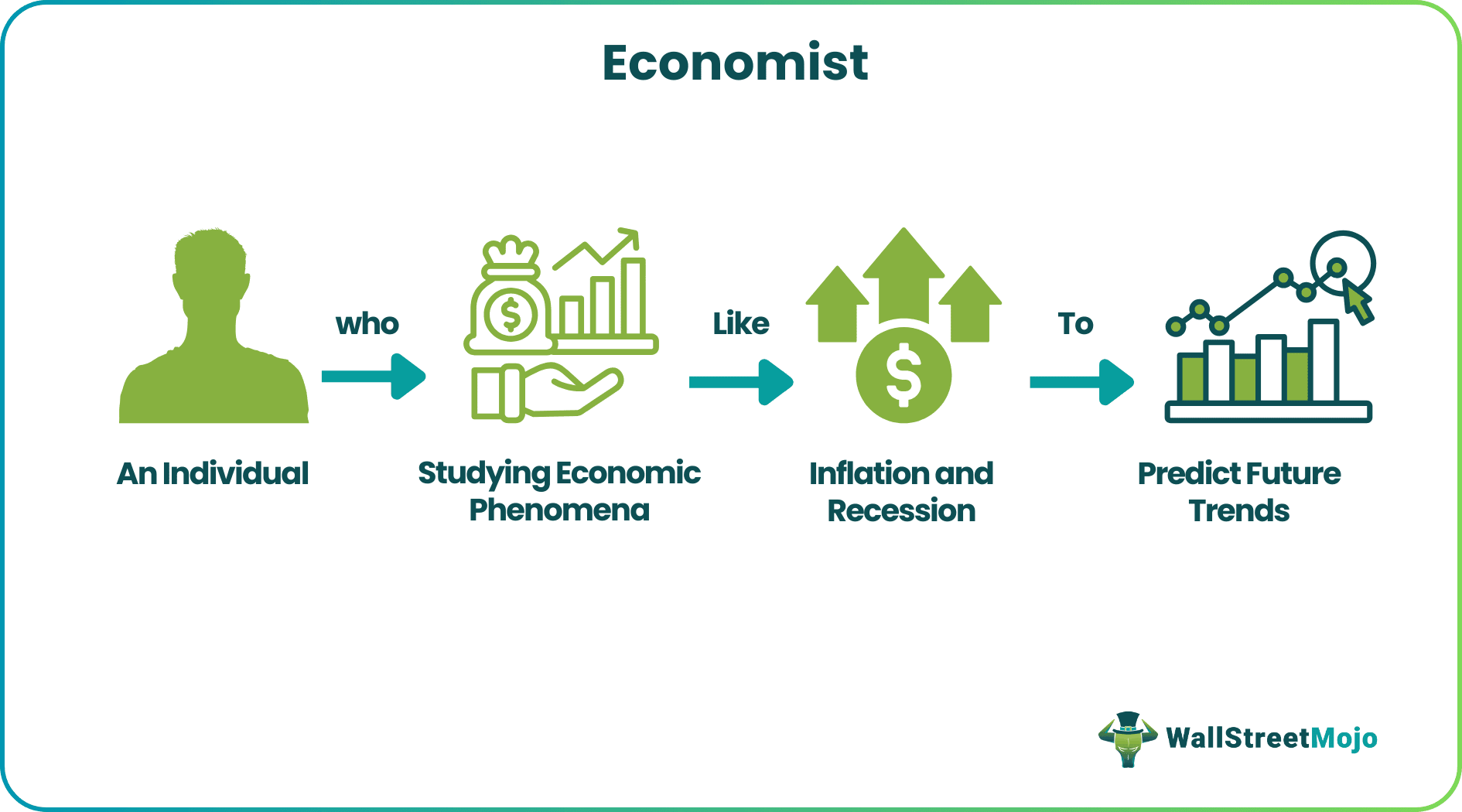
The primary function of an economist is to analyze complex data, identify patterns, and interpret economic trends to provide actionable insights. This involves a rigorous application of statistical methods, mathematical modeling, and theoretical frameworks to real-world financial challenges. Economists are essentially financial detectives, seeking to understand the underlying causes of economic phenomena and predict future outcomes. Their expertise is invaluable across a spectrum of sectors, from central banks and investment firms to multinational corporations and non-profit organizations, all of which rely on sound economic analysis to make informed financial decisions.
Economic Analysis and Forecasting
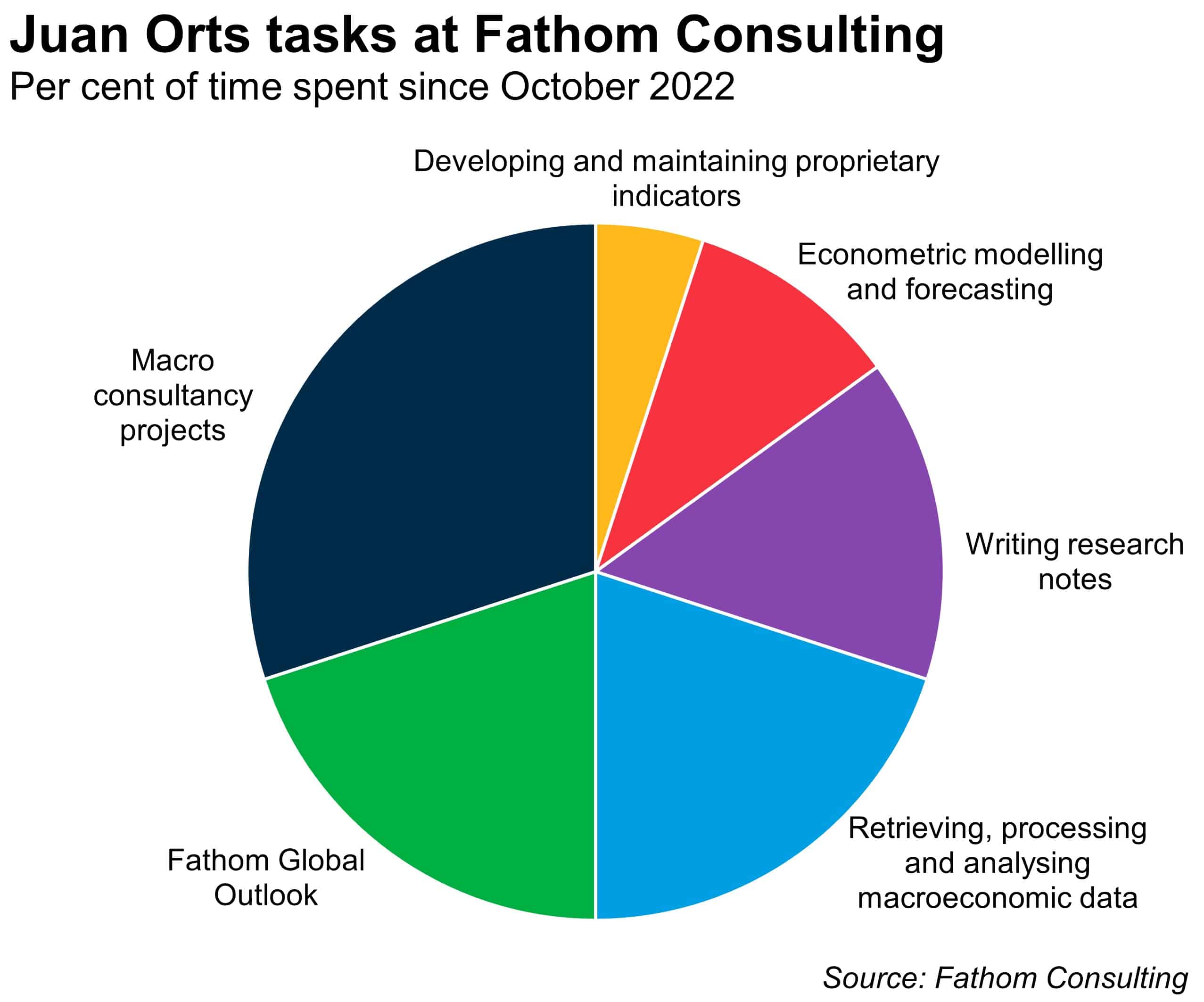
A fundamental aspect of an economist’s work involves economic analysis and forecasting. They utilize a wide array of data sources, including market reports, government statistics, and proprietary financial indicators, to assess the current state of an economy or specific market segments. This analysis often involves constructing elaborate econometric models that incorporate various variables like GDP growth, unemployment rates, inflation, consumer spending, and interest rates. The objective is to identify correlations, understand causal relationships, and ultimately forecast future economic conditions. For investors, these forecasts are crucial for predicting market movements, evaluating asset valuations, and making strategic portfolio adjustments. For businesses, they inform budgeting, production planning, and market entry strategies.
Policy Formulation and Impact
Beyond analysis, economists are instrumental in the formulation and evaluation of economic policies. Governments frequently employ economists to advise on fiscal policies, such as taxation and public spending, and monetary policies, like interest rate adjustments and money supply management. These policies have profound financial implications, directly affecting the profitability of businesses, the purchasing power of consumers, and the overall stability of financial markets. For instance, an economist might assess the potential impact of a proposed tax cut on consumer spending and national debt, or evaluate how an increase in interest rates could influence mortgage payments and corporate borrowing costs. Their recommendations aim to optimize economic growth, control inflation, reduce unemployment, and foster financial stability, all of which directly affect the financial well-being of a nation’s citizens and businesses.
Diverse Fields of Economic Specialization
The field of economics is broad, encompassing various specializations that each bring unique perspectives and tools to understanding and managing money. While all economists share a foundational understanding of economic principles, their areas of focus dictate the specific financial challenges they address and the types of insights they provide.
Macroeconomics and Global Trends
Macroeconomists concentrate on the big picture, examining the performance, structure, and behavior of a national or global economy as a whole. They analyze aggregate economic phenomena such as gross domestic product (GDP), inflation, unemployment rates, and international trade balances. Their work is critical for understanding global financial trends, assessing systemic risks, and informing large-scale investment decisions that span across countries or major industries. For an investor, a macroeconomist’s insights on global economic health can guide decisions on allocating assets across different regions or currencies, hedging against currency fluctuations, or identifying emerging market opportunities.
Microeconomics and Market Dynamics
In contrast, microeconomists delve into the behavior of individual economic agents—firms, households, and individuals—and how they make decisions regarding the allocation of scarce resources. They analyze market structures, pricing strategies, consumer behavior, and the factors influencing supply and demand for specific goods and services. For businesses, microeconomic analysis is indispensable for setting optimal prices, understanding competitive landscapes, and identifying niche market opportunities. For individuals, understanding microeconomic principles can help in making informed purchasing decisions, negotiating wages, and understanding the financial implications of market shifts in specific sectors.
Behavioral Economics and Financial Decision-Making
A more recent but increasingly influential specialization is behavioral economics. This field integrates insights from psychology to understand why individuals often deviate from purely rational economic decision-making. Behavioral economists study cognitive biases, heuristics, and emotional influences that impact financial choices, such as saving habits, investment decisions, and susceptibility to marketing tactics. Their findings help financial advisors better understand client behavior, design more effective retirement plans, and develop interventions that encourage healthier financial habits. For marketers in the financial sector, behavioral economics offers a roadmap to design campaigns that resonate with human psychology.
Econometrics and Data-Driven Insights
Econometrics is the application of statistical methods to economic data to give empirical content to economic relations. Econometricians develop and apply statistical techniques to test economic theories, estimate relationships between variables, and forecast future economic trends. This specialization is fundamental to virtually all other areas of economics, providing the rigorous analytical framework necessary for drawing robust conclusions from financial data. From predicting stock market movements to assessing the effectiveness of a new financial product, econometric models provide the quantitative backbone for data-driven financial decision-making.
How Economists Influence Financial Outcomes
The practical impact of economists’ work on financial outcomes is pervasive, touching every aspect of money management from individual investment portfolios to corporate finance and national economic policy. Their ability to synthesize complex data and anticipate market shifts makes them invaluable advisors in navigating the often volatile world of finance.
Guiding Investment Strategies
Economists provide critical insights that shape investment strategies for individuals and institutional investors alike. By analyzing macroeconomic indicators like interest rates, inflation expectations, and economic growth forecasts, they can advise on asset allocation, sector selection, and risk management. For instance, an economist might suggest a shift towards inflation-indexed bonds during periods of rising prices or recommend overweighting certain sectors expected to benefit from projected economic expansion. Their evaluations of currency movements, commodity prices, and geopolitical risks also help investors protect and grow their wealth in an increasingly interconnected global economy. Investment banks, hedge funds, and mutual funds heavily rely on in-house economists to inform their trading desks and portfolio managers.
Shaping Business Finance Decisions
In the corporate world, economists play a pivotal role in shaping business finance decisions. They help companies understand market demand, optimize pricing strategies, evaluate the financial viability of new projects, and manage financial risks. An economist might analyze consumer spending patterns to advise a retail company on inventory levels, or assess the competitive landscape to help a tech firm determine its R&D investment. They are also crucial in forecasting sales, predicting input costs, and evaluating the impact of regulatory changes on a company’s bottom line. For businesses planning mergers and acquisitions, economists conduct due diligence, assessing market power, potential synergies, and financial integration challenges.
Informing Personal Finance Choices
While often unseen by the average individual, the work of economists profoundly impacts personal finance choices. Their analyses influence the interest rates offered on savings accounts and loans, the cost of consumer goods, and the job market outlook. Understanding basic economic principles, often disseminated through economic reporting and expert commentary, can empower individuals to make smarter decisions about saving for retirement, managing debt, buying a home, or pursuing higher education. Economists’ insights into inflation, for example, can help individuals decide whether to opt for fixed-rate or adjustable-rate mortgages, or how much to adjust their savings goals to maintain purchasing power over time.
Essential Skills and Tools for Aspiring Economists
Becoming a successful economist, especially one who can effectively navigate and influence the financial world, requires a specific set of skills and a mastery of various analytical tools. These capabilities are crucial for transforming raw data into actionable financial intelligence.
Analytical Prowess and Critical Thinking
At the heart of an economist’s skill set is robust analytical prowess and critical thinking. This involves the ability to dissect complex problems, identify underlying assumptions, evaluate evidence, and construct logical arguments. Economists must be able to move beyond surface-level observations to uncover the deeper economic forces at play. In the financial context, this means not just recognizing a market downturn but understanding the confluence of factors—monetary policy, investor sentiment, global events—that contributed to it, and critically assessing potential recovery paths. This skill is vital for predicting market reactions and formulating effective financial strategies.
Statistical Software and Modeling
Modern economics is highly quantitative, making proficiency in statistical software and econometric modeling indispensable. Tools like R, Python with libraries such as Pandas and SciPy, SAS, Stata, and EViews are standard in the profession. Economists use these programs to process large datasets, run regressions, build predictive models, and perform simulations. Whether forecasting stock prices, assessing the impact of a fiscal policy on national income, or modeling consumer spending, mastery of these tools allows economists to test hypotheses rigorously and derive data-driven financial conclusions. A strong grasp of statistical theory, including probability, inference, and hypothesis testing, underpins the effective use of these software packages.
Communication and Presentation Skills
Even the most brilliant economic analysis is ineffective if it cannot be clearly communicated to stakeholders. Economists must be able to translate complex quantitative findings into accessible, actionable insights for diverse audiences, ranging from policymakers and corporate executives to investors and the general public. This requires strong written and verbal communication skills, including the ability to craft compelling reports, deliver persuasive presentations, and engage in thoughtful discussions. For financial economists, being able to explain market trends, investment risks, and policy implications in a lucid manner is critical for influencing decisions and building trust.
The Value of Economic Understanding in Everyday Money Matters
Understanding what an economist does and the principles they apply extends beyond professional circles; it offers immense value in managing personal finances. While not everyone needs to be an economist, grasping basic economic concepts can profoundly enhance one’s financial literacy and decision-making capabilities. Knowledge of supply and demand helps in understanding price fluctuations for consumer goods or housing. An awareness of inflation’s effects empowers better saving and investment choices to preserve purchasing power. Understanding interest rates guides borrowing and lending decisions.
Moreover, economic understanding fosters a more informed perspective on financial news and policy debates. It allows individuals to critically evaluate claims about market trends, government spending, or central bank actions, rather than passively accepting them. For entrepreneurs, economic insight can identify market gaps, optimize pricing, and predict consumer behavior. For those looking to grow wealth, economic forecasting—even if rudimentary—can inform long-term investment strategies and risk management. Ultimately, an economist’s work illuminates the intricate connections between individual choices, market forces, and broader societal prosperity, providing a framework for navigating the financial landscape with greater confidence and strategic foresight.
aViewFromTheCave is a participant in the Amazon Services LLC Associates Program, an affiliate advertising program designed to provide a means for sites to earn advertising fees by advertising and linking to Amazon.com. Amazon, the Amazon logo, AmazonSupply, and the AmazonSupply logo are trademarks of Amazon.com, Inc. or its affiliates. As an Amazon Associate we earn affiliate commissions from qualifying purchases.