
Catalysis, at its core, is the process of accelerating a chemical reaction through the addition of a substance called a catalyst. While seemingly a fundamental concept in pure science, its practical implications are vast and pervasive, making it a pivotal force driving innovation across virtually every sector of modern technology. From the energy we consume and the materials that build our digital world to the environmental solutions safeguarding our planet, catalysis is the unsung hero enabling efficiency, speed, and selectivity in chemical transformations on an industrial scale. Understanding catalysis is not merely grasping a scientific principle; it’s comprehending a foundational technology that underpins current advancements and promises to unlock future frontiers.

The Technological Engine of Modern Industry
The ability of catalysts to significantly lower the activation energy of reactions means processes that would otherwise be slow, inefficient, or even impossible can be executed rapidly and economically. This transformative power positions catalysis as a critical technological engine, powering industries that define our modern world. Its influence extends across manufacturing, energy, and environmental sectors, driving advancements that impact daily life and global economies.
Energy Production and Storage Innovations
The quest for efficient and sustainable energy solutions heavily relies on catalytic processes. In the realm of energy production, catalysts are indispensable for refining crude oil into gasoline, diesel, and other petrochemicals, transforming complex hydrocarbons into usable fuels. Processes like fluid catalytic cracking (FCC) and hydrotreating are critical for producing high-octane fuels and removing impurities, enabling modern transportation and industry.
Beyond traditional fossil fuels, catalysts are central to the development of alternative energy technologies. Fuel cells, which convert chemical energy directly into electricity, depend entirely on catalysts (often platinum-group metals) to facilitate the electrochemical reactions that produce power without combustion. Hydrogen production, whether through steam methane reforming or electrolysis, also leverages advanced catalysts to improve efficiency and reduce costs. The ongoing research into next-generation battery technologies frequently involves catalytic materials to enhance charge/discharge rates, energy density, and longevity, contributing directly to electric vehicles and grid-scale energy storage solutions. Even in the nascent field of synthetic fuels and carbon capture and utilization, catalysts are being engineered to convert CO2 into valuable chemicals or fuels, offering pathways to a circular carbon economy.
Advanced Materials Manufacturing
The digital age, characterized by sophisticated devices and advanced infrastructure, owes much to catalytic processes in materials science. The production of polymers, which form the backbone of plastics, composites, and countless everyday products from smartphone casings to medical devices, is dominated by catalytic polymerization. Ziegler-Natta catalysts, for example, revolutionized the manufacturing of polyethylene and polypropylene, enabling precise control over polymer structure and properties. These materials are fundamental to electronics, automotive, construction, and packaging industries.
Furthermore, the semiconductor industry, which forms the bedrock of all modern computing and communication technology, relies on highly specialized catalytic processes for deposition, etching, and surface modification of silicon wafers. The precise control offered by catalytic methods is crucial for creating the intricate micro- and nano-structures essential for microprocessors, memory chips, and sensors. Specialty chemicals, ranging from pharmaceuticals to agricultural chemicals and high-performance coatings, are also synthesized through intricate catalytic pathways, ensuring the purity, yield, and specific molecular structures required for their high-tech applications.
Environmental Technologies and Sustainability
Catalysis is a cornerstone of efforts to mitigate environmental pollution and transition towards a more sustainable future. Automotive catalytic converters, perhaps the most widely recognized application, use platinum, palladium, and rhodium catalysts to transform harmful exhaust gases (carbon monoxide, nitrogen oxides, and unburnt hydrocarbons) into less noxious substances (carbon dioxide, nitrogen, and water vapor). This technology has dramatically reduced urban air pollution.
Industrial emissions are also treated catalytically, with selective catalytic reduction (SCR) systems deployed in power plants and industrial facilities to remove nitrogen oxides. Water purification technologies employ photocatalysts to degrade organic pollutants, while new catalytic processes are being developed for plastic recycling, transforming waste plastics back into valuable monomers or fuels. The overarching push towards “green chemistry” heavily emphasizes the design of catalytic processes that are atom-efficient, use renewable feedstocks, and avoid hazardous reagents, directly contributing to eco-friendly technological development.
Catalysis in Digital Innovation and Smart Systems
The intersection of catalysis with digital technologies is opening new frontiers, accelerating discovery, and enhancing process control in ways previously unimaginable. This synergy is particularly evident in the application of AI and machine learning to catalyst design and the crucial role of catalysis in manufacturing components for smart systems.
Enabling Semiconductor Fabrication
The precision demanded by semiconductor manufacturing, a field intrinsically linked to digital innovation, often relies on advanced catalytic techniques. From atomic layer deposition (ALD) and chemical vapor deposition (CVD) processes that build layers on microchips, to selective etching and surface functionalization, catalysts play subtle yet critical roles. These processes allow for the creation of incredibly thin films with atomic-level control, which is essential for the performance of transistors, memory cells, and other integrated circuits. The continuous drive towards smaller, more powerful, and energy-efficient electronic components directly benefits from innovations in catalytic materials and methods used in their fabrication.
AI and Machine Learning in Catalyst Design
The sheer complexity of identifying optimal catalyst compositions and reaction conditions makes traditional trial-and-error experimentation a time-consuming and expensive endeavor. This is where Artificial Intelligence (AI) and Machine Learning (ML) tools are revolutionizing the field. By leveraging vast datasets of experimental and computational chemistry, AI algorithms can predict the activity, selectivity, and stability of novel catalytic materials with unprecedented accuracy.
Machine learning models can identify subtle correlations between catalyst structure and performance, guiding researchers towards promising candidates faster. High-throughput experimentation platforms, often integrated with AI, can rapidly screen thousands of potential catalysts and reaction parameters. This AI-driven approach significantly accelerates the discovery and optimization of new catalysts for various applications, from new battery materials to more efficient industrial processes, directly aligning with the “AI Tools” aspect of the Tech category. It represents a paradigm shift from empirical discovery to rational design, pushing the boundaries of what’s possible in chemical technology.
The Future Landscape: Catalytic Solutions for Emerging Tech
As technology continues its rapid evolution, catalysis remains at the forefront, offering solutions to some of the most pressing challenges and enabling entirely new technological paradigms. The future promises even more sophisticated catalytic applications, from bio-inspired systems to solutions for exploring beyond Earth.
Next-Gen Sustainable Chemistry
The imperative for sustainable technological development drives significant innovation in catalysis. Future catalysts will be designed not only for efficiency but also for exceptional selectivity and minimal environmental impact. This includes the development of robust photocatalysts that can harness solar energy to drive chemical reactions, such as splitting water into hydrogen and oxygen, or converting CO2 into fuels and chemicals directly. Biocatalysis, utilizing enzymes as highly specific and efficient biological catalysts, is also a rapidly expanding field. Enzymes offer the advantage of operating under mild conditions, reducing energy consumption and waste, and are finding increasing applications in pharmaceuticals, fine chemical synthesis, and sustainable industrial processes. The integration of synthetic biology with catalysis promises to create entirely new pathways for producing materials and energy sustainably, aligning with green tech trends.
Personalized Medicine and Advanced Drug Delivery
While often associated with industrial processes, catalysis plays a vital, albeit often less visible, role in healthcare technology. The synthesis of complex drug molecules frequently relies on precise catalytic reactions to achieve desired enantiomeric purity and yield, crucial for drug safety and efficacy. Emerging fields like personalized medicine are exploring catalytic nanotechnology for targeted drug delivery and in situ therapeutic activation. For instance, nanoparticles functionalized with catalysts could selectively activate prodrugs at disease sites, minimizing systemic side effects. Biosensors and diagnostic tools also leverage catalytic reactions for rapid and accurate detection of biomarkers, enabling earlier disease diagnosis and personalized treatment strategies. These applications demonstrate catalysis as a critical enabler for advanced healthcare tech.
Space Exploration and Resource Utilization
Looking further afield, catalysis is poised to play a crucial role in humanity’s ventures into space. On Mars, for instance, catalytic reactors are being developed to convert atmospheric carbon dioxide into oxygen and fuel (methane) through processes like the Sabatier reaction. This “In-Situ Resource Utilization” (ISRU) dramatically reduces the mass and cost of future missions, enabling longer stays and more ambitious exploration. Catalysts will be essential for life support systems, regenerating breathable air and water from waste products. Furthermore, the development of advanced materials for spacecraft, from high-performance composites to radiation shielding, often involves catalytic synthesis pathways. As we push the boundaries of space tech, catalysis will be fundamental to sustaining life and conducting science beyond Earth.
Decoding Catalysis: A Foundational Tutorial for Tech Enthusiasts
For anyone interested in the underlying mechanisms of technological progress, grasping the fundamentals of catalysis offers invaluable insight. It’s a field where microscopic interactions yield macroscopic impacts, driving innovation across diverse applications.
How Catalysts Work: Mechanisms and Principles
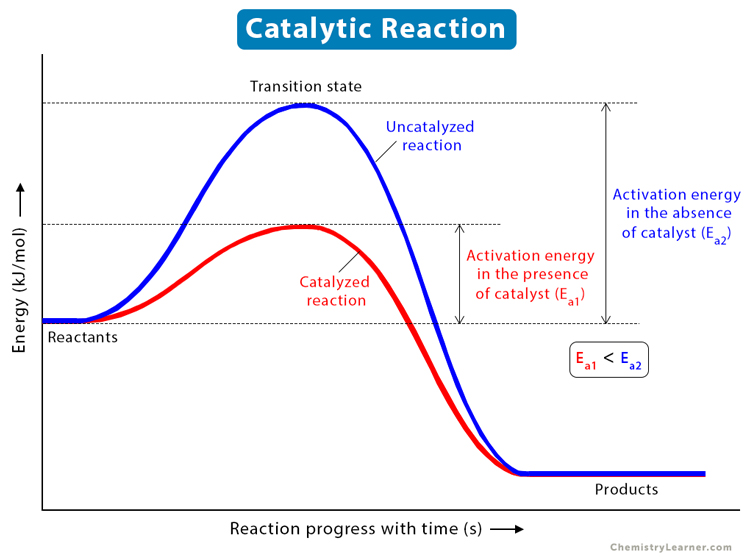
At a fundamental level, a catalyst provides an alternative reaction pathway with a lower activation energy than the uncatalyzed reaction. Crucially, the catalyst itself is not consumed in the overall reaction; it is regenerated at the end, allowing it to participate in subsequent reaction cycles. This regeneration is key to their efficiency and industrial viability. Catalysts typically interact with reactants to form transient intermediate species, facilitating bond breaking and formation, and then detach once the product is formed. This can involve surface adsorption, electron transfer, or acid-base interactions. The efficiency of a catalyst is measured by its activity (how fast it speeds up the reaction), selectivity (its ability to favor the formation of a desired product over others), and stability (its resistance to degradation or deactivation over time).

Types of Catalysis and Their Tech Applications
Catalysis is broadly categorized into several types, each with distinct mechanisms and technological applications:
- Heterogeneous Catalysis: This involves catalysts in a different phase from the reactants, typically a solid catalyst interacting with liquid or gaseous reactants. The reaction occurs on the surface of the solid catalyst. Tech applications: Petrochemical refining (fluid catalytic cracking), automotive catalytic converters, industrial ammonia synthesis (Haber-Bosch process), and production of polymers. These are central to large-scale industrial manufacturing and environmental control.
- Homogeneous Catalysis: Here, the catalyst is in the same phase as the reactants, often dissolved in a liquid. These catalysts typically offer high selectivity. Tech applications: Pharmaceutical synthesis (e.g., specific drug intermediates), production of specialty chemicals, and some polymerizations (e.g., metallocene catalysts for polyolefins). The precision of homogeneous catalysts is critical for high-value products.
- Enzymatic (Bio)catalysis: Enzymes are biological macromolecules (proteins) that act as highly specific and efficient catalysts in living systems. They operate under mild conditions (near neutral pH, ambient temperature). Tech applications: Production of high-value chemicals in pharmaceuticals and food industries, biofuels production (e.g., cellulosic ethanol), and bioremediation. This area is rapidly expanding, driven by advancements in biotechnology and green chemistry.
By understanding these fundamental principles, tech enthusiasts can better appreciate the intricate chemical engineering that underpins so many modern conveniences and sustainable solutions. Catalysis is not just chemistry; it’s a critical enabler of technology, constantly evolving to meet the demands of an innovating world.
aViewFromTheCave is a participant in the Amazon Services LLC Associates Program, an affiliate advertising program designed to provide a means for sites to earn advertising fees by advertising and linking to Amazon.com. Amazon, the Amazon logo, AmazonSupply, and the AmazonSupply logo are trademarks of Amazon.com, Inc. or its affiliates. As an Amazon Associate we earn affiliate commissions from qualifying purchases.