
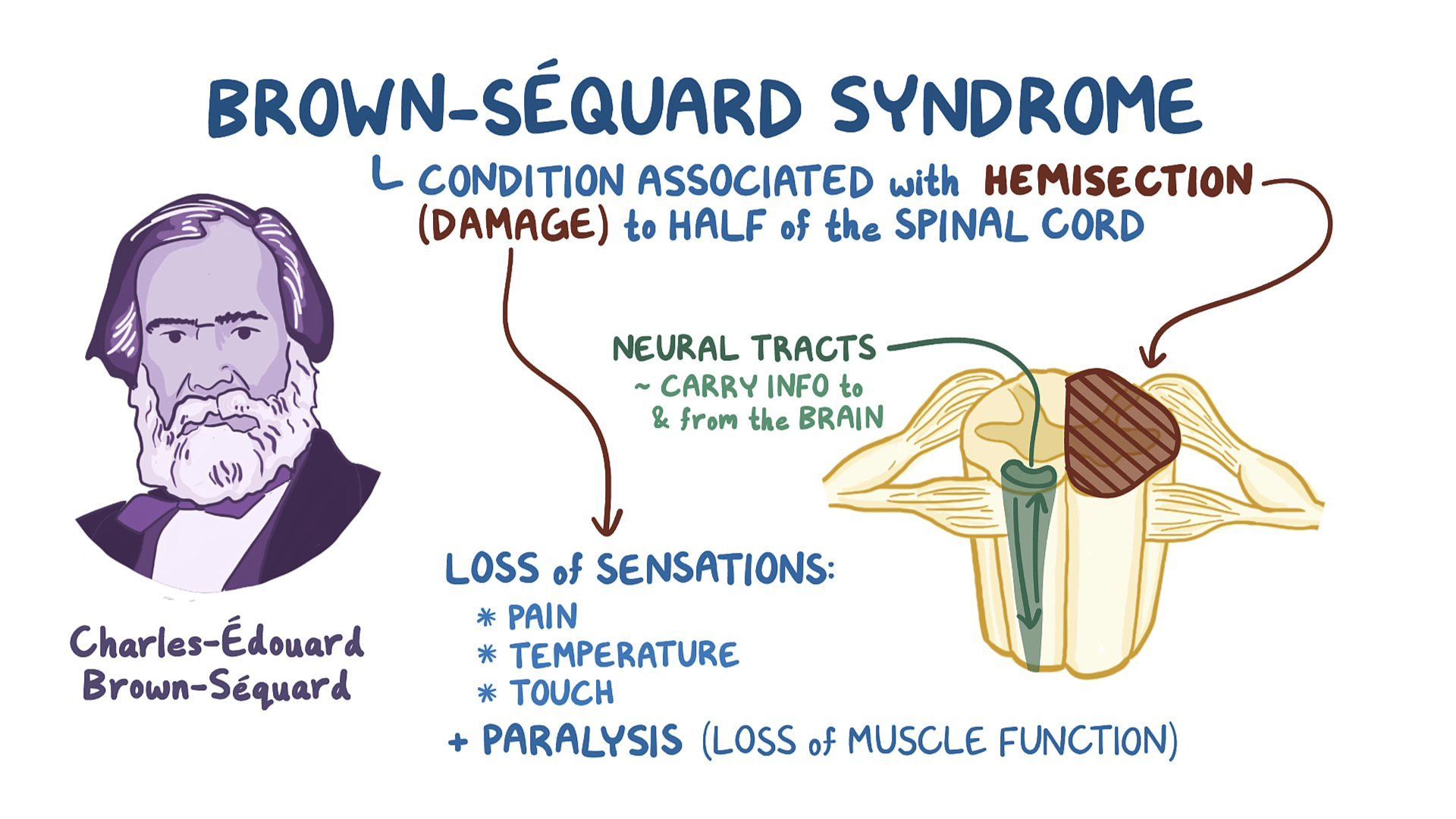
Brown-Séquard Syndrome (BSS) represents a complex neurological condition arising from damage to one half of the spinal cord. While inherently a medical diagnosis, understanding BSS in the 21st century increasingly involves the sophisticated lens of technology. The unique presentation of BSS—marked by ipsilateral motor paralysis and loss of proprioception, coupled with contralateral loss of pain and temperature sensation below the lesion—poses significant diagnostic and therapeutic challenges that advanced technological solutions are now beginning to address, offering unprecedented precision in diagnosis, tailored rehabilitation strategies, and enhanced long-term patient management.
Understanding the Neurological Challenge: Diagnosis and Pathophysiology
Brown-Séquard Syndrome typically results from a hemi-section (damage to one side) of the spinal cord, often caused by trauma (e.g., penetrating injuries), tumors, ischemia, or inflammatory diseases. The distinct set of neurological deficits stems from the specific anatomical arrangement of ascending and descending tracts within the spinal cord. The corticospinal tract (motor) and dorsal columns (proprioception, vibration, light touch) cross at higher levels in the brainstem, meaning damage to one side of the spinal cord affects motor function and proprioception on the same side of the body below the lesion. Conversely, the spinothalamic tracts (pain and temperature) cross immediately upon entering the spinal cord, causing sensory deficits on the opposite side of the body below the lesion.

Diagnosing BSS can be intricate. While the classic presentation is distinctive, incomplete or atypical forms of BSS are common, often obscuring the diagnosis. Early and accurate identification is crucial for optimal patient outcomes, guiding appropriate medical intervention and rehabilitation planning. Traditional diagnostic methods rely on a thorough neurological examination and imaging studies like Magnetic Resonance Imaging (MRI). However, interpreting these findings, especially in ambiguous cases, demands considerable expertise. This is where cutting-edge technology, particularly in artificial intelligence and advanced imaging, begins to transform the diagnostic landscape.
Leveraging AI and Machine Learning for Enhanced Detection
The inherent complexities of BSS diagnosis make it an ideal candidate for augmentation by artificial intelligence (AI) and machine learning (ML). These technologies offer the capacity to process vast amounts of data, recognize subtle patterns, and provide insights that can significantly improve diagnostic accuracy and speed.
Advanced Imaging Analysis through AI
MRI remains the gold standard for visualizing spinal cord lesions. However, human interpretation can be subjective and time-consuming, particularly in emergency settings or for less distinct lesions. AI-powered diagnostic tools are revolutionizing this process:
- Automated Lesion Detection and Segmentation: Deep learning algorithms, trained on extensive datasets of spinal MRI scans, can rapidly identify and precisely delineate spinal cord lesions. These algorithms can pinpoint the exact location and extent of damage, which is critical for confirming BSS and differentiating it from other spinal cord pathologies. Machine vision techniques analyze pixel-level data to detect subtle changes indicative of inflammation, edema, or structural disruption, often surpassing the sensitivity of the unaided human eye.
- Predictive Modeling of Deficits: By correlating specific lesion characteristics (size, location, morphology) with observed neurological symptoms, AI models can predict the likelihood and severity of particular deficits associated with BSS. This assists clinicians in anticipating functional impairments and proactively planning rehabilitation strategies even before the full clinical picture emerges.
- Differential Diagnosis Support: AI systems can act as decision support tools, sifting through hundreds of differential diagnoses based on imaging features and clinical presentation. For example, distinguishing an acute traumatic hemi-section from a less common spinal cord infarction or demyelinating lesion becomes more efficient and accurate with AI’s pattern recognition capabilities, reducing diagnostic errors and delays.
Predictive Analytics in Clinical Data
Beyond imaging, machine learning algorithms are proving invaluable in analyzing vast datasets of clinical information, from electronic health records (EHRs) to neurological examination findings.
- Symptom Pattern Recognition: ML models can analyze combinations of motor deficits, sensory losses, and autonomic dysfunctions, identifying patterns highly suggestive of BSS, even in incomplete presentations. This helps flag potential cases for further investigation earlier than traditional methods might allow.
- Risk Stratification: By integrating patient demographics, comorbidities, and initial injury characteristics, ML can help stratify patients at higher risk for developing BSS or experiencing specific complications. This allows for targeted monitoring and preventive interventions.
- Integration with Electronic Health Records (EHRs): AI tools seamlessly integrate with EHR systems, extracting relevant patient data, flagging inconsistencies, and presenting consolidated diagnostic insights to clinicians. This reduces manual data entry errors, streamlines workflows, and ensures a comprehensive view of the patient’s medical history, which is crucial for conditions with variable etiologies like BSS.
Digital Tools for Rehabilitation and Patient Management
The long-term management of BSS often involves extensive rehabilitation to maximize functional recovery and adapt to persistent deficits. Technology plays a pivotal role in personalizing and enhancing these rehabilitation efforts, extending care beyond clinical settings.
Wearable Technology for Monitoring and Therapy
Wearable devices are transforming how BSS patients are monitored and how therapy is delivered, providing objective data and engaging platforms for recovery:
- Gait Analysis and Balance Monitoring: Smart insoles, motion sensors, and accelerometers integrated into wearable devices can continuously track gait parameters (e.g., stride length, velocity, symmetry) and balance stability. This objective data helps therapists tailor physical therapy interventions, track progress, and identify subtle deteriorations or improvements that might be missed during periodic clinic visits.
- Biofeedback Systems: Wearable sensors can provide real-time biofeedback on muscle activity (EMG), joint angles, or movement patterns. This immediate feedback helps patients re-learn motor skills, improve coordination, and correct compensatory movements, making rehabilitation more effective and engaging.
- Gamified Rehabilitation Apps: Mobile applications integrated with wearable sensors can transform monotonous exercises into interactive games. These gamified approaches motivate patients to adhere to their prescribed therapy regimens, promoting consistent effort and improving functional outcomes, particularly for motor re-learning and sensory retraining.
- Continuous Physiological Monitoring: Smartwatches and other wearables can monitor vital signs, sleep patterns, and activity levels, providing a holistic view of a patient’s health status. This can help detect complications early and provide data for better overall management.
Telemedicine and Remote Care Platforms
For BSS patients, who often face mobility challenges and require specialized, ongoing care, telemedicine and remote monitoring platforms are indispensable:
- Virtual Consultations: Secure video conferencing platforms enable BSS patients to consult with neurologists, physical therapists, occupational therapists, and other specialists from the comfort of their homes. This significantly improves access to expert care, especially for those in rural areas or with limited mobility, reducing the burden of travel and associated costs.
- Remote Rehabilitation Supervision: Therapists can virtually guide patients through their exercises, provide real-time feedback, and adjust therapy plans based on remote assessments. This ensures continuity of care and allows for more frequent interactions than traditional in-person visits.
- Digital Health Education and Support: Online portals and apps provide patients and their caregivers with accessible information about BSS, rehabilitation techniques, medication management, and support groups. These platforms empower patients with knowledge, fostering greater self-management and adherence to treatment plans.
- Secure Data Sharing and Collaboration: Cloud-based platforms facilitate secure sharing of patient data (imaging, clinical notes, wearable data) among multidisciplinary care teams, ensuring all providers have access to the most up-to-date information for coordinated and comprehensive care planning.

The Future of BSS Management: Integrated Digital Ecosystems
The trajectory of technological advancement points towards an integrated digital ecosystem for BSS management, where various tools and platforms seamlessly communicate and collaborate to provide personalized, proactive, and continuous care.
The convergence of AI-driven diagnostics, smart wearables, and robust telemedicine infrastructure will enable highly personalized treatment plans. Data collected from wearables and remote monitoring devices will feed into AI algorithms, which will continuously analyze patient progress, predict potential complications, and suggest adjustments to rehabilitation programs or medication. This data-driven approach moves beyond reactive care to a proactive model, where interventions can be optimized for each individual’s unique presentation and recovery trajectory.
Furthermore, the Internet of Medical Things (IoMT) will connect various devices within the patient’s home, from smart beds to connected exercise equipment, creating a comprehensive data stream that provides clinicians with a holistic view of the patient’s daily life and functional abilities. Virtual reality (VR) and augmented reality (AR) are also emerging as powerful tools for immersive rehabilitation exercises, simulating real-world scenarios to help patients regain functional independence in a safe, controlled environment.
However, the proliferation of digital health tools also necessitates a keen focus on ethical considerations. Data privacy, cybersecurity, and algorithmic bias must be rigorously addressed to ensure that these technologies are deployed equitably and responsibly. As technology continues to evolve, its capacity to refine our understanding, diagnosis, and management of conditions like Brown-Séquard Syndrome will undoubtedly grow, ushering in an era of more precise, accessible, and patient-centric neurological care.
aViewFromTheCave is a participant in the Amazon Services LLC Associates Program, an affiliate advertising program designed to provide a means for sites to earn advertising fees by advertising and linking to Amazon.com. Amazon, the Amazon logo, AmazonSupply, and the AmazonSupply logo are trademarks of Amazon.com, Inc. or its affiliates. As an Amazon Associate we earn affiliate commissions from qualifying purchases.