
The seemingly simple string of characters at the end of every website address, often taken for granted, plays a foundational role in the intricate architecture of the internet. This concluding segment is known as a Top-Level Domain, or TLD. Far from being a mere suffix, TLDs are critical components of the Domain Name System (DNS), the internet’s global directory, dictating hierarchy, categorization, and the very mechanics of how users navigate the vast digital landscape. Understanding TLDs is essential for anyone operating within or building for the internet, from system administrators and network engineers to web developers and digital security experts.
Understanding the Internet’s Address System
Before diving specifically into TLDs, it’s crucial to grasp the fundamental structure of how internet addresses work and where TLDs fit into this hierarchical model. The internet, at its core, operates on numerical addresses called IP addresses (e.g., 192.0.2.1). However, remembering these numbers for every website is impractical for humans. This is where domain names and the DNS come into play.
The Anatomy of a Domain Name
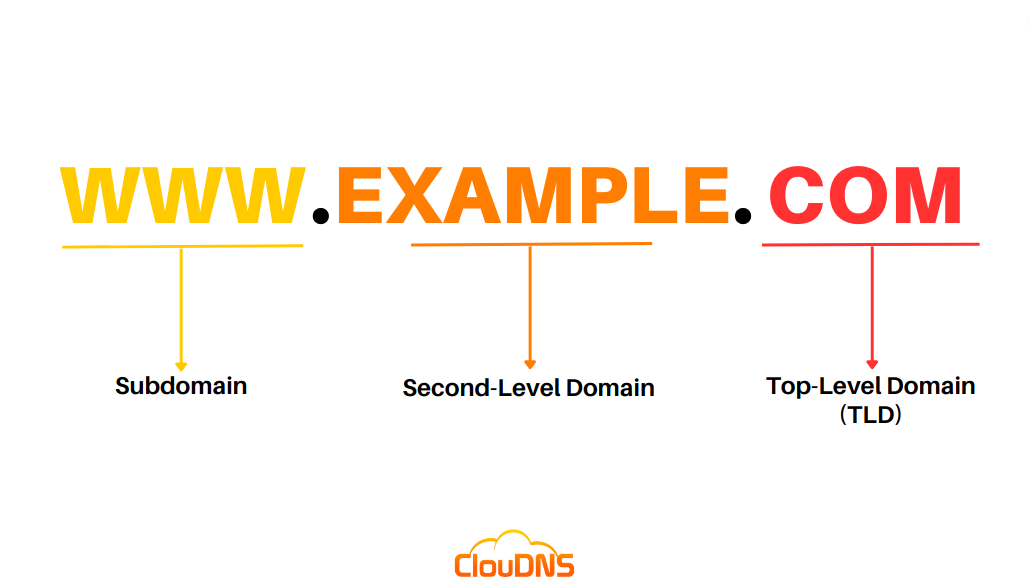
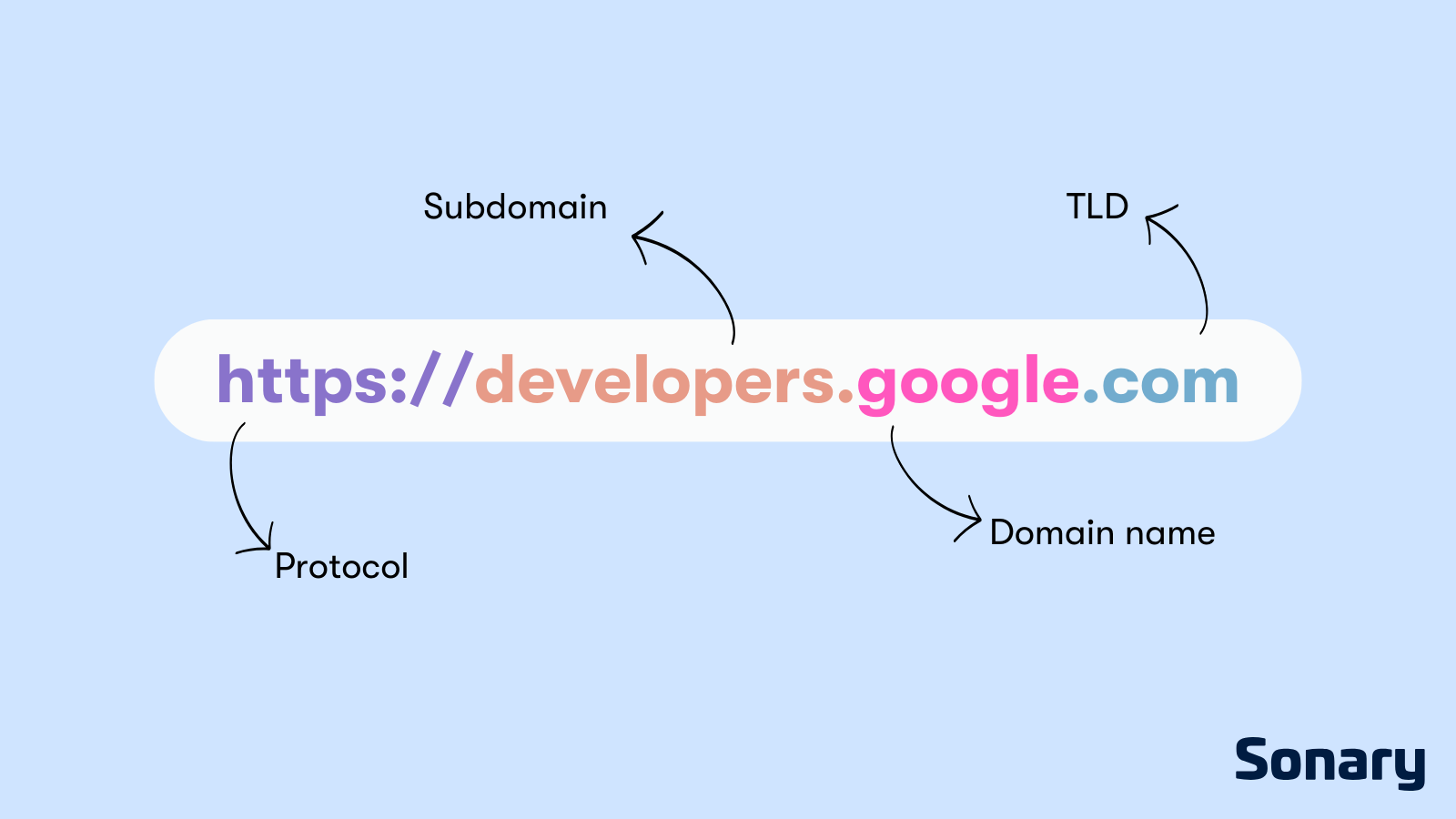
A typical domain name, such as www.example.com, is composed of several parts, each separated by a dot and read from right to left in terms of hierarchy:
- Top-Level Domain (TLD): This is the rightmost label,
.comin our example. It represents the highest level in the domain name hierarchy, directly under the root of the DNS. - Second-Level Domain (SLD): This is the label immediately to the left of the TLD,
examplein this instance. It’s usually the unique identifier chosen by the website owner. - Third-Level Domain (or Subdomain): This is the label to the left of the SLD,
wwwin our example. Subdomains can be created to organize different sections of a website (e.g.,blog.example.com,shop.example.com).
This structure is vital for the internet’s scalability and organization, allowing millions of unique addresses to coexist and be managed systematically.
The Role of DNS
The Domain Name System (DNS) acts as the internet’s phonebook, translating human-readable domain names into machine-readable IP addresses. When a user types a domain name into a browser, a complex lookup process begins:
- Root Server Query: The user’s device sends a query to a DNS resolver, which then contacts a DNS root server. These root servers know where to find the authoritative servers for all TLDs.
- TLD Server Query: The root server doesn’t know the exact IP address for
www.example.com, but it knows which server is responsible for the.comTLD. It directs the resolver to the.comTLD name server. - Authoritative Name Server Query: The
.comTLD name server then directs the resolver to the authoritative name server forexample.com. This server holds the specific IP address forwww.example.com. - IP Address Resolution: The authoritative name server provides the IP address, allowing the browser to connect to the correct web server.
TLDs are fundamental to this process, forming the initial critical lookup point that directs traffic efficiently across the internet. Without the hierarchical structure underpinned by TLDs, the DNS would be an unmanageable flat file, incapable of handling the internet’s scale and complexity.
Delving Deeper into Top-Level Domains (TLDs)
The technical definition of a TLD is deceptively simple: it is the last segment of a domain name. However, their implications for internet governance, security, and functionality are profound.
Defining a TLD
A TLD is a crucial part of the internet’s addressing hierarchy. It represents a categorization or geographical indicator that helps organize the vast number of domain names worldwide. Every domain name must end with a TLD, making it an indispensable part of a fully qualified domain name (FQDN). They are managed and delegated by various entities under the ultimate supervision of ICANN.
ICANN’s Role
The Internet Corporation for Assigned Names and Numbers (ICANN) is a non-profit organization responsible for coordinating the maintenance and procedures of several databases related to the namespaces and numerical spaces of the internet, ensuring the network’s stable and secure operation. One of its primary responsibilities is managing the DNS root zone, which lists the authoritative name servers for all TLDs.
ICANN develops and implements policies related to the DNS, including the introduction of new TLDs, the management of existing ones, and the overall allocation and administration of domain names. This centralized management prevents conflicts and ensures that domain names are unique and resolvable globally.
The Root Zone File
At the very top of the DNS hierarchy lies the root zone. This is essentially a small database that lists the authoritative name servers for all Top-Level Domains (TLDs). When a DNS resolver needs to find an IP address for a domain, it starts by querying one of the 13 root server clusters globally. These root servers don’t store individual domain names (like example.com), but they know which name servers are responsible for .com, .org, .net, and all other TLDs. This foundational file is maintained under ICANN’s purview and is critical for the initial step in any DNS lookup.
Types of Top-Level Domains
TLDs are categorized based on their purpose, geographical association, or sponsorship. These categories reflect different approaches to organizing and managing the global domain name space.
Generic TLDs (gTLDs)

Generic TLDs are perhaps the most recognizable category, initially designed to serve broad, general purposes.
- Original gTLDs: These were among the first TLDs established and formed the backbone of the early internet. Examples include:
.com(commercial): Intended for commercial entities but widely adopted by all types of organizations..org(organization): Originally for non-profit organizations..net(network): Initially for network infrastructure providers..gov(government): Exclusively for U.S. government entities..edu(education): Exclusively for accredited U.S. post-secondary educational institutions..mil(military): Exclusively for U.S. military entities..int(international): For organizations established by international treaties.
- New gTLDs: Facing saturation in the original gTLDs and a desire for more specific and descriptive domain names, ICANN began expanding the gTLD program in 2012. This led to the introduction of hundreds of new gTLDs, such as:
- Industry-specific:
.tech,.app,.blog,.shop,.photography - Geographic/Community:
.nyc,.london,.berlin - Brand-specific:
.google,.apple(for exclusive use by a particular brand) - General purpose:
.online,.xyz,.club
These new gTLDs offer more options for domain registration, allowing for highly relevant and memorable domain names, and reflecting a greater diversification of online identities and businesses.
- Industry-specific:
- Sponsored gTLDs (sTLDs): These are a special category of gTLDs that are proposed and sponsored by private organizations or communities that establish and enforce rules regarding eligibility for domain registration. Examples include:
.aero(air-transport industry).coop(cooperatives).museum(museums).jobs(employment-related organizations).travel(travel industry)
sTLDs provide a framework for creating trusted, dedicated online spaces for specific communities, ensuring that domains within these TLDs adhere to certain criteria set by their sponsors.
Country Code TLDs (ccTLDs)
Country Code Top-Level Domains are two-letter TLDs derived from the ISO 3166-1 alpha-2 country codes. Each ccTLD is generally associated with a specific country, sovereign state, or dependent territory.
- Definition: Examples include
.uk(United Kingdom),.de(Germany),.jp(Japan),.ca(Canada),.au(Australia), and.cn(China). - Usage: While primarily intended for entities operating within or targeting a specific country, some ccTLDs have gained popularity for unrelated uses due to their desirable letter combinations or perceived meaning (e.g.,
.tvfor Tuvalu, popular with media sites;.cofor Colombia, used as an alternative to.com). Management of ccTLDs is often delegated to national authorities or local internet registries.
Infrastructure TLD (.arpa)
The .arpa TLD is unique and reserved exclusively for technical infrastructure purposes, primarily for reverse DNS lookups (mapping IP addresses back to domain names). It is not available for general domain registration and represents a critical, albeit behind-the-scenes, component of internet functionality.
The Technical and Strategic Importance of TLDs
TLDs are far more than just labels; they are critical elements underpinning the internet’s stability, security, and functionality. Their design and management have profound technical implications.
DNS Resolution and Internet Stability
The hierarchical structure of the DNS, with TLDs at its upper echelons, is fundamental to the internet’s ability to scale and operate reliably. Without a well-defined TLD system, DNS queries would be unmanageable, leading to massive delays and potential system failures. TLDs act as crucial pivot points, allowing DNS resolvers to efficiently narrow down searches for IP addresses, ensuring that web pages load quickly and services remain accessible. The integrity and efficient functioning of TLD name servers are paramount for global internet stability.
Geo-targeting and Local Presence
For web services and applications, the choice of a TLD can have technical implications for geo-targeting. Search engines often use ccTLDs (like .de for Germany or .jp for Japan) as strong signals that a website is specifically relevant to users in that particular country. This helps search engines deliver more localized and relevant results, improving the user experience for geographically targeted services. While new gTLDs can also imply focus (e.g., .london), ccTLDs provide a definitive geographical anchor. From a network architecture perspective, selecting a ccTLD can sometimes align with hosting infrastructure located within that country, potentially reducing latency for local users.
Trust and Security Implications
TLDs play a subtle yet significant role in establishing trust and enhancing security. Certain TLDs, such as .gov and .edu, inherently signify official or educational institutions, lending immediate credibility. The technical management of TLDs also impacts broader internet security. The implementation of DNSSEC (Domain Name System Security Extensions) at the TLD level is critical. DNSSEC adds cryptographic signatures to DNS data, preventing cache poisoning and other DNS-based attacks that could redirect users to malicious websites. By securing the TLDs, the entire domain name system becomes more robust and resistant to tampering, providing a more secure foundation for online interactions. Network security protocols and firewalls often use TLD information as part of their rule sets for filtering and access control.
Future of TLDs
The landscape of TLDs is not static. ICANN continues to evaluate and potentially introduce new TLDs, reflecting evolving digital trends, language diversity, and specific community needs. The ongoing challenge for internet governance and technical teams is to manage this expansion while maintaining the stability, security, and interoperability of the global DNS. The rise of blockchain-based domain systems also presents a potential future technical challenge or alternative, though traditional TLDs remain the backbone of the current internet.
Choosing the Right TLD: A Technical Perspective
While branding and marketing often influence domain name choices, there are distinct technical considerations when selecting a TLD for an application, website, or service.
Availability and Practicality
From a purely technical standpoint, the most immediate challenge is often simply finding an available domain name. The scarcity of desirable second-level domains under popular gTLDs like .com often necessitates exploring new gTLDs or ccTLDs. For developers and system administrators, a unique and available TLD might be the only practical path to securing a desired domain name. This broadens the options for developers to build distinct online identities without compromising on the core domain name idea.
Search Engine Indexing
While the specific TLD (e.g., .com vs. .info) generally does not confer a direct search engine ranking advantage, the strategic use of ccTLDs is a technical consideration for multi-national deployments. For a service explicitly targeting users in a particular country, a corresponding ccTLD can signal this geographical intent directly to search engine algorithms. This can aid in achieving better visibility in localized search results, which is a key technical optimization for global services.
User Experience and Memorability
From a technical usability perspective, a clear and memorable TLD contributes to better user experience. While seemingly a marketing point, for developers building user-facing applications, ease of recall and typing directly impacts user access and reduces potential for errors in URL entry. A TLD that intuitively relates to the content or purpose of the site (e.g., .app for an application, .tech for a technology blog) can make the domain more user-friendly and reduce cognitive load for navigation, ultimately improving direct traffic and user retention.