
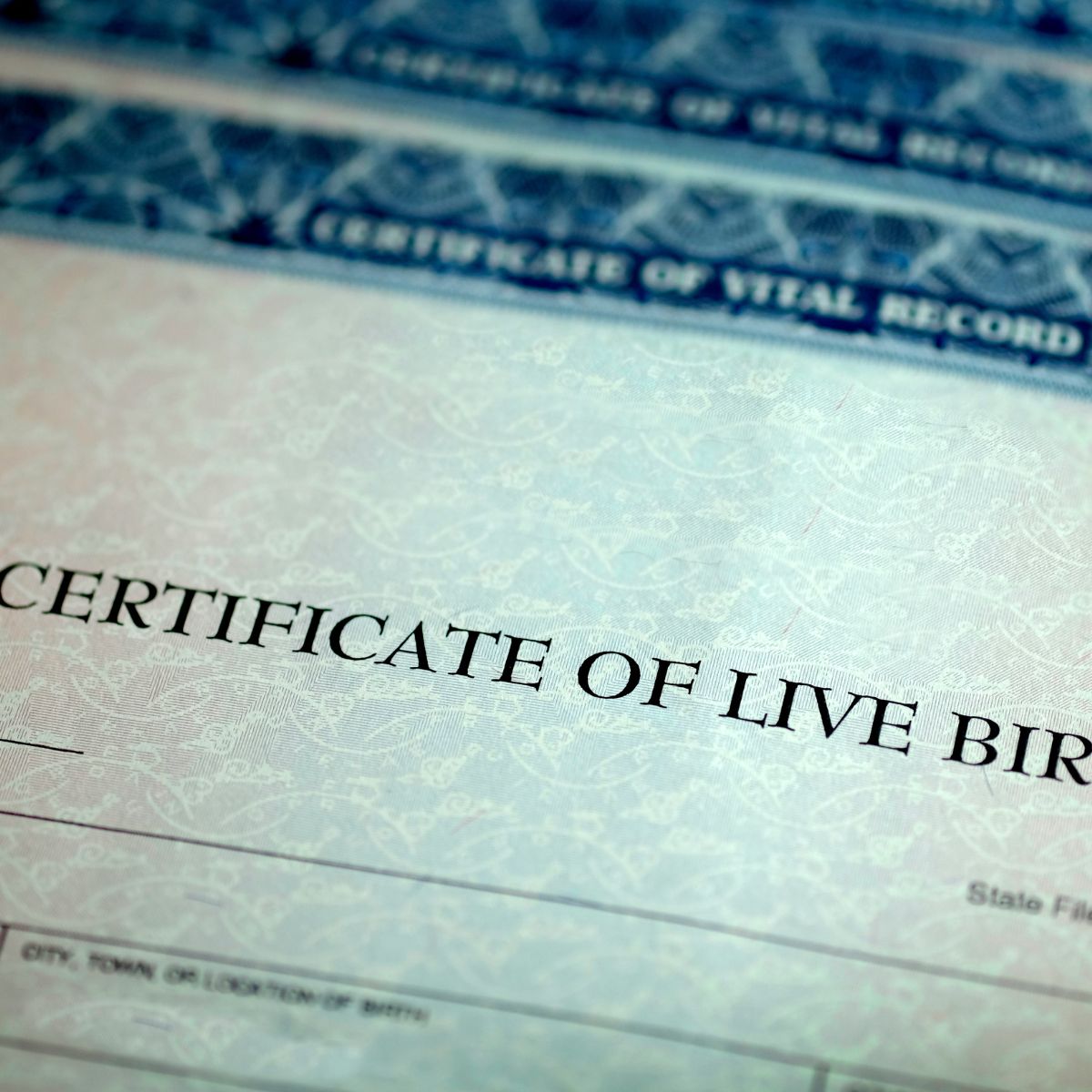
Losing a birth certificate can feel like losing a piece of your identity, and in many ways, it is. More critically, the absence of this foundational document carries significant financial ramifications, potentially disrupting everything from your ability to secure employment to accessing essential financial services and government benefits. Understanding these implications and knowing the steps to mitigate them is crucial for maintaining your financial stability.
The Immediate Financial Ramifications
The moment you realize your birth certificate is missing, a series of potential financial roadblocks appear. This seemingly simple piece of paper is a linchpin for proving your identity, citizenship, and age – all critical for engaging with the financial ecosystem.

Hindrances to Opening Bank Accounts and Securing Loans
Financial institutions operate under strict “Know Your Customer” (KYC) regulations, primarily designed to prevent financial crime and identity theft. A birth certificate, often paired with a driver’s license or state ID, serves as a primary document to establish your identity and U.S. citizenship. Without it, opening a new bank account, applying for a credit card, or securing any form of loan (mortgage, auto, personal) becomes significantly more challenging, if not impossible. Banks may accept alternative combinations of secondary identification, but the absence of a birth certificate often prolongs the verification process or necessitates additional, time-consuming steps. This can delay access to crucial financial tools, from direct deposit capabilities to emergency credit lines, potentially leaving you financially vulnerable.
Impact on Employment and Income Generation
Your ability to earn income can be directly hampered by a missing birth certificate. When starting a new job, employers are legally required to verify your eligibility to work in the United States through Form I-9. While a birth certificate isn’t always listed as a standalone “List A” document (which proves both identity and work authorization), it is a key “List C” document that establishes work authorization when presented with a “List B” identity document (like a driver’s license). Without it, providing the necessary documentation can be difficult, potentially delaying your start date or even jeopardizing job offers. Furthermore, professions requiring specific licenses or certifications often demand proof of citizenship, for which a birth certificate is the easiest and most universally accepted document. Any delay in employment translates directly into lost income and potential financial strain.
Access to Government Benefits and Services
From Social Security benefits to veterans’ services, public assistance, and even applying for a passport – a birth certificate is frequently a prerequisite for accessing various government-issued benefits and services. Applying for a Social Security card, which is essential for employment and tax purposes, typically requires a birth certificate. Delay in obtaining a Social Security card means delays in getting a job or receiving tax refunds. Similarly, applying for a passport, which is vital for international travel for work or leisure, lists a birth certificate as primary evidence of U.S. citizenship. Without this document, accessing these critical services can become a prolonged bureaucratic nightmare, potentially deferring necessary financial aid or limiting your opportunities.
The Cost of Replacement and Associated Fees
Replacing a lost birth certificate isn’t free. Understanding the various costs involved is important for budgeting and preparing for the process. These expenses extend beyond a simple processing fee and can accumulate depending on urgency and specific circumstances.
State and Local Vital Records Office Fees
The primary cost associated with replacing a birth certificate is the fee charged by the vital records office in the state or county where you were born. These fees vary significantly by jurisdiction, typically ranging from $10 to $30 per copy. While seemingly small, these fees can add up if you require multiple certified copies for various purposes (e.g., one for a passport application, one for a new driver’s license, and one for personal records). It’s crucial to check the exact fee structure of the specific vital records office, as some may also charge a small administrative fee.
Expedited Processing Costs
If you’re facing an urgent need for your birth certificate – perhaps for a last-minute job offer, an impending travel deadline, or a time-sensitive financial application – many vital records offices offer expedited processing services. These services come at an additional cost, which can sometimes be equal to or even exceed the standard processing fee. Expedited requests might shave days or weeks off the standard processing time, but it’s a financial trade-off for speed. Considering the potential financial losses from delays (e.g., lost wages, missed investment opportunities), paying for expedited service might be a prudent financial decision in certain circumstances.
Ancillary Costs (Notary, Postage, Travel)
Beyond the direct fees, several ancillary costs can emerge. Many vital records offices require that your application form be notarized, adding a small fee (typically $5-$15 per notarization). If you’re applying by mail, postage costs for sending your application and receiving the new certificate will apply, particularly if you opt for secure, trackable shipping. Furthermore, if you choose or are required to apply in person, you’ll need to account for travel expenses, including fuel, public transport, or parking fees. For those born in a different state or even country, these travel costs can be substantial, making mail-in or online applications (if available and secure) more financially viable, despite their potentially longer processing times.

Protecting Your Financial Future: Steps to Take
Losing a birth certificate is a setback, but it doesn’t have to be a permanent roadblock to your financial well-being. Proactive steps can help you navigate the replacement process efficiently and secure your financial future.
Gathering Supporting Documentation
Before you can apply for a new birth certificate, you’ll need to prove who you are. This often involves presenting other forms of identification. Start by gathering as many supporting documents as possible:
- Photo ID: A valid driver’s license, state-issued identification card, or military ID.
- Proof of address: Utility bills, lease agreements, or bank statements with your current address.
- Social Security Card: While not a primary ID for a birth certificate, it’s crucial for various other financial purposes and helps establish your identity.
- Parental Information: If you’re applying for your child’s birth certificate, or if your own application requires parental details, have their full names, birthdates, and birthplaces ready.
- Prior Applications/Records: Any old school records, hospital records from your birth, or even prior copies of your birth certificate (even if expired or unofficial) can help.
Having these documents readily available will streamline the application process and reduce potential delays.
The Application Process for a New Certificate
The process for obtaining a new birth certificate typically involves contacting the vital records office in the state or county where you were born.
- Locate the Correct Office: Use official government websites (usually state health department or vital records websites) to find the specific office responsible for birth certificates from your birth location. Beware of third-party services that charge exorbitant fees.
- Download the Application Form: Most offices provide downloadable application forms online. Fill it out accurately and completely.
- Gather Required Documents: Refer to the previous section. The application will specify which identification and supporting documents are needed. These often need to be photocopies, but some offices may require original documents or certified copies of other IDs.
- Payment: Determine the exact fees and acceptable payment methods (money order, credit card, personal check).
- Submission: Submit your application by mail, in person, or sometimes online. Follow the instructions carefully for notarization or specific mailing requirements. Keep copies of everything you submit.
Being meticulous in this process will prevent rejection of your application, saving you time and money.
Alternative Forms of ID and Their Financial Uses
While awaiting your new birth certificate, you might need to rely on alternative forms of identification for certain financial transactions. A valid U.S. passport (if you have one), a U.S. passport card, or a permanent resident card (Green Card) are all strong primary identity documents that can be used for most financial purposes. For domestic needs, a state-issued driver’s license or non-driver ID card, combined with your Social Security card, can suffice for many transactions, including opening bank accounts (though some banks may require additional verification or documentation). Keep these documents secure and carry only what is necessary to minimize further loss or theft risks.
Long-Term Financial Planning and Identity Security
A lost birth certificate serves as a potent reminder of the importance of document security and robust financial planning. Beyond the immediate replacement, consider how you can prevent future issues and strengthen your overall financial identity.
Digitalizing Important Documents (Securely)
In an increasingly digital world, creating secure digital copies of your birth certificate and other vital financial documents (like passports, social security cards, marriage certificates, and property deeds) is a prudent long-term strategy. Scan these documents and store them in encrypted cloud storage services, on an encrypted external hard drive, or within a secure digital vault application. Ensure these copies are password-protected and accessible only to you. While a digital copy is not a legal substitute for a certified physical birth certificate, it can be invaluable for reference, as a backup, or to quickly provide information needed for replacement applications, saving significant time and reducing stress during future crises.
The Role of a Birth Certificate in Major Financial Life Events
A birth certificate isn’t just for opening a bank account; its importance resurfaces during major financial life events. For instance, estate planning often requires proof of identity and familial relationships, which a birth certificate can help establish. Inheritances, beneficiary designations, and the execution of wills can all be smoother when primary identification documents are readily available. Furthermore, securing life insurance, planning for retirement withdrawals, or applying for Medicare often involves identity verification where a birth certificate can serve as a foundational document. Keeping this document secure and knowing its location is a small effort with significant long-term financial benefits.
Safeguarding Against Identity Theft Without Your Primary Document
While losing a birth certificate isn’t a direct cause of identity theft in the same way a stolen Social Security card might be, its absence can complicate your ability to prove your identity if you do become a victim. If your wallet or purse containing other IDs was lost along with your birth certificate, the risk of identity theft increases significantly. Regularly monitor your credit reports for suspicious activity, place fraud alerts on your credit files, and review bank and credit card statements diligently. Having a robust financial identity protection plan in place – even without your physical birth certificate – is critical. This includes strong passwords, two-factor authentication for financial accounts, and being vigilant about phishing attempts. The birth certificate is a building block of your identity; protecting it, and having a plan for when it’s absent, directly contributes to your overall financial security.
aViewFromTheCave is a participant in the Amazon Services LLC Associates Program, an affiliate advertising program designed to provide a means for sites to earn advertising fees by advertising and linking to Amazon.com. Amazon, the Amazon logo, AmazonSupply, and the AmazonSupply logo are trademarks of Amazon.com, Inc. or its affiliates. As an Amazon Associate we earn affiliate commissions from qualifying purchases.