
Navigating the American tax system is often cited as one of the most stressful annual financial obligations for the average household. Beyond the complexity of the tax code itself, the “tax on filing”—the fees charged by commercial software providers to simply submit your data to the government—can range from $60 to over $200 depending on the complexity of your return. For many, these fees represent a significant chunk of a hard-earned refund.
However, the landscape of personal finance has shifted significantly in recent years. Today, there are more robust, secure, and truly free options for tax preparation than ever before. Whether you are a high-earner looking to minimize overhead or a student filing for the first time, understanding the ecosystem of free financial tools is essential for maintaining a healthy bottom line. This guide explores the most effective ways to file your taxes for free, ensuring you keep more of your money where it belongs: in your pocket.
1. The IRS Free File Program: A Public-Private Partnership
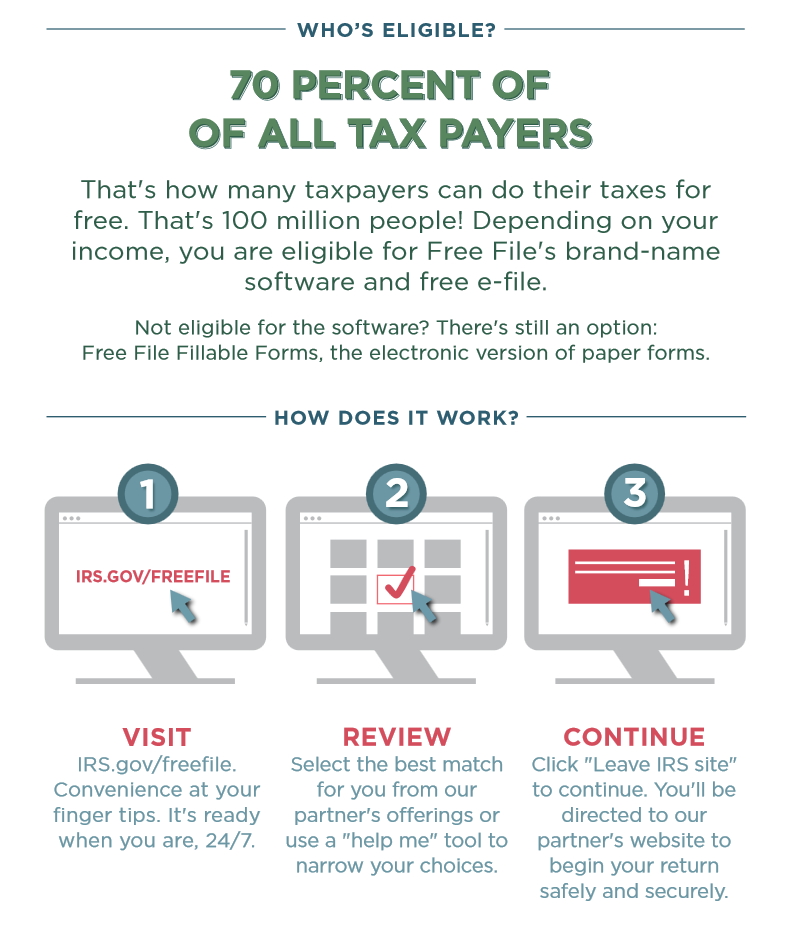
For over two decades, the IRS Free File program has served as the cornerstone of no-cost tax preparation in the United States. This program is a public-private partnership between the Internal Revenue Service and the Free File Alliance, a group of industry-leading tax software companies. The primary goal is to provide high-quality tax preparation software to low-to-moderate-income taxpayers at no cost.
Income Thresholds and Eligibility
The most critical factor in using IRS Free File is your Adjusted Gross Income (AGI). For the 2023 and 2024 tax years, the threshold is typically set around $79,000. If your AGI is at or below this limit, you are eligible to use full-featured software from providers like TaxAct, 1040Now, or Free1040TaxReturn. Each provider within the Free File Alliance may set slightly different eligibility requirements—some may limit their free offer to certain states or age groups—but the IRS website provides a “Lookup Tool” to help you find the best match for your specific financial profile.
The Advantage of State Filing
One of the historical “catches” of free tax software was that while federal filing was free, state filing came with a fee. The IRS Free File program mitigates this by requiring many of its partners to include free state returns for certain income levels. When selecting a provider through the IRS portal, it is vital to check if your specific state return is included, as this can save an additional $40 to $50 in professional fees.
IRS Direct File: The New Frontier
In 2024, the IRS launched a pilot program known as “Direct File.” Unlike the Free File program which uses third-party software, Direct File is a government-built tool that allows taxpayers to file directly with the IRS for free. While currently limited to specific states and taxpayers with relatively simple tax situations (such as W-2 income, standard deductions, and specific credits like the EITC), it represents a major shift in how the government facilitates financial compliance.
2. Top-Tier Private Sector Financial Tools
If your income exceeds the IRS Free File limit, or if you prefer a more modern user interface, several private-sector tools have disrupted the market by offering “truly free” services. These platforms leverage tax filing as a “loss leader” to bring users into their broader financial ecosystems.
Cash App Taxes (Formerly Credit Karma Tax)
Cash App Taxes has become a favorite in the personal finance community because it offers something rare: 100% free federal and state filing regardless of your income level or the complexity of your return. Whether you have capital gains from stock trading, rental income, or freelancer 1099s, Cash App Taxes does not upcharge for “premium” forms. The trade-off is that you must use the Cash App mobile ecosystem, which is a strategic move by the parent company, Block, Inc., to integrate your tax refund directly into your mobile wallet.
FreeTaxUSA: The Transparent Alternative
While its name sounds like a 90s infomercial, FreeTaxUSA is widely considered one of the most reliable and transparent financial tools available. They offer free federal filing for everyone, regardless of complexity. Unlike the “Big Two” (TurboTax and H&R Block), they do not hide forms like HSA contributions or student loan interest behind a paywall. While they do charge a small, flat fee for state returns (usually under $20), their “Deluxe” support options are significantly cheaper than the industry average, making them a top choice for cost-conscious taxpayers with complex investments.
The “Free Edition” Trap of Major Brands
It is important to distinguish between “truly free” tools and the “Free Editions” marketed by major corporations. Many commercial providers offer a free version that only applies to “simple returns” (typically defined as W-2 income and the standard deduction only). If you have a mortgage, a child, or a retirement account, these programs often force an “upsell” mid-way through the process. For those focused on financial optimization, it is usually better to start with a tool designed to be free from the outset.

3. Specialized Financial Assistance for Vulnerable Populations
For many Americans, the barrier to filing isn’t just the cost of software, but the complexity of the law. For these individuals, the IRS funds community-based programs that provide free, face-to-face financial assistance from certified volunteers.
VITA: Volunteer Income Tax Assistance
The VITA program offers free tax help to people who generally make $64,000 or less, persons with disabilities, and limited English-speaking taxpayers. VITA sites are often located at libraries, community centers, and schools. The volunteers are IRS-certified and can help ensure that low-income earners are claiming important financial boosters like the Earned Income Tax Credit (EITC) and the Child Tax Credit (CTC), which are often overlooked by those filing on their own.
TCE: Tax Counseling for the Elderly
The Tax Counseling for the Elderly (TCE) program offers free tax help for all taxpayers, particularly those who are 60 years of age and older. TCE specializes in questions about pensions and retirement-related issues unique to seniors. This program is often managed through the AARP Foundation’s Tax-Aide program. For retirees on a fixed income, these programs are essential for preserving their wealth and ensuring they do not overpay the government.
Military OneSource: MilTax
Active-duty service members, guard and reserve, and their families have access to MilTax. This is a suite of free tax services provided by the Department of Defense. It includes easy-to-use software and support from consultants who are trained in the nuances of military pay, such as combat zone exclusions and multi-state filing requirements due to frequent relocations.
4. Strategic Financial Benefits of Filing for Free
Filing for free is more than just a way to save $100 today; it is a strategic component of long-term personal wealth management. Every dollar saved in administrative fees is a dollar that can be redirected toward high-interest savings, debt repayment, or retirement contributions.
The Opportunity Cost of Filing Fees
If a taxpayer spends $150 every year on tax preparation software for 40 years, the nominal cost is $6,000. However, if that same $150 were invested annually in a low-cost S&P 500 index fund with an average 7% return, it would grow to nearly $30,000 over a working lifetime. By utilizing free financial tools, you are essentially making a micro-investment in your future self.
Ensuring Refund Accuracy and Security
A common misconception is that “free” means “less accurate.” In reality, all IRS-authorized e-file providers must adhere to the same rigorous calculation standards. Using a free tool does not increase your audit risk. In fact, many free tools include audit-check features that flag inconsistent data. From a digital security perspective, choosing reputable free tools like those found on the IRS website ensures that your most sensitive financial data—your Social Security Number and banking information—is protected by bank-level encryption.
Integration with Personal Finance Apps
Modern free tax tools often allow you to import data directly from your employer, your bank, or your brokerage. This integration reduces manual entry errors, which are the leading cause of delayed refunds. By utilizing these digital financial tools, you streamline your record-keeping and gain a clearer picture of your annual cash flow, helping you plan better for the fiscal year ahead.

Summary
Filing your taxes for free is no longer a perk reserved for those with the simplest financial lives. Through the IRS Free File program, innovative platforms like Cash App Taxes and FreeTaxUSA, and community-based volunteer efforts like VITA, the vast majority of Americans can fulfill their tax obligations without spending a dime on software fees.
By strategically selecting the right financial tool for your income level and filing complexity, you can avoid the “hidden taxes” of the tax-prep industry. This proactive approach to personal finance ensures that your tax refund remains yours to save, invest, or spend as you see fit, rather than being depleted by unnecessary administrative costs. As the digital landscape continues to evolve, the barrier between the taxpayer and the IRS is shrinking, making financial self-sufficiency more accessible than ever before.
aViewFromTheCave is a participant in the Amazon Services LLC Associates Program, an affiliate advertising program designed to provide a means for sites to earn advertising fees by advertising and linking to Amazon.com. Amazon, the Amazon logo, AmazonSupply, and the AmazonSupply logo are trademarks of Amazon.com, Inc. or its affiliates. As an Amazon Associate we earn affiliate commissions from qualifying purchases.