
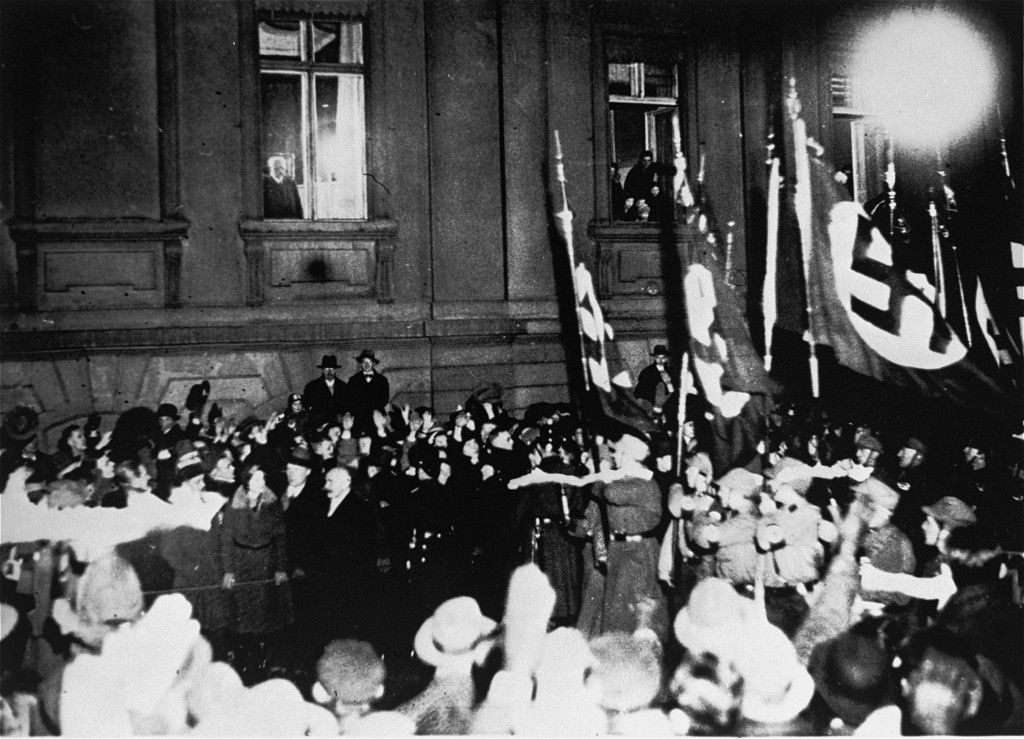
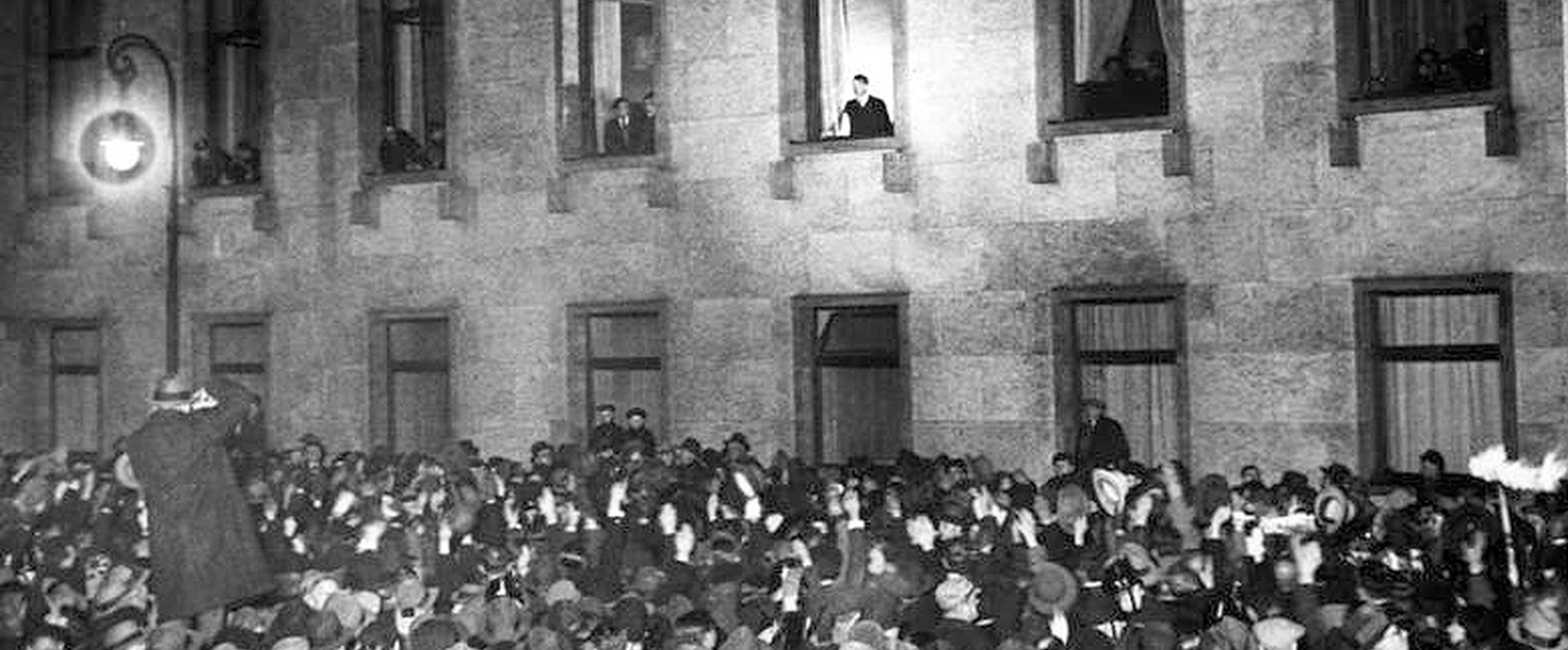
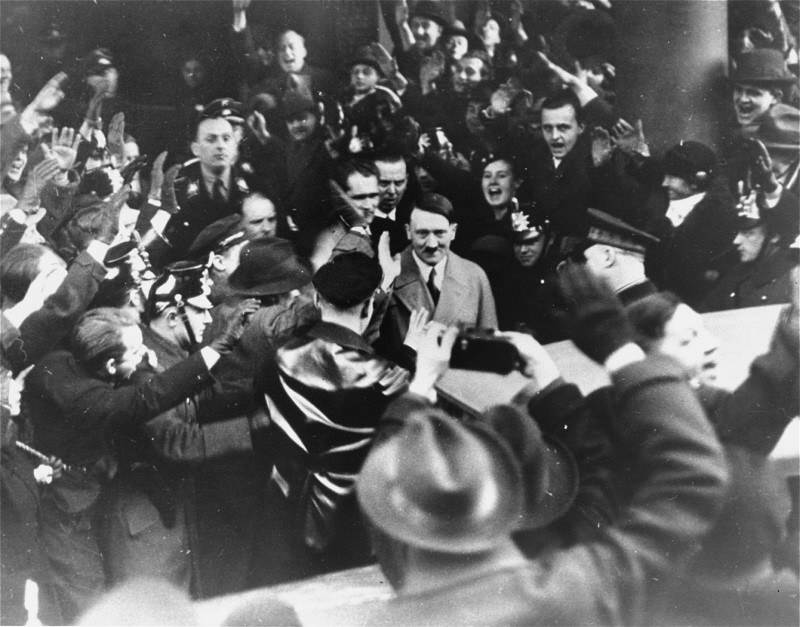
January 30th, 1933, stands as a pivotal date in 20th-century history, ushering in a new era with profound and lasting financial and economic repercussions that reverberated globally. While often viewed through a political lens, the appointment of Adolf Hitler as Chancellor of Germany on this day marked the beginning of a radical transformation of the German economy, ultimately reshaping international finance, trade, and the very concept of economic sovereignty. To understand the gravity of this moment, one must first grasp the precarious global financial landscape that preceded it and the subsequent economic policies that fundamentally altered the trajectory of nations.
A World on the Brink: The Economic Precursors
The early 1930s were characterized by an unprecedented global economic crisis: the Great Depression. Originating in the United States with the 1929 stock market crash, its tentacles quickly spread across continents, fueled by interconnected financial systems, protectionist trade policies, and a fragile international monetary order. Germany, in particular, was acutely vulnerable, still grappling with the financial aftershocks of World War I and the punitive reparations imposed by the Treaty of Versailles.
The Great Depression’s Global Contagion
The withdrawal of American loans, which had been crucial for Germany’s post-WWI economic recovery, triggered a severe banking crisis in 1931. German banks, heavily reliant on short-term foreign capital for long-term investments, faced massive withdrawals. This led to bank runs, insolvencies, and a freeze in credit markets, paralyzing industrial production and trade. As factories idled, unemployment soared, creating a vicious cycle of decreased demand and further economic contraction. This financial contagion was not isolated; it mirrored crises in other European nations and the U.S., highlighting the deep interdependence of global capital markets. The collapse of international trade, exacerbated by rising tariffs and competitive devaluations, further choked off avenues for economic recovery, trapping nations in a downward spiral of declining output and deflation.
Hyperinflation’s Scars and Germany’s Debt Burden
While the Great Depression presented a new set of challenges, Germany carried the lingering trauma of the 1923 hyperinflation, an event that had decimated savings, shattered confidence in the currency, and eroded the middle class’s wealth. This historical precedent made the German populace particularly susceptible to promises of economic stability and national rejuvenation. Furthermore, the persistent burden of reparations payments, despite multiple rescheduling attempts (like the Dawes Plan and Young Plan), continued to drain national resources and impede fiscal flexibility. The perception of an oppressive external financial burden fueled widespread resentment and contributed to the instability that extremist political movements capitalized upon. The combination of past economic trauma and present economic despair created fertile ground for radical solutions, regardless of their long-term financial viability.
Investment Retreat and Capital Flight
In the years leading up to 1933, Germany experienced significant capital flight. As political instability mounted and the global economic outlook darkened, both domestic and international investors began to withdraw their funds, seeking safer havens. This exodus of capital further depleted Germany’s foreign exchange reserves, making it difficult to finance imports and service external debts. The lack of investment, both foreign and domestic, stifled innovation, modernization, and job creation, pushing the economy deeper into recession. Companies struggled to access credit, leading to bankruptcies and further job losses. This acute shortage of capital was a critical factor enabling the subsequent regime to implement stringent capital controls and pursue an autarkic economic policy, effectively walling off the German financial system from global market forces.
The New Economic Order: Centralized Control and Autarky
With the appointment of Adolf Hitler, Germany embarked on a radical shift from a market-oriented economy towards a highly centralized, state-controlled system. This transformation was meticulously engineered to serve specific political and ideological objectives, primarily rearmament and national self-sufficiency, often at the expense of traditional financial prudence and free-market principles.
The Appointment of Hjalmar Schacht and Economic Policy Shifts
A key architect of this new economic order was Hjalmar Schacht, president of the Reichsbank and later Minister of Economics. Schacht, a respected financier, initially brought a veneer of financial legitimacy to the regime’s economic plans. His primary challenge was to finance the burgeoning rearmament program without triggering another hyperinflationary crisis or depleting foreign exchange reserves. He implemented a complex system of state-controlled trade, price and wage controls, and strict capital allocation. Rather than relying on open market borrowing, the state began directing investment into specific industries deemed vital for rearmament. This represented a fundamental departure from liberal economic thought, where market forces typically dictated resource allocation and investment decisions. The regime’s economic policy became less about fostering free markets and more about mobilizing all national resources for strategic objectives.
Public Works and Employment Creation as Fiscal Stimulus
One of the initial successes, and a cornerstone of the regime’s popular appeal, was its rapid reduction of unemployment through ambitious public works programs. The construction of autobahns, public buildings, and other infrastructure projects absorbed millions of unemployed workers. While these projects provided immediate economic stimulus and improved infrastructure, their primary financial mechanism involved significant state spending and, crucially, a system of government-created credit known as “Mefo bills” (Metallurgische Forschungsgesellschaft m.b.H.). These bills were essentially promissory notes guaranteed by the state, allowing the government to finance projects without immediately showing the spending on official budgets. This creative financing mechanism obscured the true extent of deficit spending and allowed for massive government investment without directly tapping conventional capital markets or increasing the visible national debt initially, thereby side-stepping inflationary pressures and maintaining investor confidence, albeit temporarily.
Trade Policies: Bilateralism and Clearing Agreements
The drive for autarky—economic self-sufficiency—was a defining feature of the new economic policy. Facing chronic shortages of foreign currency and a desire to reduce dependence on international markets, the regime abandoned multilateral free trade in favor of bilateral clearing agreements. Under this system, Germany would negotiate directly with individual countries to exchange goods and services without the need for convertible currency. Germany often paid for imports from Balkan and Latin American countries with “blocked marks” or special account balances, which could only be used to purchase German goods. This system effectively tied the economies of these smaller nations to Germany, creating a captive market and ensuring a supply of raw materials for its war industries, while preserving Germany’s scarce foreign exchange for critical strategic imports. While financially restrictive and distorting, these agreements allowed Germany to maintain trade flows despite international financial isolation and resource constraints.
Monetary Policy and Financial Instruments Under the Third Reich
The financial architecture of the Third Reich was characterized by innovation, deception, and aggressive state intervention, fundamentally transforming the role of the central bank and the nature of financial instruments. The primary goal was to circumvent conventional financial limitations and fund the vast rearmament program, regardless of long-term economic stability.
The Reichsbank’s Role and the Mefo Bills
Under Schacht’s leadership, the Reichsbank, Germany’s central bank, transitioned from an independent monetary authority to an instrument of state policy. Its traditional role in maintaining currency stability and managing interest rates was subsumed by the imperative to finance government spending. The most ingenious, and arguably deceptive, financial innovation was the Mefo bill. These bills, issued by a dummy corporation (Metallurgische Forschungsgesellschaft m.b.H.), were essentially government-backed IOUs. They matured in five years and carried interest, but critically, they were accepted by banks for rediscount at the Reichsbank, making them highly liquid. This system allowed the government to place orders with industry, which would then be paid with Mefo bills. Industries could then convert these bills into cash at the Reichsbank, effectively printing money without explicitly doing so, and thus financing rearmament off the official budget. This allowed for substantial deficit spending without immediately triggering inflation or debt visibility, a crucial short-term financial feat.
Capital Controls and the Erosion of Free Markets
To further control the flow of capital and preserve foreign exchange for strategic imports, the regime implemented stringent capital controls. Restrictions were placed on currency exchange, foreign investment, and the movement of funds across borders. German citizens were largely prevented from holding foreign assets or transferring capital abroad. These controls not only prevented capital flight but also enabled the state to direct all available financial resources towards its strategic objectives. The free movement of capital, a cornerstone of liberal economic theory, was effectively abolished. Simultaneously, the German stock market, while not completely closed, lost much of its autonomy. Stock prices and company valuations became increasingly influenced by state policy and industrial directives rather than purely market forces. Foreign exchange controls, in particular, made it extremely difficult for foreign investors to extract profits or capital from Germany, creating a de facto confiscation of assets for some and further isolating the German financial system.
Financing Rearmament: A Debt-Driven Recovery
The initial economic recovery and employment boom were largely debt-driven, financed primarily through the Mefo bill system and later through more direct public borrowing. While this strategy successfully stimulated production and reduced unemployment, it built up a massive hidden debt that would eventually need to be addressed. The reliance on this opaque financing mechanism meant that the true extent of government spending and the long-term financial liabilities were masked. The plan was to eventually repay these debts through the spoils of war and the exploitation of conquered territories. This financial strategy, therefore, was intrinsically linked to an aggressive foreign policy, turning the entire economy into a preparation for conflict. It demonstrated how a national economy could be fully mobilized and directed, albeit unsustainably, towards a single strategic objective through manipulation of monetary policy and financial instruments.
Long-Term Financial Legacies and Investment Lessons
The economic and financial policies initiated on January 30th, 1933, had far-reaching consequences, leaving indelible marks on global finance and offering critical lessons for modern economies, investors, and policymakers about the dangers of unchecked state power and the intricate relationship between politics and finance.
The Dangers of Unchecked State Spending and War Economy
The German economic model of the 1930s serves as a stark warning about the perils of unsustainable state-directed spending, especially when geared towards a war economy. While initial public works and rearmament boosted employment and production, the underlying financing through quasi-money creation (Mefo bills) and massive government debt accumulation was fundamentally inflationary and unstable. Without the eventual expansion through conquest and exploitation, the system would have collapsed under its own weight. For investors, this period underscores the risk of economies where political objectives supersede fiscal discipline, leading to eventual currency devaluation, asset confiscation, or economic collapse. It highlights the importance of transparent government accounting and independent central banks to prevent such fiscally irresponsible policies from taking root.
Capital Protection and International Sanctions
The imposition of stringent capital controls, the effective nationalization of certain industries, and the manipulation of trade through bilateral clearing agreements demonstrate the extreme measures a state can take to control its economy. For international investors, this period is a powerful reminder of sovereign risk and the importance of diversification across stable political and legal jurisdictions. The experience also illustrates the limitations and complexities of international financial sanctions. While many nations attempted to isolate Germany economically, the bilateral trade agreements and creative financial instruments allowed the regime to maintain critical supply chains for a considerable period, showcasing the resilience and adaptability of determined national economies under duress, even when defying conventional financial wisdom.
Understanding Systemic Risk in Political Instability
January 30th, 1933, epitomizes how profound political shifts can generate systemic financial risk. The rise of an authoritarian regime, driven by extreme ideologies, fundamentally alters the rules of economic engagement, leading to a breakdown of established financial norms and institutions. For anyone involved in finance, this historical moment emphasizes the need to closely monitor political developments, particularly in times of economic distress, as they can rapidly transform investment climates, currency values, and property rights. The German experience teaches that economic recovery, when pursued through unsustainable and aggressive means, can create an illusion of stability while masking deeper, more dangerous financial and geopolitical imbalances that ultimately lead to catastrophic outcomes. The interrelationship between political stability, economic policy, and global financial health remains a crucial lesson from this pivotal date.
aViewFromTheCave is a participant in the Amazon Services LLC Associates Program, an affiliate advertising program designed to provide a means for sites to earn advertising fees by advertising and linking to Amazon.com. Amazon, the Amazon logo, AmazonSupply, and the AmazonSupply logo are trademarks of Amazon.com, Inc. or its affiliates. As an Amazon Associate we earn affiliate commissions from qualifying purchases.