
The Core Concept of Ratification in Finance and Business
Ratification, at its essence, is the formal act of giving consent or approval to a decision, action, or agreement, thereby making it legally valid and binding. In the intricate world of finance and business, this term carries significant weight, transforming mere proposals or preliminary agreements into fully actionable and enforceable commitments. It is the final, authoritative stamp that validates a process, ensuring all parties are aligned and legally bound by the terms discussed or the decisions made. Without ratification, many agreements remain provisional, lacking the legal force required to compel compliance or facilitate secure transactions.
Formalizing Agreements and Decisions
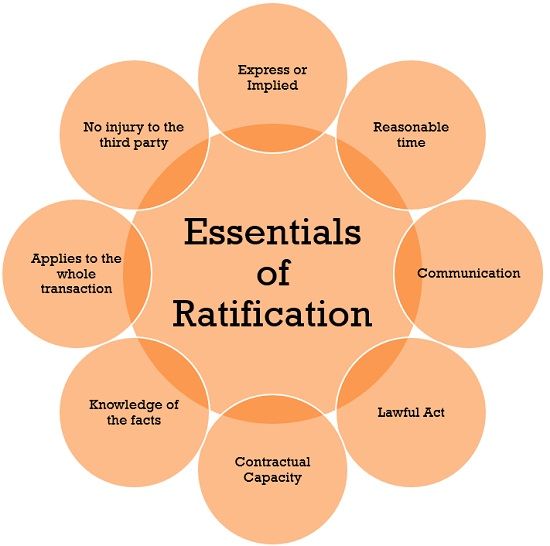
The primary function of ratification is to formalize and legitimize. It distinguishes a preliminary understanding or a tentative agreement from a definitive, enforceable one. For instance, a board of directors might discuss a potential acquisition, but until that decision is formally ratified, often by a shareholder vote or a subsequent board resolution, it remains an intent rather than a finalized corporate action. This formal approval process is critical for establishing clear legal obligations and rights for all involved parties. It signifies that the relevant authority – be it shareholders, a board, or an individual – has reviewed, understood, and officially accepted the terms, implications, and responsibilities associated with the decision or agreement. This formalization is not merely a bureaucratic step; it is a foundational element in contract law and corporate governance, providing the bedrock upon which trust and enforceability are built in the financial realm.
Legal vs. Practical Implications
Beyond its strict legal enforceability, ratification carries profound practical implications. Legally, a ratified agreement or decision is enforceable in a court of law, meaning parties can seek remedies if obligations are not met. This legal weight provides security and predictability, crucial for long-term investments and complex financial undertakings. Practically, the act of ratification fosters a sense of commitment and collective ownership among stakeholders. It reduces ambiguity by explicitly stating the approved terms and limits, thereby minimizing the potential for future disputes and misunderstandings. In a business context, a ratified decision signals internal cohesion and external credibility. For investors, knowing that major corporate actions are subject to and have undergone a formal ratification process provides assurance regarding the stability and integrity of the company’s governance. It underscores transparency and accountability, vital ingredients for maintaining investor confidence and market stability.
Ratification in Corporate Governance and Business Operations
In the sphere of corporate governance and the day-to-day operations of businesses, ratification serves as a crucial mechanism for ensuring accountability, maintaining order, and legitimizing significant actions. It acts as a gatekeeper, requiring explicit approval from designated authorities before certain decisions or contracts can take full effect. This process is indispensable for protecting stakeholder interests and upholding the integrity of the corporate structure.
Shareholder and Board Resolutions
One of the most common applications of ratification occurs within corporate governance, specifically concerning shareholder and board resolutions. Shareholders, as the ultimate owners of a company, often have the right to ratify key decisions made by the board of directors. This can include approving executive compensation packages, endorsing major strategic shifts, authorizing significant capital expenditures, or, most critically, greenlighting mergers, acquisitions, or divestitures. For example, a board might negotiate the terms of a merger, but the deal typically cannot close without the ratification of shareholders from both the acquiring and target companies, often requiring a supermajority vote. Similarly, boards of directors themselves ratify various actions, such as the appointment of senior executives, the approval of annual financial statements, or the finalization of substantial contracts that exceed a certain financial threshold. Proxy voting plays a significant role here, allowing shareholders to cast their votes on ratification proposals without physical attendance at annual general meetings (AGMs) or extraordinary general meetings (EGMs), ensuring broader participation in these critical validation processes.
Contractual Agreements
Ratification is also a fundamental aspect of establishing valid contractual agreements within a business. Any significant agreement—be it an employment contract for a senior executive, a vendor agreement for critical supplies, or a loan agreement with a financial institution—requires formal ratification by the authorized representatives of the company. For startups and small and medium-sized enterprises (SMEs), properly ratifying early-stage agreements is paramount. This ensures that commitments made during preliminary discussions are officially binding, protecting the company’s interests and establishing clear expectations with external partners. Without proper ratification, a seemingly agreed-upon contract could be challenged for lack of authority or formal consent, potentially leading to costly legal battles or the collapse of essential business relationships. For instance, a sales director might negotiate a massive supply contract, but it remains a draft until the company’s legal department and potentially its board ratify the final terms, making it an enforceable document.
Mergers, Acquisitions, and Divestitures
The stakes for ratification reach their zenith in mergers, acquisitions, and divestitures (M&A). These transactions fundamentally alter the structure, ownership, and strategic direction of companies, impacting shareholders, employees, and the broader market. Consequently, the legal requirement for ratification by the shareholders of the involved entities is almost universally enforced. Shareholders must approve the terms of the deal, the transfer of assets and liabilities, and any new corporate structures that emerge from the transaction. This ratification process ensures that such transformative decisions reflect the will of the ownership and are not merely executive mandates. Beyond corporate entities, regulatory bodies also play a role in “ratifying” such deals. While not a direct corporate ratification, their approval, often focused on anti-trust concerns or industry-specific regulations, is a prerequisite for the legal completion of many M&A transactions, underscoring the multi-layered approval processes that underpin significant financial maneuvers.
Ratification in Financial Markets and Investing
Within the dynamic landscape of financial markets and investing, the concept of ratification, while sometimes subtle, underpins various mechanisms designed to protect investors, formalize obligations, and ensure the stability of financial instruments. It reinforces the integrity of transactions and the framework within which capital is raised, deployed, and managed.
Investor Protection and Due Diligence
While individual investors do not typically “ratify” a stock purchase in the same formal sense a board ratifies a merger, the principle of informed consent, which is analogous to ratification, is crucial. Investors are expected to conduct due diligence, understand the risks, and confirm their acceptance of the investment terms before committing capital. When an investor signs a brokerage agreement, for example, they are formally ratifying the terms and conditions under which their investments will be managed, their responsibilities, and the firm’s obligations. This act of signing is a personal ratification, signifying their understanding and acceptance of the legal framework governing their financial relationship. Similarly, in private placements or venture capital funding rounds, sophisticated investors often ratify detailed subscription agreements, acknowledging the specific risks and illiquidity associated with their investment. This robust process safeguards both the investor by ensuring transparency and the issuing entity by confirming the investor’s informed consent.

Bond and Loan Covenants
In the realm of debt financing, ratification is a significant factor concerning bond and loan covenants. These covenants are legal clauses in bond indentures or loan agreements that protect the interests of lenders (bondholders or banks) by restricting the borrower’s actions. Should a company wish to modify or waive certain covenants—for example, altering debt ratios or dividend policies—it often requires the ratification of the bondholders or lenders. This ensures that significant changes impacting their financial security or the terms of their investment cannot be made unilaterally by the borrowing entity. For institutional investors holding substantial debt portfolios, the right to ratify such changes is a critical tool for managing risk and protecting their investment value. This mechanism provides a formal channel for debtholders to consent to or reject proposed alterations, thereby maintaining the integrity of the original financial agreement.
International Financial Agreements
On a broader scale, international financial agreements and treaties frequently necessitate ratification by the legislative bodies of member states. These agreements can range from trade accords that impact financial services to multinational conventions on global taxation or financial regulatory standards. For instance, a bilateral investment treaty (BIT) designed to protect foreign investments between two countries must be ratified by each nation’s parliament or equivalent legislative body before it becomes legally binding. Such ratification ensures that international financial commitments align with national laws and priorities, providing a stable and predictable legal environment for cross-border investments and financial transactions. The absence of ratification can render an international agreement merely aspirational, unable to exert legal force and thus limiting its practical impact on global finance and investment flows.
The Process and Mechanics of Ratification
The mechanics of ratification are diverse, tailored to the context and the nature of the decision or agreement being validated. Understanding who ratifies, how they do it, and the consequences of a failed ratification is essential for navigating the legal and financial landscape.
Who Ratifies and How?
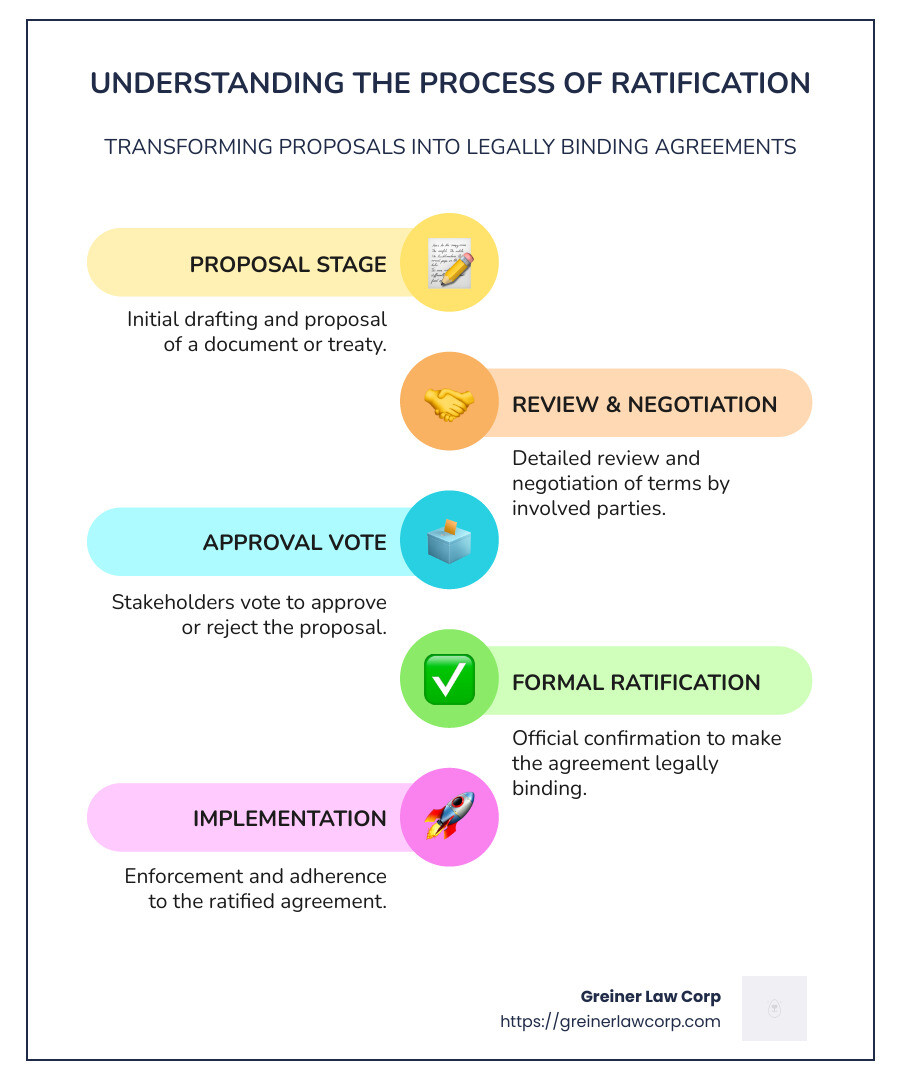
The authority to ratify varies significantly depending on the specific situation. In corporate settings, shareholders typically ratify major strategic decisions, such as mergers, acquisitions, or significant changes to the company’s charter, through formal votes at annual general meetings (AGMs) or extraordinary general meetings (EGMs). These votes often require specific quorum requirements and voting thresholds, such as a simple majority or a supermajority (e.g., two-thirds or three-quarters) of outstanding shares. The board of directors, on the other hand, ratifies operational decisions, financial statements, and executive appointments through formal board resolutions recorded in meeting minutes. For individuals entering into contracts, ratification is typically achieved through the physical or digital signature on the agreement, signifying their acceptance of the terms and conditions. The formality of the ratification process ensures that decisions are not made lightly and that proper governance procedures are followed.
Consequences of Non-Ratification
When an action or agreement fails to be ratified, the consequences can be significant and far-reaching. Without ratification, a proposed agreement or decision remains unapproved, rendering it legally null and void. This means it cannot be enforced, and parties involved are not bound by its terms. For a business, a failed ratification can lead to the collapse of a crucial deal, such as a merger or a significant financing round, resulting in missed opportunities, financial losses, and reputational damage. It might necessitate renegotiation of terms, which consumes time and resources, or, in extreme cases, the complete abandonment of the proposed action. For example, if shareholders fail to ratify a proposed executive compensation package, the board may need to revise it or face dissent that could affect corporate stability. The inability to ratify an international treaty can hinder cross-border trade or investment flows, demonstrating the critical role ratification plays in creating a predictable legal environment.
Digital Ratification and Modern Practices
In the digital age, the process of ratification has increasingly embraced technology to enhance efficiency and accessibility while maintaining legal integrity. Electronic signatures (e-signatures) are now widely accepted as legally binding forms of ratification for a vast array of contracts and agreements, from loan applications to commercial leases. Digital contract management platforms streamline the entire process, allowing for secure document sharing, tracking of approvals, and compliant electronic signing. Furthermore, secure online voting systems have revolutionized shareholder participation in ratification processes, enabling investors worldwide to cast their votes on resolutions without physical presence, thereby increasing democratic participation and efficiency. These modern practices underscore an ongoing evolution to make ratification processes more efficient and accessible, adapting to a globalized, digital business environment without compromising the fundamental legal principles of consent and approval.
Why Ratification is Indispensable for Financial Integrity
The concept of ratification is far more than a mere legal formality; it is a foundational pillar supporting the integrity, stability, and trust within the financial and business ecosystem. Its pervasive application across corporate governance, contractual agreements, and market operations highlights its critical role in mitigating risk, ensuring accountability, and building enduring confidence among all stakeholders.
Ensuring Accountability and Transparency
One of the most vital functions of ratification is its ability to enforce accountability and promote transparency in financial dealings and corporate decision-making. By requiring formal approval, ratification creates a clear audit trail for every significant action or agreement. This trail definitively identifies who approved what, and when, making it easier to assign responsibility and ensure that decisions align with established mandates. In corporate governance, the ratification of financial statements or executive actions by the board or shareholders means these parties are explicitly acknowledging their approval, thereby accepting responsibility for the implications. This transparency is crucial for investors, allowing them to monitor a company’s governance practices and understand the legitimacy behind its strategic moves, which, in turn, fosters trust and informed investment decisions. Without such formal processes, opaque decision-making could lead to unchecked power, misallocation of resources, and a lack of recourse for aggrieved parties.
Risk Mitigation and Governance
Ratification serves as a powerful mechanism for risk mitigation and the establishment of robust governance frameworks. By necessitating explicit consent for significant actions, it acts as a safeguard against unilateral decisions that could potentially harm the organization or its stakeholders. For instance, requiring shareholder ratification for major asset sales or mergers prevents a small group within management or the board from making decisions that might not be in the best long-term interest of the company or its investors. This systematic approach to approval ensures that due diligence is properly conducted, various perspectives are considered, and potential risks are thoroughly evaluated before a commitment is made. Strong ratification protocols are a hallmark of good corporate governance, reducing the likelihood of legal challenges, financial malfeasance, and operational instability, thereby protecting shareholder value and fostering a more predictable business environment.
Building Trust and Stability
Ultimately, ratification is instrumental in building and maintaining trust within the complex web of financial relationships. When parties formally ratify an agreement or decision, it signifies a mutual commitment and understanding, solidifying relationships between businesses, investors, employees, and even nations. This formal acceptance demonstrates sincerity and intention, which are essential for long-term collaborations and investment. In financial markets, the presence of clear and respected ratification processes contributes significantly to market stability. Investors are more likely to commit capital when they are confident that agreements are legally binding and that corporate actions are subject to proper oversight and approval. This confidence reduces uncertainty, encourages investment, and facilitates the smooth functioning of economies. By upholding the principles of consent, approval, and accountability, ratification underpins the legal and ethical framework necessary for a thriving and trustworthy global financial system.
aViewFromTheCave is a participant in the Amazon Services LLC Associates Program, an affiliate advertising program designed to provide a means for sites to earn advertising fees by advertising and linking to Amazon.com. Amazon, the Amazon logo, AmazonSupply, and the AmazonSupply logo are trademarks of Amazon.com, Inc. or its affiliates. As an Amazon Associate we earn affiliate commissions from qualifying purchases.