
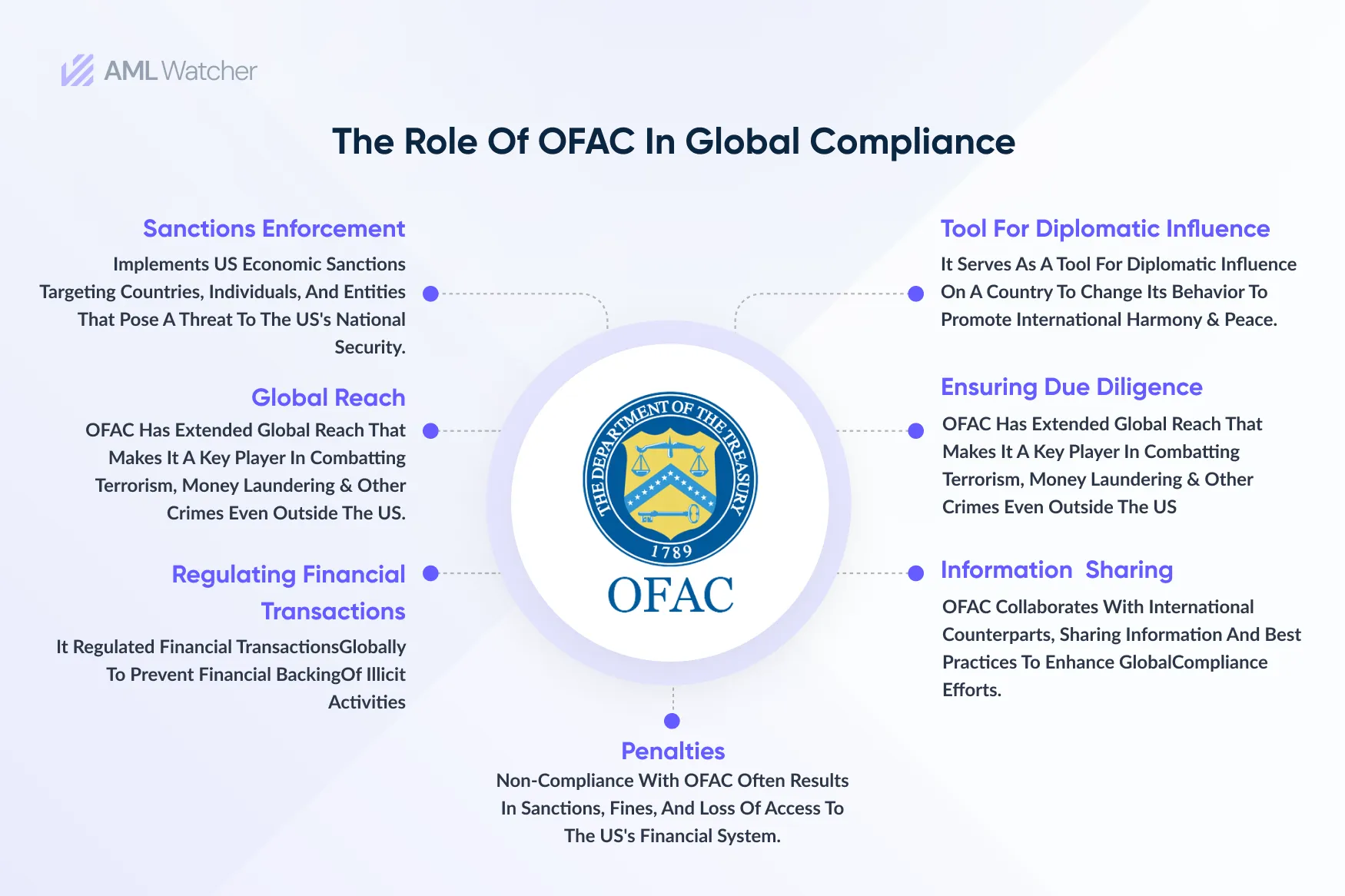
The Office of Foreign Assets Control (OFAC), a powerful financial intelligence and enforcement agency within the U.S. Department of the Treasury, stands as a critical pillar in the global financial architecture. Far from a mere regulatory body, OFAC serves as the primary instrument for the United States to administer and enforce economic and trade sanctions programs targeting foreign countries, entities, and individuals that pose threats to national security, foreign policy, or the economy. Its actions directly influence the flow of capital, international trade, and the operational strategies of businesses and financial institutions worldwide, making a deep understanding of its functions indispensable for anyone involved in finance or international commerce.
OFAC’s Core Mission: Safeguarding U.S. Financial Integrity and National Security
At its heart, OFAC’s mission is multifaceted, aiming to protect the U.S. financial system from illicit activities, deter destabilizing geopolitical behavior, and promote human rights and democratic values through economic means. This involves a delicate balance of implementing broad economic pressure while allowing for legitimate humanitarian and commercial activities under specific circumstances.
The Office of Foreign Assets Control (OFAC) Defined
OFAC is not a law enforcement agency in the traditional sense, but rather a regulatory and enforcement arm that translates U.S. foreign policy objectives into actionable economic sanctions. It drafts, implements, and enforces these sanctions, which typically involve freezing assets, blocking transactions, and imposing restrictions on trade and financial dealings with targeted individuals, organizations, and regimes. Its authority derives from various executive orders and statutory provisions, including the International Emergency Economic Powers Act (IEEPA) and the Trading with the Enemy Act (TWEA).
Congressional Mandate and Treasury Department Oversight
Operating under the aegis of the U.S. Department of the Treasury, OFAC’s activities are integral to the broader U.S. financial intelligence and security apparatus. Its mandates are often influenced by congressional legislation and presidential directives, reflecting the evolving landscape of global threats and strategic priorities. This oversight ensures that OFAC’s actions align with national interests and are subject to legal scrutiny, though its enforcement powers are exceptionally broad. The Treasury’s direct involvement underscores the agency’s focus on the financial implications of foreign policy decisions, affecting everything from banking and investment to supply chain management and technology exports.
The Dual Purpose: Foreign Policy and Economic Sanctions
The primary tools OFAC wields are economic sanctions, which are utilized for a dual purpose: to exert pressure on adversaries and to protect the integrity of the U.S. and international financial systems. These sanctions can be a potent, non-military foreign policy tool, designed to alter the behavior of targeted regimes or entities by limiting their access to the global economy and financial markets. Concurrently, OFAC’s enforcement actions prevent bad actors from exploiting the U.S. financial system for illicit financing, terrorism, proliferation of weapons of mass destruction, cybercrime, or human rights abuses, thereby reinforcing financial security and stability.
The Scope and Mechanics of OFAC Sanctions Programs
OFAC administers numerous sanctions programs, each tailored to specific foreign policy or national security concerns. These programs vary significantly in their scope and intensity, ranging from comprehensive embargoes on entire countries to targeted measures against specific individuals or entities. Understanding the mechanics of these programs is crucial for any financial institution or business operating internationally.
Types of Sanctions: Comprehensive vs. Targeted
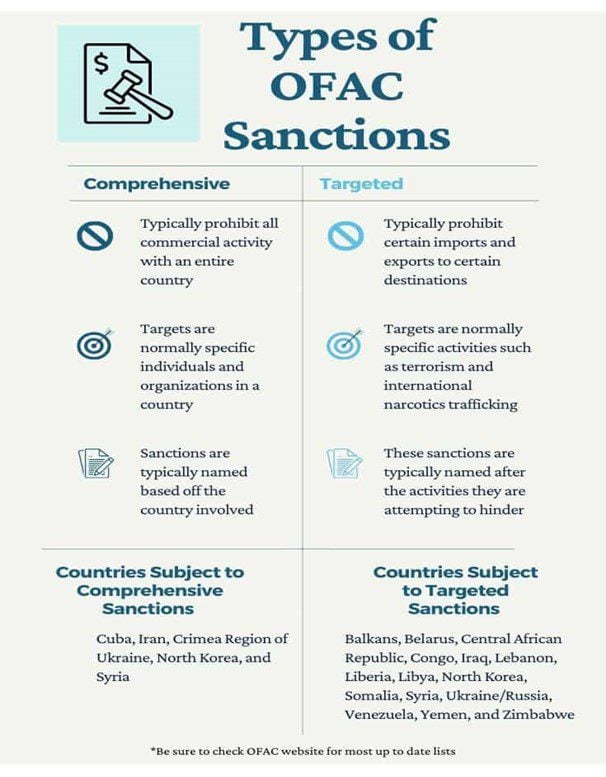
OFAC sanctions generally fall into two broad categories:
- Comprehensive Sanctions: These are broad embargoes that prohibit virtually all financial and commercial transactions with a sanctioned country. Examples include programs against Cuba, Iran, and Syria, though exceptions for humanitarian aid or specific licensed activities often exist. Their intent is to isolate the target regime economically.
- Targeted Sanctions: These programs focus on specific individuals, entities, or sectors within a country, rather than the entire economy. They are designed to minimize harm to the general populace while maximizing pressure on the specific actors whose conduct is deemed problematic. Most of OFAC’s current programs are targeted, focusing on individuals involved in terrorism, narcotics trafficking, human rights abuses, or cyber-attacks.
The Specially Designated Nationals and Blocked Persons (SDN) List
Perhaps OFAC’s most widely recognized tool is the Specially Designated Nationals and Blocked Persons (SDN) List. This dynamic roster identifies individuals and entities with whom U.S. persons (including U.S. citizens, permanent residents, entities organized under U.S. law, and anyone within the United States) are generally prohibited from transacting. U.S. persons are required to freeze any assets belonging to SDNs that come into their possession and report such blocking to OFAC. Being listed as an SDN effectively cuts off access to the U.S. financial system and often, by extension, a significant portion of the global financial system.
Asset Blocking and Prohibited Transactions
When an individual or entity is designated by OFAC, any property or interests in property belonging to that party that are in the United States or come within the possession or control of U.S. persons must be blocked. This means the assets cannot be transferred, paid, exported, withdrawn, or otherwise dealt with without OFAC authorization. Furthermore, U.S. persons are broadly prohibited from engaging in any transactions or dealings that violate OFAC sanctions programs, including indirect dealings. This “50 percent rule” extends prohibitions to entities owned 50% or more, directly or indirectly, by one or more blocked persons, even if those entities are not explicitly listed on the SDN list themselves.
Sectoral Sanctions Identifications (SSI) List and Other Measures
Beyond the SDN List, OFAC employs other mechanisms like the Sectoral Sanctions Identifications (SSI) List. This list imposes more limited restrictions, typically on financing, against entities operating in specific sectors of sanctioned economies, such as Russia’s financial, energy, and defense sectors. These sanctions aim to restrict access to U.S. capital and technology without imposing a full block on the entity. Other measures can include restrictions on certain types of transactions (e.g., related to specific goods or services) or prohibitions on dealing with particular types of debt or equity.
The Profound Impact on Business Finance and Global Commerce
OFAC’s broad reach means its regulations have profound implications for virtually every sector involved in international finance and trade. From global banks to small businesses importing goods, the need for robust compliance is paramount.
Compliance Burden on Financial Institutions
Banks and other financial institutions bear a significant compliance burden. They must implement sophisticated screening systems to identify potential SDN matches in transactions, accounts, and customer onboarding processes. This requires continuous investment in technology, staff training, and rigorous internal controls. Any oversight can lead to severe penalties, making OFAC compliance one of the most resource-intensive aspects of financial regulation. Banks must also monitor for indirect exposure, ensuring that their clients are not inadvertently facilitating prohibited transactions.
Challenges for Multinational Corporations
Multinational corporations face a complex web of compliance challenges. They must not only ensure their direct dealings comply with OFAC sanctions but also vet their entire supply chain, partners, and customers globally. A subsidiary in a non-U.S. country, for example, might still be subject to OFAC regulations if it uses U.S. financial services, trades in U.S. dollars, or involves U.S. persons. This necessitates a global approach to compliance, often requiring dedicated teams and specialized software to manage the risk.
Mitigating Risk in International Trade and Investment
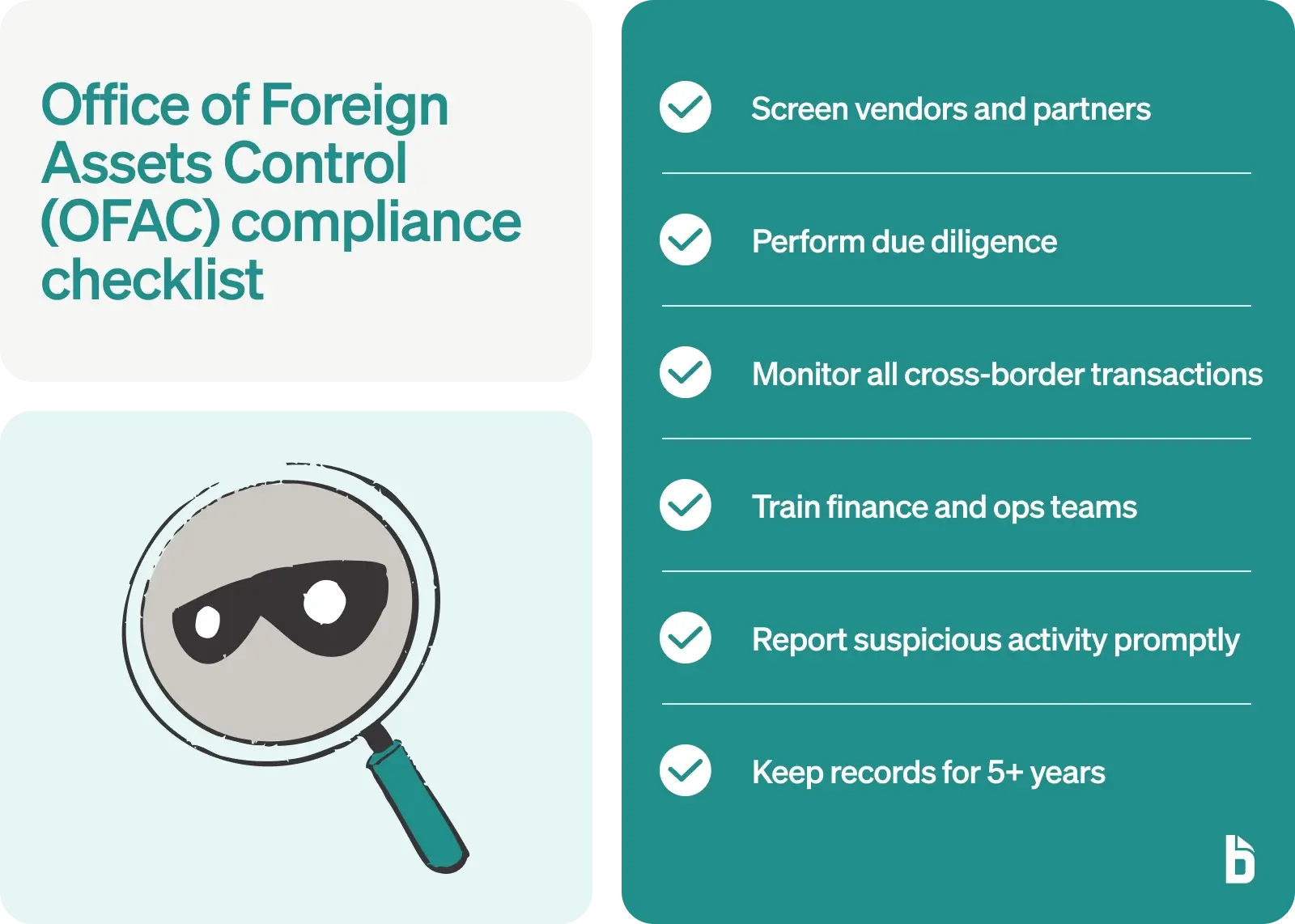
For businesses engaged in international trade or investment, OFAC compliance is a non-negotiable aspect of risk management. Before entering new markets, engaging with foreign partners, or executing cross-border transactions, companies must conduct thorough due diligence to ensure compliance. This includes screening all parties against OFAC lists, understanding the origin and destination of goods, and ensuring that funds do not directly or indirectly benefit sanctioned entities. Failure to do so can result in frozen assets, interrupted supply chains, and significant financial penalties, disrupting business operations and damaging financial standing.
Implications for Cryptocurrency and Emerging Financial Technologies
The rise of cryptocurrencies and decentralized finance (DeFi) presents new frontiers for OFAC compliance. While the technology itself is not sanctioned, its use by sanctioned individuals or entities is. OFAC has increasingly focused on ensuring that virtual asset service providers (VASPs) and other participants in the crypto ecosystem comply with sanctions. This means implementing know-your-customer (KYC) and anti-money laundering (AML) controls, screening wallet addresses, and blocking transactions involving sanctioned parties. The complexity of tracing crypto transactions and the pseudonymous nature of some platforms pose unique challenges, pushing the boundaries of traditional financial surveillance and compliance.
Navigating the Complexities: OFAC Compliance Strategies
Given the severe consequences of non-compliance, businesses and financial entities must implement comprehensive strategies to navigate OFAC’s complex regulatory landscape. Proactive measures and robust internal controls are key to managing risk and ensuring operational continuity.
Developing Robust Compliance Programs
An effective OFAC compliance program is not a one-time setup but an ongoing commitment. It typically includes a written policy, dedicated compliance personnel, regular risk assessments, employee training, auditing, and continuous screening processes. These programs should be tailored to the specific risks and operational footprint of the organization, taking into account the types of transactions, geographic exposure, and customer base. The “five essential components” of a strong sanctions compliance program (SCP) as outlined by OFAC itself are: management commitment, risk assessment, internal controls, testing and auditing, and training.
Due Diligence and Transaction Screening
Thorough due diligence is fundamental. Before engaging in any new business relationship or transaction, entities must screen all relevant parties (customers, vendors, beneficiaries, intermediaries) against OFAC’s SDN and other sanctions lists. This often involves automated screening software that integrates with existing business systems. Beyond name matching, due diligence extends to understanding the ultimate beneficial ownership of entities and the purpose and nature of transactions to prevent evasion attempts. For ongoing relationships, continuous monitoring is essential to catch newly designated parties or changes in status.
Reporting Requirements and Licensing Procedures
U.S. persons are required to report blocked property and rejected transactions (transactions that would violate a sanctions program but were not completed) to OFAC. These reports provide crucial data for OFAC’s enforcement efforts. In some cases, businesses may seek specific authorization from OFAC to engage in activities that would otherwise be prohibited. This is done through a licensing process, where OFAC may issue general licenses (broadly applicable authorizations) or specific licenses (case-by-case authorizations) for certain transactions, such as humanitarian aid or pre-existing contracts. Understanding when and how to apply for a license is a critical aspect of compliance.
Engaging with OFAC: Guidance and Voluntary Disclosures
OFAC actively encourages dialogue with the regulated community. It provides extensive guidance, FAQs, and interpretive rulings to help organizations understand and comply with its regulations. In instances where a potential violation is discovered, companies are strongly encouraged to make a voluntary self-disclosure (VSD) to OFAC. While not a guarantee against penalties, a VSD can significantly mitigate the severity of enforcement actions, demonstrating good faith and a commitment to compliance. OFAC’s enforcement guidelines typically grant substantial penalty reductions for VSDs.
The Financial and Reputational Stakes of Non-Compliance
The penalties for violating OFAC sanctions are severe, encompassing substantial monetary fines, potential criminal charges, and lasting damage to a company’s financial health and public image. The costs of non-compliance far outweigh the costs of establishing robust compliance programs.
Steep Monetary Penalties for Violations
OFAC has the authority to levy civil monetary penalties that can range from thousands to hundreds of millions of dollars per violation, depending on the severity, the number of transactions, and the intent. These penalties are often calculated based on the transaction value, multiplied by factors reflecting the aggravating and mitigating circumstances. Willful violations can lead to even higher statutory maximum fines and potential criminal prosecution, which might involve significant prison sentences for individuals. The financial repercussions can be devastating for businesses, wiping out profits and even threatening solvency.
Legal Repercussions and Enforcement Actions
Beyond civil penalties, non-compliance can trigger enforcement actions from other regulatory bodies and lead to criminal charges, particularly in cases involving terrorism financing, money laundering, or egregious violations. Individuals within organizations, including executives and compliance officers, can be held personally liable. These legal battles are costly, time-consuming, and divert significant resources away from core business operations, impacting financial performance.
Damage to Brand and Investor Confidence
Perhaps equally damaging to the direct financial penalties is the profound harm to a company’s reputation. Being publicly linked to sanctions violations can erode investor confidence, deter potential business partners, and alienate customers. The negative publicity can persist for years, making it harder to attract talent, secure financing, and compete in the global marketplace. This long-term reputational damage translates directly into diminished financial value and reduced market capitalization.
Case Studies in OFAC Enforcement
History is replete with examples of major financial institutions and multinational corporations facing colossal fines for OFAC violations. These cases often highlight failures in internal controls, insufficient due diligence, or a lack of understanding of the indirect dealings prohibitions. Whether it’s a bank processing transactions for a sanctioned entity, a manufacturing firm selling goods to a sanctioned country, or a technology company providing services to blacklisted individuals, the message from OFAC is clear: compliance is non-negotiable, and the financial consequences of failure are severe and far-reaching, reinforcing OFAC’s critical role in global finance.
aViewFromTheCave is a participant in the Amazon Services LLC Associates Program, an affiliate advertising program designed to provide a means for sites to earn advertising fees by advertising and linking to Amazon.com. Amazon, the Amazon logo, AmazonSupply, and the AmazonSupply logo are trademarks of Amazon.com, Inc. or its affiliates. As an Amazon Associate we earn affiliate commissions from qualifying purchases.