
In the rapidly evolving landscape of the 21st century, technology acts as both a bridge and a barrier. For the millions of individuals globally living with dyslexia—a neurodivergent condition primarily affecting phonological processing and reading fluency—the digital world presents a unique set of challenges and opportunities. While traditionally viewed through an educational lens, dyslexia’s impact is perhaps most profound in the tech sector, influencing everything from User Experience (UX) design and software development to the emergence of specialized Artificial Intelligence (AI) tools.
Understanding what dyslexia affects in a technological context is no longer a niche concern for developers and tech leaders; it is a fundamental pillar of universal design and digital accessibility. As we move toward an increasingly automated and text-reliant digital economy, the intersection of neurodiversity and technology defines how we build the tools of tomorrow.
The Digital Interface: How Dyslexia Influences UX and UI Design
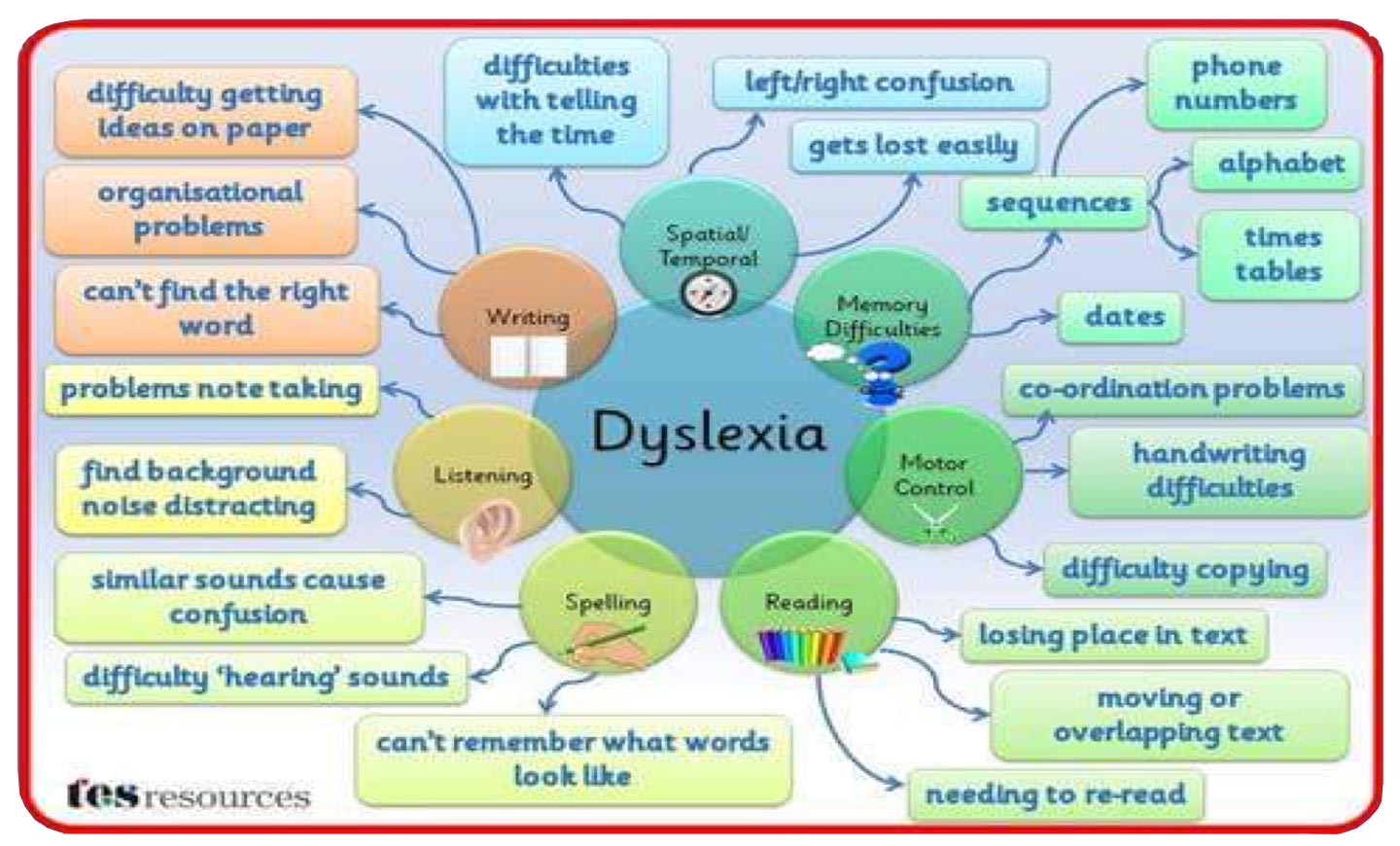
The way a user interacts with a screen is the first point of contact between human cognition and digital logic. For individuals with dyslexia, the visual presentation of information can significantly alter the usability of a software application or website. This has led to a revolution in User Interface (UI) design principles that prioritize cognitive ease.
Visual Crowding and Spatial Layout
Dyslexia often affects a person’s ability to process “crowded” visual information. In tech terms, this means that high-density text blocks, tight line spacing, and cluttered sidebars can lead to “white-space blurring,” where the text seems to swim or overlap. Tech designers are now utilizing “chunking”—the practice of breaking information into small, manageable modules—to mitigate this. By increasing white space and utilizing wide margins, software interfaces become more navigable for neurodivergent users.
Typography and the “Dyslexie” Innovation
One of the most visible impacts of dyslexia on technology is the development of specialized fonts. Traditional serifs (like Times New Roman) can be difficult for dyslexic users because the “hooks” on letters can cause them to flip or rotate in the mind’s eye. Tech-driven solutions include the creation of fonts like OpenDyslexic or Dyslexie, which use heavy-weighted bottoms to give letters a “gravity” that prevents them from appearing to rotate. Furthermore, modern web browsers and e-readers now offer customizable CSS settings, allowing users to adjust letter-spacing and line height, a direct technological response to dyslexic processing needs.
Color Contrast and Visual Stress
What dyslexia affects is often exacerbated by harsh visual contrasts. Pure black text on a pure white background can cause “visual stress” or a vibrating effect for some users. The tech industry has responded with “Dark Mode” and customizable “Overlay” features. These tools allow users to shift the background to cream, pastel blue, or grey, reducing the glare and making digital reading a more sustainable activity.
Assistive Technology: Tools That Bridge the Gap
If the interface is the environment, assistive technology is the toolkit. For years, the tech industry has been developing software specifically designed to bypass the phonological hurdles of dyslexia, turning what was once a “learning disability” into a “different way of processing.”
Text-to-Speech (TTS) and Natural Language Processing
The evolution of Text-to-Speech (TTS) technology has been a game-changer. Early TTS sounded robotic and was difficult to follow. However, with the integration of Natural Language Processing (NLP) and deep learning, voices have become incredibly human-like. For a dyslexic professional, tools like Speechify or integrated “Read Aloud” functions in Microsoft Word allow for the consumption of high volumes of data through auditory channels, bypassing the need for traditional visual decoding.
Speech-to-Text (STT) and the Rise of Voice UI
Dyslexia often affects “encoding” or the ability to spell and write thoughts down fluently. Speech-to-Text (STT) software, once a clunky novelty, is now a sophisticated staple in mobile OS (Siri, Google Assistant) and professional software (Nuance Dragon). By moving the input method from a keyboard to the voice, tech allows dyslexic users to express complex ideas at the speed of thought, ensuring that their intellectual output isn’t throttled by their mechanical writing speed.
Optical Character Recognition (OCR) and Mobile Apps
The “Point and Click” era of accessibility is here. Mobile apps now use OCR technology to scan physical text—such as a menu, a textbook, or a contract—and instantly convert it into digital text that can be read aloud or simplified. This tech effectively “digitizes” the physical world, making the non-digital environment accessible to those who struggle with printed text.
AI and Machine Learning: A New Frontier for Neurodiversity
The most exciting development in what dyslexia affects is the application of Artificial Intelligence (AI) and Generative Pre-trained Transformers (GPT). AI is not just an assistive tool; it is becoming a cognitive partner that adapts to the specific needs of the dyslexic brain.
Summarization and Information Synthesis
Dyslexic users often struggle with “skimming” long documents to find the main point. AI-powered tools can now take a 50-page technical manual and provide a bulleted summary of key takeaways in seconds. This technology levels the playing field in high-data environments like software engineering or data analysis, where the sheer volume of text can be overwhelming.
Real-Time Writing Correction and Predictive Text
While basic spellcheck has existed for decades, it often fails dyslexic users who might spell a word so phonetically that the software cannot guess the intended meaning. Modern AI-driven writing assistants like Grammarly or Jasper use context-aware algorithms. They don’t just look at the word; they look at the sentence. If a user writes “their” instead of “there,” the AI understands the intent. This reduces the cognitive load and the “editing fatigue” that many dyslexic individuals experience in digital communication.
Predictive Behavior and Adaptive Learning
Machine learning models are being developed to recognize patterns in how a user interacts with a system. If an AI detects that a user is re-reading the same paragraph multiple times or clicking “help” on specific linguistic patterns, it can dynamically adjust the interface. This “Adaptive UI” represents the future of tech—a system that learns how you think and changes its presentation to match your cognitive style.
Digital Security and Accessibility: The Hidden Hurdles
While technology offers many solutions, it also introduces new hurdles. One area where dyslexia affects user experience negatively is in the realm of digital security and authentication.
The Problem with CAPTCHAs
The “Completely Automated Public Turing test to tell Computers and Humans Apart” (CAPTCHA) is a security staple. However, for a dyslexic user, a CAPTCHA that requires identifying distorted letters or typing a string of random characters is a significant barrier. The tech industry is currently shifting toward more inclusive security measures, such as “No CAPTCHA” checkboxes (which analyze mouse movement) or image-based puzzles, which rely on spatial reasoning—a known strength of the dyslexic brain.
Multi-Factor Authentication (MFA) and Sequential Processing
Dyslexia often impacts short-term working memory, specifically the ability to hold a sequence of numbers in one’s head. Traditional MFA, which requires a user to read a 6-digit code from a text message and type it into a login screen, can be a source of frustration. Tech leaders are now pushing for “Push Notifications” or biometric authentication (FaceID, Fingerprint), which eliminate the need for sequential memory and manual typing, making security both tighter and more accessible.
The Future of Inclusive Tech: Moving Toward Universal Design
As we look toward the future, the tech industry is shifting from “accommodating” dyslexia to “integrating” for neurodiversity. This is known as Universal Design—the idea that building for the “margins” actually makes the product better for everyone.
From Niche Tools to System-Level Integration
In the past, a dyslexic user had to buy expensive third-party software. Today, accessibility features are baked into the core of operating systems (iOS, Android, Windows, macOS). When a tech giant like Apple prioritizes “VoiceOver” or “Spoken Content,” it doesn’t just help dyslexic users; it helps the busy commuter, the elderly, and the multi-tasker.
The “Dyslexic Advantage” in Tech Careers
Finally, the tech industry is beginning to realize that what dyslexia affects is not just a challenge to be solved, but a trait to be recruited. Many of the most successful tech founders and engineers have dyslexia. Their natural aptitude for “big picture” thinking, pattern recognition, and 3D spatial reasoning makes them uniquely qualified for complex systems architecture and high-level strategy. Companies like Microsoft and SAP have launched neurodiversity hiring programs, recognizing that a brain that processes information differently is an asset in a sector defined by innovation.
In conclusion, dyslexia affects nearly every facet of our digital life—from how we read a line of code to how we log into our bank accounts. However, through the lens of technology, these effects are driving a wave of innovation that makes the digital world more intuitive, more flexible, and more inclusive for everyone. As AI continues to mature, the gap between “disability” and “capability” will continue to shrink, replaced by a tech landscape that celebrates cognitive diversity as a driver of progress.
aViewFromTheCave is a participant in the Amazon Services LLC Associates Program, an affiliate advertising program designed to provide a means for sites to earn advertising fees by advertising and linking to Amazon.com. Amazon, the Amazon logo, AmazonSupply, and the AmazonSupply logo are trademarks of Amazon.com, Inc. or its affiliates. As an Amazon Associate we earn affiliate commissions from qualifying purchases.