
In the intricate world of mechanical engineering and specifically within the heart of an internal combustion engine, few components are as critical yet often misunderstood as the camshaft. This vital piece of technology orchestrates the precise rhythm of an engine, dictating when and how much air enters and exhausts the combustion chambers. Understanding the camshaft is fundamental to grasping how engines generate power, optimize efficiency, and manage emissions—a true testament to sophisticated mechanical design that underpins much of our modern transportation and power generation infrastructure.
The Core Function of a Camshaft: Orchestrating the Engine’s Breath
At its essence, a camshaft is a rotating shaft with lobes (cams) that actuate the engine’s intake and exhaust valves. These valves are the gatekeepers of the combustion chambers, controlling the flow of gases in and out of the cylinders. The camshaft’s job is to ensure these valves open and close at precisely the right moment during each engine cycle, allowing for optimal combustion. Without this exact synchronization, an engine simply would not run, or would run extremely inefficiently.

Every stroke of an engine’s piston—intake, compression, power, and exhaust—requires specific valve actions. During the intake stroke, the intake valve opens to allow the air-fuel mixture (or just air in direct injection engines) into the cylinder. After compression and combustion, the exhaust valve opens during the exhaust stroke to expel spent gases. The camshaft’s lobes are carefully designed with specific profiles to lift the valve off its seat for a set duration and to a specific height, ensuring the optimal amount of gas exchange occurs for the engine’s operational needs.
Synchronizing Engine Operations
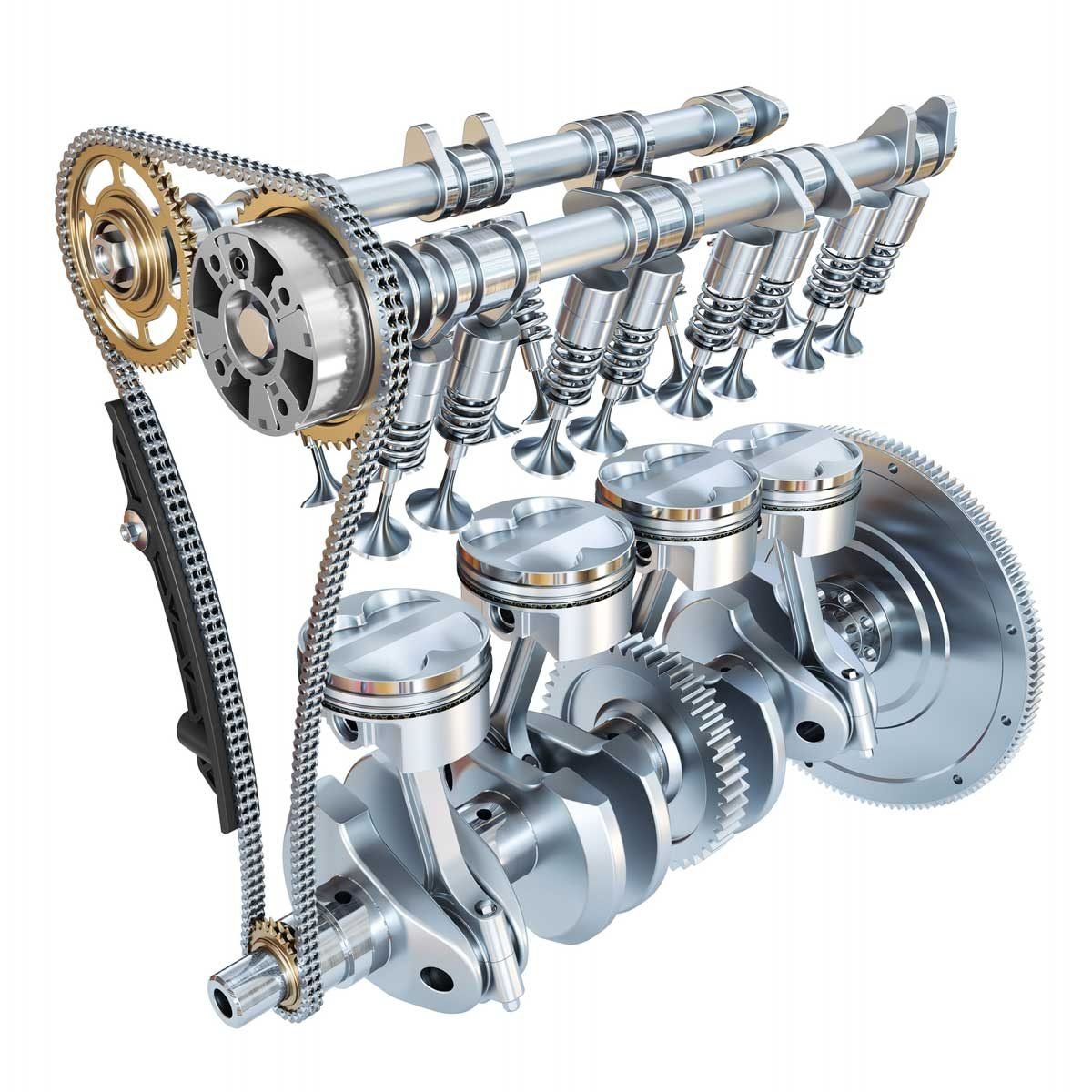
The camshaft is typically driven by the crankshaft, often via a timing belt, chain, or gears. This mechanical linkage is paramount for maintaining absolute synchronization between the pistons’ movement and the valves’ opening and closing. This synchronization ensures that the valves never collide with the pistons, a catastrophic event known as “valve-piston interference,” which can severely damage an engine. The camshaft’s rotational speed is directly proportional to the crankshaft’s speed, usually rotating at half the speed of the crankshaft in a four-stroke engine, meaning for every two rotations of the crankshaft, the camshaft completes one full rotation. This 2:1 ratio is essential for managing the four strokes of the engine cycle with the necessary valve events.
Intake and Exhaust Valve Management
Different lobes on the camshaft are responsible for opening the intake and exhaust valves. The design of these lobes—their shape, height (lift), and duration (how long they hold the valve open)—directly impacts the engine’s performance characteristics. A “high-lift, long-duration” cam profile, for instance, allows more air and fuel into the cylinder for a longer period, typically yielding higher power at high RPMs, but potentially sacrificing low-end torque and fuel efficiency. Conversely, a “low-lift, short-duration” cam might improve fuel economy and low-end torque but limit peak power. This demonstrates how the camshaft’s design is a critical factor in defining an engine’s operational personality, whether it’s built for racing performance, everyday commuting, or heavy-duty hauling.
Anatomy of a Camshaft: Key Components
To understand its function, one must first appreciate the physical structure of a camshaft. It is a robust, cylindrical shaft engineered for precision and durability.
The Shaft
The main body of the camshaft is a hardened steel or cast iron rod. It is designed to withstand immense rotational forces and the constant friction and heat generated during engine operation. The length and diameter of the shaft vary significantly depending on the engine design, specifically the number of cylinders and valves it actuates.
Cams (Lobes)
These are the most distinctive features of a camshaft. Cams are precisely shaped eccentric projections, one for each valve. As the camshaft rotates, the highest point of the lobe (the apex or nose) pushes against a cam follower (tappet or rocker arm), which in turn opens the valve. The shape of the lobe dictates the valve’s lift (how far it opens), duration (how long it stays open), and opening/closing velocity. The intricate profile of these lobes is a product of advanced engineering and material science, requiring extremely tight tolerances to ensure smooth operation and longevity.
Bearings and Journals
Like any rotating shaft, the camshaft needs to be supported within the engine block or cylinder head. This is achieved through a series of journals, which are smooth, cylindrical sections of the shaft that rest within bearings. These bearings provide a low-friction surface, typically made of bronze or other wear-resistant alloys, ensuring the camshaft rotates freely and precisely, minimizing wear and tear.
Drive Gear/Sprocket
At one end of the camshaft, a gear or sprocket is attached. This component engages with the timing belt, chain, or gears that connect to the crankshaft, forming the timing drive system. This mechanical link is crucial for maintaining the precise 2:1 rotational relationship between the crankshaft and camshaft.
Types of Camshaft Configurations
The placement and number of camshafts in an engine significantly influence its design complexity, performance, and manufacturing costs. Modern engine technology primarily utilizes overhead camshaft (OHC) designs, though older or specialized engines might use overhead valve (OHV) configurations.
Overhead Valve (OHV) vs. Overhead Cam (OHC) Systems
In Overhead Valve (OHV) engines, also known as “pushrod” engines, the camshaft is located in the engine block, below the cylinder head. It actuates the valves via pushrods and rocker arms. This design is simpler, often results in a more compact engine block, and places the camshaft closer to the crankshaft, simplifying the timing drive. However, the mass and inertia of the pushrods and rocker arms limit the engine’s ability to rev at very high RPMs, making precise valve control more challenging at speed.

Overhead Cam (OHC) engines, in contrast, place the camshafts directly in the cylinder head, above the valves. This design eliminates the need for pushrods, allowing for more direct valve actuation (often through rocker arms or bucket tappets) and greatly reducing the valvetrain’s mass. This allows OHC engines to rev higher and achieve more precise valve timing, leading to better high-RPM performance, improved fuel efficiency, and reduced emissions. OHC is the dominant design in modern passenger vehicles.
Single Overhead Cam (SOHC)
A Single Overhead Cam (SOHC) engine features one camshaft per cylinder bank (or one for an inline engine) located in the cylinder head. This single camshaft typically actuates both the intake and exhaust valves for each cylinder. While offering the benefits of OHC technology over OHV, SOHC designs often use rocker arms that span both intake and exhaust valves, which can slightly complicate valve timing optimization for both sets of valves independently.
Dual Overhead Cam (DOHC)
Dual Overhead Cam (DOHC) engines are the most prevalent and technologically advanced configuration in modern automotive design. These engines feature two separate camshafts per cylinder bank (or two for an inline engine)—one dedicated solely to the intake valves and the other to the exhaust valves. This independent control allows for much greater flexibility in optimizing valve timing for both intake and exhaust, leading to superior performance across the RPM range, better fuel economy, and lower emissions. The independent control is also a prerequisite for sophisticated variable valve timing systems.
Variable Valve Timing (VVT) and Modern Camshaft Technology
The evolution of camshaft technology didn’t stop at DOHC. One of the most significant advancements has been the introduction of Variable Valve Timing (VVT) systems, and its more advanced cousin, Variable Valve Lift (VVL).
The Need for Variable Timing
Traditional camshafts have fixed valve timing, meaning the intake and exhaust valves open and close at the same points in the engine cycle regardless of engine speed or load. This is a compromise: a timing optimized for low RPMs (better torque, fuel economy) is often poor for high RPMs (higher power), and vice-versa. VVT was developed to overcome this limitation, allowing the engine’s computer (ECU) to dynamically adjust valve timing.
How VVT Systems Work
VVT systems typically work by using a cam phaser, often a hydraulically actuated device, that can rotate the camshaft relative to its drive gear. This effectively shifts the timing of when the valves open and close. More advanced systems can alter valve lift and duration as well. By advancing or retarding the camshaft, the engine can optimize valve overlap (the period when both intake and exhaust valves are open) and timing for different operating conditions. For example, at low RPMs, VVT might reduce valve overlap to improve idle stability and low-end torque. At high RPMs, it might increase overlap to enhance volumetric efficiency and power.
Benefits of VVT
The implementation of VVT technology has brought about significant benefits:
- Improved Fuel Efficiency: By optimizing combustion across various engine speeds, less fuel is wasted.
- Increased Power and Torque: Engines can deliver more power at high RPMs and more torque at low RPMs.
- Reduced Emissions: Better combustion control leads to fewer harmful pollutants being released.
- Enhanced Driveability: Smoother power delivery across the entire operating range.
Importance and Impact on Engine Performance
The camshaft’s influence extends far beyond merely opening and closing valves; it is a principal determinant of an engine’s overall character and capabilities. Its design directly impacts key performance metrics, making it a critical area of focus in engine development and tuning.
Power and Torque Delivery
The camshaft’s lobe profiles dictate how efficiently an engine can breathe. Cams designed for higher lift and longer duration generally allow an engine to ingest more air and fuel, translating to greater power output, especially at higher engine speeds. Conversely, profiles optimized for lower lift and shorter duration enhance cylinder filling at lower RPMs, boosting low-end torque, which is crucial for acceleration from a standstill and for hauling heavy loads. Modern engines often strive for a balance, or use VVT to achieve the best of both worlds.
Fuel Efficiency
Optimal valve timing is paramount for fuel efficiency. By precisely controlling the intake and exhaust processes, the camshaft helps ensure that fuel is burned as completely as possible, minimizing waste. VVT systems further enhance this by tailoring valve events to current engine load and speed, reducing pumping losses and improving thermal efficiency across a broader operating range. This capability significantly contributes to the engine’s overall miles per gallon (MPG) rating.
Emissions Control
Modern emissions standards are incredibly stringent, and the camshaft plays a crucial role in meeting them. Precise control over valve overlap and timing can reduce the formation of pollutants such as nitrogen oxides (NOx) by lowering peak combustion temperatures and promoting internal exhaust gas recirculation (EGR). This helps engines burn cleaner and comply with environmental regulations.
Engine Design and Innovation
The camshaft is a prime example of mechanical technology that has continuously evolved. From simple pushrod designs to sophisticated DOHC setups with intricate VVT and VVL capabilities, the drive for improved performance, efficiency, and reduced emissions has pushed camshaft design to new heights. It embodies the ongoing innovation in mechanical engineering, demonstrating how precision and dynamic control over fundamental mechanical actions lead to vastly superior outcomes in complex technological systems like the internal combustion engine. Understanding the camshaft is therefore not just about a single component, but about appreciating a cornerstone of modern technological prowess in the automotive and power industries.
aViewFromTheCave is a participant in the Amazon Services LLC Associates Program, an affiliate advertising program designed to provide a means for sites to earn advertising fees by advertising and linking to Amazon.com. Amazon, the Amazon logo, AmazonSupply, and the AmazonSupply logo are trademarks of Amazon.com, Inc. or its affiliates. As an Amazon Associate we earn affiliate commissions from qualifying purchases.