
The pursuit of wildlife, particularly deer, has evolved significantly over centuries, moving from rudimentary survival tactics to a sophisticated outdoor activity. At the heart of many modern hunting strategies is the deer blind—a structure designed to conceal a hunter from their quarry. While historically a simple hide constructed from natural materials, today’s deer blinds represent a fascinating intersection of traditional outdoor pursuits and cutting-edge technology. They are no longer just shelters; they are integrated systems, leveraging advanced engineering, material science, and digital tools to enhance the hunter’s effectiveness, comfort, and safety. Understanding “what is a deer blind” in the contemporary context necessitates an exploration of the technological innovations transforming these essential hunting tools.
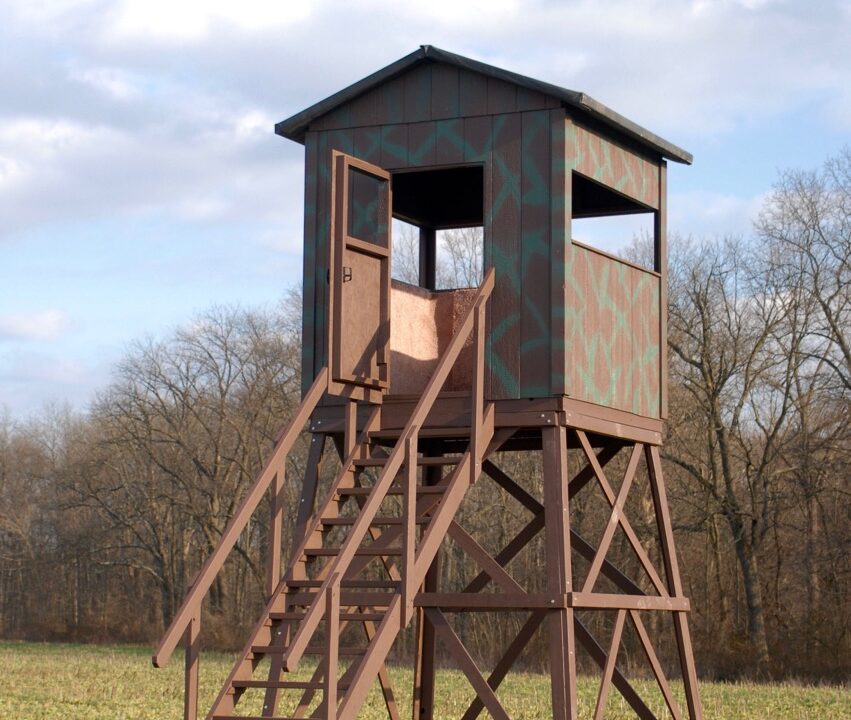
Evolution of the Hunting Blind: From Camouflage to Connected Tech
The concept of a deer blind, at its core, revolves around achieving an advantage through concealment. This fundamental principle has remained constant, but the methods and technologies employed to achieve it have undergone a profound transformation, moving from basic cover to highly advanced, connected structures.
The Core Concept: Concealment and Advantage
In its simplest form, a deer blind provides a strategic vantage point while simultaneously obscuring the hunter’s presence. This concealment is multi-faceted, addressing visual detection through camouflage, auditory detection through sound dampening, and olfactory detection through scent control. The goal is to allow the hunter to observe their surroundings and prepare for an ethical shot without alerting the deer. Beyond concealment, a blind offers protection from the elements, ensuring the hunter remains comfortable and focused, even during extended periods in challenging weather conditions.
Early Innovations: Simple Structures and Materials
Historically, deer blinds were often impromptu structures—a cluster of branches, a dug-out pit, or a natural rock formation offering cover. The advent of more structured blinds saw the use of readily available materials like wood, canvas, or basic fabric. Early manufactured blinds focused on portability and simple camouflage patterns, often taking the form of pop-up ground blinds or basic elevated platforms (tree stands). These designs emphasized straightforward function: provide a barrier between hunter and prey, and offer a basic level of weather protection. While effective, they largely lacked integrated features beyond their primary purpose of physical concealment.
The Digital Revolution in Deer Blinds
The 21st century has ushered in a digital revolution that has profoundly impacted nearly every industry, and outdoor recreation is no exception. For deer blinds, this has meant an evolution from purely mechanical structures to smart systems that integrate various technologies. Early signs of this shift included the incorporation of improved insulation for thermal regulation, more durable and weather-resistant synthetic fabrics, and advanced camouflage patterns. However, the true digital revolution began with the inclusion of power sources, sensors, and communication capabilities. Today, a modern deer blind can be equipped with remote monitoring systems, environmental controls, and sophisticated data-gathering tools, effectively transforming a simple hide into a sophisticated technological hub for wildlife observation and hunting. This integration of smart features extends the hunter’s capabilities far beyond what was possible even a decade ago, providing an unprecedented level of insight and control.
Modern Deer Blind Technology: Enhancing the Hunter’s Edge
The contemporary deer blind leverages a suite of technologies to provide hunters with a significant advantage, moving beyond mere physical concealment to offer enhanced situational awareness, comfort, and operational efficiency. These innovations span from advanced materials science to sophisticated digital integration.
Advanced Materials and Structural Design
The foundation of any modern deer blind is its physical structure, which has seen remarkable advancements in material science and engineering. Contemporary blinds often utilize lightweight, high-strength composites such as fiberglass, aluminum alloys, or reinforced polymers. These materials offer superior durability, resistance to extreme weather conditions (UV radiation, heavy winds, snow loads), and are often treated for corrosion resistance, significantly extending the lifespan of the blind. Insulated panels, frequently incorporating closed-cell foam or other thermal barriers, provide excellent temperature regulation, keeping the interior warmer in winter and cooler in summer. Sound-dampening materials are strategically integrated into walls and floors to minimize noise, preventing echoes and muffling sounds generated inside the blind, thus preserving the element of surprise. Furthermore, modular designs and precision-engineered components allow for easier assembly, disassembly, and transport, reflecting a move towards both permanence and flexibility.
Integrated Electronics and Connectivity
Perhaps the most significant technological leap in deer blinds is the integration of electronic systems and connectivity features, turning a simple structure into a connected hunting platform.
Remote Monitoring and Scouting
Modern hunting strategies heavily rely on data, and integrated blind technology facilitates this collection. Cellular-enabled trail cameras, often deployed around the blind or in key travel corridors, transmit real-time images and videos of wildlife activity directly to a hunter’s smartphone or computer. Drones equipped with high-resolution cameras or thermal imaging sensors can be used for aerial scouting of terrain and animal patterns before or during a hunt, feeding valuable data back to the hunter in the blind. This data can include species identification, movement patterns, and even estimated population densities, all contributing to a more informed hunting decision.
Environmental Controls
Comfort is key for extended sits, and modern blinds offer sophisticated environmental controls. Integrated HVAC (heating, ventilation, and air conditioning) systems, often powered by solar or battery, maintain optimal interior temperatures regardless of exterior conditions. Quiet electric heaters ensure warmth without noise or scent. Ventilation systems, sometimes incorporating carbon filters, actively manage scent dispersal, mitigating the hunter’s human odor signature—a critical factor in deer hunting.

Smart Features
The “smart” aspect of deer blinds extends to various operational enhancements. App-controlled lighting allows for subtle illumination without spooking game. Integrated laser rangefinders provide precise distance measurements to targets, enhancing shot accuracy. Silent, motor-driven window mechanisms allow hunters to open and close windows with minimal movement and noise. USB charging ports ensure that essential devices like smartphones, GPS units, and rangefinders remain powered. Some advanced blinds even feature integrated GPS for precise location tracking, environmental sensors for real-time wind direction and temperature, and digital interfaces for managing all these systems.
Ergonomics and User Experience
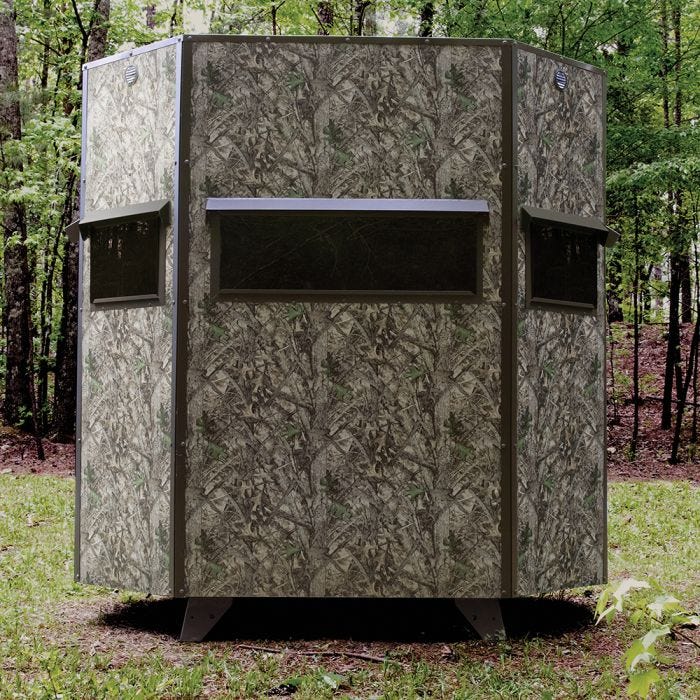
Beyond raw technology, modern deer blind design also focuses heavily on optimizing the hunter’s experience. Ergonomics plays a crucial role, with adjustable, comfortable seating designed for long hours, minimizing fatigue and allowing for steady aim. Viewing ports are meticulously designed for maximum field of view while minimizing exposure, often featuring specialized glass or mesh that enhances stealth. The internal layout is optimized for efficient movement, silent weapon handling, and easy access to gear. Every element, from the silent door hinges to the placement of control panels, is considered to ensure the hunter can operate effectively and discreetly, enhancing both comfort and the probability of success.
Choosing Your Tech-Enabled Deer Blind: Key Considerations
Selecting a modern, tech-enabled deer blind involves navigating a range of features and functionalities. The decision largely hinges on balancing intended use, desired level of technology integration, and practical considerations like power and security.
Portability vs. Permanence: A Tech Compromise
One of the primary decisions is whether a portable or permanent blind best suits your hunting style and property. Portable blinds, often pop-up or lightweight panel designs, prioritize ease of transport and quick setup. Their tech integration typically focuses on battery-powered, simpler smart features like basic environmental sensors, USB charging, or external mounting points for cellular trail cameras. The emphasis is on energy efficiency and minimal power draw. In contrast, permanent blinds (often elevated towers or cabin-like structures) can support far more elaborate, power-intensive systems. These might include full HVAC units, comprehensive surveillance camera networks, integrated solar power arrays, and Wi-Fi connectivity. The choice dictates the scope of technology you can realistically incorporate and maintain.
Powering Your Blind: Solar, Battery, or Generator
The lifeline of any tech-enabled deer blind is its power source. Reliable energy is crucial for integrated electronics, environmental controls, and charging personal devices.
- Solar Power: Increasingly popular, solar panels offer a sustainable and often silent power solution for both permanent and semi-permanent blinds. They are ideal for remote locations, minimizing the need for external fuel. Systems typically include panels, a charge controller, and deep-cycle batteries for energy storage, allowing operation during cloudy days or at night. The initial investment can be higher, but long-term operating costs are minimal.
- Battery Banks: For more portable or less power-intensive setups, large-capacity deep-cycle batteries (marine or RV batteries) are a common choice. These provide reliable power but require periodic recharging via external sources (grid power, vehicle, or a portable solar charger). Lithium-ion battery packs offer lighter weight and longer life but come at a premium price.
- Generators: While offering abundant power, generators are generally reserved for very high-demand permanent blinds due to their noise, fuel requirements, and potential for scent contamination. Quiet inverter generators exist, but even these can be disruptive in a hunting environment. They are more suitable for construction or occasional power boosts rather than continuous operation during a hunt.
Digital Security and Privacy in Remote Locations
As deer blinds become more connected, digital security and privacy become critical considerations. Integrated cameras, app-controlled systems, and connected devices are susceptible to various risks. Securing data from trail cameras is paramount; this involves using strong passwords, encrypted storage options, and reputable cloud services. Network security for Wi-Fi or cellular-enabled devices within the blind requires strong router passwords and regular software updates to prevent unauthorized access to the blind’s systems or data. Furthermore, protecting personal information associated with app accounts and ensuring the physical security of valuable electronic equipment in remote locations is essential. This might involve robust locks, alarm systems, or even motion-activated deterrents linked to your smart blind system, safeguarding both your investment and your privacy.
The Future of Hunting Technology: Beyond the Blind
The trajectory of technological innovation suggests that the modern deer blind is merely a precursor to even more integrated and intelligent hunting systems. The future promises advancements that will further enhance efficiency, ethical practices, and the overall understanding of wildlife.
AI-Powered Tracking and Analytics
Artificial intelligence is poised to revolutionize wildlife monitoring and tracking. Future systems could deploy AI algorithms to analyze vast amounts of data from trail cameras, thermal sensors, and even micro-drones. This AI could autonomously identify individual animals, track their movements with unprecedented accuracy, predict migration patterns, and model optimal feeding times based on environmental factors. Hunters could receive real-time, AI-generated insights on their smart devices, advising them on the most opportune moments and locations, moving beyond simple observation to predictive analytics. This could lead to more efficient and selective harvesting, reducing the time spent in the field while increasing success rates.
Augmented Reality for Enhanced Situational Awareness
Imagine wearing augmented reality (AR) goggles within your deer blind that overlay critical information directly onto your field of view. This AR display could show real-time wind direction and speed, precise ranges to multiple targets, thermal signatures of hidden animals, and even identify species or provide vital anatomy overlays for ethical shot placement. Such technology could integrate GPS data to mark waypoints, track animal movement paths, and even provide heads-up navigational assistance. This would provide an unparalleled level of situational awareness, enhancing decision-making and improving safety in dynamic environments.
Sustainable Tech and Ethical Hunting
As technology advances, so too does the potential to foster more sustainable and ethical hunting practices. Future tech could include smart feeders that precisely control feed distribution based on animal population dynamics, minimizing waste and optimizing nutritional intake. Advanced sensors could provide non-invasive population monitoring, offering ecologists and wildlife managers more accurate data for conservation efforts. Biometric data from animals could be collected remotely to track health and genetic diversity. Furthermore, technology could facilitate less intrusive scouting methods, reducing human impact on wildlife habitats. By providing deeper insights into ecosystems and animal behavior, technology can empower hunters to become even more effective stewards of the land, aligning the pursuit of game with broader conservation goals and ensuring the long-term health of wildlife populations.
aViewFromTheCave is a participant in the Amazon Services LLC Associates Program, an affiliate advertising program designed to provide a means for sites to earn advertising fees by advertising and linking to Amazon.com. Amazon, the Amazon logo, AmazonSupply, and the AmazonSupply logo are trademarks of Amazon.com, Inc. or its affiliates. As an Amazon Associate we earn affiliate commissions from qualifying purchases.