
In the intricate world of chemistry, reactions do not simply occur because ingredients are placed in the same vessel. Whether in the specialized labs of pharmaceutical manufacturing or the complex synthetic processes powering industrial chemical production, there is a fundamental “barrier to entry” that molecules must overcome. Understanding the mechanics of what must happen before a chemical reaction can begin is not merely an academic exercise; it is the cornerstone of controlling chemical processes, optimizing yields, and ensuring safety in high-stakes environments.
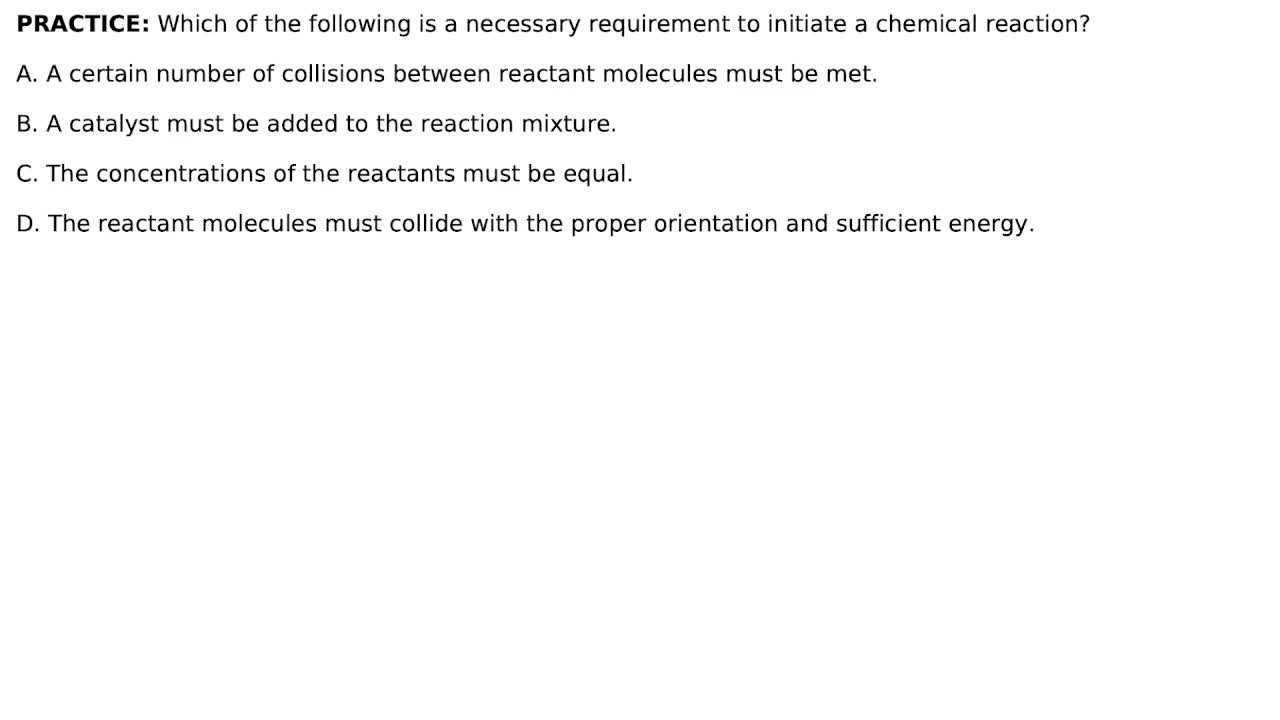
For a reaction to transition from a theoretical possibility to a tangible reality, molecules must navigate a specific set of physical and energetic requirements. These prerequisites—molecular collision, proper orientation, and the acquisition of activation energy—form the bedrock of chemical kinetics.

The Collision Theory: The Physics of Interaction
At the most basic level, a chemical reaction requires contact. Molecules are in constant, chaotic motion, but simple proximity is insufficient. According to collision theory, for a reaction to occur, particles must physically collide. However, the vast majority of collisions between molecules are “unproductive,” meaning they result in a simple rebound rather than the breaking and forming of chemical bonds.
The Necessity of High-Frequency Collisions
In any given system, molecules are constantly bumping into one another. In a liquid or gaseous phase, these collisions happen billions of times per second. Increasing the frequency of these collisions is the primary method for accelerating reaction rates in industrial settings. By increasing the concentration of reactants or decreasing the volume of the reaction vessel, manufacturers force molecules into tighter quarters, statistically increasing the likelihood that they will strike one another.
The Role of Kinetic Energy
Collision frequency is only half the battle. If two molecules collide with very little speed, they will merely bounce off each other, much like two billiard balls rolling slowly toward one another. To initiate a reaction, these molecules must possess enough kinetic energy to overcome the repulsive forces of their electron clouds. This threshold of kinetic energy is the minimum force required to initiate the bond-breaking process.
Achieving Proper Molecular Orientation
Even when molecules collide with sufficient force, a reaction is not guaranteed. Imagine two complex organic molecules approaching each other; if they collide in an orientation where the reactive functional groups are facing away from each other, the energy of the collision will be dissipated harmlessly as vibration or heat.
The Geometric Requirement
The geometry of a collision is a critical, yet often overlooked, component of reaction kinetics. For a bond to break and a new one to form, the atoms involved must approach each other at specific angles that allow for the overlap of atomic orbitals. If the atoms are not aligned correctly, the “lock and key” mechanism of chemical bonding cannot engage.
In industrial synthesis, this is why catalysts are so vital. Catalysts work by providing a surface or an active site that acts as a scaffold. By docking the reactant molecules in the precise orientation required for the reaction, the catalyst drastically increases the probability that a collision will be successful. This geometric alignment effectively lowers the “entropy penalty” of the reaction, ensuring that the necessary atoms are brought into the right place at the right time.
Steric Hindrance and Molecular Shape
In complex molecules, steric hindrance—the physical crowding of atoms—can prevent the necessary orientation. Large, bulky side groups can shield the reactive site, making it physically impossible for another molecule to reach the necessary position. Before a reaction can begin in these systems, the molecular structure must be flexible enough, or the collision forceful enough, to overcome this spatial interference. Understanding these spatial constraints is why chemists often modify reactants or use specific solvents to change the effective shape or “solvation shell” of the molecules involved.
Surmounting the Activation Energy Barrier
The most significant hurdle in any chemical transformation is the activation energy ($E_a$). This is the “energy hump” that reactants must climb before they can be transformed into products. Think of it as a mountain pass: even if you are moving toward your destination, you cannot reach it unless you have enough energy to reach the peak of the pass.
Defining the Transition State
As molecules collide with sufficient energy and correct orientation, they reach a high-energy, unstable state known as the transition state. At this fleeting moment, old bonds are halfway broken, and new bonds are halfway formed. This transition state is extremely short-lived and represents the highest point of potential energy in the reaction coordinate.
If the reactant molecules do not possess the total energy required to reach this transition state, they will simply revert to their original form. Therefore, “triggering” a reaction often involves a deliberate input of energy to help the system climb this hill.
Thermal Activation vs. Catalytic Assistance
There are two primary ways to help molecules overcome the activation energy barrier:
- Thermal Activation: Adding heat increases the average kinetic energy of the molecules. As the temperature rises, a larger fraction of the molecules in the population will possess the threshold energy required to cross the activation energy barrier. This is the brute-force method of chemistry.
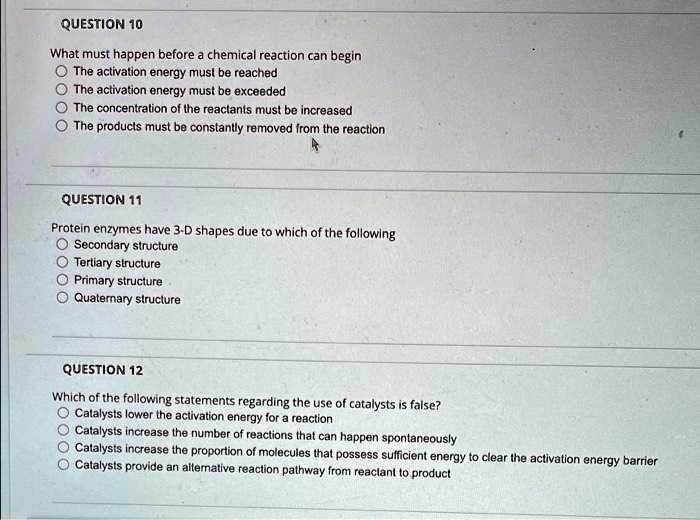
- Catalytic Lowering of $E_a$: A catalyst provides an alternative reaction pathway with a lower activation energy. By creating a different, more efficient transition state, the catalyst allows the reaction to proceed at much lower temperatures. This is the elegant, efficient method preferred in modern green chemistry and industrial manufacturing, as it saves energy and prevents the degradation of delicate compounds that might occur under high heat.
The Environmental Context: Solvent and Phase Effects
Before the first atom can move, the environment—or the “reaction medium”—must be primed. The choice of solvent is not merely about keeping reactants in a liquid state; it is about managing the energetic landscape of the reactants.
Solvent Polarity and Solvation
Solvents play an active role in stabilizing or destabilizing reactants. Polar solvents can surround charged species, “caging” them and potentially making them less reactive. Alternatively, a solvent can be used to specifically destabilize the reactant, essentially “pushing” it toward the transition state by making the initial state less energetically favorable.
In some cases, the solvent participates directly in the reaction, acting as a reactant or a proton donor/acceptor. Before the reaction begins, the chemist must ensure that the solvent environment is compatible with the desired reaction mechanism, ensuring that the solvent doesn’t undergo its own competing reaction or sequester the reactants in a way that renders them inert.
Equilibrium and Thermodynamic Spontaneity
Finally, even if a reaction is kinetically capable of proceeding, it must also be thermodynamically favorable. The Gibbs free energy of the system must decrease for a reaction to occur spontaneously. Before a reaction begins, the system’s concentrations must be such that the reaction quotient ($Q$) is favorable relative to the equilibrium constant ($K$). In industrial processes, this often means constantly removing products from the reaction vessel to maintain a “pulling” force that prevents the reaction from reaching equilibrium too early, thereby keeping the reaction in a state of constant forward motion.
By managing the collision frequency, ensuring proper spatial orientation, providing the necessary activation energy, and optimizing the environmental medium, we move from the chaos of random molecular movement to the ordered precision of a controlled chemical reaction. These elements are the prerequisites that every molecule must satisfy before the transformation from reactant to product can finally commence.
aViewFromTheCave is a participant in the Amazon Services LLC Associates Program, an affiliate advertising program designed to provide a means for sites to earn advertising fees by advertising and linking to Amazon.com. Amazon, the Amazon logo, AmazonSupply, and the AmazonSupply logo are trademarks of Amazon.com, Inc. or its affiliates. As an Amazon Associate we earn affiliate commissions from qualifying purchases.