
The Czech Republic, a nation situated at the geographical heart of Europe, is defined by a unique linguistic landscape that serves as the cornerstone of its cultural identity. For those interested in the nexus of technology, global software deployment, and the digitization of Slavic languages, understanding the Czech language is essential. From a technological standpoint, the Czech language presents specific challenges and opportunities in Natural Language Processing (NLP), localization, and the development of intelligent user interfaces.
The Linguistic Foundations of the Czech Republic
The primary and official language of the Czech Republic is Czech, a West Slavic language spoken by over ten million people. Linguistically, it is closely related to Slovak, Polish, and Sorbian. However, for technology developers and software architects, it is the morphosyntactic complexity of Czech that makes it a fascinating case study in computational linguistics.
The Complexity of Morphological Inflection
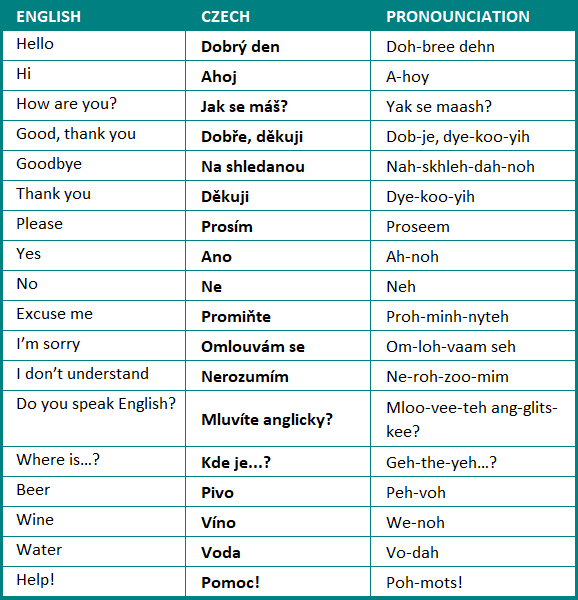
Czech is a highly inflected language. Unlike English, where meaning is largely derived from word order, Czech relies on an intricate system of cases, genders, and numbers. For software engineers working on AI-driven translation tools or speech-to-text engines, this means that a single lemma (the base form of a word) can generate dozens of different word forms.
When developing localized software or Large Language Models (LLMs) for the Czech market, developers cannot rely on simple keyword mapping. Effective digital solutions require advanced morphological analyzers that can deconstruct these inflected forms to understand the underlying semantic intent. Failure to account for this complexity leads to poor user experience in chatbots, automated customer support systems, and predictive text algorithms.
Orthography and Digital Input
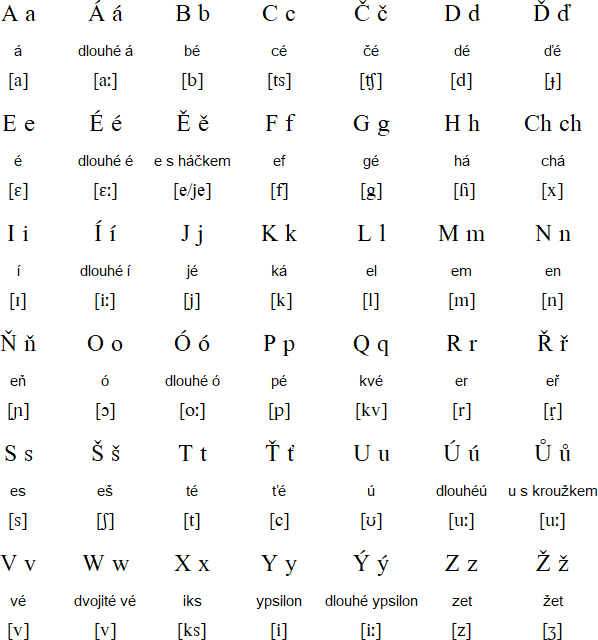
The Czech alphabet uses the Latin script supplemented by diacritics—specifically the háček (caron) and the čárka (acute accent). In the early days of digital computing, these characters often caused “mojibake” (encoding errors). Today, while UTF-8 has largely standardized character representation, the integration of these characters into search engine optimization (SEO) and database indexing remains a technical consideration. Developers must ensure that their software architectures are fully compliant with Unicode standards to avoid broken user interfaces or lost data during synchronization processes.
Localization Strategy and Digital Market Entry
For global technology companies, entering the Czech market requires more than simple translation. It requires a robust localization strategy that respects the nuance of the local language. When a brand decides to expand its digital footprint into Prague, Brno, or Ostrava, the localization process must be treated as a technical product requirement rather than an afterthought.
User Interface and Experience (UI/UX) Design
Because Czech words are often longer than their English equivalents due to their inflected nature, UI designers must account for “text expansion.” A button labeled “Save” in English might become “Uložit,” but a more complex administrative command can grow significantly in character count. If the software interface is not designed with flexible, responsive layouts, the text will overflow, break the design, or create truncated strings that appear unprofessional.
Voice Recognition and AI Integration
As the tech industry pivots toward voice-first interfaces, the Czech market presents a high-growth environment. However, training speech-to-text (STT) engines for Czech requires significantly larger datasets than for less inflected languages. The phonological intricacies—including specific consonant clusters—mean that general-purpose models often underperform in the Czech Republic. Developers are increasingly turning to domain-specific training sets to improve accuracy for local applications, such as home automation systems, virtual assistants, and accessibility software for the visually impaired.
The Role of Czech in Modern Computing
The technological infrastructure of the Czech Republic is highly developed, with a strong emphasis on cybersecurity and software development. Consequently, the Czech language is not merely a tool for communication; it is a critical component of the localized digital ecosystem.
Localization vs. Internationalization (i18n)
In modern software development, internationalization (i18n) is the process of planning and implementing products so they can be easily adapted to specific local languages and cultures. For companies deploying SaaS (Software as a Service) platforms in the Czech Republic, this involves:
- Date and Time Formatting: Czech uses the DD. MM. YYYY format, which is distinct from the US-centric MM/DD/YYYY.
- Currency Handling: The Czech Republic utilizes the Czech Koruna (CZK). Payment gateways must be configured to handle local decimal separators (the comma instead of the period).
- Sorting Algorithms: Standard ASCII sorting fails for Czech because characters like ‘č’, ‘š’, and ‘ž’ have specific positions in the Czech alphabet that differ from the standard English ‘z’.
Cybersecurity and Language-Specific Threats
The localization of security protocols is another often overlooked aspect of the tech industry in the Czech Republic. Phishing attempts and social engineering attacks are becoming increasingly sophisticated. In the past, attackers often relied on poor-quality, machine-translated emails that were easy to identify. However, as generative AI tools become more accessible, attackers are producing high-quality, native-level Czech text that mimics local banking or government communications. Consequently, Czech tech companies are investing heavily in AI-driven fraud detection systems capable of identifying linguistic anomalies that suggest synthetic or malicious intent, even when the grammar appears perfect.
The Future of Czech in the Digital Age
The trajectory of the Czech language within the global tech landscape is defined by the tension between localization and the ubiquity of English. While English remains the lingua franca of international business and programming, there is a strong demand for native-language software experiences.
Generative AI and the Czech Language
The current AI boom has changed how we perceive language limitations. While early LLMs were notoriously poor at handling Slavic languages, the current generation of models has shown remarkable proficiency in Czech. This is a game changer for local software startups. Small to medium-sized enterprises (SMEs) in the Czech Republic can now leverage high-end, native-level AI for customer service automation, legal document review, and code documentation in their own language.

Data Sovereignty and Local Cloud Infrastructure
As the Czech Republic continues to integrate deeper into the European Union’s digital single market, discussions around data sovereignty are accelerating. Localizing digital services into Czech is no longer just about customer satisfaction; it is about compliance. Tech providers must ensure that data processing workflows respect local preferences for language and privacy.
For developers and stakeholders, the lesson is clear: the Czech language is a sophisticated, highly structured component of the Central European tech market. Whether you are developing a mobile app, deploying a cloud-based enterprise solution, or training the next generation of neural networks, acknowledging the specific requirements of the Czech language is vital. Those who prioritize precision in linguistic localization will inevitably secure a competitive advantage in this highly digitalized and tech-savvy nation. The future of Czech technology is not just in binary code, but in the seamless, respectful, and accurate integration of its unique linguistic identity into the global stack.
aViewFromTheCave is a participant in the Amazon Services LLC Associates Program, an affiliate advertising program designed to provide a means for sites to earn advertising fees by advertising and linking to Amazon.com. Amazon, the Amazon logo, AmazonSupply, and the AmazonSupply logo are trademarks of Amazon.com, Inc. or its affiliates. As an Amazon Associate we earn affiliate commissions from qualifying purchases.