
In the rapidly evolving landscape of modern technology, the concepts of “system” and “control” serve as the fundamental pillars upon which all automated processes are built. Whether we are discussing the algorithms governing artificial intelligence, the architecture of cloud computing, or the complex networks of the Internet of Things (IoT), these two concepts are omnipresent. Understanding them is not merely an academic exercise; it is the key to mastering the digital tools that define our era.
The Architecture of Systems
At its most granular level, a system is an organized collection of components—be they hardware, software, or data—that interact according to a defined set of rules to achieve a specific objective. In the context of technology, a system acts as an integrated whole, where the sum of its parts generates a functionality that none of the individual components could achieve in isolation.
Defining System Boundaries
A system is defined by its boundaries. In software engineering, this involves identifying the inputs, the processing logic, and the outputs. For instance, a cloud-based storage system takes raw data as an input, executes encryption and indexing protocols, and outputs a managed, retrievable file structure. By establishing these boundaries, engineers can isolate specific functions, allowing for modular development. This modularity is the secret to scaling modern platforms; by treating distinct services as separate systems that communicate via APIs, developers can update, debug, and expand complex digital ecosystems without collapsing the entire structure.
From Linear to Complex Adaptive Systems
Traditionally, digital systems were linear—input A would reliably lead to output B. However, the rise of machine learning and autonomous software has shifted the paradigm toward complex adaptive systems. These systems are dynamic, capable of modifying their internal logic based on environmental feedback. When we view software not as a static script but as an adaptive system, we shift our focus from simple programming to creating frameworks that evolve, self-optimize, and handle unforeseen variables, which is the cornerstone of modern AI development.
The Science of Control
While a system provides the structure, control provides the intent. Control theory is the branch of engineering and mathematics that deals with the behavior of dynamical systems with inputs. It is the mechanism by which we steer a system toward a desired state or keep it stable despite external disturbances.
Feedback Loops: The Engine of Autonomy
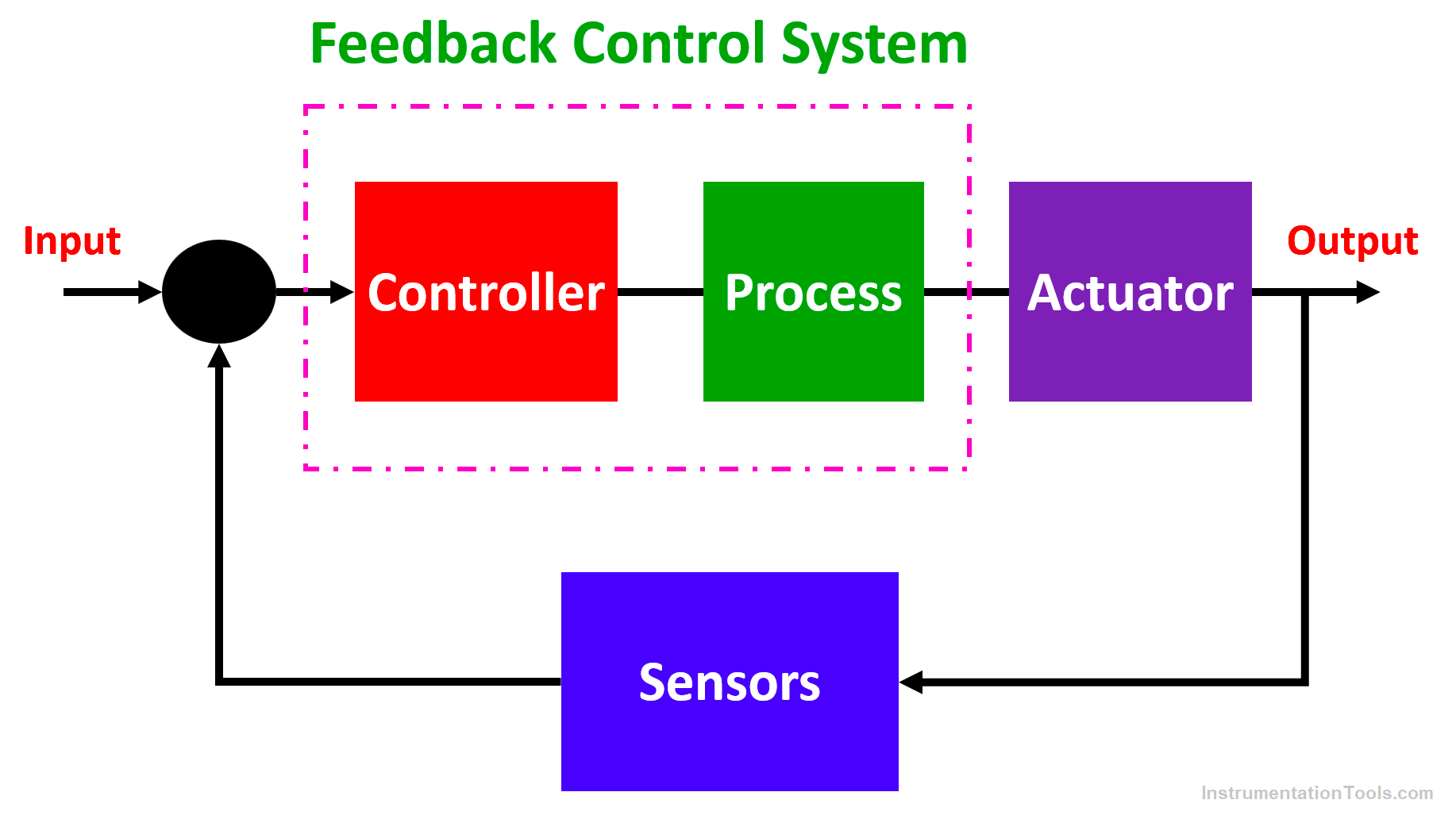
The heartbeat of any control system is the feedback loop. This is the process of comparing the actual state of a system against the desired state and adjusting the input to minimize the error between them. In technical terms, this is often implemented through Proportional-Integral-Derivative (PID) controllers.
Consider a server load balancer in a web architecture. It monitors the traffic volume (feedback) and automatically scales the number of active virtual machines (control input) to ensure that the response time remains below a threshold. This self-regulating behavior is the hallmark of sophisticated digital infrastructure. Without these control loops, our modern internet would be prone to frequent crashes and catastrophic bottlenecks, as it would lack the ability to compensate for surges in data demand.

Feedforward and Predictive Control
While feedback reacts to past errors, predictive control—or feedforward control—seeks to anticipate them. In high-performance computing, predictive algorithms analyze patterns to pre-fetch data or optimize resource allocation before the demand spikes. By modeling the system and anticipating potential disturbances, we move from reactive “damage control” to proactive “performance optimization.” This is the direction in which modern software engineering is heading: systems that do not just maintain balance but actively optimize for efficiency before an imbalance occurs.
Systems and Control in the Age of AI
The intersection of system architecture and control theory has reached a zenith with the proliferation of artificial intelligence. AI is, in essence, the ultimate control system. It consumes vast quantities of data (system input), processes it through multi-layered neural networks (system logic), and executes decisions or predictions (system output) that influence future data points (closed-loop feedback).
The Role of Algorithms in System Governance
Algorithms serve as the “governance” layer within these systems. In an automated trading platform, for example, the control parameters are set by algorithms that monitor market volatility. The “system” includes the exchange interfaces, the database of historical price action, and the execution engine. The “control” is the set of constraints—risk thresholds, stop-loss triggers, and target margins—that the algorithm enforces. As systems grow in complexity, the importance of robust control algorithms becomes paramount; a small error in the control logic can lead to systemic failure, often amplified by the speed at which these digital systems operate.
Digital Security as a Control Problem
Security can be effectively viewed through the lens of control theory. A firewall or a digital identity access management (IAM) system is a controller. It defines the state of “allowed access” and evaluates every incoming connection request as an input. If the connection aligns with the security policies, the “system” grants access; if it deviates, the “control” action is to deny or terminate the connection. As cyber threats become more automated, our security controls must evolve into “adaptive systems” themselves, utilizing machine learning to detect anomalous patterns that traditional, static rules-based controls would miss.
The Future of Autonomous Infrastructure
As we move toward a future characterized by edge computing and decentralized autonomous organizations (DAOs), the distinction between the system and the controller will continue to blur. We are entering an era of “Self-Organizing Systems,” where the control mechanisms are embedded directly into the fabric of the software.
Decentralization and Distributed Control
Traditional control systems are often centralized, relying on a master controller to dictate the behavior of peripheral nodes. However, modern digital trends favor decentralized control. In a blockchain network, there is no single central server; the “control” is a consensus mechanism shared across every node. Each participant acts as an autonomous part of the system, yet the aggregate behavior is strictly controlled by the protocol. This represents a paradigm shift in how we build systems: moving from hierarchical command structures to emergent properties driven by distributed rules.

Designing for Robustness and Resilience
The ultimate goal of any systems-and-control practitioner is to design for “resilience”—the ability of a system to maintain its primary function despite component failure or environmental shock. A resilient system is one where the control mechanisms are not brittle. If a module fails, the control system reroutes processes; if data is corrupted, the system discards the input and defaults to a safe state.
Building such systems requires a deep understanding of the feedback loops and the internal architecture of the applications being deployed. Whether you are a software architect, a data engineer, or a technical strategist, viewing your work through the prism of systems and control allows you to move beyond simply “writing code” and toward “engineering environments.”
By focusing on how your components interact and how your system maintains stability, you create digital assets that are not just functional, but enduring. In the tech-heavy environment of the modern world, the capacity to structure complex interactions and enforce intelligent control is the most valuable skill one can possess. It is the difference between a system that breaks under pressure and one that scales to meet the challenges of the future.
aViewFromTheCave is a participant in the Amazon Services LLC Associates Program, an affiliate advertising program designed to provide a means for sites to earn advertising fees by advertising and linking to Amazon.com. Amazon, the Amazon logo, AmazonSupply, and the AmazonSupply logo are trademarks of Amazon.com, Inc. or its affiliates. As an Amazon Associate we earn affiliate commissions from qualifying purchases.