
Maintaining a crystal-clear swimming pool requires more than just skimming leaves and vacuuming the floor. It is an exercise in delicate chemistry, where the balance of pH, alkalinity, and sanitizer levels determines whether your water is a refreshing oasis or a bacterial playground. Among the various chemicals involved in this process, cyanuric acid—commonly known as pool stabilizer—plays a pivotal role. Understanding how this chemical functions is essential for any pool owner looking to protect their investment and ensure a safe swimming environment.
The Science of Sunlight and Chlorine Degradation
To understand why stabilizer is necessary, one must first understand the relationship between chlorine and the sun. Chlorine is the workhorse of pool maintenance; it is the primary sanitizer responsible for killing bacteria, algae, and other microorganisms that contaminate the water. Without chlorine, a swimming pool would turn green and become a health hazard within a matter of days.
However, chlorine is highly sensitive to ultraviolet (UV) radiation. When pool water is exposed to direct sunlight, the hypochlorous acid (the active form of chlorine) breaks down rapidly. Studies have shown that without protection, up to 90% of the chlorine in a pool can be destroyed by the sun’s UV rays in as little as two hours. This process creates a cycle of constant chemical depletion, forcing pool owners to add massive amounts of chlorine daily to keep up with the losses.
The Role of Cyanuric Acid as a Sunscreen
Pool stabilizer, or cyanuric acid (CYA), acts as a chemical “sunscreen” for your chlorine. When dissolved in the water, cyanuric acid molecules bind loosely to the chlorine molecules. This temporary bond shields the chlorine from the sun’s UV rays, preventing it from breaking down. Importantly, the bond is weak enough that the chlorine can still perform its sanitizing duties when it encounters contaminants, but it remains protected while floating in the water waiting for action.
By using stabilizer, you significantly increase the longevity of your sanitizer. A pool with properly stabilized water requires far less chlorine to maintain the same level of effectiveness compared to an unstabilized pool. This efficiency is not merely a convenience; it is a critical component of water management that saves money, reduces the need for constant chemical handling, and keeps water chemistry stable throughout the hottest summer months.
Determining Ideal Levels and Avoiding Over-Stabilization
While stabilizer is essential, the old adage “more is better” does not apply in pool chemistry. In fact, an excess of cyanuric acid is one of the most common and difficult-to-remedy issues in pool maintenance. Finding the “Goldilocks” zone—the range where the sanitizer is protected but not inhibited—is the key to professional-grade pool care.
The Optimal Range
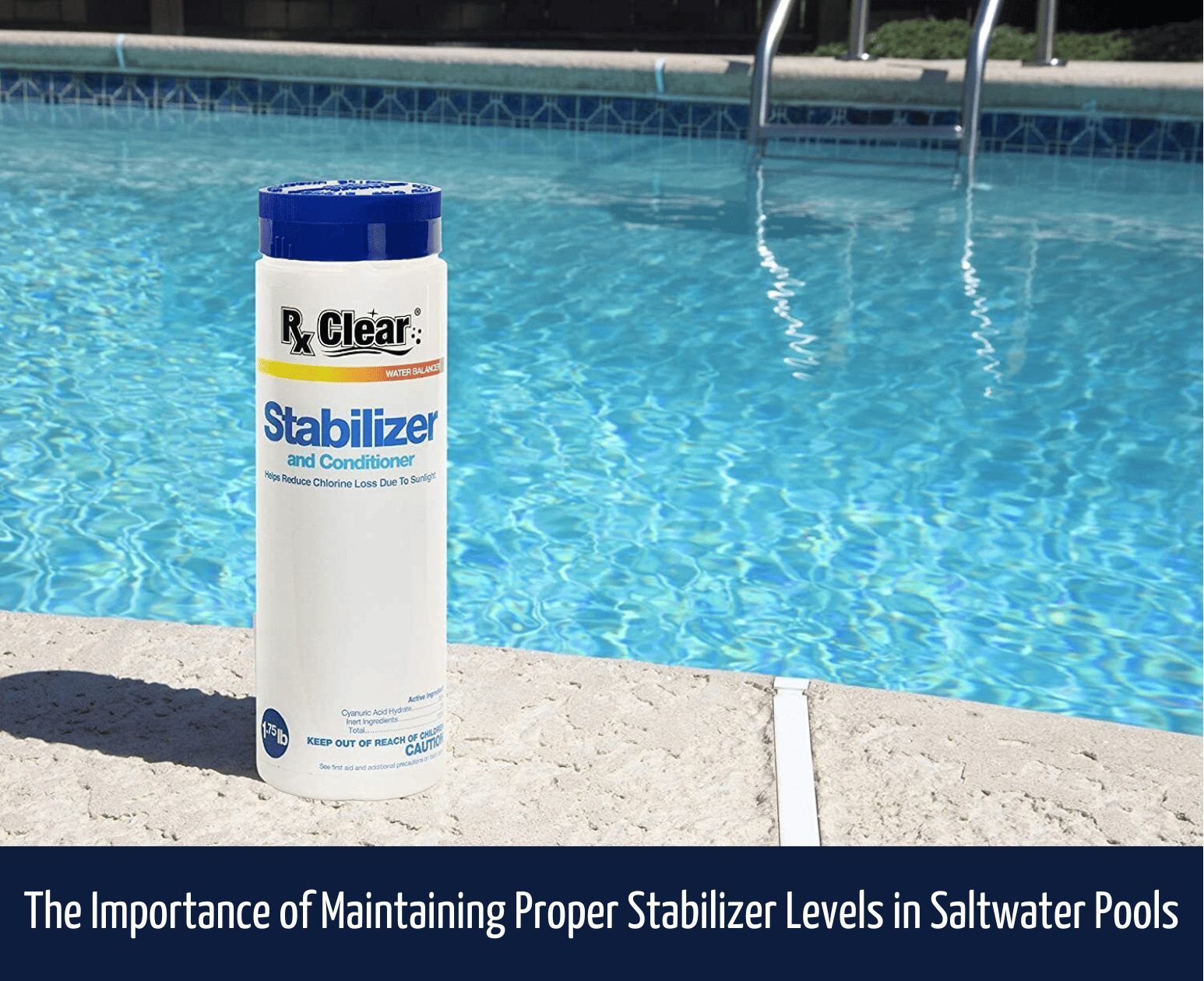
For most outdoor residential swimming pools, the ideal concentration of stabilizer falls between 30 and 50 parts per million (ppm). Some high-demand scenarios, such as saltwater pools or regions with extreme, year-round sun intensity, might push that range toward 60 to 80 ppm. However, it is generally recommended to keep levels on the lower end of the functional spectrum to avoid long-term complications.
The Dangers of “Chlorine Lock”
The primary risk of having too much stabilizer is a phenomenon known as “chlorine lock.” Because cyanuric acid binds to chlorine, an excessive amount of CYA creates such a strong bond that the chlorine becomes trapped. Even if a test strip shows that you have high levels of “Total Chlorine,” the “Free Chlorine”—the portion actually available to kill bacteria—becomes effectively neutered.
When a pool is locked, you might have high chlorine readings, yet the water remains cloudy or develops algae. This is because the chlorine is inhibited from performing its oxidizing work. Once levels exceed 100 ppm, it becomes increasingly difficult to sanitize the water effectively. Unlike pH or alkalinity, which can be adjusted with simple chemical additions, cyanuric acid levels are notoriously stubborn. They do not evaporate or dissipate on their own, meaning the only practical way to lower high CYA levels is to partially drain the pool and refill it with fresh water.
Testing, Application, and Best Practices
Maintaining the correct balance of stabilizer requires a disciplined approach to testing. Because cyanuric acid levels are stable over time, they do not need to be measured daily. Once the level is set at the beginning of the season, a monthly check is usually sufficient. However, pool owners must be aware of how their specific sanitization method impacts these levels.
Liquid vs. Granular Stabilizer
Stabilizer is typically sold in two forms: granular (powder) and liquid.
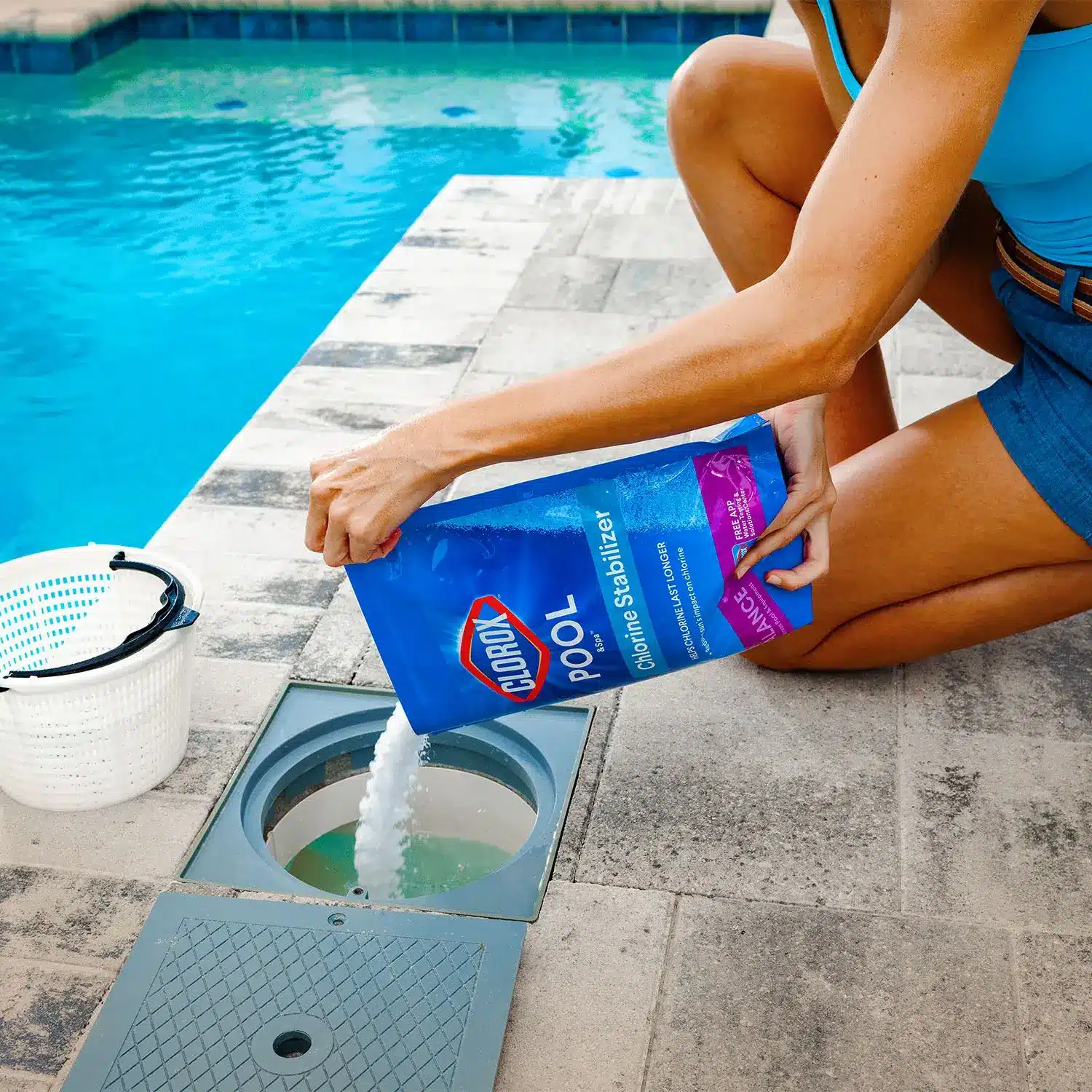
- Granular Stabilizer: This is the most common form. It dissolves slowly and can be harsh on surfaces if allowed to sit on the floor of the pool. The best practice is to dissolve the granules in a bucket of warm water before pouring it into the skimmer or directly into the pool while the pump is running.
- Liquid Stabilizer: While generally more expensive, liquid stabilizer is easier to apply and disperses into the water almost instantly. It is an excellent choice for those who want to avoid the potential for residue on the pool liner or plaster.
The “Dichlor” Trap
One of the most frequent mistakes made by pool owners involves the use of “stabilized” chlorine products, such as Dichlor or Trichlor tablets. These chemicals are popular because they are easy to use and contain both chlorine and stabilizer. However, every time you add a tablet to your chlorinator or floater, you are also adding more cyanuric acid to the water.
If you rely exclusively on these tablets throughout the season, your stabilizer levels will inevitably climb until the pool hits the threshold of chlorine lock. To avoid this, successful pool managers often rotate their sanitizing methods. They may use stabilized tablets during the peak heat of summer but switch to liquid chlorine or calcium hypochlorite (which contains no stabilizer) during the shoulder seasons or when CYA levels begin to approach the upper limit of the target range.
Long-Term Water Health and Cost Efficiency
The integration of pool stabilizer is ultimately about financial and operational efficiency. When you manage your stabilizer levels correctly, you reduce the “churn” of pool chemicals. You will buy fewer chlorine tablets, spend less time monitoring fluctuating sanitization levels, and experience fewer bouts of algae outbreaks that require expensive “shock” treatments and flocculants.
Furthermore, a stabilized pool is a more comfortable pool. When chlorine is left unprotected, it produces more chloramines—the byproducts of chlorine reacting with organic waste. Chloramines are responsible for the sharp, pungent “pool smell” and the skin and eye irritation often associated with swimming. By keeping the chlorine protected and functional via proper stabilization, you minimize the formation of these irritating byproducts.
Ultimately, understanding the role of the stabilizer is the bridge between being a “pool user” and a “pool maintainer.” It is an acknowledgment that the swimming pool is an ecosystem. By regulating the light-sensitivity of your sanitizer, you ensure that the water remains clear, safe, and balanced, providing a healthier environment for swimmers and a much easier routine for yourself. Whether you are managing a backyard fiberglass pool or a large concrete vessel, the presence of stabilizer remains the silent, invisible guardian of your pool’s clarity and longevity. Always prioritize testing before adding any chemical, and keep a close eye on the cumulative effect of your sanitizing routine to avoid the common pitfalls of over-stabilization. By mastering this balance, you master the chemistry of the pool.
aViewFromTheCave is a participant in the Amazon Services LLC Associates Program, an affiliate advertising program designed to provide a means for sites to earn advertising fees by advertising and linking to Amazon.com. Amazon, the Amazon logo, AmazonSupply, and the AmazonSupply logo are trademarks of Amazon.com, Inc. or its affiliates. As an Amazon Associate we earn affiliate commissions from qualifying purchases.