
Maintaining the correct tire pressure is one of the most critical aspects of vehicle maintenance, yet it is frequently overlooked by motorists. Often viewed as a mundane chore, monitoring your tire pressure is actually a sophisticated exercise in safety, mechanical longevity, and financial prudence. When you consider that your tires are the only four points of contact between your multi-ton vehicle and the road surface, the importance of ensuring they are inflated to the manufacturer’s exact specifications becomes paramount. From a financial perspective, proper inflation is a foundational pillar of vehicle ownership, directly influencing your fuel economy, tire lifespan, and long-term repair costs.

The Financial Impact of Proper Inflation
Many vehicle owners view tire maintenance purely through the lens of safety, neglecting the significant drain on their personal finances caused by improper inflation. Understanding the economic implications of tire pressure is essential for anyone looking to optimize their personal finance and vehicle budget.
Fuel Efficiency and Rolling Resistance
The most immediate financial consequence of under-inflated tires is increased fuel consumption. When a tire is under-inflated, the tire’s sidewalls flex more than they are designed to, creating higher internal friction and heat. This resistance against the road is known as “rolling resistance.” As rolling resistance increases, the engine must work harder to propel the vehicle forward, consuming more fuel in the process. Studies conducted by the U.S. Department of Energy suggest that for every 1 psi drop in pressure in all four tires, fuel economy can decrease by approximately 0.2% to 0.4%. While this may seem negligible on a single trip, over the lifespan of a set of tires, this represents a significant and avoidable expense.
Maximizing Tire Longevity
Tires are a substantial capital expenditure, often costing hundreds of dollars per set. Driving on under-inflated tires causes them to wear out significantly faster. Because the edges of the tire bear more of the load when pressure is low, the tread wears unevenly and prematurely. By maintaining the recommended tire pressure, you ensure an even contact patch with the road, which maximizes tread life. Effectively, proper maintenance acts as a form of “preventative investment”—spending five minutes a month to check your pressure can delay the need for a $600 to $1,000 tire replacement by thousands of miles.
Preventing Secondary Damage
Beyond the cost of the tires themselves, driving on improperly inflated tires risks secondary damage to the vehicle’s suspension and braking systems. The vibration and heat generated by faulty tire pressure can accelerate the degradation of wheel bearings, shocks, and struts. These are high-ticket repair items that can be avoided simply by adhering to the manufacturer’s pressure guidelines. When you look at the total cost of ownership, consistent tire maintenance is an essential strategy for preserving the resale value and mechanical integrity of your asset.
Locating Your Vehicle’s Specific Requirements
It is a common misconception that the “recommended” pressure is printed on the sidewall of the tire itself. This is a dangerous myth that can lead to improper inflation. The pressure listed on the tire sidewall is the maximum pressure the tire can hold under its maximum load capacity; it is rarely the optimal pressure for your specific vehicle’s handling, comfort, and fuel efficiency.

The Tire Placard
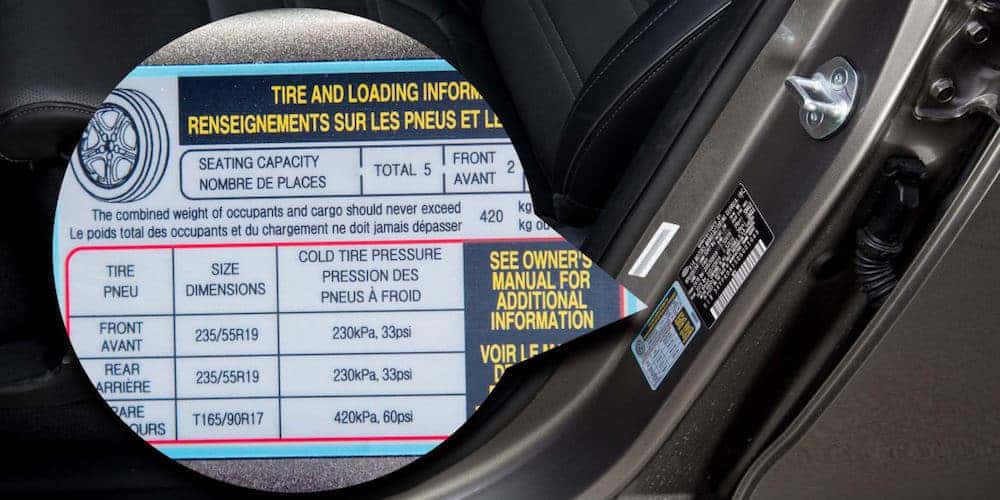
Every vehicle manufacturer installs a tire information placard, typically located on the driver-side door jamb. This label provides the precise cold tire pressure recommendations for the front and rear tires, along with the size of the tires the vehicle was equipped with at the factory. This placard is the definitive source of truth for your vehicle. If you cannot find it on the door jamb, check the owner’s manual or, occasionally, the glove box door or the fuel filler door.
The “Cold” Inflation Rule
It is vital to understand that tire pressure recommendations are based on “cold” inflation pressure. This means the tires should be checked after the car has been parked for at least three hours or has been driven for less than one mile. As you drive, the friction between the tire and the road generates heat, which causes the air inside the tire to expand and the pressure reading to rise. If you check your tires after a long highway drive, the reading will be artificially high. If you inflate or deflate your tires based on a “warm” reading, you will likely find them under-inflated once the tires cool down, leading to all the negative financial and safety consequences previously discussed.
Strategic Maintenance for Long-Term Savings
Treating tire pressure as a recurring task in your financial planning is a hallmark of a disciplined vehicle owner. By integrating tire checks into your monthly routine, you create a system that protects your budget from unexpected maintenance costs.
Establishing a Monitoring Routine
Consistency is the most effective tool in your arsenal. Commit to checking your tire pressure at least once a month and before any long road trip. Because pressure naturally fluctuates with changes in ambient temperature—typically dropping about 1 psi for every 10-degree Fahrenheit drop in outdoor temperature—seasonal shifts are a critical time to recalibrate. If you live in an area with drastic climate changes, your tire pressure monitoring is essentially a year-round job.
The Value of Quality Equipment
To manage this process effectively, invest in a high-quality, reliable digital tire pressure gauge. While the gauges found at gas stations are often unreliable, inaccurate, or damaged due to heavy public use, owning your own device ensures consistent, repeatable readings. This small, one-time investment allows you to take control of your maintenance schedule rather than relying on service station equipment. If your vehicle is equipped with a Tire Pressure Monitoring System (TPMS), view it as a backup or an emergency alert system rather than your primary maintenance tool. By the time the TPMS light illuminates on your dashboard, your tires are likely already dangerously under-inflated, and you may have already suffered the efficiency losses associated with low pressure.
Professional Rotation and Balancing
While tire pressure is the most frequent maintenance task, it should be coupled with professional tire rotation and balancing every 5,000 to 7,000 miles. Think of this as the “diversification” strategy for your tire investment. By rotating the tires, you ensure that they wear at a uniform rate, extending the life of the entire set. When you combine this disciplined rotation schedule with regular, correct inflation, you achieve the lowest possible cost per mile for your vehicle’s rolling stock.
Final Economic Considerations
The economics of vehicle ownership are often dictated by the “small” things. Just as compounding interest affects your investment accounts over decades, the compounding impact of fuel efficiency, extended tire life, and avoided suspension repairs impacts your net worth. Ignoring your tire pressure might save you ten minutes of time this month, but it effectively acts as a “hidden tax” on your monthly budget.
By shifting your perspective from viewing tire pressure as a mechanical annoyance to recognizing it as an essential component of personal financial management, you change your relationship with your vehicle. It is no longer just a machine; it is a financial asset that requires proactive stewardship. Adhering to the manufacturer’s recommended cold pressure is the simplest, most cost-effective way to ensure that your money stays in your pocket rather than flowing out through the exhaust pipe or disappearing into the premature replacement of expensive automotive components. Make the commitment to monitor your tire pressure with the same rigor you apply to your monthly investment contributions; the long-term dividends in the form of vehicle reliability and saved capital will be well worth the effort.
aViewFromTheCave is a participant in the Amazon Services LLC Associates Program, an affiliate advertising program designed to provide a means for sites to earn advertising fees by advertising and linking to Amazon.com. Amazon, the Amazon logo, AmazonSupply, and the AmazonSupply logo are trademarks of Amazon.com, Inc. or its affiliates. As an Amazon Associate we earn affiliate commissions from qualifying purchases.