
In the intricate world of business finance and electronic fund transfers, accuracy is the difference between a seamless payroll cycle and a logistical nightmare. One of the most effective, yet often overlooked, tools for ensuring this accuracy is the “prenote.” Understanding what a prenote is, how it functions, and why it is a critical component of financial operations is essential for business owners, human resources managers, and anyone handling Automated Clearing House (ACH) payments.
Understanding the Fundamentals of a Prenote
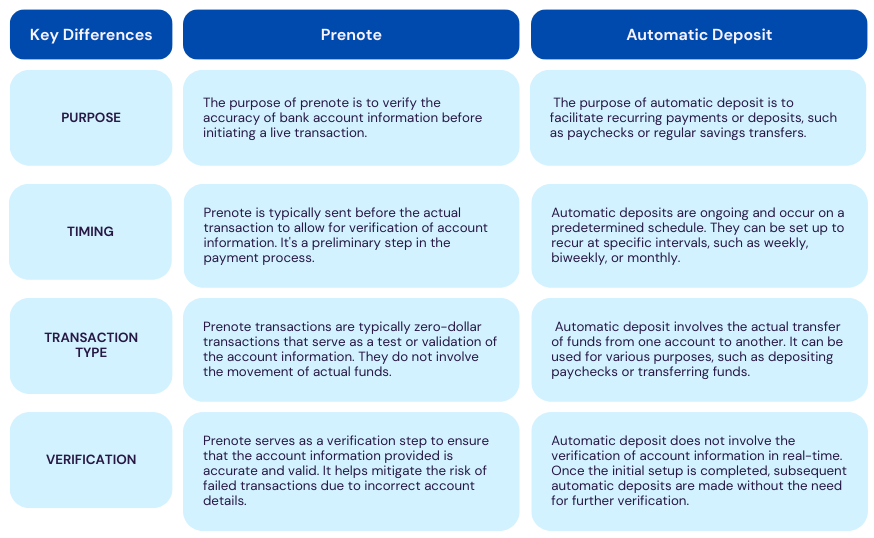
A prenote—short for “pre-notification”—is a zero-dollar transaction sent through the ACH network to verify the validity of bank account information before the first actual payment is processed. When an organization initiates a direct deposit or an automated withdrawal, the system relies on two primary pieces of information: the Routing Transit Number (RTN) and the account number. If either of these is incorrect, the transaction fails, leading to rejected payments, bank fees, and employee or vendor frustration.

The Mechanism of Verification
The prenote acts as a test drive for a financial transaction. The originating institution sends a request to the receiving bank, effectively asking, “Does this account exist, and can it accept the type of transfer I am about to send?” Because the transaction amount is set to $0.00, no actual funds are moved. This allows the financial institutions involved to confirm the routing number and account number combination without disrupting the account holder’s balance.
The Role of the ACH Network
The ACH network is the backbone of electronic payments in the United States. Governed by Nacha (the National Automated Clearing House Association), this network facilitates the movement of billions of dollars daily. Prenotes are a standardized protocol within this ecosystem. By utilizing prenotes, organizations harmonize their internal data with the strict requirements of the banking system, ensuring that when it is time to move real money, the infrastructure is already calibrated for success.
Why Prenotes Are Essential for Business Finance
For companies managing large-scale operations—such as paying hundreds of employees via direct deposit or collecting recurring subscription fees—the risk of data entry error is statistically high. Relying on “live” payments to verify banking details is a strategy that carries significant financial and reputational risk.
Minimizing Administrative Errors
Human error is an inevitable part of manual data entry. Whether it is a transposed digit in an account number or a forgotten routing number, small mistakes can lead to major complications. A rejected direct deposit doesn’t just mean the money didn’t arrive; it often triggers a cycle of reconciliation work, where payroll departments must investigate the error, reach out to the employee to obtain corrected information, and reissue the payment as a manual check or wire transfer. This process is costly, time-consuming, and resource-heavy.
Avoiding Financial Penalties
Many banking institutions charge “Return Fees” or “NOC Fees” (Notification of Change) when an ACH transaction fails. While these fees might seem nominal on a per-transaction basis, they can balloon quickly for a mid-sized business. Furthermore, if a business has a high return rate, banks may flag the company’s account as high-risk, potentially leading to increased scrutiny, higher processing costs, or even the suspension of payment privileges. Prenotes effectively mitigate these risks by identifying potential issues before they reach the stage of being a billable financial event.
Improving Relationships with Employees and Vendors
Trust is the currency of professional relationships. When an employee expects their paycheck on a Friday morning, any delay caused by banking errors can be a significant point of friction. Similarly, if a B2B vendor does not receive a payment on time due to an ACH failure, it can strain professional partnerships. By utilizing a prenote system, a business demonstrates proactive professionalism, ensuring that the first payment—and every payment thereafter—arrives exactly as scheduled.
The Operational Lifecycle of a Prenote
Integrating prenotes into a financial workflow requires a clear understanding of the timeline and the expected communication between the originating bank, the receiving bank, and the internal accounting department.
The Three-Day Window
Typically, a prenote must be sent at least three banking days before the actual transaction occurs. During this window, the receiving bank processes the inquiry. If the account number is invalid or closed, the receiving bank will send a return file to the originating institution. If the information is correct, the bank may not send any formal confirmation at all, or they may send a notification of acceptance. In most modern banking systems, “no news is good news”—if a company does not receive an error message within the designated window, the account is generally considered verified.
Navigating Notifications of Change (NOCs)
Sometimes, a prenote will trigger an “NOC.” This occurs when the bank recognizes the account, but there is a slight discrepancy in the provided information (such as an incorrect account type or a change in the routing number due to a recent bank merger). The NOC provides the business with the updated, correct information. This allows the company to update its records proactively, ensuring that the next live payment is sent to the correct destination without further friction.
Automation and Software Integration
In the digital age, many modern payroll and accounts payable platforms automate the prenote process. When a new bank account is added to an HR portal or a vendor payment portal, the software automatically triggers a prenote request. For business owners, this underscores the importance of choosing financial technology that supports automated ACH verification. It removes the burden of manually tracking the three-day window and ensures that data integrity is maintained as a background function of the business’s daily operations.
Best Practices for Implementing Prenotes
While prenotes are a powerful tool, they are not a silver bullet for all financial risks. Implementing them correctly requires a strategy that balances speed with accuracy.
Balancing Speed and Compliance
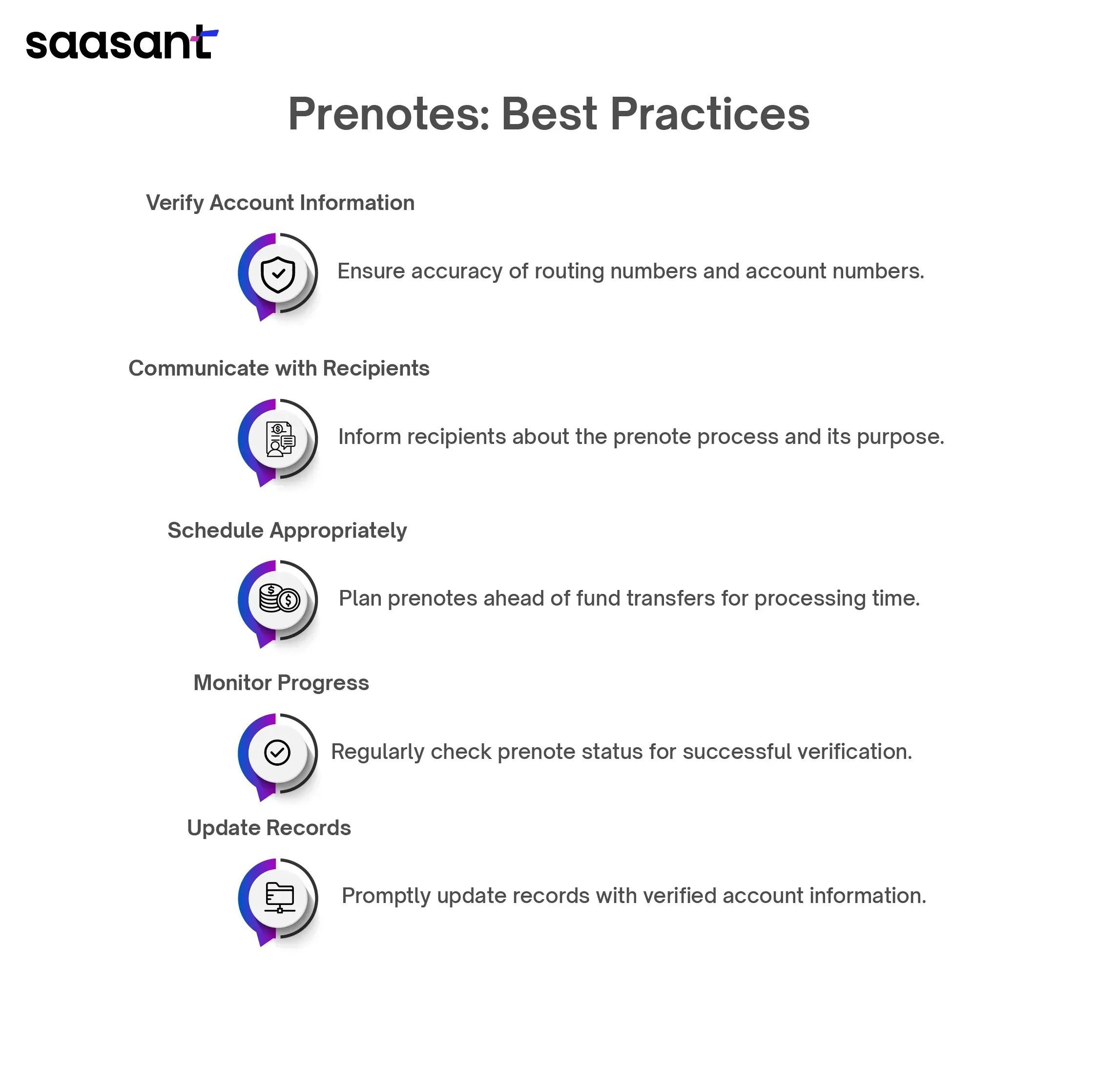
There is a tension between the need to pay employees or vendors quickly and the time required for a prenote cycle. Some businesses may choose to skip the prenote for smaller, low-risk payments to ensure faster processing. However, for high-value transactions or initial payments, the prenote process should be non-negotiable. Establish clear internal policies regarding when a prenote is mandatory—for example, every new bank account onboarding—to ensure consistency across the organization.
Educating Stakeholders
Often, employees or vendors may be confused if they see a small “test” transaction or a $0.00 entry on their bank statement. Proactive communication is key. Including a brief mention in the payroll onboarding document that a “verification transaction” may appear can prevent unnecessary support tickets or panic. Transparency helps ensure that the back-end technical processes do not result in front-end confusion.
Regular Audits of Banking Data
Even after a prenote has passed, data can become stale. Banks merge, accounts are closed, and banking platforms evolve. It is a best practice to conduct periodic audits of your ACH payment database. If a business discovers that certain accounts have not been used in a significant amount of time, it may be prudent to re-verify those details before initiating a large payment, especially during seasonal payroll spikes or annual bonus cycles.
Conclusion
The prenote is a subtle, invisible guardian of corporate liquidity and professional reliability. By moving from a reactive model of “fix it when it breaks” to a proactive model of verification, businesses protect themselves from the administrative costs, banking fees, and relationship strains associated with failed electronic transfers. In an era where digital agility is a hallmark of successful enterprise, the simple act of verifying banking information via a prenote is a fundamental step toward operational excellence. By integrating these verification checks into standard financial workflows, businesses can ensure that their capital flows efficiently, securely, and without unnecessary interruption.
aViewFromTheCave is a participant in the Amazon Services LLC Associates Program, an affiliate advertising program designed to provide a means for sites to earn advertising fees by advertising and linking to Amazon.com. Amazon, the Amazon logo, AmazonSupply, and the AmazonSupply logo are trademarks of Amazon.com, Inc. or its affiliates. As an Amazon Associate we earn affiliate commissions from qualifying purchases.