
Maintaining a pristine, weed-free lawn is often the primary goal of any serious property owner. Whether you are managing a residential landscape or a commercial estate, the difference between a lush, uniform carpet of grass and a patch of unruly weeds often comes down to proactive strategy rather than reactive labor. This is where the concept of pre-emergent herbicides becomes the cornerstone of professional groundskeeping. By understanding the mechanical and financial implications of these products, homeowners and property managers can transition from constant weeding—which is a drain on both time and capital—to a streamlined, automated approach to landscape maintenance.

Understanding Pre-Emergent Herbicides: The Financial Efficiency of Prevention
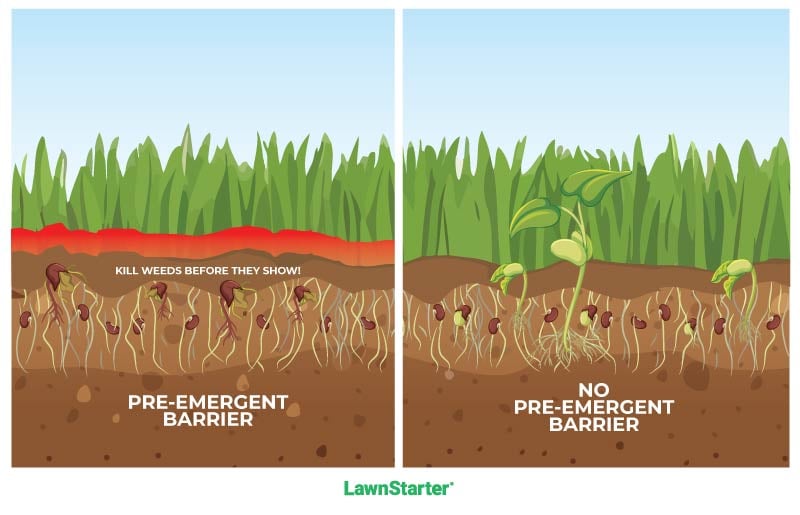
In the context of personal finance and property management, the “law of prevention” holds as much weight as it does in investment portfolios. Just as compound interest rewards early action in finance, pre-emergent herbicides reward early investment in lawn health. A pre-emergent is a specialized herbicide designed to stop weed seeds from establishing a root system. Unlike post-emergent herbicides, which are used to kill weeds that have already broken the surface, pre-emergents act as a preventative barrier.
From a business finance perspective, the cost-benefit analysis is clear. The labor cost associated with manual weeding or the recurring expense of repeated post-emergent applications far outweighs the cost of a timely pre-emergent treatment. When you consider the “opportunity cost” of your time, or the professional fees paid to lawn care companies for cleanup services, investing in a high-quality pre-emergent product at the start of the season serves as a protective hedge against future expenses. By stopping the weeds before they emerge, you are effectively protecting the “asset value” of your lawn.
The Mechanism: How Chemical Barriers Secure Your Investment
To effectively utilize pre-emergents, one must understand that they are not inherently killing agents for existing plants; rather, they are growth inhibitors. When applied to the soil, these products create a thin chemical layer—a “barrier”—just below the surface. When a seed begins to germinate, the radical (the first root) absorbs the herbicide. This triggers a physiological reaction that halts cell division, causing the seedling to perish before it ever breaches the soil surface.
Strategic Application Timing
The efficacy of this process is strictly governed by timing. If you apply the product too late, the seed has already sprouted, and the barrier is bypassed entirely. This necessitates an understanding of soil temperature rather than calendar dates. Weed seeds—particularly crabgrass and other common summer annuals—begin to germinate when soil temperatures reach approximately 55 degrees Fahrenheit for several consecutive days. Professionals monitor these soil temperature metrics with the same diligence a stock trader monitors market indices. Missing this window of opportunity is essentially a “sunk cost,” as the effectiveness of the preventative measure drops to near zero once the seed has sprouted.
The Importance of Uniformity
For the barrier to work, it must be uniform. In financial terms, this is about risk mitigation. If a patch of soil is left untreated, the “return on investment” of the entire application is compromised. Weeds are opportunistic; they will fill any gap in the chemical barrier. Therefore, professional application requires precise calibration of equipment to ensure that the chemical is distributed evenly across the lawn’s surface. Inconsistent coverage is the most common reason for failure, leading to a waste of capital and continued weed growth.
Strategic Lawn Management as a Business Asset

A well-maintained lawn is a tangible asset that contributes to the overall market value of a property. Real estate experts often cite “curb appeal” as one of the most critical factors in property valuation. A lawn infested with weeds signals neglect, which can depress property value or require significant capital expenditure to restore.
Budgeting for Maintenance
When budgeting for landscape maintenance, treat pre-emergents as a recurring operating expense. By allocating a set portion of your maintenance budget to these products, you ensure that your lawn remains a stable, low-maintenance asset. This is vastly more economical than the “crisis management” approach of dealing with weed outbreaks mid-summer, which often requires expensive, heavy-duty chemicals and significant manual labor.
The Role of Integrated Pest Management (IPM)
Savvy homeowners and business owners adopt an Integrated Pest Management approach. This includes not only the judicious use of pre-emergent herbicides but also the practice of cultural controls, such as proper mowing heights and deep-cycle watering. By maintaining a thick, healthy stand of grass, you create a natural barrier that outcompetes weeds for nutrients and sunlight. This synergy—using pre-emergents to prevent initial infestation and healthy grass management to prevent re-colonization—is the gold standard for landscape ROI. It reduces the dependency on chemical inputs over time, optimizing your long-term maintenance costs.
Evaluating Products and Maximizing Your ROI
Not all pre-emergent products are created equal. When navigating the market, it is essential to distinguish between different active ingredients and their longevity. Some products are highly specific to certain types of grassy weeds, while others are “broad-spectrum.”
Investing in Quality
Choosing a professional-grade product often provides better coverage and lasts longer in the soil than cheaper, generic alternatives. When evaluating the cost of these products, look at the “cost per square foot” and the “duration of effectiveness.” A product that costs slightly more but provides a four-month barrier is a better financial decision than a cheaper product that breaks down in six weeks, as the latter requires a second application, effectively doubling your labor and material costs.
Sustainability and Financial Responsibility
Financial responsibility also involves environmental stewardship. Over-applying chemicals is not only harmful to the soil microbiome—which is essential for long-term grass health—but it is also a waste of money. By following label instructions precisely, you avoid “over-treating,” ensuring that you are using the minimum amount of product required to achieve the desired result. This balance of cost-efficiency and performance is the hallmark of a smart financial strategy for your property.
Long-Term Benefits of Consistent Preventative Care
The long-term accumulation of weed seeds in the soil is a “debt” that continues to grow if not managed. Every weed that goes to seed contributes to a future infestation. By using pre-emergents consistently, you are effectively “paying down” the weed seed bank in your soil. Over the course of three to five years, consistent preventative treatment leads to a lawn that requires fewer chemicals and less manual intervention.
This transition from high-input maintenance to a self-sustaining lawn is the ultimate goal. It represents a significant reduction in annual operational costs. As the lawn becomes denser and the weed seed bank is depleted, you may find that you can move to a lighter application schedule, further optimizing your finances.
In conclusion, viewing pre-emergent herbicides through the lens of asset management and financial planning transforms them from mere lawn supplies into essential tools for wealth protection. By respecting the timing, ensuring uniform application, and choosing high-quality inputs, you are not just growing grass—you are protecting the value of your property and maximizing the efficiency of your time and capital. A proactive approach today ensures a cleaner, more valuable, and less costly landscape tomorrow.
aViewFromTheCave is a participant in the Amazon Services LLC Associates Program, an affiliate advertising program designed to provide a means for sites to earn advertising fees by advertising and linking to Amazon.com. Amazon, the Amazon logo, AmazonSupply, and the AmazonSupply logo are trademarks of Amazon.com, Inc. or its affiliates. As an Amazon Associate we earn affiliate commissions from qualifying purchases.