
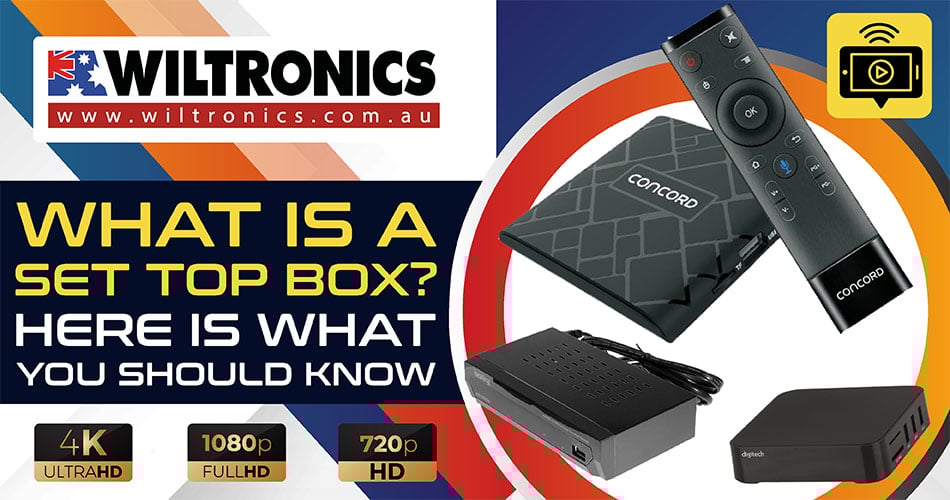
The landscape of home entertainment has undergone a dramatic transformation over the last three decades. While streaming services now dominate our screens, the hardware that bridges the gap between the internet or broadcast signals and our television sets remains a cornerstone of the modern living room. The device at the center of this experience is the set-top box (STB). Originally a simple adapter for analog cable signals, the set-top box has evolved into a sophisticated computing hub that powers everything from live sports broadcasts to high-definition 4K streaming.
The Evolution of the Set-Top Box
To understand what a set-top box is today, one must look at where it began. The term “set-top box” was born from a physical reality: in the early days of cable television, the device was literally a box that sat on top of the television set. Its primary function was to tune into specific frequencies provided by cable operators, decrypt them, and convert them into a video signal the television could display.

From Analog to Digital Conversion
In the pre-digital era, cable providers broadcasted scrambled signals. The set-top box served as an intermediary, using a “descrambler” to allow subscribers to access the channels they had paid for. As the industry transitioned to digital broadcasting, the STB became more complex. It no longer just decrypted signals; it converted compressed digital data—delivered via coaxial cables or satellite dishes—into visual and audio output. This shift allowed for Electronic Program Guides (EPGs), which changed the way viewers interacted with their televisions by providing on-screen schedules and channel information.
The Rise of Smart Connectivity
The true revolution occurred with the integration of broadband internet. Modern set-top boxes have moved far beyond their roots as mere cable tuners. Today’s devices are essentially small, specialized computers. They feature high-speed processors, significant RAM, and sophisticated operating systems that can run applications, connect to cloud servers, and manage high-bandwidth video streams. This evolution has blurred the line between the traditional “cable box” and modern “streaming devices” like Apple TV, Roku, or the Nvidia Shield.
Core Functionality and Internal Architecture
At its most basic level, a set-top box receives an input signal, processes that signal, and outputs a high-definition or ultra-high-definition image to a display device via an HDMI cable. However, the sophisticated nature of modern media consumption requires a robust internal architecture to ensure smooth playback and seamless interaction.
Signal Processing and Decryption
When a set-top box receives data, it performs a series of high-speed tasks. First, it handles “demodulation,” which extracts the information from the carrier signal. Next, it performs “decryption” and “conditional access” checks to ensure that the user has the appropriate subscription credentials to view the content. Finally, it uses a hardware-accelerated video decoder—a crucial component—to turn compressed formats (such as H.264, H.265, or AV1) into a readable video stream. Without dedicated hardware decoding, the latency and processing power required to display 4K or 8K content would overwhelm a standard computer.
Operating Systems and User Interfaces
Modern set-top boxes are powered by specialized operating systems. Many cable providers utilize proprietary Linux-based systems optimized for low latency and stability. Conversely, consumer-grade streaming devices often utilize Android TV (Google TV), tvOS, or Roku OS. These environments provide a platform for “apps.” This is a significant paradigm shift; the set-top box is no longer just a window to a provider’s channel list, but an application platform where users can install Netflix, Disney+, YouTube, or gaming services. The user interface (UI) is designed for a “10-foot experience,” meaning it must be legible, intuitive, and navigable via a simple remote control from a distance.

Connectivity Ports and Hardware Standards
The physical hardware of a set-top box has also evolved to support modern standards. The standard HDMI 2.1 port is essential for supporting 4K resolution at 120Hz and high-dynamic-range (HDR) formats like Dolby Vision. Additionally, high-end boxes now include Gigabit Ethernet ports for stable, high-bandwidth streaming, dual-band Wi-Fi 6 or 6E antennas to minimize buffering, and optical or eARC ports to output high-fidelity audio to soundbars and home theater systems.
The Modern Ecosystem: IPTV and Streaming Integration
The role of the set-top box has recently shifted toward the concept of IPTV (Internet Protocol Television). In this model, television signals are delivered entirely through the user’s internet connection rather than dedicated broadcast infrastructure. This change has fundamentally altered the relationship between service providers and hardware manufacturers.
Cloud-Based Content Delivery
Unlike traditional cable, which relied on the physical limitations of a coaxial cable network, IPTV uses packet-switched networking. This allows for features that were once science fiction: “start-over” functionality, where a user can restart a live show from the beginning; cloud-based DVR, which records shows to remote servers rather than a local hard drive; and multi-device synchronization, where the user can start a show on their set-top box and finish it on a tablet.
The Convergence of Gaming and Media
We are currently witnessing a convergence where the set-top box is becoming a gaming console. With the rise of cloud gaming services, the processing power required to run high-fidelity games is handled on a remote server, with the set-top box acting as the interface. By connecting a Bluetooth controller, users can turn their living room television into a gaming powerhouse without the need for expensive dedicated hardware. This transformation underlines the transition of the STB from a passive reception device to an active, interactive entertainment hub.
Choosing the Right Hardware for Your Home
With the market flooded with options ranging from budget-friendly “sticks” to full-featured set-top consoles, choosing the right device depends heavily on the user’s requirements regarding resolution, ecosystem, and integration.
Stick vs. Box Form Factors
The “streaming stick”—a dongle that plugs directly into the back of a TV—is popular for its portability and aesthetic minimalism. While these are excellent for basic streaming needs, they often lack the processing power, thermal management, and port variety of larger set-top boxes. For users who require a wired Ethernet connection for 4K streaming or who want to manage a larger library of locally stored media via USB, a dedicated, larger-format set-top box is superior.
The Importance of Ecosystem Lock-in
When selecting a set-top box, the choice of OS often dictates the user’s overall digital experience. For users deep within the Apple ecosystem, an Apple TV offers seamless integration with HomeKit and iCloud Photos. For those who utilize Google services or want the widest range of app availability, Android TV devices provide unparalleled flexibility and Google Assistant integration. Understanding that the set-top box is the “brain” of the living room is essential; the OS you choose will govern your interaction with every piece of content you consume.
Future-Proofing for 8K and Beyond
As display technology moves toward 8K resolution and higher-bitrate streaming, the demand on set-top hardware will only increase. Future-proofing a home theater setup requires looking for devices that support AV1 decoding, as this codec is becoming the industry standard for high-efficiency, high-quality streaming. Furthermore, as artificial intelligence becomes more prevalent in upscaling images from lower resolutions to 4K or 8K, the neural processing units (NPUs) inside these boxes will become as important as their traditional CPUs.
In conclusion, the set-top box has shed its skin as a simple cable adapter to become the sophisticated engine room of digital media. Whether it is managing complex IPTV streams, acting as an application host, or serving as a gateway to cloud gaming, it remains an indispensable piece of modern technology. As the boundaries between broadcast, internet streaming, and gaming continue to dissolve, the set-top box will remain the vital point of intersection between the digital world and the viewer.
aViewFromTheCave is a participant in the Amazon Services LLC Associates Program, an affiliate advertising program designed to provide a means for sites to earn advertising fees by advertising and linking to Amazon.com. Amazon, the Amazon logo, AmazonSupply, and the AmazonSupply logo are trademarks of Amazon.com, Inc. or its affiliates. As an Amazon Associate we earn affiliate commissions from qualifying purchases.