
In an era where identity theft remains one of the most pervasive digital and physical security risks, the humble paper shredder has evolved from a simple office accessory into a critical component of your personal and professional defense strategy. While many believe that deleting digital files is the only way to protect data, the physical destruction of documents containing sensitive information is equally vital. A “good” shredder is not merely defined by its ability to turn paper into confetti; it is defined by its security rating, durability, capacity, and the specific nature of the threats it is designed to mitigate.

Understanding Security Levels: The DIN 66399 Standard
To determine if a shredder is actually effective, you must look past the marketing jargon and focus on the DIN 66399 security levels. This international standard categorizes shredders based on the size of the resulting particles, which directly correlates to the difficulty of reconstructing the document.
P-1 to P-3: The Basic Tier
Shredders in the P-1 to P-3 categories are generally strip-cut or low-security cross-cut models. These are suitable for destroying junk mail or internal documents that hold no real private value. However, they are insufficient for financial statements, medical records, or sensitive corporate data. If your goal is true document security, these levels are rarely sufficient.
P-4 and P-5: The Gold Standard for Personal and Small Business Use
The P-4 level, which produces cross-cut particles roughly 160mm² or smaller, is the industry recommendation for personal identity protection. It ensures that a standard 8.5×11-inch document is rendered unreadable and virtually impossible to reassemble manually. For those handling high-level intellectual property or highly sensitive legal documents, the P-5 level—producing micro-cut particles—is the superior choice. These machines essentially turn paper into dust-like shreds, ensuring maximum compliance with data privacy regulations like GDPR or HIPAA.
Engineering and Durability: What Makes a Shredder Last?
A common mistake consumers make is purchasing a shredder based solely on its sheet capacity without considering the mechanical integrity of the cutting blades and the duty cycle of the motor. A good shredder is an investment in longevity; it should not require replacement every eighteen months.
The Importance of Hardened Steel Cutters
Look for units that feature solid, hardened steel cutting cylinders. Cheap, plastic-geared shredders often fail when they encounter a staple or a paperclip. High-quality shredders use precision-engineered blades that can handle minor obstructions without jamming. These blades are often self-sharpening, ensuring that the shred quality remains consistent throughout the life of the machine.
Duty Cycles and Cooling Systems
The “duty cycle” refers to how long a shredder can run continuously before it needs to cool down. If you have a backlog of tax returns from the last five years, a machine with a two-minute duty cycle will lead to extreme frustration. A robust shredder for a home office or small business should offer at least 15 to 30 minutes of continuous run time. Furthermore, internal thermal protection is a must; this feature prevents the motor from burning out by automatically shutting the unit down if it begins to overheat during a heavy shredding session.
Feature Sets: Convenience and Efficiency
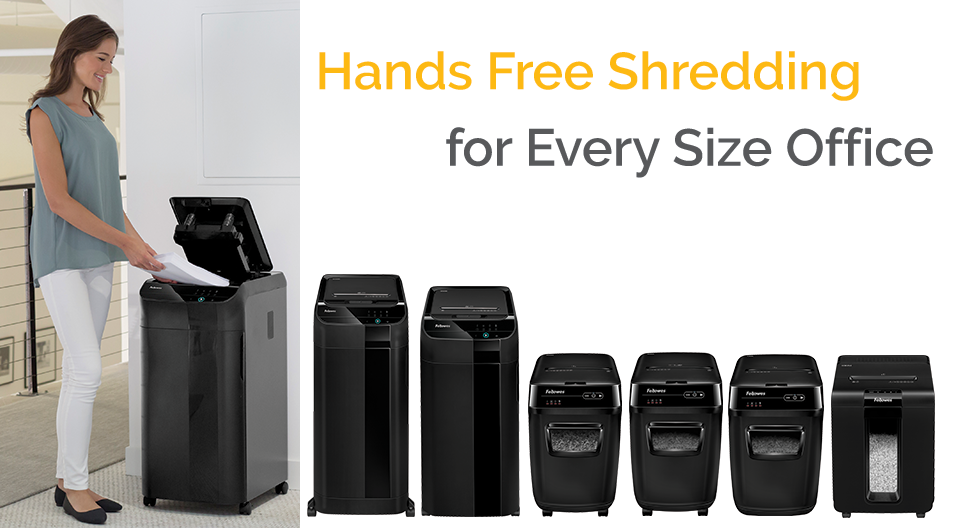
Modern shredders have moved beyond the “on/off” switch. To maximize efficiency and reduce the time spent on administrative tasks, a good shredder should incorporate features that automate the process.
Jam-Proof Technology
The primary cause of consumer dissatisfaction with shredders is the dreaded paper jam. Advanced models now utilize sensor technology to detect paper thickness before the blades even begin to turn. These systems will either reverse the motor automatically or provide an LED indicator warning if the user attempts to insert too much paper, effectively preventing the jam from occurring in the first place.
Auto-Feed Mechanisms
If your workflow involves high volumes of document destruction, manual feed shredders become a bottleneck. Auto-feed shredders allow you to stack 50 to 500 sheets of paper into a tray, close the lid, and let the machine handle the rest. This feature is a game-changer for quarterly document purges, allowing you to reclaim your time while the machine works independently.
Bin Capacity and Ease of Maintenance
The physical footprint of the shredder must be balanced with the bin capacity. A shredder that is powerful but has a small bin will require constant emptying, which creates a messy environment. A good shredder should feature a pull-out waste bin, which is significantly more convenient and cleaner than lift-off head designs that often spill dust when removed. Furthermore, consider the “noise level.” Shredding is inherently loud, but high-end models now use noise-dampening technology that keeps decibel levels low enough to operate in an open office environment without causing a distraction.
Security Beyond Paper: The Multimedia Factor
In the digital age, sensitive data is not confined to paper. A comprehensive security posture must account for the secondary storage media that accumulates in offices and homes.
Credit Cards and Optical Media
A good shredder should offer dedicated slots for credit cards and CDs/DVDs. Many identity thieves look for discarded hard plastic—credit cards or old ID badges—because they contain magnetic strips and chips that carry actionable data. Ensure your shredder has a separate, hardened intake path for these materials, as they can quickly ruin the precision blades intended for paper.
Maintenance: Lubrication and Cleaning
Even the best shredder will fail if it is not maintained. Over time, paper dust can clog the internal mechanisms, and the cutting blades can lose their friction-reducing coating. Using shredder oil sheets or applying lubricant directly to the blades every few weeks is the single most important action you can take to prolong the life of your device. Proper lubrication reduces heat, lowers the strain on the motor, and keeps the blades cutting cleanly rather than tearing the paper.
Making the Final Decision
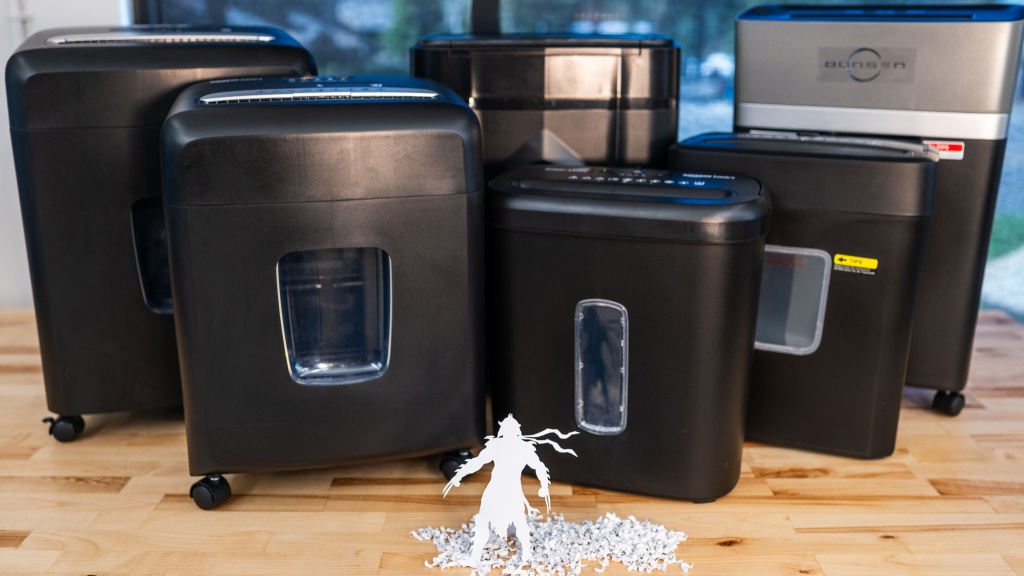
When selecting the right unit, categorize your needs based on the “Three V’s”: Volume, Velocity, and Veracity.
- Volume: How many documents do you generate in a typical month? If you handle a stack of mail once a week, a compact unit is sufficient. If you are destroying archived business records, invest in a high-capacity auto-feed unit.
- Velocity: How fast do you need the job done? If you are prone to procrastinating on paperwork, you need a shredder that can handle large amounts of data quickly to prevent a bottleneck.
- Veracity: How sensitive is the data? If you are dealing with PII (Personally Identifiable Information), banking details, or proprietary company secrets, settle for nothing less than a P-4 security rating.
A good shredder is the silent sentry of your personal privacy. By choosing a model that balances high-security cutting mechanisms with a motor capable of handling your specific workload, you transform a mundane chore into an essential component of your security infrastructure. It is not merely a tool for disposal; it is a tool for digital and physical risk management. In a world where data is the most valuable currency, ensuring that your discarded information cannot be recovered is one of the most effective ways to protect your reputation, your finances, and your privacy. Choose wisely, maintain the unit regularly, and treat document destruction as a non-negotiable part of your administrative routine.
aViewFromTheCave is a participant in the Amazon Services LLC Associates Program, an affiliate advertising program designed to provide a means for sites to earn advertising fees by advertising and linking to Amazon.com. Amazon, the Amazon logo, AmazonSupply, and the AmazonSupply logo are trademarks of Amazon.com, Inc. or its affiliates. As an Amazon Associate we earn affiliate commissions from qualifying purchases.