
When people ask what happened to Swatch watches, they often operate under the misconception that the brand suffered the fate of so many other 1980s icons—a slow, fading decline into irrelevance. The truth, however, is a fascinating case study in corporate resilience, brand evolution, and the ability of a singular product strategy to save an entire industry. Swatch did not disappear; it merely shifted from a cultural revolution to a foundational pillar of the global luxury and fashion watch market.
The 1983 Revolution: A Brand Strategy Masterclass
To understand where Swatch is today, we must revisit the crisis of the 1970s. The “Quartz Crisis”—driven by the influx of inexpensive, highly accurate Japanese watches—had decimated the Swiss watchmaking industry. Hundreds of traditional manufacturers were shuttered as they failed to compete with the precision and low cost of electronic movements.

Swatch emerged in 1983 not just as a product, but as a strategic pivot. Nicolas Hayek, the business visionary who would go on to chair the Swatch Group, understood that the Swiss industry could not compete on price alone if they continued to focus on craftsmanship-heavy, expensive mechanical timepieces.
Marketing as a Lifestyle, Not a Luxury
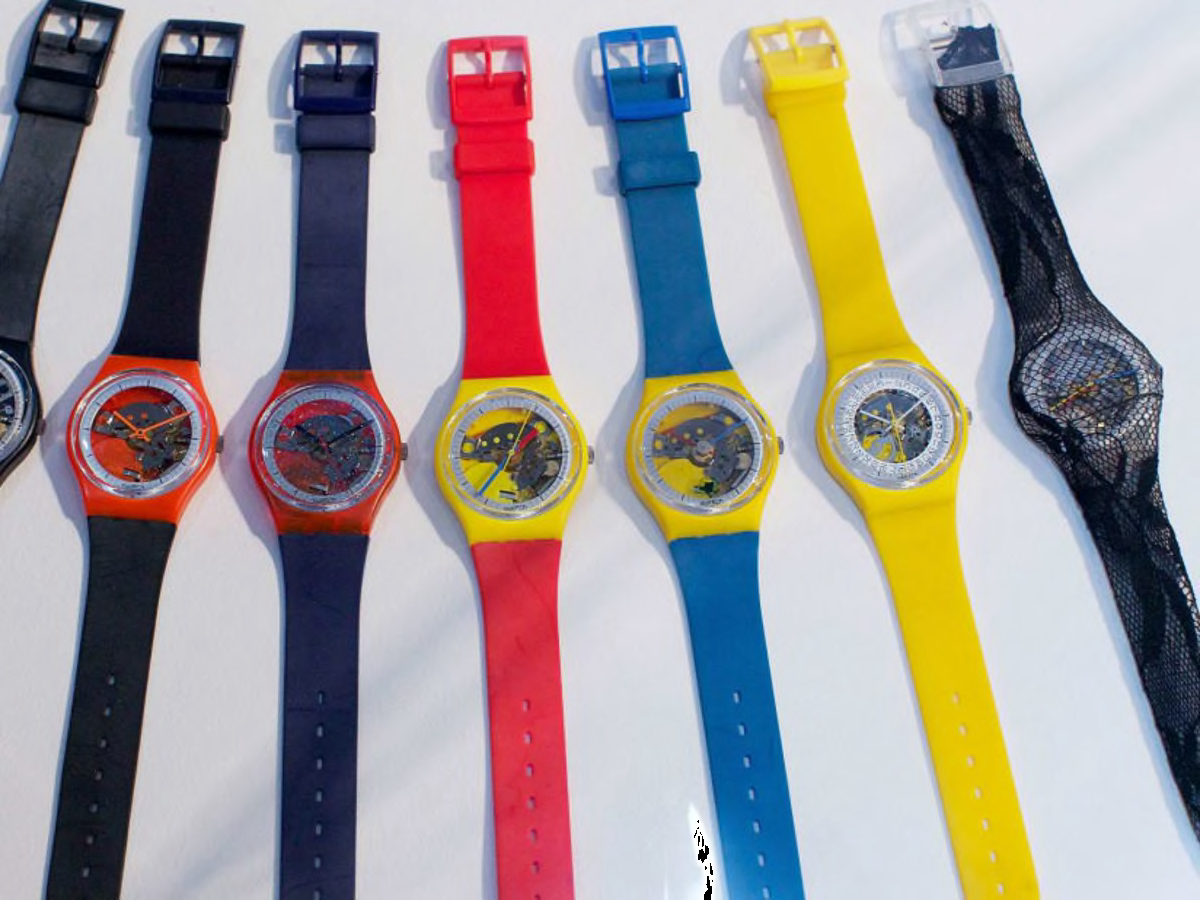
The brilliance of the initial Swatch strategy lay in its positioning. Instead of marketing watches as heirlooms or status symbols—the traditional Swiss approach—Swatch marketed them as disposable, interchangeable fashion accessories. By utilizing a plastic case, a hermetically sealed design, and a reduction in parts from 91 to 51, they slashed production costs while maintaining the “Swiss Made” quality stamp.
This brand strategy transformed the watch from a long-term investment into a fashion statement. Marketing campaigns leveraged vibrant colors, collaborations with artists like Keith Haring and Kiki Picasso, and seasonal collections. Swatch wasn’t just selling time; they were selling membership in a culture of modernism and pop art. This move effectively saved the Swiss watch industry by consolidating the market under the Swatch Group, which eventually used its profits to purchase and stabilize heritage brands like Omega, Blancpain, and Breguet.
From Cultural Phenomenon to Corporate Empire
The mid-80s to early 90s represented the peak of Swatch’s cultural dominance. Collectors emerged, secondary markets boomed, and the brand became a shorthand for “fun” horology. However, as the 2000s approached, the market landscape changed. Consumer tastes shifted toward larger watch faces and the impending rise of digital technology.
Many critics argue that Swatch suffered a “brand dilution” during this era. As they attempted to follow trends—experimenting with everything from semi-precious materials to integrated payment chips—they arguably drifted away from the lean, high-design ethos that defined their inception.
The Institutional Shift
It is essential to distinguish between the product “Swatch” and the entity “The Swatch Group.” While the colorful plastic watch was no longer the sole focus of the global zeitgeist, it remained a massive cash cow for the parent company. By diversifying, the group transformed from a singular product brand into a multi-tiered corporate giant. They didn’t “fail” to keep up with trends; they leveraged the retail dominance established by Swatch to dominate the luxury space. The irony is that the success of the plastic Swatch provided the capital necessary to acquire the very high-end brands that would define the next thirty years of luxury watchmaking.
The Modern Pivot: Scarcity and Collaboration
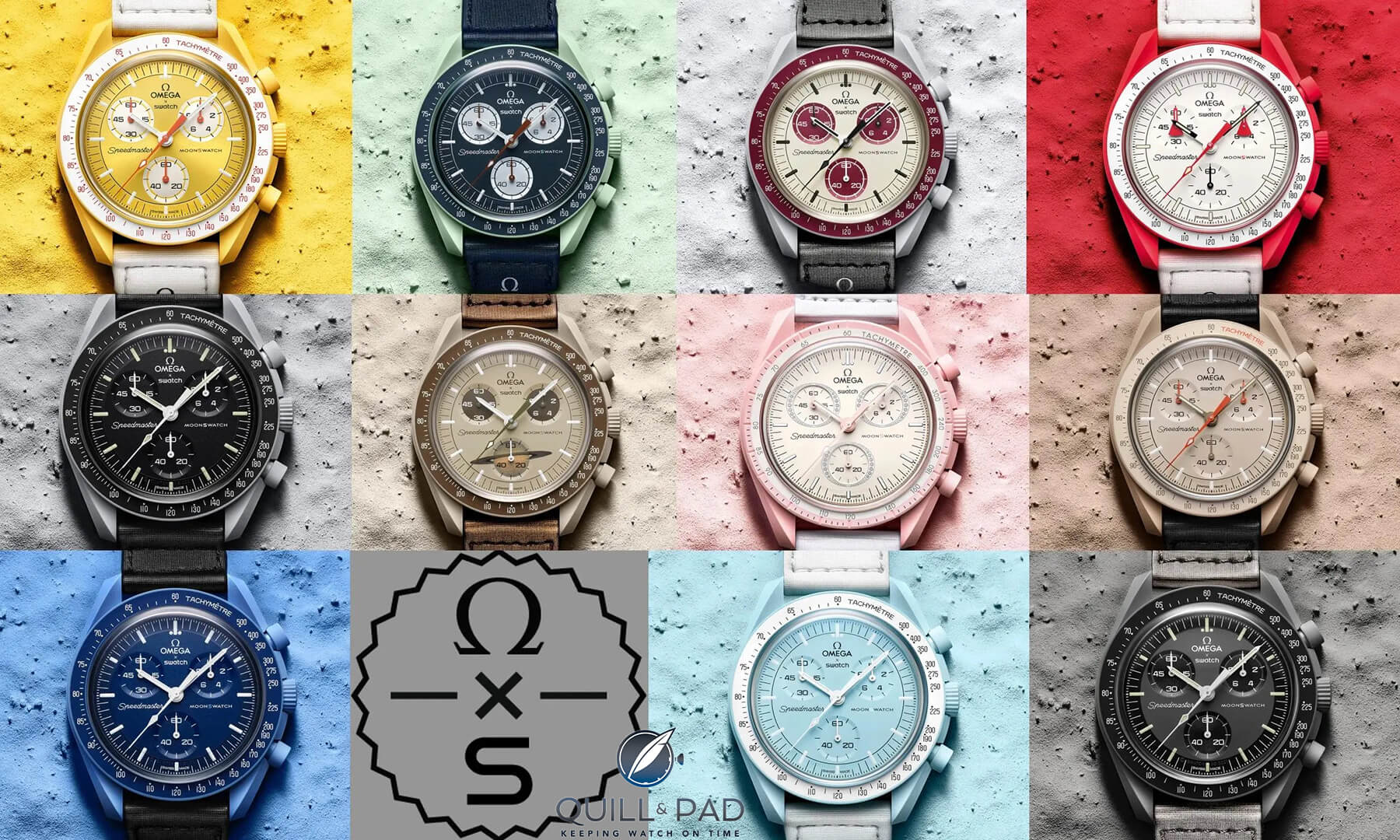
The perception that Swatch “lost its way” changed dramatically in 2022 with the release of the MoonSwatch. This collaboration between Swatch and Omega—both owned by the Swatch Group—was a masterclass in modern brand strategy. By taking the iconic design language of the Omega Speedmaster Professional and reimagining it in bioceramic at a fraction of the cost, Swatch managed to accomplish what few legacy brands achieve: they captured the Gen Z and Millennial market without alienating their core demographic.
Engineering Scarcity
The MoonSwatch rollout utilized a strategy of managed scarcity. By restricting sales to physical retail locations and refusing to sell the watches online, Swatch artificially inflated demand. This brought the “hype culture” typically reserved for sneaker releases into the watch industry. It forced consumers back into physical stores, reinvigorating retail presence and proving that the brand still possessed the power to generate global headlines.
Bioceramic and Sustainability
The brand’s recent pivot toward sustainability is another strategic layer of its corporate identity. The introduction of Bioceramic—a blend of ceramic and bio-sourced plastic—positions Swatch as an innovator in materials science. This branding move is crucial for a company targeting younger demographics who prioritize ecological impact. By integrating this material across their product lines, they are attempting to move the brand away from the “disposable” plastic narrative of the 80s toward a more responsible, contemporary brand perception.
Challenges to Future Relevance
Despite the success of recent collaborations, Swatch faces a unique set of obstacles in a landscape dominated by the Apple Watch and smart technology. For the general consumer, the function of telling time has been entirely subsumed by the smartphone and the smartwatch.
The Challenge of Functionality
Swatch is a brand built on the concept of the “fashion watch.” However, when a consumer can wear a device that monitors health, sends emails, and tracks location, the traditional quartz watch—no matter how stylish—struggles to justify a place on the wrist. To remain relevant, Swatch must continue to lean into the concept of “identity expression” over “utility.”
The Luxury-Fashion Bridge
The brand’s future depends on its ability to maintain its position as a “bridge” brand. It occupies a unique space: it is affordable enough to be an impulse purchase, yet carries the credibility of a parent group that owns the most prestigious watchmakers in history. If Swatch attempts to move too far upmarket, it risks losing its accessibility. If it leans too far into mass-market low-cost production, it risks becoming indistinguishable from generic fashion watches.
The strategy moving forward appears to be a heavy reliance on collaborations. The Blancpain x Swatch “Scuba Fifty Fathoms” collection and subsequent partnerships confirm that the brand has found a winning formula in leveraging the heritage of its parent company’s luxury catalog. This strategy effectively creates a “top-down” brand halo, where the prestige of a $10,000 watch is reflected in a $400 bioceramic timepiece.
Conclusion: The Endurance of a Visionary Brand
What happened to Swatch watches? They evolved. The brand that defined the 1980s as a quirky, affordable, and vibrant cultural touchstone grew into the engine of the Swiss watch industry. While the individual plastic watch may not carry the same universal cultural gravity it did four decades ago, its function as a corporate vehicle, a gateway to high horology, and a canvas for design innovation remains unparalleled.
The story of Swatch is not a story of decline; it is a story of strategic transition. By embracing its identity as a fashion accessory rather than a precision instrument, and by utilizing its parent company’s assets to create limited-edition hype, Swatch has managed to avoid the obsolescence that claimed so many of its contemporaries. It has successfully navigated the transition from a post-war manufacturing savior to a modern, hype-driven fashion label. For the brand, the lesson remains clear: when the product stops being about the time it keeps and starts being about the statement it makes, the brand remains timeless.
aViewFromTheCave is a participant in the Amazon Services LLC Associates Program, an affiliate advertising program designed to provide a means for sites to earn advertising fees by advertising and linking to Amazon.com. Amazon, the Amazon logo, AmazonSupply, and the AmazonSupply logo are trademarks of Amazon.com, Inc. or its affiliates. As an Amazon Associate we earn affiliate commissions from qualifying purchases.