
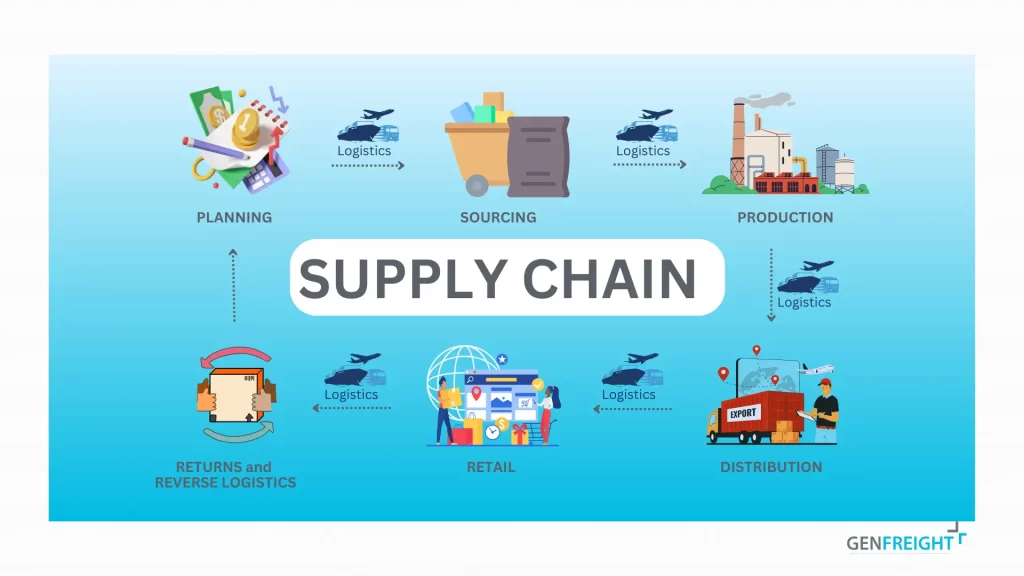
In the modern era of commerce, the term “global supply chain” is frequently invoked, yet rarely fully understood in its complexity. At its core, a global supply chain is the intricate, interconnected network of individuals, organizations, resources, activities, and technologies involved in the creation and sale of a product. From the extraction of raw materials in one hemisphere to the final delivery of a finished good to a consumer’s doorstep in another, the supply chain is the logistical backbone of the international economy. It is not merely about transportation; it is about the strategic orchestration of production, inventory management, and distribution across geographical and political borders to maximize efficiency and profitability.
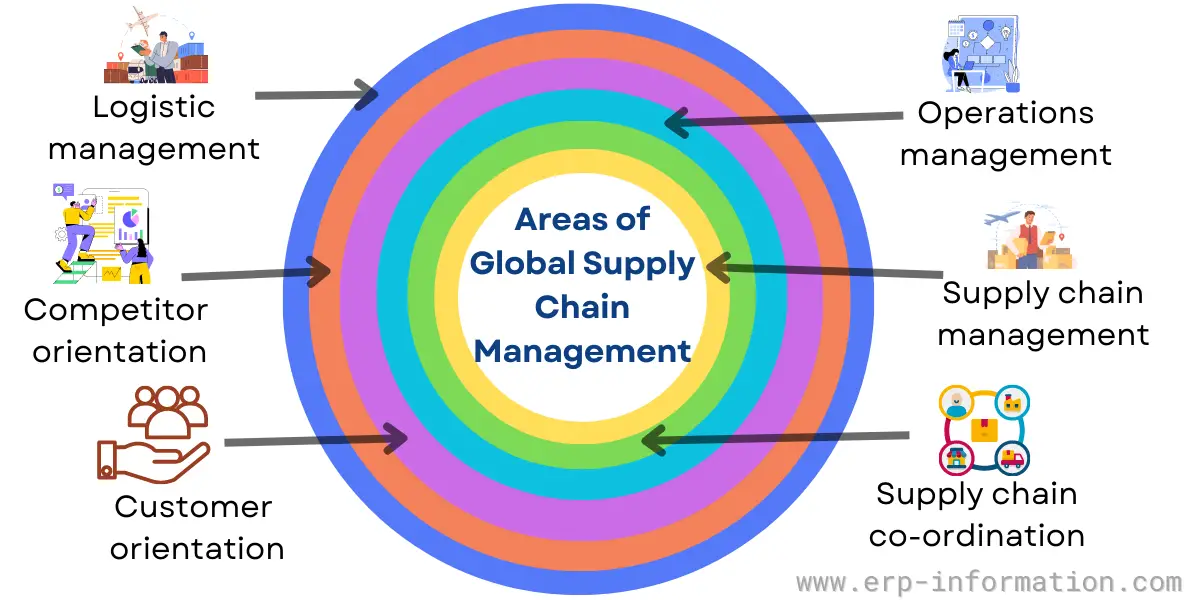
For businesses, the supply chain is the most significant determinant of competitive advantage. In an age where consumer expectations for speed and availability are at an all-time high, the ability to manage this network effectively is what separates market leaders from those that falter.
The Financial Mechanics of Global Logistics
A global supply chain is fundamentally an exercise in financial optimization. Every link in the chain represents a cost center—sourcing raw materials, manufacturing, warehousing, customs duties, international freight, and final-mile delivery. When a company decides to source components from across the globe, they are engaging in a calculated financial trade-off: they are betting that the reduction in production costs (via lower labor or material expenses) will outweigh the increased costs of international logistics and the risks associated with an extended lead time.
Capital Allocation and Inventory Strategy
Inventory represents trapped capital. In a traditional supply chain model, businesses often held large reserves of stock to protect against fluctuations in demand. However, modern financial principles—most notably the Just-in-Time (JIT) methodology—have pushed firms to reduce inventory levels to the bare minimum required to maintain operations. By reducing the capital tied up in warehouses, businesses improve their cash flow and return on assets.
The global supply chain complicates this, however. Because goods must traverse oceans and cross borders, the “time-to-market” is significantly longer than in local manufacturing. Consequently, companies must employ sophisticated financial modeling to balance the cost of carrying inventory against the risk of stockouts, which can result in massive revenue losses.
Managing Foreign Exchange and Volatility
Global supply chains are inherently exposed to foreign exchange (Forex) risk. When a manufacturer pays a supplier in a foreign currency, fluctuations in exchange rates can erase profit margins overnight. Financial executives within multinational corporations must utilize hedging strategies—such as forward contracts and options—to stabilize their costs. Furthermore, the volatility of fuel prices (bunker fuel for shipping or aviation fuel for air cargo) adds another layer of financial complexity. A global supply chain, therefore, is as much a derivative trading desk as it is a warehouse management operation.
Strategic Cost Management and Outsourcing
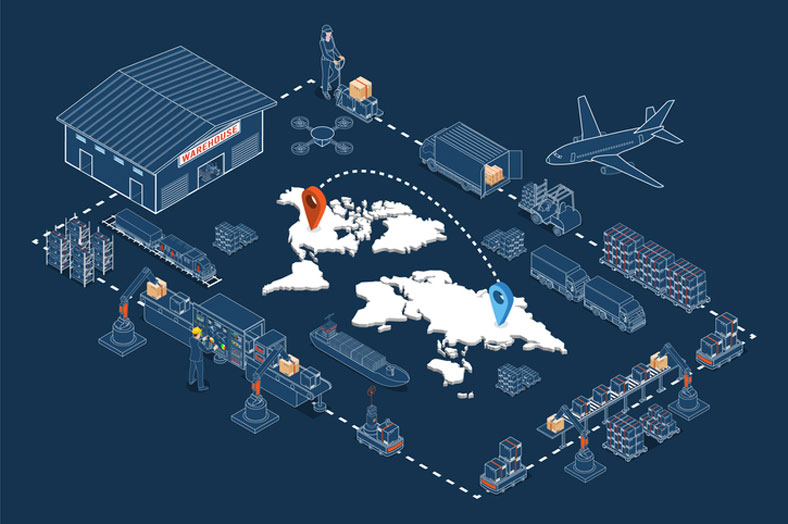
The decision to go “global” is almost always driven by the pursuit of cost leadership. By diversifying the production base, firms can leverage regional advantages. For example, a tech firm might design its hardware in the United States, source specialized silicon from Taiwan, manufacture the components in Vietnam, and assemble the final product in China, before shipping it to global markets.
The Trade-off Between Resilience and Efficiency
For decades, the “lean” supply chain was the gold standard, focusing almost exclusively on minimizing costs. The financial goal was simple: strip out every ounce of “waste,” including redundant suppliers or excess capacity. However, recent global disruptions have highlighted the fragility of this approach. When a supply chain is optimized solely for cost, it lacks the elasticity to absorb shocks—whether those shocks are geopolitical tensions, pandemics, or environmental disasters.
Strategic financial planning is now shifting toward “supply chain resilience.” This involves a higher expenditure in the short term to ensure long-term stability. This might mean diversifying the supplier base—even if it means paying higher unit costs to suppliers closer to home—or investing in domestic manufacturing capabilities. The CFO’s role has expanded from merely tracking costs to assessing the financial impact of potential systemic failures within the chain.
The Cost of Customs and Trade Compliance
Navigating the global supply chain requires deep expertise in trade finance and compliance. Tariffs, trade quotas, and anti-dumping duties act as stealth taxes on a business. A supply chain manager must understand the intricacies of Free Trade Agreements (FTAs) and Incoterms (International Commercial Terms) to ensure that the tax burden is minimized legally. Failure to optimize the customs process can lead to significant financial leakage, where the profit of a shipment is eroded by unexpected duties or detention and demurrage fees at ports.
The Digital Transformation of Supply Chain Finance
Technology has revolutionized how financial value is extracted from global supply chains. We have moved from paper-based bills of lading and fragmented communication to digitized, blockchain-enabled transparency.
Visibility as a Financial Metric
The greatest threat to a supply chain’s profitability is “dark inventory”—goods in transit that cannot be tracked or accounted for in real-time. By utilizing Internet of Things (IoT) sensors and integrated Enterprise Resource Planning (ERP) software, companies can now track not only the location of their goods but also their condition. This level of visibility allows for better financial forecasting. When a business knows exactly when a shipment will arrive, it can optimize its accounts payable and receivable cycles, improving working capital management.
Blockchain and Smart Contracts
One of the most promising developments in supply chain finance is the implementation of smart contracts. In a traditional global trade scenario, the payment process involves multiple intermediaries, including banks and letter-of-credit providers, all of whom take a fee and add time to the process. Blockchain technology allows for “smart contracts” that trigger automatic payments once a shipment hits a verified GPS coordinate or passes a customs milestone. This reduces administrative overhead, eliminates human error, and speeds up the velocity of money through the entire ecosystem.
Conclusion: The Bottom Line of Global Trade
Ultimately, a global supply chain is a massive, decentralized financial instrument. It is a system designed to move value across the world, converting labor, raw materials, and intellectual property into finished goods that the market is willing to purchase at a premium.
In the current economic climate, managing this system is no longer a back-office logistics task; it is a core business strategy that dictates corporate viability. Leaders who treat their supply chain as a strictly cost-cutting exercise are increasingly finding themselves at a disadvantage. Conversely, those who treat the global supply chain as a sophisticated financial engine—optimizing for both efficiency and resilience, leveraging digital tools for transparency, and managing currency and geopolitical risks with foresight—will continue to define the future of international commerce. The complexities are immense, but for the modern corporation, the rewards of a perfectly tuned global supply chain remain the most powerful driver of bottom-line growth.
aViewFromTheCave is a participant in the Amazon Services LLC Associates Program, an affiliate advertising program designed to provide a means for sites to earn advertising fees by advertising and linking to Amazon.com. Amazon, the Amazon logo, AmazonSupply, and the AmazonSupply logo are trademarks of Amazon.com, Inc. or its affiliates. As an Amazon Associate we earn affiliate commissions from qualifying purchases.