
When examining the influence of The Church of Jesus Christ of Latter-day Saints—often colloquially referred to as the Mormon faith—through the lens of Brand Strategy, one observes a masterclass in organizational identity, global consistency, and narrative control. Unlike many faith-based movements that rely on decentralized or localized branding, this organization has developed a highly sophisticated corporate identity that functions with the precision of a multinational conglomerate. Understanding the “Mormon brand” requires an analysis of how a mid-19th-century American religious movement evolved into a global entity defined by specific visual, behavioral, and cultural markers.
The Power of Visual Identity and Symbolism
Central to the success of any global brand is the ability to maintain a recognizable, consistent identity across diverse cultural landscapes. The Church of Jesus Christ of Latter-day Saints has excelled at this through a standardized architectural and visual strategy.
Architectural Branding: The Temple as an Icon
The most distinct physical component of the brand is its architecture. Temples are not merely houses of worship; they are architectural landmarks that serve as physical manifestations of the brand’s promise of longevity, stability, and exclusivity. By utilizing high-quality materials, such as white granite and limestone, and incorporating iconic features like the statue of the angel Moroni, the Church creates a “halo effect” around its physical assets. Wherever a temple is constructed—from Tokyo to Paris to Salt Lake City—the aesthetic is unmistakable. This architectural consistency functions as a visual anchor, signaling the Church’s presence and permanence in a community.
Uniformity and Recognition
Beyond architecture, the brand is known for its human-facing representation. The missionary program is, arguably, the most recognizable grassroots marketing effort in modern religious history. The white shirt, dark tie, and name tag combination functions as a literal uniform that creates instant brand recognition. This “white-shirt aesthetic” communicates professionalism, youth, and a disciplined adherence to a code of conduct. From a branding perspective, this consistency mitigates ambiguity. Whether an observer encounters a representative in a major urban center or a rural village, the brand promise—a consistent message delivered by a consistent messenger—is maintained.
Cultivating a Distinct Corporate Culture
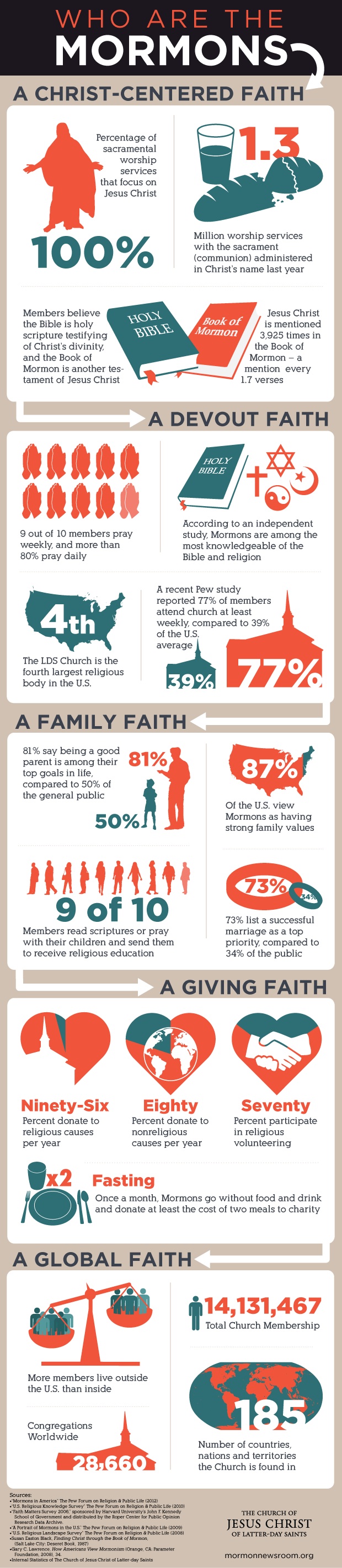
A brand is not just what an organization tells the world; it is the lived experience of its members. The Church of Jesus Christ of Latter-day Saints has successfully integrated its theological tenets into a robust “lifestyle brand” that dictates day-to-day behavior, fostering deep loyalty and internal cohesion.
The Health Code as a Brand Differentiator
One of the most widely recognized aspects of the Mormon identity is the “Word of Wisdom,” a health code that prohibits the consumption of alcohol, tobacco, coffee, and tea. In terms of brand positioning, this serves as a powerful “point of difference.” By advocating for a clean, abstinent lifestyle, the Church differentiates itself from the broader secular culture. This creates a clear internal barrier to entry and a strong sense of in-group identity. Members who follow these guidelines are, in effect, ambassadors of the brand’s value proposition: self-discipline, health, and familial stability.
Community-Centric Engagement
The brand thrives on a high level of member participation, which effectively turns consumers into stakeholders. Because the Church lacks a professional clergy in its local congregations, the management of the organization is decentralized among its members. This creates an ownership mentality. When a member is responsible for teaching a class, organizing a charity event, or managing administrative duties, their personal brand becomes inextricably linked to the institutional brand. This “peer-to-peer” engagement model is a cornerstone of their marketing success, ensuring that the institution remains woven into the fabric of the members’ social lives.

Strategic Communication and Reputation Management
In an era of instant global scrutiny, maintaining a positive brand reputation is a primary challenge for any large organization. The Church has invested significantly in professionalizing its communication strategy, transitioning from a reactive stance to a proactive, highly controlled narrative.
The Shift to “The Church of Jesus Christ”
In recent years, the organization has engaged in a significant rebranding effort. Leadership has emphasized the full name of the organization, moving away from the nickname “Mormon,” which had become a genericized trademark that the organization felt diminished its focus on the centrality of Jesus Christ. This is a classic “brand correction” strategy. By asserting control over the nomenclature, the institution aims to clarify its mission and reposition itself within the broader landscape of Christianity. It is a bold move to shed a nickname that had been in use for over a century, signaling a transition toward a more deliberate, mission-driven public identity.
Content Marketing and Digital Presence
The organization has embraced the digital age with the same rigor it applies to its physical infrastructure. Their digital properties, including ChurchofJesusChrist.org, serve as a centralized hub for doctrine, genealogical resources, and charitable outreach. By positioning itself as a leader in family history and genealogy through platforms like FamilySearch, the Church has successfully leveraged “interest-based marketing.” Millions of people who have no affiliation with the faith use these tools, effectively creating a massive, top-of-funnel engagement strategy. They have successfully positioned themselves as the global authority on ancestral research, thereby generating goodwill and brand equity among a demographic far larger than their active membership base.
Philanthropy as Brand Advocacy
Modern corporate social responsibility (CSR) is no longer optional; it is a critical component of brand equity. The Church of Jesus Christ of Latter-day Saints utilizes large-scale humanitarian efforts to humanize the brand and soften its often-austere reputation.
The “LDS Charities” Strategy
The humanitarian arm of the organization serves as a major driver of positive brand sentiment. By focusing on disaster relief, vision care, clean water, and refugee support, the organization creates tangible, observable value in the public square. From a strategy perspective, this is “value-based branding.” The goal is to ensure that the mention of the Church is associated with tangible acts of service rather than purely theological debates.
Leveraging Volunteers for Mass Influence
The efficiency with which the Church mobilizes its membership for service projects—such as the “Helping Hands” initiative—functions as a powerful marketing asset. When thousands of volunteers appear in high-visibility yellow vests to clean up a community or aid in disaster relief, they are performing a high-impact act of brand awareness. It signals to the public that the brand is “active,” “capable,” and “community-oriented.” This strategy effectively neutralizes negative perceptions by proving the brand’s utility and kindness through action rather than rhetoric.

Conclusion: The Endurance of the Institutional Brand
Ultimately, what the public knows as “Mormonism” is a carefully curated and historically layered brand identity. It stands out in the modern world not only for its beliefs but for its operational excellence. By focusing on consistency—in architecture, in the behavior of its members, in its clear-cut health standards, and in its strategic pivot toward a name that emphasizes its core theological message—the organization has proven itself to be one of the most stable and enduring brands in history.
Its success lies in the synergy between the institution and the individual. By ensuring that every member acts as a physical representation of the brand, the Church has built a system that is incredibly difficult to disrupt. Whether viewed through the lens of architectural branding, lifestyle marketing, or strategic CSR, the organization provides a compelling case study in how to build a global institution that commands loyalty, generates consistent output, and manages its reputation with a level of foresight that few secular organizations ever achieve. The brand’s ability to evolve while maintaining its fundamental identity remains its most significant competitive advantage.
aViewFromTheCave is a participant in the Amazon Services LLC Associates Program, an affiliate advertising program designed to provide a means for sites to earn advertising fees by advertising and linking to Amazon.com. Amazon, the Amazon logo, AmazonSupply, and the AmazonSupply logo are trademarks of Amazon.com, Inc. or its affiliates. As an Amazon Associate we earn affiliate commissions from qualifying purchases.