
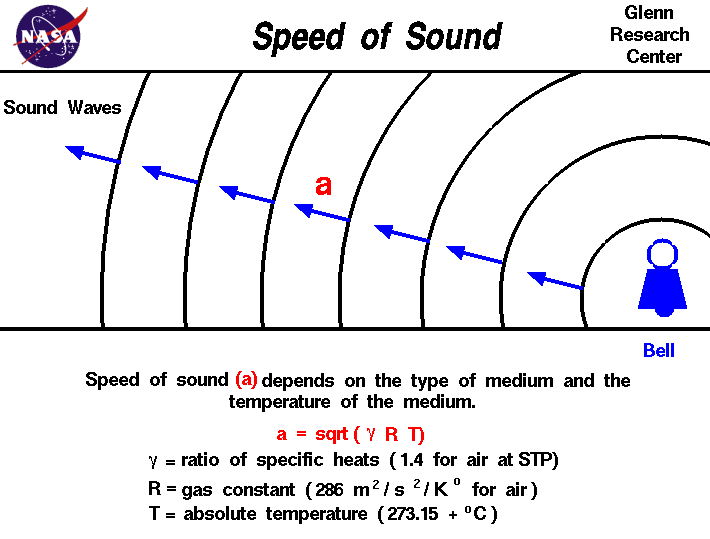
When we discuss the speed of sound, we are fundamentally talking about the rate at which mechanical vibrations—pressure waves—travel through a medium. In the realm of high-fidelity audio engineering, ultrasonic sensing technologies, and acoustic data transmission, understanding the physics of sound propagation is not merely academic; it is a critical requirement for precision. The speed of sound is not a universal constant; it is a dynamic variable dictated by the physical properties of the environment through which it travels. Engineers and software developers working with acoustic-based UI, sonar systems, or precision hardware must account for these fluctuations to ensure system reliability.
Molecular Density and Elasticity: The Physics of the Medium
At the most granular level, sound travels through the collision of molecules. Unlike light, which can travel through a vacuum, sound requires a physical medium—be it gas, liquid, or solid—to propagate. The speed at which these pressure waves move is determined by two intrinsic properties of that medium: its stiffness (or bulk modulus) and its density.
The Role of Elasticity
Elasticity refers to the ability of a material to return to its original shape after a force has been applied. In a medium, sound waves travel faster if the particles are “springy.” When a molecule is pushed, a more elastic material allows it to pass that kinetic energy to its neighbor more rapidly. This is why sound travels significantly faster in solids than in gases. In a solid, the molecular bonds are much stiffer than the intermolecular forces found in gases, allowing for a more efficient and rapid energy transfer.
Accounting for Density
Density represents the mass of a medium per unit volume. While one might intuitively assume that denser materials are “slower” because they are heavier, the relationship is nuanced. High density usually correlates with higher inertia, which could potentially slow down the wave. However, in nature, the stiffness of a material typically increases much faster than its density does as you move from gases to liquids and solids. This explains why sound travels at approximately 343 meters per second in air, but over 1,480 meters per second in water, and nearly 5,000 meters per second in steel.
Thermal Dynamics and the Impact of Temperature
For those developing software for IoT sensors, outdoor acoustic tracking, or precision measurement tools, temperature is the most common variable that interferes with data accuracy. The speed of sound in a gas is primarily a function of temperature. As the temperature of the air increases, the kinetic energy of the gas molecules increases as well.
Kinetic Energy and Molecular Collision
At higher temperatures, molecules move more rapidly and collide more frequently. Because these collisions are the mechanism by which sound energy is transmitted, an increase in molecular velocity directly translates to a higher speed of sound. For every degree Celsius increase in temperature, the speed of sound in air increases by approximately 0.6 meters per second.
Implementation in Digital Systems
For developers designing hardware that relies on time-of-flight (ToF) calculations—such as ultrasonic rangefinders used in autonomous robotics—ignoring temperature compensation is a recipe for failure. A distance measurement calculated at 10°C will be fundamentally inaccurate if the sensor is moved to a 30°C environment without a software-based correction algorithm. Modern precision systems must integrate thermistors or digital temperature sensors to feed real-time ambient data back into the propagation model, adjusting the speed constant dynamically to maintain millimeter-level accuracy.

Influence of Atmospheric Composition and Pressure
While temperature is the primary driver of change in atmospheric sound speed, the composition of the medium and the external pressure also play secondary roles that are essential in specialized tech applications.
Gas Composition and Molecular Weight
The speed of sound is inversely proportional to the square root of the molar mass of the gas. This is why sound travels faster in helium than in air. Because helium molecules are lighter, they move faster at a given temperature, facilitating a quicker transfer of wave energy. In environments where specialized gases are used for cooling or inert atmospheric control, software-driven acoustic monitoring tools must be calibrated for the specific molar weight of the gas mixture present in the chamber. A sensor calibrated for Earth’s standard nitrogen-oxygen mix will report erroneous data if utilized in a pressurized helium-argon environment.
Pressure Sensitivity
Interestingly, in an ideal gas, pressure and density change in a way that their effects on the speed of sound cancel each other out. This means that under normal atmospheric conditions, pressure changes have a negligible impact on the speed of sound. However, this rule breaks down at extreme pressures or when the gas ceases to behave “ideally.” In high-pressure industrial testing or deep-sea submerged hardware, the non-ideal behavior of the medium must be modeled through the use of specific equations of state. Engineers must move beyond basic linear models and utilize fluid dynamic simulations to predict wave behavior when pressure becomes a dominating factor.
Practical Applications for Engineering and Development
The intersection of acoustic physics and digital technology is expanding. As we integrate more sensors into our devices, the requirement for robust acoustic modeling grows. From consumer-grade smart home devices that map rooms using ultrasonic chirps to industrial predictive maintenance tools that listen for the “signature” of a failing bearing, the speed of sound is a hidden foundation of modern tech.
Signal Processing and Calibration
When designing signal processing pipelines, developers must account for signal latency caused by sound propagation. If an application utilizes multiple microphones to triangulate the source of a sound (beamforming), the system must have a precise, real-time understanding of the speed of sound in the room to correlate the arrival times of the wave across different sensors accurately. Any drift in temperature or local atmospheric conditions will cause the “view” of the acoustic landscape to blur or shift.
The Future of Acoustic Data Transmission
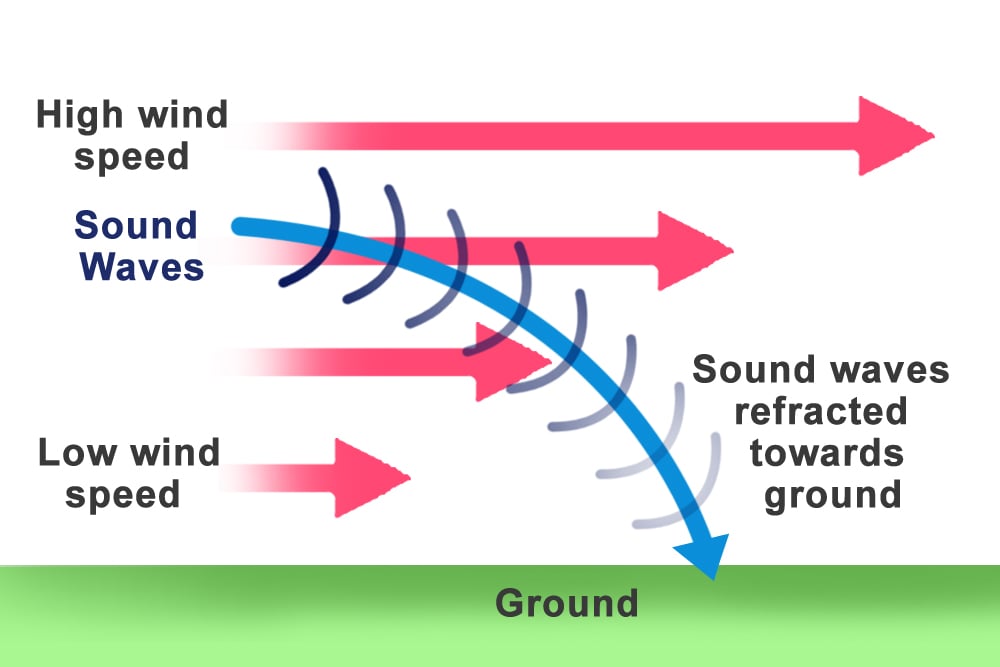
We are entering an era of sophisticated acoustic data transmission, where sound waves carry data between devices. As these systems move toward higher frequencies and wider bandwidths, the medium-dependency of sound becomes even more pronounced. High-frequency sound waves (ultrasound) are more easily attenuated and affected by micro-fluctuations in the air density than lower frequency waves. Developing reliable protocols for this type of communication requires an intimate understanding of how variables like humidity, temperature, and local gas density create a non-static environment.
Precision Beyond the Standard
To achieve the highest level of performance, modern tech systems should treat the speed of sound as a streaming telemetry data point rather than a fixed coefficient. By integrating local environmental sensing into the hardware layer, and utilizing adaptive algorithms at the software layer, engineers can compensate for the physics of the environment. Whether for autonomous navigation, medical imaging, or high-speed communication, the ability to predict and adjust for the velocity of acoustic waves is what separates high-performance hardware from consumer-grade novelty.
The physics of sound is a testament to the fact that our digital interactions are always grounded in the physical reality of the medium. As we continue to push the boundaries of what sensors and acoustic technologies can achieve, the mastery of these fundamental variables will be the key to unlocking the next generation of precision digital systems.
aViewFromTheCave is a participant in the Amazon Services LLC Associates Program, an affiliate advertising program designed to provide a means for sites to earn advertising fees by advertising and linking to Amazon.com. Amazon, the Amazon logo, AmazonSupply, and the AmazonSupply logo are trademarks of Amazon.com, Inc. or its affiliates. As an Amazon Associate we earn affiliate commissions from qualifying purchases.