
In the landscape of modern reputation management, few case studies are as polarizing or as instructive as that of Kevin Spacey. Once an icon of American cinema—an actor defined by a rare combination of gravitas, intellectual depth, and unmatched range—Spacey’s brand underwent a catastrophic devaluation following a series of high-profile allegations in 2017. For students of personal branding, Spacey’s trajectory offers a profound lesson in how an established corporate identity can be dismantled overnight, and how, in the digital age, the effort to reconstruct a personal brand is a task that never truly concludes.

The Architecture of a Fallen Brand
To understand the current state of Kevin Spacey’s brand, one must first recognize what that brand represented at its peak. Spacey was not just an actor; he was a premium intellectual commodity. His association with prestigious projects like House of Cards and his tenure at The Old Vic Theatre in London signaled a level of sophistication that made him a darling of awards circuits and corporate boardrooms alike.
The Devaluation of Equity
A personal brand is built on a foundation of trust and consistency. When an individual’s actions stand in direct contradiction to their established public persona, the resulting “brand dissonance” causes immediate market rejection. In 2017, the rapid-fire allegations against Spacey triggered a textbook example of corporate distancing. Production houses, streaming platforms, and marketing agencies—all of whom had significant capital invested in the “Kevin Spacey” asset—acted with ruthless efficiency to sever ties. This was not merely a moral stance; it was a necessary act of brand preservation by external stakeholders who could not afford the toxicity associated with his name.
The Loss of Cultural Capital
Brand equity is often measured by the ability to command attention and leverage influence. Following the allegations, Spacey’s cultural capital effectively plummeted to zero. He was edited out of completed films, terminated from ongoing series, and stripped of honorary accolades. In the world of personal branding, this represents the ultimate market correction: when the cost of association outweighs the potential value, the entity is forced into liquidation. Spacey’s removal from All the Money in the World served as the definitive visual metaphor for his brand’s erasure.
The Strategy of the “Long Tail” Comeback
Following a period of near-total silence, the approach taken by Spacey to re-enter the public consciousness has been unconventional, largely eschewing traditional Hollywood public relations maneuvers in favor of a direct-to-audience digital strategy. This pivot highlights a shift in how disgraced public figures attempt to navigate the modern media ecosystem.
Digital Disintermediation
Spacey’s periodic “Frank Underwood” monologues, posted directly to his own social media channels, represent an attempt to bypass traditional gatekeepers. By leveraging the remaining psychological association between himself and his most iconic television character, he sought to reclaim the narrative. From a branding perspective, this is a risky strategy. It blurs the lines between the performer and the persona, banking on the audience’s nostalgia to overwrite the present reality. It is a form of brand reclamation that relies on the “strong character” narrative, suggesting that if the performer remains unbowed, the audience might eventually forgive the transgressions of the human being.

The “Independent” Pivot
The current stage of Spacey’s professional life involves operating in the periphery of the mainstream industry. By engaging with smaller, independent projects and international productions, he is attempting to rebuild his brand from the ground up, moving away from the “A-list” prestige model toward a “cult status” model. This is a common strategy for individuals in high-risk personal branding categories. When the mainstream gates are locked, the goal shifts to targeting niche audiences who are either ideologically aligned, indifferent to the allegations, or supportive of the “second chance” narrative.
Reputation Management and the Legal Horizon
The intersection of legal outcomes and brand perception is where Spacey’s case becomes particularly complex. In the world of personal branding, a legal victory is not the same as a reputational exoneration. While Spacey has secured significant wins in courtrooms—clearing his name in several high-profile legal challenges—the public perception of a brand is rarely dictated by the nuance of legal evidence.
The Courtroom vs. The Court of Public Opinion
There is a fundamental disconnect between the objective truth established in a court of law and the subjective truth held by the public. For Spacey, the legal wins provide a structural framework for a comeback, but they do not act as an automatic “reboot” button. Modern audiences prioritize emotional consistency over procedural justice. Consequently, even with the legal burden removed, the brand remains tethered to the original controversy. The lesson here is that in the era of social media, the court of public opinion operates on a timeline that rarely aligns with the slow, deliberate pace of the judicial system.
Communicating Continuity
Spacey’s current strategy focuses on emphasizing his enduring craft. By focusing on acting workshops, interviews, and small-scale appearances, he is attempting to shift the conversation from the scandal back to the utility of his skill set. In personal branding, “utility” is the best defense against controversy. If an individual can demonstrate that they provide a unique, high-quality value that cannot be replicated elsewhere, they increase the likelihood that the market will eventually overlook their personal baggage. However, for a figure of Spacey’s stature, the ceiling for this recovery remains significantly lower than his original trajectory.
Lessons for Personal Branding in the Digital Age
The “Kevin Spacey” case study serves as a masterclass in the volatility of human capital. It illustrates that in a hyper-connected world, personal branding is not a static state, but a constant process of risk mitigation and narrative adjustment.
The Fragility of Identity
Perhaps the most significant takeaway is the fragility of a personal brand that is overly reliant on a singular, curated image. When that image is damaged, the loss of trust is absolute. Contemporary public figures must diversify their identity, ensuring that their personal brand is not solely defined by one performance or one character. When the audience’s perception of the person is inextricably tied to a role, the downfall of the person necessarily destroys the integrity of the work.
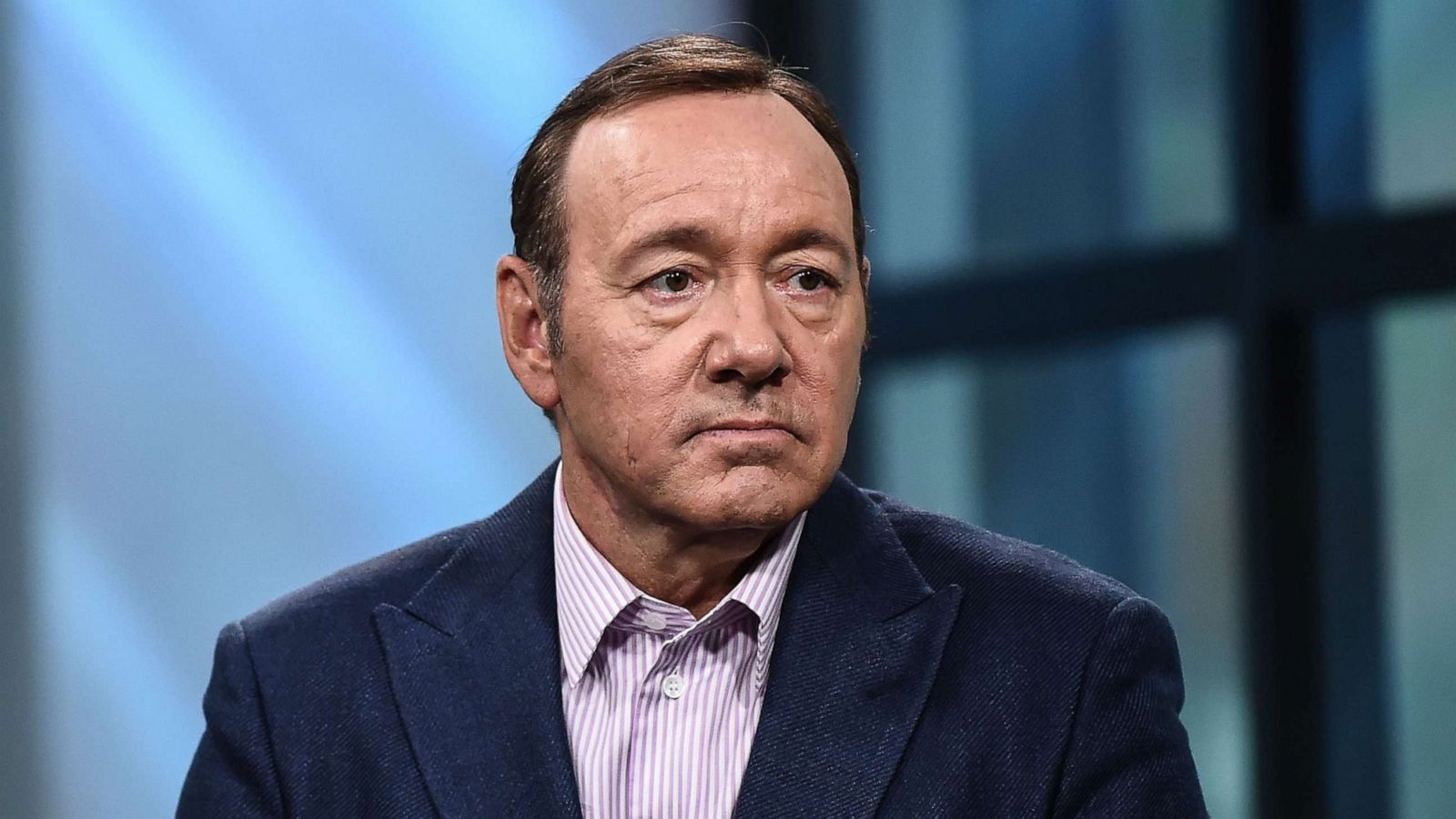
The Persistence of Digital Footprints
Spacey’s attempt to reconstruct his brand also underscores the permanence of digital history. Unlike the past, where scandals could fade with the expiration of news cycles, the modern internet ensures that every controversy is searchable, archived, and permanently accessible. Any attempts at a brand “reboot” are constantly competing against a wall of historical context. For any professional, this highlights the necessity of absolute vigilance regarding one’s personal conduct, as the “right to be forgotten” is a legal aspiration, not a practical reality in the digital economy.
Ultimately, what is happening with Kevin Spacey is a testament to the endurance of the individual will versus the collective memory of the market. While his brand will likely never regain the universal acclaim it once held, he is engaged in the archetypal struggle of the “fallen icon” attempting to define his own terms of engagement. His path serves as a cautionary tale for any personal brand: the higher the pedestal, the more complex the reconstruction, and the audience remains the final arbiter of when—or if—a brand is worthy of redemption. In this new phase, Spacey is no longer a corporate commodity; he is an independent operator fighting to define his own legacy, one role and one interview at a time. The verdict is not one that will be rendered by a judge, but by the slow, quiet evolution of his audience’s interest.
aViewFromTheCave is a participant in the Amazon Services LLC Associates Program, an affiliate advertising program designed to provide a means for sites to earn advertising fees by advertising and linking to Amazon.com. Amazon, the Amazon logo, AmazonSupply, and the AmazonSupply logo are trademarks of Amazon.com, Inc. or its affiliates. As an Amazon Associate we earn affiliate commissions from qualifying purchases.