
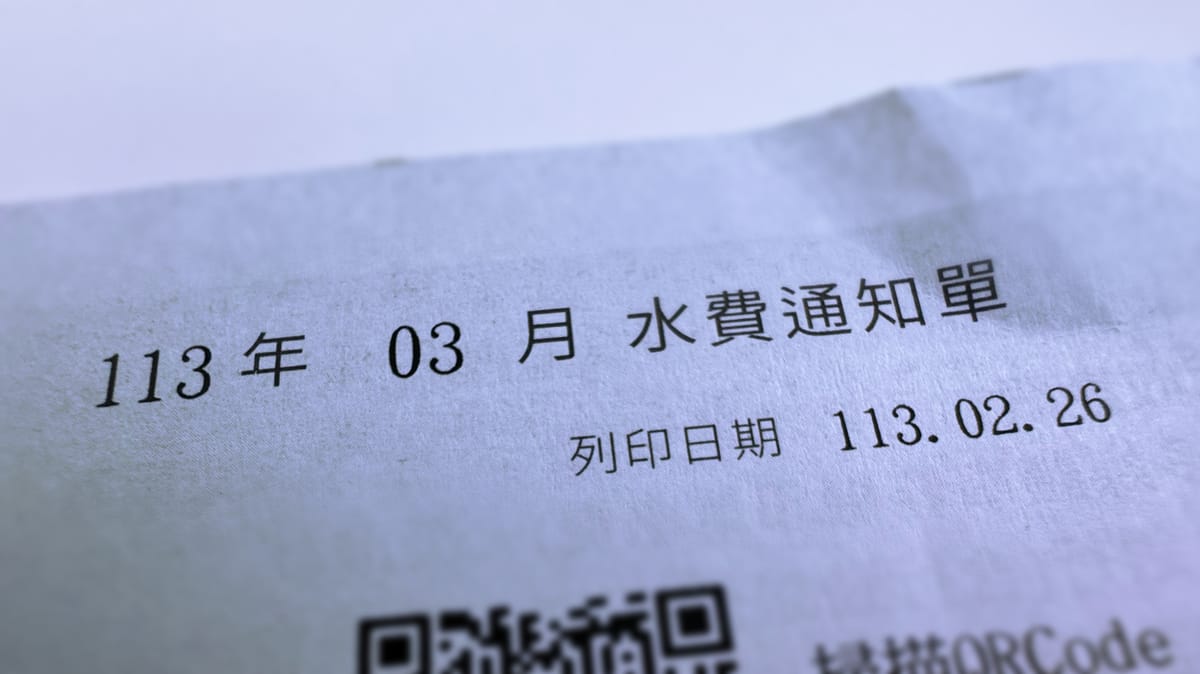
When navigating the complexities of global commerce and digital expansion, one often encounters the “Minguo” or Republic of China (ROC) calendar system. For businesses operating in or expanding into Taiwan, understanding this unique chronological framework is not merely a cultural nuance—it is a critical requirement for maintaining professional digital workflows, software localization, and database management. If you are currently working with Taiwanese systems, you are likely looking at the year 113.
The Mechanics of the Minguo Calendar in Digital Systems
In the world of international software development, the Gregorian calendar is the default standard for almost all backend architectures. However, Taiwan remains one of the few jurisdictions where the Minguo calendar remains the official standard for government documentation, legal contracts, and financial receipts.
Understanding the Calculation
The Minguo calendar functions by offsetting the Gregorian calendar by 1911 years. The year 1912 marked the founding of the Republic of China, which serves as Year 1 in this system. To calculate the current Minguo year, you simply subtract 1911 from the Gregorian year.
For instance, in the year 2024, the calculation 2024 – 1911 yields 113. Integrating this logic into custom enterprise software requires a robust localization strategy. If your application handles invoice generation, government filings, or tax reporting in Taiwan, hardcoding the Gregorian calendar can lead to significant compliance risks and user friction.
Software Localization and API Integration
When building software for the Taiwanese market, developers must account for “date-picker” components that support alternative era systems. Modern frameworks like ICU (International Components for Unicode) provide built-in support for the “roc” calendar type. Utilizing these libraries is essential for:
- Database Normalization: Ensuring that historical data stored in Minguo format can be queried alongside Gregorian-based analytics.
- Input Validation: Creating UI components that allow users to toggle between international and local standards.
- Compliance: Ensuring that automated VAT and tax software correctly formats dates to match local regulatory expectations.
Strategic Digital Infrastructure for the Taiwanese Market
For companies looking to scale their digital footprint in East Asia, your tech stack must be “Taiwan-ready.” This goes beyond language translation; it involves structural technical decisions that influence how your users interact with your platform on a daily basis.
Database Design and Timestamp Handling
The most common mistake engineers make when scaling into Taiwan is storing dates as strings formatted in the Minguo era. This is a technical debt trap. Instead, always store your timestamps in UTC or Unix format within your database. The conversion to Minguo should occur exclusively at the presentation layer (the frontend or the reporting module).
By decoupling the storage format from the display format, you maintain the integrity of your data analytics while providing a localized experience. This allows your BI (Business Intelligence) tools to compare data across regions (e.g., Japan, Singapore, and Taiwan) without getting bogged down by disparate calendar systems.
Enhancing User Experience (UX) through Local Context
UX design in Taiwan requires an awareness of the Minguo calendar’s prevalence in offline life. If your SaaS platform manages logistics, inventory, or payroll, your users will frequently be cross-referencing your digital dashboard with physical paperwork that uses the Minguo year.

Implementing a “Display Preference” setting is a high-value feature. Allow users to toggle their preferred date format—Gregorian, Minguo, or a hybrid. By accommodating this cultural preference, you reduce cognitive load for your users. A user who sees “113/05/20” on their shipping manifest will feel much more comfortable if your logistics software dashboard offers the option to display the exact same format.
Navigating Legal and Financial Technology Constraints
In the financial sector, the Minguo calendar is not optional; it is the backbone of government-regulated financial infrastructure. If your technology platform interacts with Taiwanese banking APIs or government-issued e-invoices, you will encounter the Minguo year by default.
Automated Financial Reporting and Tax Compliance
Taiwan’s e-invoice system (the “Unified Invoice”) is strictly governed by the Ministry of Finance. These invoices are stamped with dates that almost exclusively utilize the Minguo format. If your platform automates B2B transactions or ecommerce accounting, your export functions must support this date system to ensure that financial data is exportable to local accounting software like “Ding Xin” or other widely used regional ERPs.
Failing to build a flexible date-formatting engine into your financial modules can lead to “data mismatch” errors, where the end-user is forced to manually reformat every exported row of data before it can be imported into their local bookkeeping software.
The Role of Middleware in Cross-Border Data
If your company operates across borders, you are likely managing data that flows between Gregorian-standard regions (such as the United States or Europe) and the Minguo-standard region of Taiwan. The best strategy is to implement a middleware layer that manages calendar normalization.
- Ingestion: Accept data from Taiwanese legacy systems in the Minguo format.
- Normalization: Map these to a standardized Gregorian timestamp.
- Analytics: Run all global performance metrics against this normalized dataset.
- Presentation: Re-convert the data for specific UI components depending on the user’s location settings.
Future-Proofing Your Digital Strategy
As Taiwan continues to be a hub for semiconductor manufacturing and global high-tech supply chains, the integration between Western ERP systems and Taiwanese local infrastructure will only increase. We are moving toward a period where automated cross-border reconciliation is the norm rather than the exception.
Adopting Modern Localization Libraries
Moving forward, rely heavily on established libraries such as Moment.js (though now in maintenance mode), Luxon, or Day.js, which offer plug-ins for the “roc” calendar. Avoid building custom calendar conversion logic unless strictly necessary. Custom code is prone to errors, especially when handling leap years or specific historical edge cases inherent in any calendar system.
Security and Data Integrity
When dealing with date-heavy systems, ensure that your date-formatting logic is not vulnerable to injection or manipulation. Because Minguo dates are often treated as distinct from standard Gregorian dates in some legacy security filters, ensure that your input sanitization processes account for the different character lengths and formats (e.g., “1130520” vs “20240520”). Always validate date fields on the server side to ensure they conform to expected Gregorian boundaries after conversion.

The Competitive Advantage of Cultural Awareness
Ultimately, the year in Taiwan—113—is a symbol of the region’s unique heritage. For tech companies, acknowledging this in your product design does more than solve a technical problem; it builds trust. It signals that your business is not merely a generic, global entity, but one that respects and accommodates the local realities of the market.
By investing the time to integrate the Minguo calendar correctly, you reduce the operational burden on your Taiwanese clients, increase the interoperability of your software, and position your brand as a sophisticated player capable of navigating the nuances of the international marketplace. As you continue to build out your software capabilities, remember that the most successful digital tools are those that blend global scalability with deep, local precision. Whether you are managing supply chains, financial records, or user databases, treating the Minguo calendar as a core feature of your localization strategy is the hallmark of a mature, global-ready tech organization.
aViewFromTheCave is a participant in the Amazon Services LLC Associates Program, an affiliate advertising program designed to provide a means for sites to earn advertising fees by advertising and linking to Amazon.com. Amazon, the Amazon logo, AmazonSupply, and the AmazonSupply logo are trademarks of Amazon.com, Inc. or its affiliates. As an Amazon Associate we earn affiliate commissions from qualifying purchases.