
When we analyze the trajectory of human history, financial data is often the first metric historians consult to determine the prosperity of a nation. However, the most accurate indicator of a population’s long-term economic health and systemic wealth isn’t just GDP or bullion reserves—it is the biological standard of living, specifically the average height of the population. By examining the average height of individuals in 1700, we gain a profound perspective on the economic distribution, nutritional accessibility, and the shifting landscape of global wealth during the pre-industrial era.
The Economic Indicators of Biological Stature
In the context of financial history, human height serves as a proxy for net nutrition. A population’s average height is largely determined by the calories available during childhood and the disease environment that prevents the body from absorbing those nutrients. In 1700, the world stood at a financial precipice. Wealth was still predominantly agrarian, and the mechanisms for capital accumulation were localized and inefficient compared to the post-Industrial Revolution standards.

The Cost of Stature
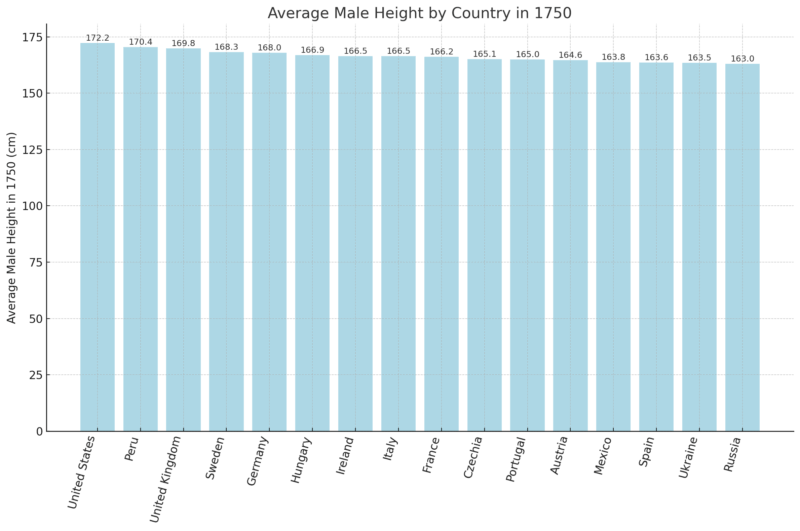
In 1700, there was a direct, albeit slow-moving, correlation between the cost of food and the height of the average adult male. Historical records, primarily derived from military enlistment documents and probate inventories of the time, suggest that the average height for men in Western Europe and the North American colonies hovered around 5 feet 5 inches (approx. 165 cm). While this seems diminutive by modern standards, it reflected a world where the majority of disposable income was funneled into basic caloric survival.
Capital Allocation and Nutritional Deficit
For the average citizen in 1700, “investing” was not a financial concept but a survival strategy. Capital was tied up in land, livestock, and simple tools. The lack of efficient global trade routes meant that food prices were subject to extreme volatility based on local harvests. If the harvest failed, the biological investment—the growth of the next generation—stalled. Families with higher financial capital could afford a protein-rich diet, which is directly linked to bone density and terminal height, creating a physical “wealth gap” that was visible to the naked eye.
Economic Stratification and the Height Gap
The economic history of the 18th century is marked by a fascinating divergence in height based on socioeconomic class. While the overall average remained relatively stagnant, the variance between the landed gentry and the peasantry was profound.
The Upper-Class Advantage
Those who held significant capital—merchants, aristocrats, and the rising middle class—were markedly taller than their laborer counterparts. In 1700, this height differential was a hallmark of generational wealth. Because wealth was inherited through land and business ownership, the nutritional advantages were compounded over centuries. Wealthy families were less likely to suffer from the endemic diseases of crowded, impoverished urban centers or the malnutrition caused by crop failures.
The Financial Burden of Urbanization
As 1700 progressed, the shift toward early industrial hubs began to impact the average height negatively. The cost of living in emerging cities was high, but wages often failed to keep pace with the hyper-inflated cost of imported produce and clean water. Consequently, the “urban penalty” emerged. The financial instability of the urban working class meant that children were often stunted by lack of resources, creating a demographic of shorter adults compared to their counterparts in the rural frontier of the North American colonies, where land was cheap and food was abundant.

Comparative Wealth and the “Frontier Premium”
One of the most compelling aspects of 1700s anthropometrics is the disparity between the Old World and the New World. It serves as a textbook case study on the impact of resource availability on long-term capital growth and human development.
The American Advantage
Records from the British and American colonial forces indicate that by 1700, individuals in the American colonies were significantly taller than their British cousins. This phenomenon is often attributed to the “frontier premium.” Because the North American colonies possessed vast, inexpensive, and fertile land, the average settler—even those of modest means—could access a diet rich in high-quality protein (game and livestock) that was unaffordable to the average British tenant farmer.
Wealth Distribution as a Metric
From a financial standpoint, this height gap illustrates the efficiency of decentralized wealth. In Britain, land was concentrated in the hands of the elite, keeping the labor force on the brink of subsistence. In the colonies, the democratization of land meant that the “investment” in human capital (nutrition and growth) was much higher. This led to a more physically robust population, which in turn increased the productivity of the colonial economy. The height of the 1700s American was, in essence, a reflection of a burgeoning economy with a higher ROI on individual labor.
The Financial Implications of Stagnation
For almost a century around 1700, the average height remained largely static or fluctuated only slightly. This stagnation is a clear signal of the limits of a pre-industrial economy.
The Malthusian Trap
Economic historians often refer to the “Malthusian trap,” where population growth outstrips the growth of food supply, leading to a collapse in the standard of living. Throughout the 17th and early 18th centuries, whenever the economy expanded and people became slightly more prosperous, families would grow larger, and the food supply would be stretched thinner. This cycle prevented significant, sustained increases in the average height. The financial system of the time lacked the technological leverage—such as improved agricultural techniques or globalized supply chains—to break this cycle.
Investing in Future Growth
It wasn’t until the advancements in agricultural science and the eventual onset of the Industrial Revolution that the financial constraints on human growth were finally loosened. By analyzing the average height in 1700, we are looking at the financial ceiling of the pre-capitalist world. It was a time when the “cost” of being human was determined by the immediate availability of land and local harvests.
Conclusion: Stature as a Ledger
Looking back at the year 1700, the data on human height provides a clear ledger of the era’s financial limitations. While the era was ripe with ambition and the beginnings of global trade, the average individual remained tethered to the constraints of a world where nutritional capital was scarce and unevenly distributed.
The height of our ancestors in 1700 serves as a reminder that economic progress is not merely an abstract shift in numbers on a spreadsheet. True economic growth has historically manifested in the physical capacity of a population to thrive. By understanding why the average person stood at roughly 5’5″, we gain a deeper appreciation for the complex intersection of food security, wealth distribution, and the long road that eventually led to the modern standard of living. In the history of money, the height of a nation is perhaps the most honest account of its success, acting as a permanent, physical record of the prosperity—or lack thereof—that defined the lives of those who came before us.
aViewFromTheCave is a participant in the Amazon Services LLC Associates Program, an affiliate advertising program designed to provide a means for sites to earn advertising fees by advertising and linking to Amazon.com. Amazon, the Amazon logo, AmazonSupply, and the AmazonSupply logo are trademarks of Amazon.com, Inc. or its affiliates. As an Amazon Associate we earn affiliate commissions from qualifying purchases.