
The Economic Philosophy of Andrew Johnson’s Reconstruction
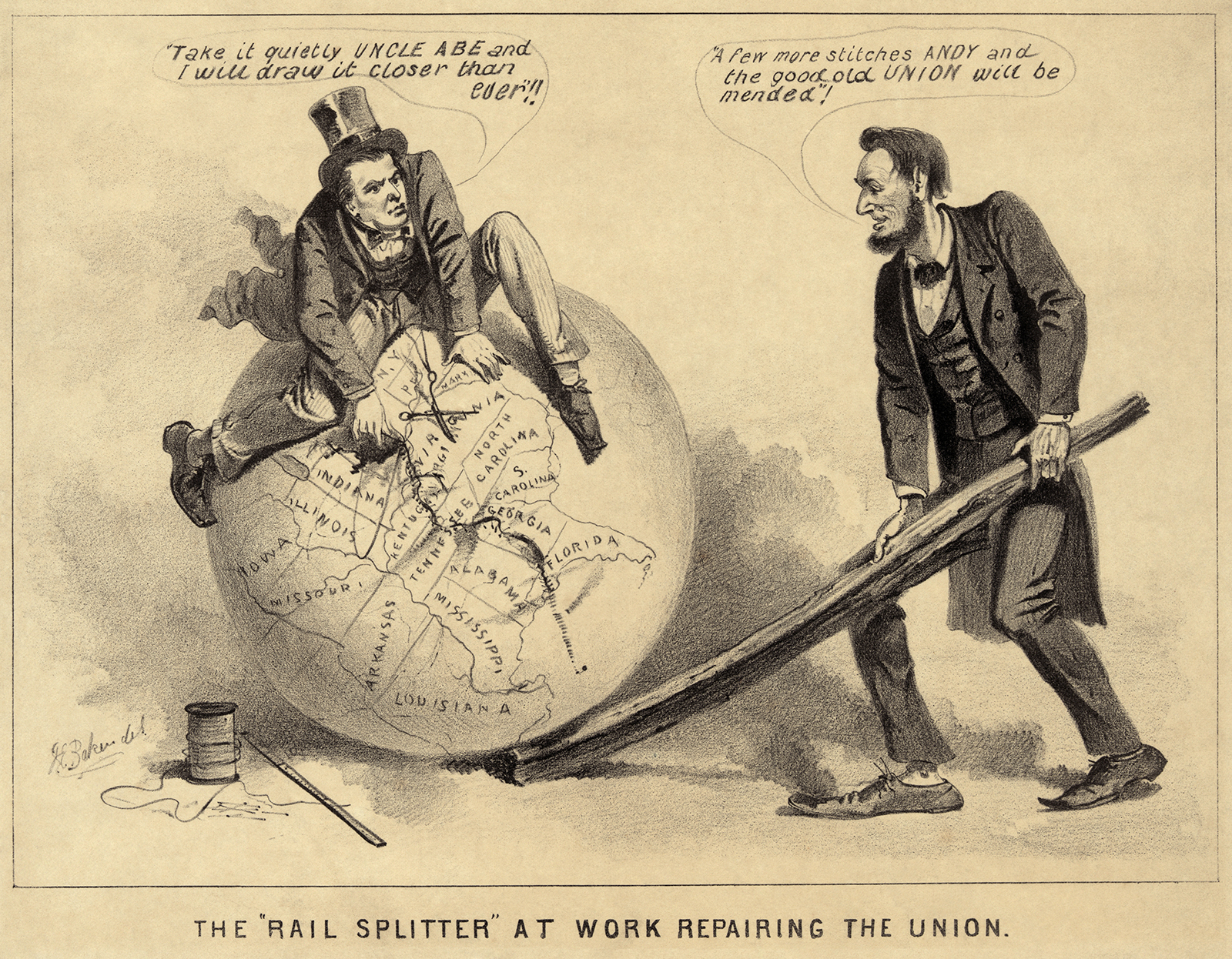
To understand the economic implications of Andrew Johnson’s Reconstruction plan, one must first view it through the lens of a rigid fiscal conservative and a champion of agrarian individualism. Unlike his predecessor, Abraham Lincoln, who envisioned a federal government capable of directing vast capital toward infrastructure and national industrialization, Johnson operated under a philosophy of limited government intervention. His approach to the post-Civil War landscape was essentially a “bootstrap” financial policy—one that prioritized the rapid restoration of state sovereignty to minimize the federal fiscal burden and stimulate local market activity.
The Fiscal Strategy of Rapid Reintegration
Johnson’s primary economic directive was the swift readmission of Southern states into the Union. From a financial perspective, he viewed the sustained occupation of the South as a drain on the national treasury. By granting amnesty to the majority of Confederate rebels and validating their state governments, Johnson sought to normalize regional commerce immediately. He believed that if Southern markets were reintegrated without the interference of federal “strings,” the natural forces of supply and demand would stabilize the shattered Confederate dollar and revive agricultural production.
Property Rights and Capital Protection
Central to Johnson’s plan was the restoration of property to former Confederates. Throughout the Civil War, the federal government had seized vast tracts of land—some of which had been promised to emancipated individuals under the “40 acres and a mule” ethos of the Freedmen’s Bureau. Johnson’s executive policy actively reversed these confiscations. He ordered that land be returned to its former owners, effectively stripping newly freed citizens of the only capital base they might have possessed. In Johnson’s fiscal view, private property rights were absolute, and any deviation from this, even to provide economic agency to former slaves, was considered an unconstitutional reach of federal power that undermined the sanctity of investment and ownership.
Labor Markets and the Preservation of the Plantation Economy
Johnson’s plan was deeply rooted in the preservation of the Southern socioeconomic structure. By creating a regulatory vacuum at the federal level, he essentially allowed local legislatures to reconstruct their labor markets according to pre-war standards, albeit without the legal status of chattel slavery.
The Economics of the Black Codes
The most significant impact of Johnson’s hands-off policy was the emergence of the “Black Codes.” These state-level laws were essentially economic mechanisms designed to regulate the labor of freedpeople. By forcing individuals into restrictive labor contracts and imposing vagrancy laws, the Southern states—under Johnson’s blessing—sought to recreate a captive labor force. Economically, this was an attempt to maintain the plantation-based model of production that had served as the bedrock of the Southern export economy. Johnson’s refusal to challenge these codes meant that capital continued to be concentrated in the hands of the land-owning elite, effectively stifling the development of a competitive, wage-based labor market.
Sharecropping as a Financial Default
Because Johnson’s plan provided no federal funding for land redistribution or economic transition, the South was left without liquid capital. With banks in ruins and currency worthless, the region shifted toward sharecropping. This system—which became the dominant economic reality under Johnson’s lack of oversight—was fundamentally predatory. It forced laborers to work the land for a portion of the crop, but the system of “crop liens” and high-interest credit ensured that farmers remained perpetually indebted to landowners and merchant capitalists. This cycle of debt effectively replaced the legal status of slavery with an economic status of debt peonage, ensuring that the Southern economy remained stunted, under-capitalized, and heavily reliant on traditional, low-yield agricultural techniques rather than modern industrial investment.

The Collision of Executive Policy and National Investment
Johnson’s plan was not merely a political failure; it was an economic conflict between a localist agrarian view and a burgeoning national industrial capitalist model. His Reconstruction plan stood in stark contrast to the emerging Republican vision of a federally subsidized economy.
Federal Spending and the National Debt
The national government had incurred a massive deficit to fund the war effort. Republican legislators favored high tariffs and the national banking system to manage this debt and encourage Northern industrial growth. Johnson, however, viewed federal fiscal expansion with profound skepticism. He argued that the cost of Reconstruction should be borne by the states themselves, rather than through federal assistance. By vetoing the expansion of the Freedmen’s Bureau and opposing the Civil Rights Act of 1866, he attempted to keep the federal government out of the business of social and economic engineering, effectively halting any potential for a federal investment strategy that could have modernized the South.
The Consequences of Fiscal Autonomy
The result of Johnson’s insistence on state-level economic autonomy was a “lost decade” of development. Without federal infrastructure projects—such as the expansion of railroads, telegraphs, and education systems designed to raise human capital—the South lagged behind the North for generations. Johnson’s plan preserved the existing hierarchy, which incentivized the protection of old wealth rather than the pursuit of new venture capital. By prioritizing the interests of the existing landed gentry, he prevented the emergence of a middle class of property-owning freedmen, which would have arguably created a more robust, diversified, and consumer-oriented regional economy.
Legacy of Financial Stagnation
The failure of Andrew Johnson’s Reconstruction plan serves as a cautionary study in the relationship between executive fiscal policy and long-term economic prosperity. His approach was designed to heal the national budget by minimizing federal intervention, but in doing so, he crippled the long-term economic health of the South.
The Cost of Short-Term Stability
Johnson prioritized the “bottom line” of the federal treasury over the structural transformation of the Southern economy. By opting for a low-cost, low-intervention approach, he effectively guaranteed that the economic disparity between the North and South would widen rather than shrink. When the federal government finally attempted to intervene under the subsequent Congressional Reconstruction, the economic damage—characterized by deeply entrenched debt, a lack of diversified industry, and the suppression of labor rights—was already too profound to be easily reversed.

Lessons in Institutional Economics
Modern economic analysis of this era highlights the necessity of institutional support for market participation. Johnson’s plan failed because it assumed that a market could function equitably in a vacuum, ignoring the fact that the post-war South lacked the legal and social framework to ensure fair competition. For a market to thrive, it requires not just the absence of intervention, but the presence of institutions that protect individual agency and ensure liquidity. Johnson’s plan focused on restoring the old order of the Southern marketplace, which ultimately served to alienate a massive portion of the population from the economy, leading to systemic poverty and a reliance on subsistence-level production.
In conclusion, Johnson’s Reconstruction plan was a pursuit of fiscal stability through the preservation of the status quo. His belief that the South could rebuild itself through traditional agrarian methods, without federal support or capital injection, resulted in a stagnation that would hinder the region’s integration into the national economy for decades. It stands as a prime example of how an executive failure to understand the link between social equity and economic health can lead to long-term financial underperformance and the entrenchment of inefficient, extractive economic systems.
aViewFromTheCave is a participant in the Amazon Services LLC Associates Program, an affiliate advertising program designed to provide a means for sites to earn advertising fees by advertising and linking to Amazon.com. Amazon, the Amazon logo, AmazonSupply, and the AmazonSupply logo are trademarks of Amazon.com, Inc. or its affiliates. As an Amazon Associate we earn affiliate commissions from qualifying purchases.