
The moment you deposit a physical check or a mobile image into your bank account, a common question arises: “When will this money actually be available?” While many people expect instant access to funds, the banking system operates on a complex schedule governed by federal regulations, internal institutional policies, and the mechanics of the clearinghouse process. Understanding the “when” of check deposits requires a look at banking business days, cutoff times, and the legal frameworks that define fund availability.
Understanding Banking Business Days and Cutoff Times
The most significant factor determining when your check funds become available is the bank’s defined “business day” and the daily “cutoff time.” It is a common misconception that banking happens 24/7. In the eyes of the financial system, weekends and federal holidays do not exist.
The Role of Cutoff Times
Banks establish specific cutoff times—often between 2:00 PM and 5:00 PM—for processing deposits. If you submit a check at your local branch or via your banking app before this time, the bank considers that day the “day of deposit.” However, if you submit the check after the cutoff, or on a Saturday, Sunday, or holiday, the bank will process the check as if it were deposited on the next business day.
For example, if you deposit a check at 7:00 PM on a Friday, the bank will typically start the clearing process on Monday morning. This creates a significant “float” period that many consumers find frustrating but is standard practice for verifying the validity of the negotiable instrument.
Business Days vs. Calendar Days
Regulation CC, the federal law governing the availability of funds, defines a business day as any day other than a Saturday, Sunday, or federal holiday. Even if your bank has a branch open inside a grocery store on a Sunday, the funds from your check deposit will likely not begin their regulatory clearing clock until Monday. Managing your cash flow requires aligning your expectations with these professional business cycles rather than the standard calendar.
The Clearing Process: Why Checks Take Time
When you deposit a check, you aren’t just giving the bank cash; you are submitting a legal order for the bank to collect funds from the issuer’s account. This process, known as “clearing,” involves several layers of verification that must occur before the funds can be safely released.
The Electronic Imaging System
Since the Check Clearing for the 21st Century Act (Check 21) was enacted, the physical transport of paper checks has been largely eliminated. Today, when you deposit a check—especially via mobile app—the image of the check is transmitted electronically to the paying bank. The paying bank verifies the signature, the routing and account numbers, and the availability of funds in the issuer’s account.
The Risk of Returns
The primary reason banks place holds on deposits is to mitigate the risk of the check “bouncing.” If a check is returned for non-sufficient funds (NSF) or a closed account, the bank that initially accepted your deposit must claw back those funds. To protect themselves from losses, most financial institutions will make a portion of the check available to you immediately (or the next business day) while holding the remainder until the clearinghouse confirms that the funds have been successfully transferred from the payer’s bank.
The Factors Influencing Fund Availability
Not all checks are created equal in the eyes of your bank. The amount, the type of check, and your personal account history all play a role in how quickly you gain access to your money.
Immediate Availability vs. Delayed Holds
Under federal regulations, banks are generally required to make the first $225 of a check deposit available on the next business day, provided the check is a “next-day” item (such as a cashier’s check or a government check). Personal checks, however, are subject to the bank’s “reasonable period” policy.
Banks have the authority to impose longer holds under specific circumstances:
- Large Deposits: Deposits exceeding $5,525 may be subject to a longer hold for the portion exceeding that threshold.
- Redeposited Checks: If a check was previously returned unpaid, the bank will almost certainly place a hold on it the second time around.
- New Accounts: If your account has been open for less than 30 days, your bank has wider latitude to place extended holds on check deposits to verify the legitimacy of your financial activity.
- Reasonable Cause for Doubt: If the bank has specific reason to believe a check will not be paid—for example, if the check appears altered or the issuer is known for NSF activity—they may implement a case-by-case hold.
The “Good Customer” Factor
Your relationship with your bank matters. If you maintain a high average balance and have a long-standing history of responsible account management, your bank may waive standard holds and provide faster access to your funds. Conversely, an account that frequently fluctuates near zero or has a history of overdrafts will likely trigger automated, conservative hold policies every time a check is deposited.
Best Practices for Managing Check Deposits
To ensure you have access to your funds when you need them, you must approach check deposits with a strategic mindset.
Utilize Direct Deposit Whenever Possible
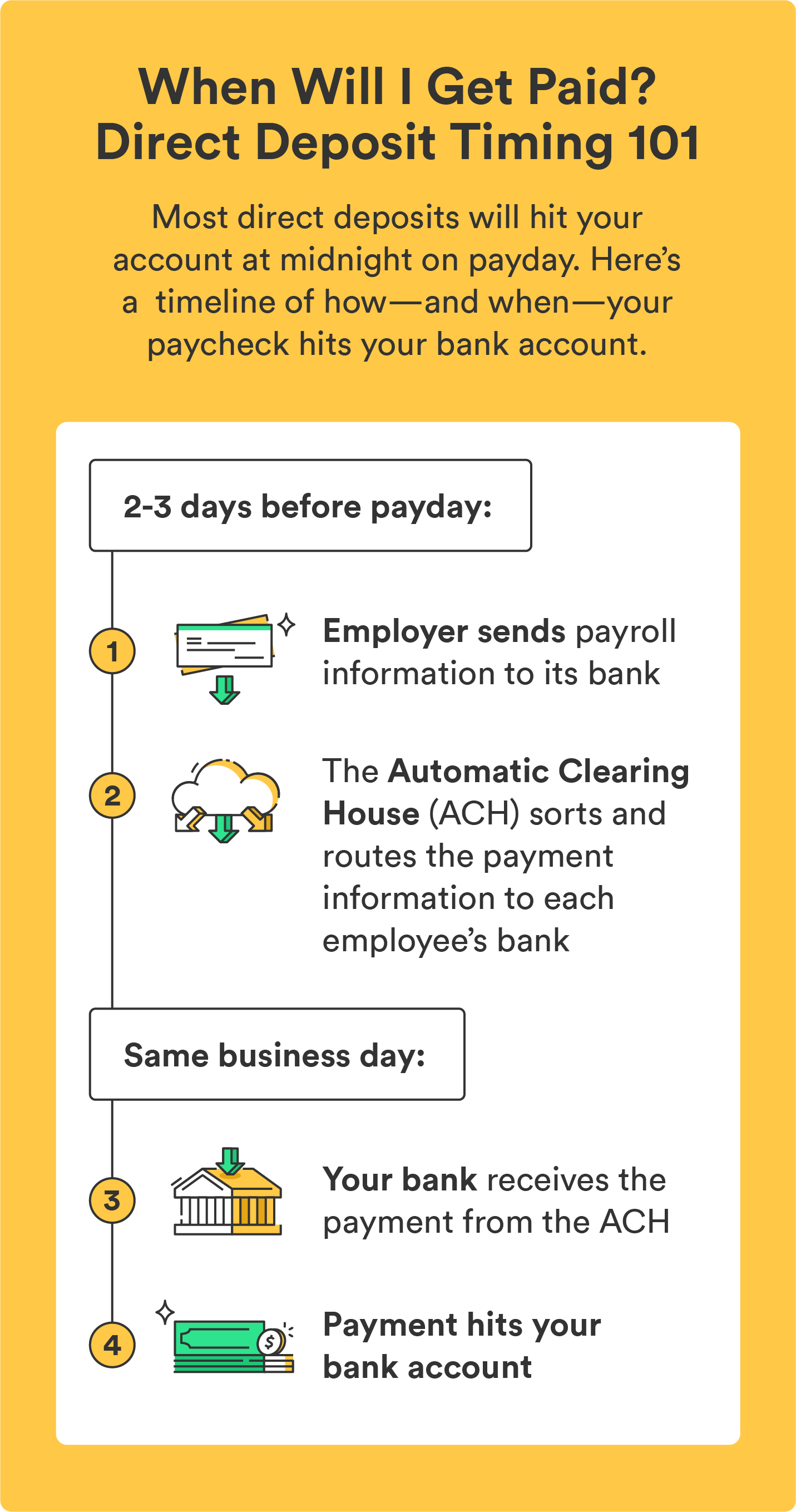
The most effective way to eliminate wait times is to bypass the check system entirely. Direct deposit ensures that funds are available in your account on the morning of the payroll date. By moving away from physical or even digital check deposits, you eliminate the risk of clearing holds and the unpredictability of banking business days.
Deposit Early in the Day
If you must use physical checks, make it a habit to visit the branch or use the mobile app well before the daily cutoff time. Aiming for a mid-morning deposit provides the best chance of the deposit being processed in that day’s batch. If you deposit at 9:00 AM, you are far more likely to see the funds clear on the earliest possible schedule compared to a late-afternoon deposit.
Read Your Bank’s Funds Availability Policy
Every bank is required to provide you with a “Funds Availability Policy” document. While it may seem like dry reading, it is the contract that dictates exactly how your money is handled. Knowing whether your bank classifies your specific account type as “Standard” or “Premium” can help you anticipate how long your holds will typically last. If you find your bank’s holds are consistently too long for your business or personal needs, it may be time to compare their policies with other institutions that offer faster clearance times for digital mobile deposits.

Monitor Your Account via Digital Banking
In the digital age, you don’t need to wait for a mailed statement to see the status of your deposit. Most banking apps provide a “Pending” section in your transaction history. This is the most reliable way to monitor the status of a check. If you see the amount listed as “Pending,” you know the bank has received the image but has not yet confirmed the final settlement. Once the funds move from “Pending” to “Available,” you are free to use them.
Ultimately, while the banking system works to facilitate the movement of money, it does so through a framework of verification designed to protect the integrity of the financial system. By understanding the cutoff times, the legal regulations, and the bank’s internal risk policies, you can plan your finances around the reality of how and when check deposits will hit your account.
aViewFromTheCave is a participant in the Amazon Services LLC Associates Program, an affiliate advertising program designed to provide a means for sites to earn advertising fees by advertising and linking to Amazon.com. Amazon, the Amazon logo, AmazonSupply, and the AmazonSupply logo are trademarks of Amazon.com, Inc. or its affiliates. As an Amazon Associate we earn affiliate commissions from qualifying purchases.