
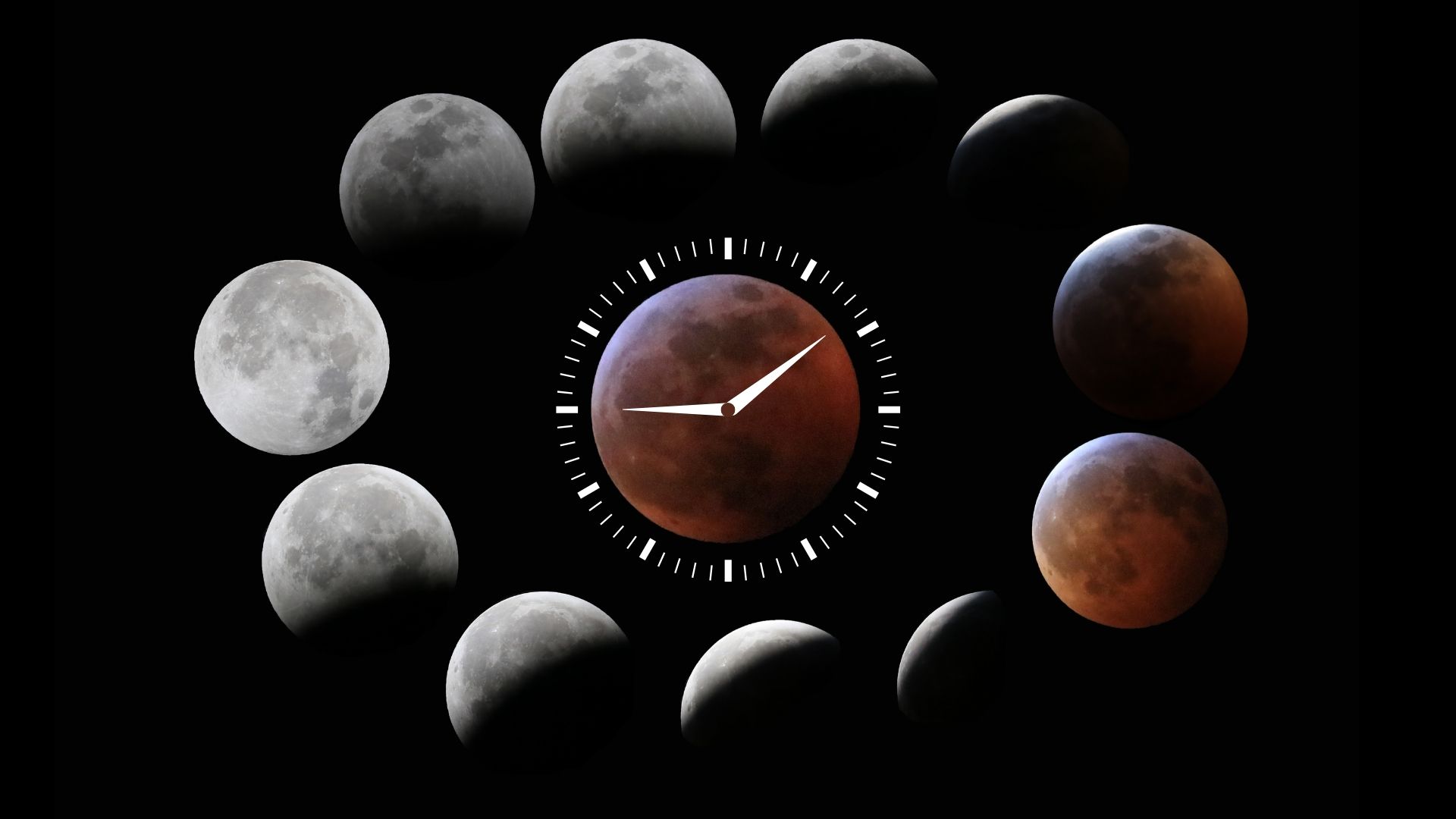
The phenomenon of a “Blood Moon”—a total lunar eclipse where the Earth passes directly between the Sun and the Moon, casting a deep, reddish hue across the lunar surface—is one of nature’s most spectacular displays. While the celestial event itself is a matter of astronomy, the way we capture, broadcast, and interact with this event in the modern age is a matter of technology. As we prepare to witness this evening’s eclipse, the question isn’t just “when” to look up, but how we can leverage the latest tech to enhance our viewing, documentation, and digital preservation of the moment.

The Digital Architecture of Celestial Observation
Modern astronomy is no longer restricted to those with backyard telescopes and paper charts. Today, the intersection of mobile computing, high-precision sensors, and global connectivity allows enthusiasts to experience the Blood Moon through a technical lens that far exceeds the capabilities of the naked eye.
Leveraging Mobile Applications for Precision Timing
The exact moment of totality depends heavily on your geographic coordinates. Rather than relying on generic global forecasts, advanced astronomy apps utilize your device’s GPS module to provide second-by-second updates on the eclipse’s trajectory. Applications like SkySafari and Stellarium have integrated augmented reality (AR) interfaces that overlay the moon’s path onto your live camera feed, allowing you to track the shadow’s movement across the lunar disc in real-time. By syncing your local notifications with precise UTC offsets, these tools ensure that you do not miss the “first contact” phase, where the penumbral shadow begins its slow crawl across the lunar surface.
Cloud-Based Real-Time Streaming and Global Networks
For those residing in regions where the eclipse might be obscured by local weather patterns or obstructed by urban infrastructure, the digital solution lies in global streaming networks. Tech-forward observatories like the Virtual Telescope Project and various NASA-affiliated satellite relays provide high-bandwidth, low-latency live streams. These platforms utilize specialized optical sensors—often mounted on stabilized platforms—to broadcast the event. When choosing a stream, look for those that offer metadata overlays; these provide technical specifications like atmospheric refraction estimates and current exposure settings, turning a casual viewing into a data-rich experience.
Optimizing Your Hardware for Lunar Documentation
Capturing the Blood Moon requires a nuanced understanding of digital imaging technology. Because the Moon reflects significantly less light during totality than it does during a full phase, your camera settings—and the supporting software—must be finely tuned to handle the high dynamic range (HDR) of the lunar surface.
Computational Photography and Sensor Calibration
Modern mirrorless cameras and high-end smartphones have shifted the burden of photography from the photographer to the processor. When documenting the eclipse, utilize manual exposure modes to disable automated “Moon-mode” AI, which often defaults to over-sharpening or aggressive noise reduction.

To achieve the best results, you must consider:
- ISO Management: During the deep red phase, push your ISO higher than usual, but keep a close watch on the thermal noise generated by the sensor.
- Shutter Speed Integration: Because the Earth is rotating, the Moon is constantly moving relative to your lens. Use the “500 Rule” (or 200 for digital sensors) to calculate the maximum exposure time before motion blur occurs, ensuring your final image is crisp.
- RAW Processing Pipelines: Always shoot in RAW format. The reddish spectrum of a Blood Moon is prone to color-clipping in standard JPEG compression. Bringing your RAW files into professional editing suites like Adobe Lightroom or Capture One allows for non-destructive adjustment of the white balance and shadows, preserving the delicate copper tones of the moon.
The Role of Stabilized Mounting Systems
The digital signal is only as good as the hardware’s stability. Even at high shutter speeds, the focal length required to capture a detailed lunar surface makes cameras hyper-sensitive to vibration. Integrating an automated tracking mount—a piece of hardware that communicates with your camera via Bluetooth or Wi-Fi to adjust for the Earth’s rotation—is the “gold standard” for tech-savvy sky-watchers. These systems allow for long-exposure stacking, a technique where multiple images are combined by software to reduce noise and enhance the subtle craters on the moon’s face that are otherwise lost in the darkness.
Cybersecurity and Digital Etiquette for Real-Time Sharing
As the event unfolds, the internet becomes a hub for collaborative astronomical science. Engaging with this community requires a baseline understanding of digital security and platform optimization to ensure that your contributions are not compromised by malicious actors or bandwidth bottlenecks.
Securing Your Live Feeds
If you are hosting a local or remote stream of the Blood Moon, you are effectively running a server. Ensure your streaming software is updated to the latest version to patch vulnerabilities that could allow for unauthorized access to your feed. Utilizing encrypted RTMP (Real-Time Messaging Protocol) streams helps ensure that your signal remains high-quality and free from third-party tampering. Furthermore, when sharing your location via social media or streaming platforms, consider “privacy masking.” While it is exciting to share your view, broadcasting your exact GPS coordinates in real-time can be a security risk; share your region rather than your precise street address.
The Impact of Network Latency
The surge in traffic during a major astronomical event often causes significant congestion on regional ISP nodes. If you are uploading high-definition footage of the eclipse, prepare for “buffer bloat”—a phenomenon where high latency ruins the continuity of your stream. Using a Content Delivery Network (CDN) or platforms optimized for high-bitrate video, such as Twitch or specialized astronomical streaming sites, can mitigate these issues. Before the eclipse reaches its peak, run a diagnostic speed test to determine your upload overhead. If your network is struggling, prioritize lower-resolution streams that maintain a high frame rate over high-resolution, stuttering video; the scientific value of a smooth, consistent feed is far higher than a sporadic 4K image.
Looking Forward: The Future of Remote Space Observation
The ability to see the Blood Moon tonight is a testament to how far we have come in democratizing scientific observation through technology. We are currently witnessing a shift toward decentralized astronomy, where everyday tech enthusiasts are contributing to global datasets.
As you prepare to view the moon, consider the technological ecosystem that makes it possible: from the satellite telemetry that predicts the eclipse to the fiber-optic networks carrying the light of the moon to your screen. By integrating high-precision mobile tools, calibrating your optical sensors for the specific challenges of lunar totality, and maintaining a secure digital workflow, you move from being a mere spectator to an active participant in the modern scientific narrative. Tonight, when the shadow of the Earth finds its mark, remember that your screen is more than just a display—it is an interface to a vast, unfolding digital universe. Enjoy the observation, optimize your hardware, and ensure your capture of this celestial event is as seamless and sharp as the engineering that allows us to witness it.
aViewFromTheCave is a participant in the Amazon Services LLC Associates Program, an affiliate advertising program designed to provide a means for sites to earn advertising fees by advertising and linking to Amazon.com. Amazon, the Amazon logo, AmazonSupply, and the AmazonSupply logo are trademarks of Amazon.com, Inc. or its affiliates. As an Amazon Associate we earn affiliate commissions from qualifying purchases.