
When investors, entrepreneurs, and hospitality professionals look at the landscape of American tourism, Nashville, Tennessee, consistently ranks as a gold-standard case study for high-yield destination branding. The heart of this phenomenon is Broadway—the iconic corridor that serves as the undisputed epicenter of the city’s nightlife economy. From a brand strategy perspective, the “Honky Tonk Highway” is not just a street; it is a meticulously curated ecosystem of personal branding, corporate identity, and immersive experiential marketing.
The Architecture of a Destination Brand
To understand why Broadway functions as the primary engine for Nashville’s tourism revenue, one must look past the neon signs and live music. The street operates as a masterclass in place-branding. A destination brand is successful when it creates an indelible emotional association with the consumer, and Broadway achieves this by layering disparate brand identities into a cohesive, high-energy environment.

The Power of Co-Branding and Celebrity Partnerships
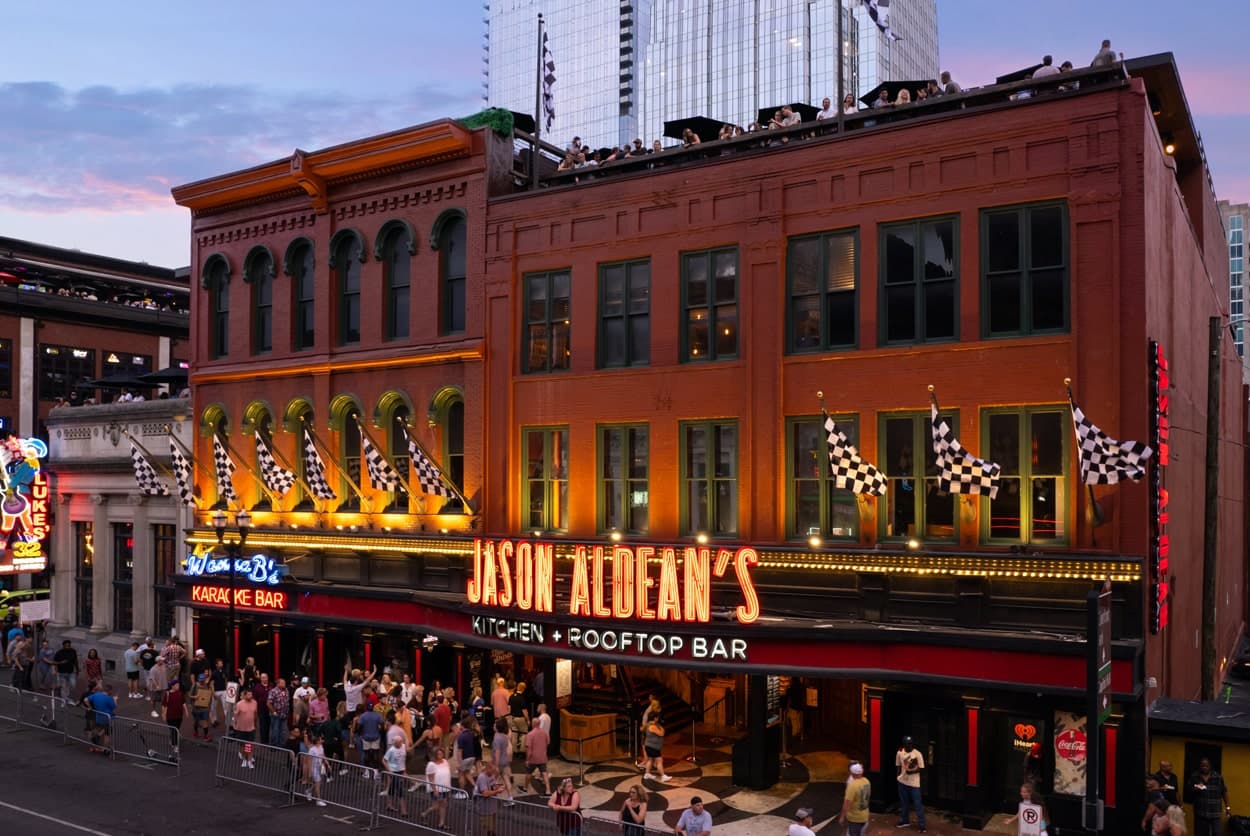
The most significant trend currently shaping the Broadway district is the proliferation of celebrity-owned venues. Names like Jason Aldean, Luke Bryan, Dierks Bentley, and Kid Rock have transformed their individual personal brands into massive corporate entities. This is a brilliant application of influencer marketing scaled to a physical brick-and-mortar environment. By attaching a famous persona to a hospitality venture, these stars leverage their existing fan bases to guarantee immediate brand awareness and high foot traffic.
For the hospitality investor, this model changes the game. It reduces the cost of customer acquisition significantly because the “brand” is already established in the minds of the target demographic before the doors even open. The result is a high-density, competitive market where the brand identity of the artist dictates the aesthetic, menu, and service style of the bar.
Visual Identity and Urban Marketing
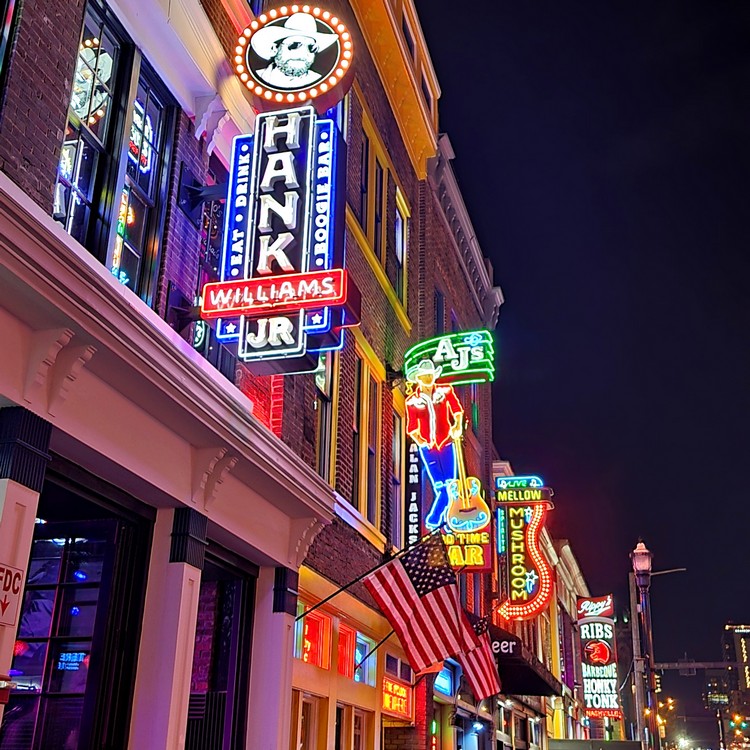
The visual landscape of Broadway is a masterclass in distinctive asset development. Every venue uses high-impact exterior signage and lighting to compete for attention. In marketing terms, this is “extreme differentiation.” Because the concentration of bars is so dense, a venue cannot afford to be subtle. The neon, the open-air stages, and the massive vertical branding elements ensure that the street remains recognizable in every piece of user-generated content shared on social media. This constant influx of organic marketing—tourists filming their experiences and posting them to millions of followers—serves as the ultimate feedback loop for the Nashville brand.
Strategic Positioning and Market Saturation
For businesses entering the Nashville market, the strategy is rarely about finding a “niche” in the traditional sense; it is about finding a way to stand out within a saturated, high-traffic environment. The strategic positioning of Broadway relies on what marketers call “clustered competition.”
The Cluster Effect
In many industries, competition is viewed as a threat to be avoided. In the hospitality and tourism sector of Nashville, clustering is the core strength. By grouping dozens of bars, restaurants, and music venues within a three-block radius, Nashville has created a “destination anchor.” A tourist knows that if they go to Broadway, they will find an endless supply of entertainment. This drastically lowers the “search cost” for the consumer. When the supply of high-quality, similarly themed experiences is concentrated, the area becomes a self-sustaining magnet for visitors.
Developing a Unique Value Proposition (UVP)
Even within this cluster, successful venues must define their UVP. Is it the rooftop view? Is it the specific sub-genre of country music? Is it the VIP experience? Corporate identity in this district is heavily reliant on experiential branding. Unlike a retail brand that might rely on product quality alone, these Broadway establishments are selling a memory. They manage this through the intentional design of their spaces—creating “Instagrammable” moments that reinforce the brand image. When a business understands that its primary product is the customer’s social status and shared memory, it can command a premium price point.
Navigating the Competitive Landscape: Lessons for Brand Managers
If an entrepreneur wants to build a brand that resonates with the same intensity as the venues on Broadway, they must look at how these companies manage their reputation and customer touchpoints. The Nashville model provides three critical lessons for modern brand strategy.
1. Authenticity as a Scalable Asset
While many of these venues are corporate-backed, they lean heavily into the “authentic” Nashville aesthetic. They cultivate a brand identity that feels rooted in the city’s musical history. Even when a brand is large-scale, it must maintain a connection to its origin story. For brands in any industry, the lesson is clear: if you lose your tether to your authentic “why,” your brand becomes generic. Broadway venues stay relevant by constantly bridging the gap between historical country music roots and modern entertainment demands.
2. Experience-First Design
Broadway bars are not designed as static rooms; they are designed as live stages. Every corner of a venue is optimized for throughput, visibility, and energy. This is a design principle that applies to all service-based businesses: your physical (or digital) layout should dictate the flow of the customer experience. If the customer can easily see the “main event” (whether that is a band, a menu display, or a service desk), their satisfaction increases. By designing spaces that encourage movement and social interaction, these brands increase dwell time, which directly correlates to higher revenue per visitor.
3. Leveraging High-Volume Traffic Channels
Broadway is the physical equivalent of a high-traffic digital landing page. The businesses there have mastered the art of “capture.” They understand that they have seconds to convert a pedestrian into a patron. This requires a strong visual hook—the “hero” element of the brand. For a website, this might be a headline or a video; for a Nashville bar, it is a four-story rooftop with a view of the skyline and a live band blasting classic hits. Successful brands identify their most powerful asset and display it with absolute confidence.
The Future of Destination Branding in Nashville
As Nashville continues to expand, the question for brand strategists becomes: how do you maintain the equity of a street that is so heavily identified with one type of experience? The answer lies in brand evolution.
We are currently seeing a shift toward “premiumization” on and around Broadway. While the traditional honky-tonk remains the foundational brand of the street, newer developments are incorporating high-end lounges, culinary-focused bars, and tech-integrated entertainment venues. This is a classic brand expansion strategy. By diversifying the types of experiences available, Nashville is moving from a single-note attraction to a multifaceted destination that can capture different segments of the market simultaneously.
For professionals analyzing this space, it is clear that Nashville has achieved the “Holy Grail” of place-branding: the city name is synonymous with a specific, replicable, and highly desirable consumer experience. This is achieved through aggressive, coordinated marketing and a fierce commitment to the brand’s core pillars—music, hospitality, and celebration.
In conclusion, Broadway represents the intersection of high-octane branding and real estate development. It proves that when you commit to a singular, powerful brand identity and curate an environment that supports that identity in every detail, you don’t just build a business; you build a landmark. Whether you are managing a personal brand, building a corporate identity, or analyzing high-performing markets, the lessons from the neon lights of Broadway remain the same: define your space, lean into your most authentic assets, and ensure that every interaction leaves the customer with a story they want to share.
aViewFromTheCave is a participant in the Amazon Services LLC Associates Program, an affiliate advertising program designed to provide a means for sites to earn advertising fees by advertising and linking to Amazon.com. Amazon, the Amazon logo, AmazonSupply, and the AmazonSupply logo are trademarks of Amazon.com, Inc. or its affiliates. As an Amazon Associate we earn affiliate commissions from qualifying purchases.