
The Economics of Daytime Television Longevity
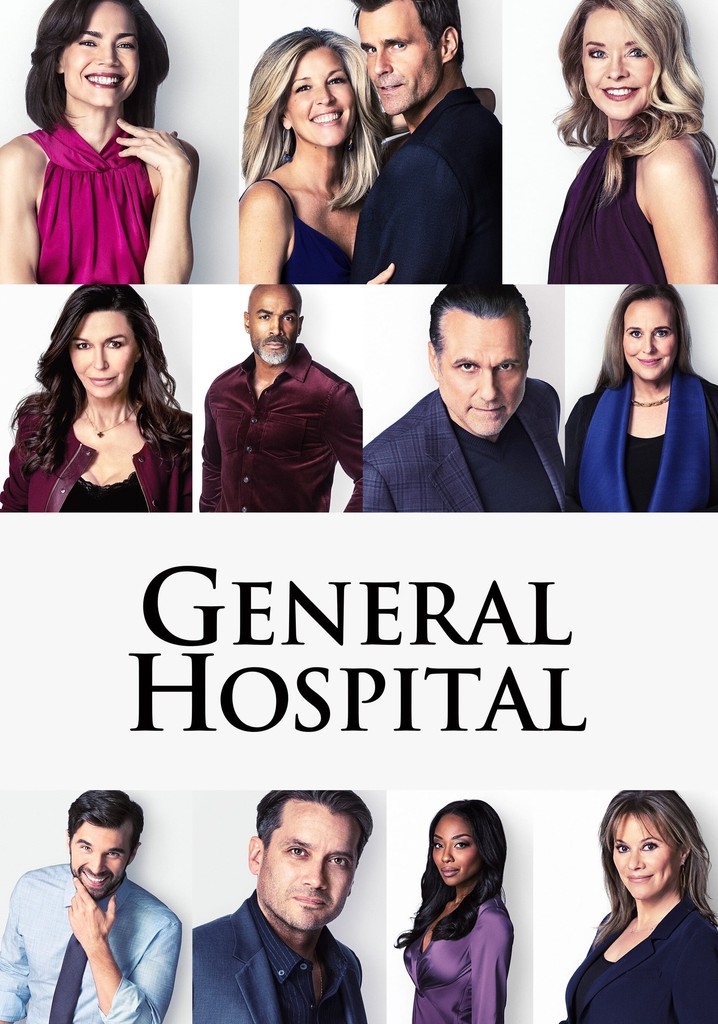
In the shifting landscape of modern media, General Hospital stands as a titan of endurance, a property that has defied the erosion of traditional linear television. To understand its current status, one must move beyond the conventional measurement of “seasons.” Unlike scripted dramas on premium cable or streaming services that operate on discrete 10- or 13-episode seasonal cycles, General Hospital functions on a continuous, multi-generational fiscal model. Since its debut on April 1, 1963, the show has not tracked progress in seasons, but in years and episodes. As of 2024, the show is well into its 61st year of production, approaching an astounding 15,500 episodes. From a brand management and financial perspective, this longevity is not merely a feat of storytelling; it is a masterclass in asset retention and audience lifetime value.

The financial infrastructure of a long-running soap opera is fundamentally different from the “hit-driven” model of streaming platforms. While a series like Stranger Things requires massive capital investment for a high-stakes, short-term return on subscriber acquisition, General Hospital operates as a low-margin, high-volume recurring revenue engine. Its production costs are amortized over hundreds of episodes per year, creating a consistent supply of inventory for its parent network, ABC. This consistency is the backbone of the show’s brand strategy: providing a reliable, daily utility for a demographic that demands stability in their entertainment consumption.
The Brand Strategy of Perpetual Narratives
The primary challenge in managing a brand that has been in circulation for six decades is the balance between heritage and relevance. General Hospital utilizes a “living brand” strategy, where the corporate identity is inextricably linked to the history of the characters while remaining flexible enough to incorporate contemporary social discourse. This is an essential tactic in corporate branding; the show acts as a case study for legacy firms that must pivot their marketing without alienating their core user base.
The Value of Legacy Equity
For a brand to survive sixty years, it must cultivate deep “brand equity.” In the context of General Hospital, this equity is held by the audience. Fans of the show are not merely viewers; they are brand advocates who have invested decades of time into the narrative arcs of the Spencer, Quartermaine, and Corinthos families. From a marketing standpoint, this creates a barrier to entry for competitors that is almost insurmountable. New shows may have higher production values or star power, but they lack the decades-deep narrative infrastructure that generates automatic audience engagement.
Modernizing the Marketing Funnel
While the show relies on its traditional broadcast roots, its brand strategy has evolved to embrace digital touchpoints. The show now functions as a content ecosystem, integrating social media sentiment tracking to gauge character popularity and plot reception. This real-time feedback loop allows the production team to adjust narrative beats in a way that functions similarly to agile software development. By treating the narrative as a product that undergoes constant, iterative updates, the brand remains “fresh” despite its advanced age, ensuring that it remains a viable product for advertisers who target specific daytime demographics.
Financial Viability in the Streaming Era
The transition of the daytime soap opera into the streaming age has been a pivot point for the business of television. Historically, General Hospital relied on traditional Nielsen ratings and linear commercial inventory. Today, the financial model has shifted toward a hybrid approach, leveraging both broadcast advertising revenue and digital viewership data via platforms like Hulu. This shift has required a sophisticated understanding of digital analytics and data-driven monetization strategies.
Monetizing Audience Retention
The financial health of General Hospital is largely predicated on the high “stickiness” of its audience. Unlike episodic dramas that suffer from high churn rates between seasons, the soap opera model is designed to minimize churn. By creating a daily habit, the show secures a predictable revenue stream from advertisers who know exactly who they are reaching: a demographic with established purchasing power. This consistency allows for accurate financial forecasting, a rare luxury in the volatile world of entertainment production.
Adapting to Digital Distribution
The migration to digital platforms has not only changed how the show is consumed but also how it is valued by its corporate owners. The ability to track granular viewing metrics—such as the exact point where a viewer drops off during a segment—has turned the soap opera into a data-rich asset. This data informs investment decisions for other projects within the network, effectively positioning General Hospital as a low-risk, high-data-yield anchor for the network’s wider entertainment portfolio. When considering the show’s place in the broader market, it is best viewed not as a traditional television series, but as a recurring subscription service that provides daily value to a loyal user base.
Future-Proofing the Daytime Business Model
The question of “what season is it” is essentially a question of how long a business can sustain its core offering before it is rendered obsolete by technological or cultural shifts. General Hospital has remained relevant by refusing to treat itself as an antique. Instead, it maintains a lean production cost structure, utilizes a rotating cast of high-value talent, and leverages its massive archive as a content library.
Lessons for Personal and Corporate Branding
The longevity of this show offers a roadmap for any entity—individual or corporate—looking to build a long-term brand. The core principles are:
- Consistency over Intensity: Success is not built on a single viral moment, but on a daily commitment to quality.
- Deep User Engagement: Build a community, not just an audience.
- Agile Adaptation: Retain the core mission while updating the delivery method to suit current technological standards.
As the media landscape continues to fracture, the value of reliable, long-form, daily content only increases. General Hospital is currently navigating its seventh decade by leaning into these financial and strategic strengths. It has moved beyond the need for seasonal validation, operating instead as a permanent fixture in the cultural and financial firmament of daytime television. Whether it is technically in its 61st year or its 15,000th episode, the focus remains the same: optimizing the delivery of a serialized product to an audience that demands both the comfort of the familiar and the excitement of the new. The show proves that in the business of media, longevity is the ultimate metric of success, and by focusing on the fundamentals of consistent brand management and fiscal efficiency, a property can indeed achieve a form of commercial immortality. In an industry obsessed with the next “big thing,” General Hospital succeeds by simply being the thing that is always there.
aViewFromTheCave is a participant in the Amazon Services LLC Associates Program, an affiliate advertising program designed to provide a means for sites to earn advertising fees by advertising and linking to Amazon.com. Amazon, the Amazon logo, AmazonSupply, and the AmazonSupply logo are trademarks of Amazon.com, Inc. or its affiliates. As an Amazon Associate we earn affiliate commissions from qualifying purchases.