
Pantheism, the philosophical and theological perspective that the universe is identical to the divine—or that all things constitute an all-encompassing, immanent God—occupies a unique position in the history of human belief. While many mainstream global religions are rooted in transcendence, where a deity exists apart from and above the created world, pantheistic thought posits that the creator and the creation are one. To understand which traditions align with this framework, one must navigate the nuances between pure pantheism, panentheism, and non-dualist spiritual philosophies.
The Foundations of Pantheistic Thought
At its core, pantheism denies the existence of a separate, anthropomorphic deity. Instead, it suggests that the divine is synonymous with the laws of physics, the natural environment, and the totality of existence. Historically, this has often led to a deep, reverent connection with the natural world, as every atom is considered sacred.

Philosophical Roots and Divergence
The term “pantheism” itself was popularized in the 18th century, but the concept dates back to antiquity. It emerged as a challenge to the established order of hierarchical, top-down theological structures. By removing the “divine observer” who judges from above, pantheism shifts the focus toward an internal or immanent divinity. This paradigm shift creates a worldview where nature is not something to be exploited, but an extension of the sacred self.
Differentiating Pantheism from Panentheism
It is essential to distinguish between pantheism and its cousin, panentheism. While pantheism claims that “God is the universe,” panentheism posits that “God is in the universe, but also transcends it.” Many spiritual traditions occupy a middle ground between these two definitions. Understanding this distinction is vital, as it dictates how practitioners interact with the divine: through direct observation of the physical world or through a mystical connection to a force that resides both within and beyond the veil of reality.
Ancient Eastern Traditions and Non-Dualism
Many of the world’s most enduring spiritual traditions contain deep threads of pantheistic or panentheistic thought, particularly those rooted in Eastern philosophies that emphasize non-duality (Advaita).
Hinduism and the Concept of Brahman
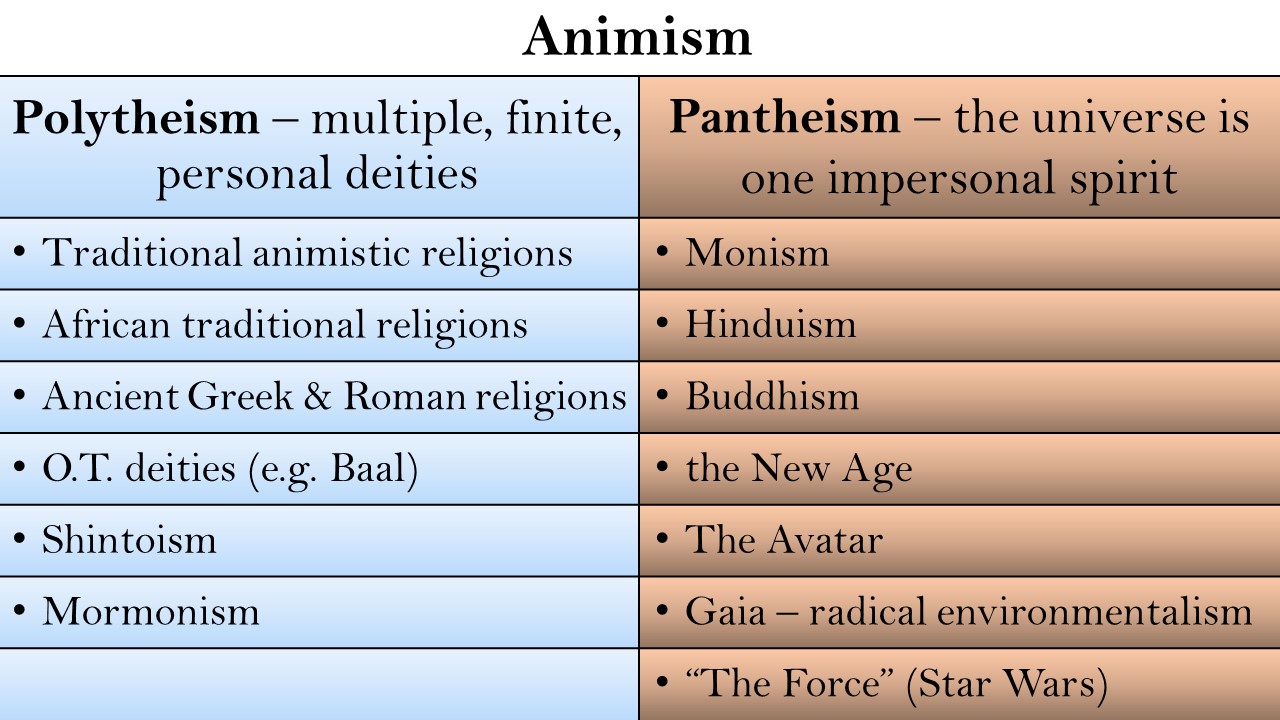
Hinduism is perhaps the most prominent example of a religious tradition that embraces pantheistic tendencies. At the heart of Vedantic philosophy lies the concept of Brahman, the ultimate reality that is both the source and the substance of all things. In the Upanishads, the identity of the individual soul (Atman) with the universal soul (Brahman) is a cornerstone of belief. While there are many deities in the Hindu pantheon, these are often interpreted as manifestations of the singular, all-encompassing divine reality. Thus, a tree, a stone, and a person are all expressions of the same underlying divine consciousness.
Taoism and the Flow of the Universe
Taoism, while not strictly “religious” in the Western sense of having a creator god, is fundamentally pantheistic in its observation of the Tao. The Tao is the nameless, formless force that flows through all things. By aligning oneself with the natural order, the practitioner recognizes that they are an integral part of the cosmic mechanism. There is no separation between the human actor and the natural environment; both are expressions of the same unfolding process. This perspective encourages a lifestyle of simplicity, humility, and harmony with the environment, as the divine is found in the way of the wind, the water, and the life cycle of the forest.
Western Esotericism and Modern Spiritual Movements
In the West, pantheism has often surfaced within mystical circles, hermetic traditions, and, more recently, through modern movements that seek to reconcile scientific understanding with spiritual wonder.
Stoicism and the Rational Cosmos
The Stoics of ancient Greece and Rome held a view that is often characterized as “providential pantheism.” They believed that the universe was a rational, organized entity imbued with a divine logos. For the Stoic, the divine was not a being in the sky but the rational structure of the cosmos itself. By living in accordance with nature—both the external world and the internal human nature—one aligns with the divine. This tradition has heavily influenced secular pantheism, as it grounds spirituality in reason and the observable mechanics of the universe.
Spinoza and the Philosophical Legacy
Baruch Spinoza remains the most influential figure in Western pantheism. His famous phrase, Deus sive Natura (“God, or Nature”), dismantled the idea of a personal, interventionist god. Spinoza argued that there is only one substance in the universe, and that substance is God. His influence permeated the Enlightenment and continues to shape modern thinkers who view the universe through a lens of scientific naturalism. For the Spinozan, God is not a deity that hears prayers, but the sum total of infinite reality.
Contemporary Paganism and Earth-Centered Paths
Modern Paganism, including various branches of Druidry and Wicca, frequently integrates pantheistic elements. The reverence for the Earth as a living entity—often personified as Gaia—places these traditions squarely in the realm of modern pantheistic expression. Unlike traditional monotheism, these paths often reject the notion of a transcendent master and instead focus on the immanent divinity present in the cycles of the seasons, the fertility of the land, and the interconnectivity of all biological life.
The Intersection of Science and Pantheism
In the modern era, the lines between scientific inquiry and pantheistic spirituality have become increasingly blurred. Many people who feel alienated by dogmatic religious structures find solace in “Naturalistic Pantheism.”
The Scientific Worldview as Religious Awe
For the secular pantheist, the “divine” is found in the complexity of the quantum field, the biological miracle of evolution, and the staggering scale of the cosmos. Scientists like Albert Einstein and Carl Sagan expressed sentiments that were overtly pantheistic. When Einstein spoke of the “God of Spinoza,” he was referring to the profound harmony and beauty of the physical laws that govern the universe. This perspective does not require faith in the supernatural; rather, it requires a commitment to the wonder of the natural world.
Ecology and the Ethical Mandate
One of the most compelling aspects of pantheism is its inherent ethical directive toward the environment. If the universe is divine, then the destruction of nature is, by extension, a form of sacrilege. This worldview provides a robust framework for environmentalism. Pantheistic religions promote a stewardship that is not based on “dominion,” as found in some interpretations of Western theology, but on the recognition that humans are a small, interdependent part of a much larger, sacred system.
The Future of Pantheistic Perspective
As humanity continues to grapple with climate change, technological advancement, and a general shift away from organized, institutional religion, pantheistic ideas are enjoying a renaissance. The appeal of a belief system that does not ask its adherents to suspend their scientific understanding is profound.
Universal Spirituality without Dogma
The defining characteristic of future-facing pantheistic thought is its inclusivity. Because it lacks the rigid hierarchies and dogmatic scriptures of traditional religions, it allows for a diverse range of interpretations. Whether one views the divine as a cosmic energy, a biological network, or the elegant mathematics of the stars, the pantheistic perspective allows for a personalized, meditative, and grounded approach to the “big questions.”

Conclusion: A Unified View of Reality
What religions are pantheistic? The answer is not limited to a list of denominations or churches. It is found in the shared truth across multiple cultures and millennia: that there is no separation between the holy and the mundane. From the non-dualist meditations of the East to the rational awe of the Western scientists, pantheism offers a path that honors the complexity of existence. By viewing the universe as a unified, divine whole, practitioners find a way to live with purpose, humility, and an enduring connection to the world around them. It is a philosophy for the ages—a way of seeing that transforms the entire cosmos into a temple, where every breath, every star, and every life form is a vital expression of the divine.
aViewFromTheCave is a participant in the Amazon Services LLC Associates Program, an affiliate advertising program designed to provide a means for sites to earn advertising fees by advertising and linking to Amazon.com. Amazon, the Amazon logo, AmazonSupply, and the AmazonSupply logo are trademarks of Amazon.com, Inc. or its affiliates. As an Amazon Associate we earn affiliate commissions from qualifying purchases.