
The Ankh, often described as a cross with a loop at the top, is one of the most recognizable symbols in human history. While it is frequently associated with spiritual belief systems, its origins are rooted in the ancient Egyptian civilization. To understand the “religion” of the Ankh, we must look beyond modern pop culture and examine it through the lens of brand strategy, visual identity, and cultural semiotics. In the world of design, the Ankh serves as a masterclass in how a singular visual asset can transcend its original context to become a timeless, globally recognized brand icon.

The Visual Identity of Ancient Egypt: A Case Study in Iconography
From a brand strategy perspective, the Ankh represents the pinnacle of ancient corporate identity. It was more than a mere religious ornament; it was a logo—a succinct, memorable, and powerful visual shorthand for the core values of the Egyptian worldview.
Simplicity and Scalability
The genius of the Ankh lies in its minimalism. In design theory, the most effective symbols are those that can be drawn from memory and scaled across various media—from intricate stone carvings on temple walls to humble clay amulets worn by the working class. The Ankh utilizes a geometric balance that feels both stable and organic. By combining the T-shaped cross (often associated with the body or the terrestrial plane) with the looped oval (representing the heavens or the womb of life), it communicated its purpose instantly to an illiterate populace.
Consistency and Brand Equity
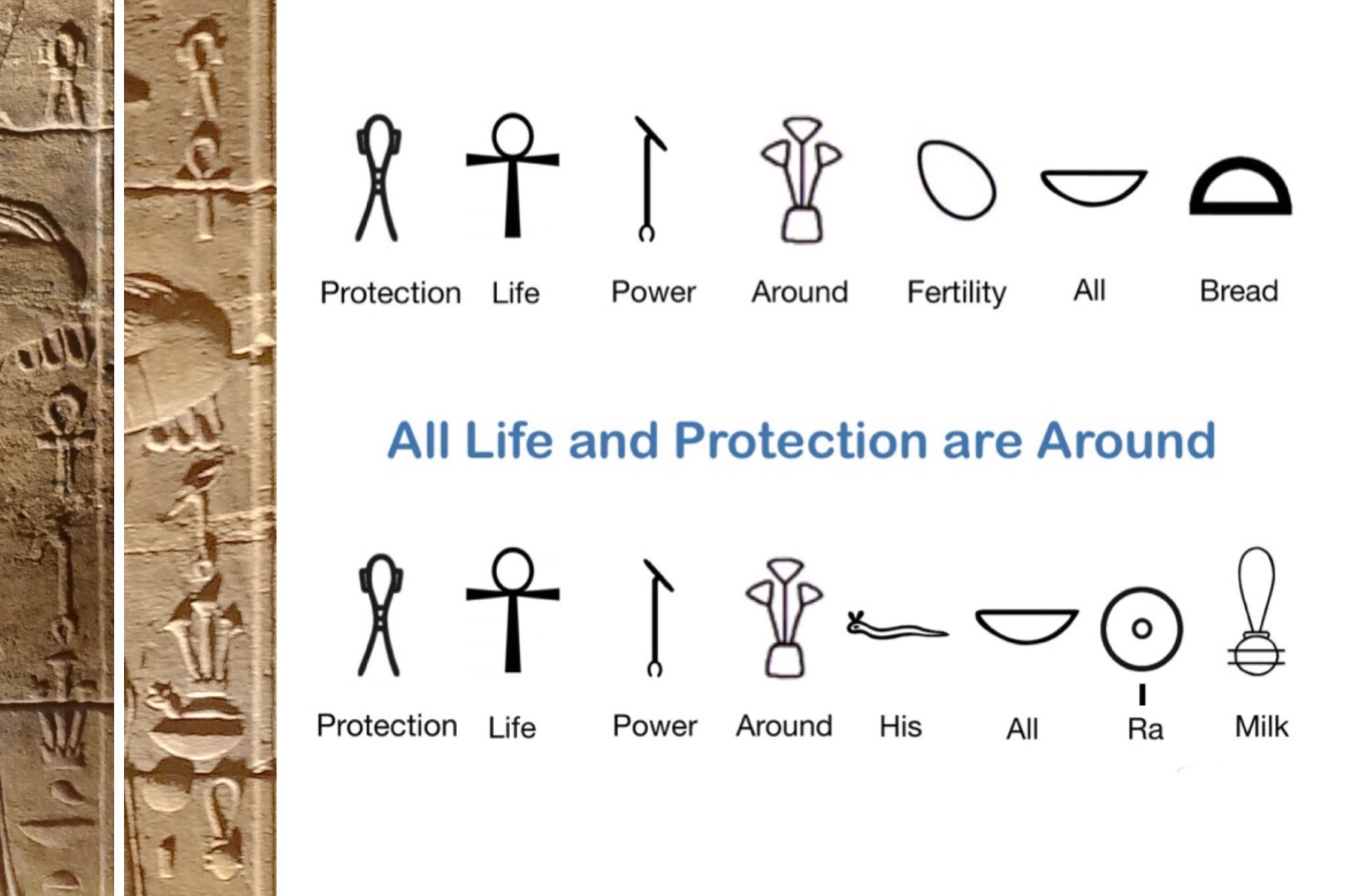
In modern marketing, a brand’s strength is measured by its ability to convey a message without words. The Ankh achieved a level of brand equity that modern global corporations strive for but rarely reach. By consistently appearing in the hands of deities and pharaohs, the symbol became synonymous with the concept of “eternal life.” This was the ultimate value proposition of the Egyptian state religion. Every time a worshipper saw the symbol, the brand identity—life, divinity, and royal authority—was reinforced. It was a perfectly executed visual communication strategy that remained consistent for over three millennia.
Symbolic Architecture and Modern Design Influence
If we analyze the Ankh as a design asset, we see it influencing modern graphic design and branding architecture. The way the Ankh balances negative and positive space is a technique now used in modern logo design to create “optical weight” that draws the eye.
Negative Space and Structural Harmony
The loop of the Ankh creates a focal point that directs the viewer’s gaze upward. This structural decision is echoed in contemporary logo design, where designers use negative space to imbue a brand mark with hidden layers of meaning. Much like the Ankh, successful modern brands often employ “sacred geometry”—mathematical proportions that feel inherently “right” to the human eye. By utilizing these proportions, the Ankh functioned as a user interface for spirituality. It provided a clear, intuitive path for the believer to connect with abstract concepts like reincarnation and the afterlife.

Adaptability Across Media
The Ankh’s ability to transition from architecture to jewelry, and from papyrus to limestone, provides a case study in media-neutral branding. A strong brand mark must maintain its integrity regardless of the substrate. The Ankh was carved, painted, cast in bronze, and woven into fabrics. Because its form was so distinct, it retained its “brand recognition” even when stylized or abstracted. This lesson is essential for modern designers: a logo’s power is derived from its silhouette, not its ornamentation. When you strip away the color and the texture, the silhouette of the Ankh remains undeniably powerful.
The Evolution of the Symbol: From State Religion to Global Icon
While the Ankh began as a tool for the Egyptian state and religious apparatus, its trajectory offers a profound lesson on how symbols evolve, are co-opted, and eventually become “heritage brands.”
Decoding Cultural Rebranding
As the Egyptian civilization waned, the Ankh did not disappear. Instead, it was re-contextualized. In the late antique period, it bore a striking resemblance to the Staurogram or the Chi-Rho, symbols adopted by early Christianity. This transition represents a shift in brand positioning. When a symbol is as powerful as the Ankh, it does not die; it is acquired by new entities. This is a common phenomenon in marketing where older symbols are rebranded to signify a shift in power or belief while retaining the “psychological comfort” that the original mark provided to the target audience.
The Modern Brandification of Ancient Symbols
Today, the Ankh is ubiquitous in popular culture, from fashion houses using it as a motif to modern subcultures adopting it as a symbol of personal empowerment. It has essentially been “unbundled” from its original religious context and is now utilized as a symbol of “the exotic” or “the eternal.” This is an example of brand dilution, yet the symbol’s structural strength is so profound that it continues to convey a sense of authority and depth. Designers and marketers today must look at this trajectory to understand the longevity of their own brands. A brand that achieves “archetypal” status, like the Ankh, survives the decline of the industry that created it.
Lessons for Contemporary Strategy
What can brand managers, designers, and entrepreneurs learn from the Ankh? The “religion” of the Ankh, in a professional sense, is the religion of effective communication. It teaches us that the most enduring brands are those that can simplify the most complex human desires into a single, cohesive, and aesthetically pleasing form.
The Power of Clarity
The Ankh succeeded because it didn’t try to say too much. It said one thing—life—and it said it clearly. Modern branding often fails by overcrowding the visual space with too many messages. By observing the restraint used in the design of the Ankh, companies can learn to strip away the noise and focus on the core value proposition. Whether you are designing a SaaS interface or a corporate logo, the goal is to create a symbol that acts as a “shortcut to the brain.”
Creating Lasting Resonance
To build a brand that lasts, one must tap into universal human needs. The Ankh touched on the fear of death and the desire for immortality—the ultimate human aspiration. Brands that align themselves with deep, archetypal human values, rather than passing trends, are the ones that stand the test of time. When we ask “what religion is the Ankh,” we are really asking what it represents to the human consciousness. It represents the successful branding of a fundamental human hope.
In conclusion, the Ankh serves as a cornerstone of design history and brand strategy. It proves that the most successful visual assets are those that combine extreme simplicity with profound meaning. By studying its lines, its history, and its evolution, modern professionals can gain insight into the mechanics of influence and the art of crafting symbols that speak to the human condition across generations. The Ankh is not just a relic of the past; it is a blueprint for the future of enduring identity.
aViewFromTheCave is a participant in the Amazon Services LLC Associates Program, an affiliate advertising program designed to provide a means for sites to earn advertising fees by advertising and linking to Amazon.com. Amazon, the Amazon logo, AmazonSupply, and the AmazonSupply logo are trademarks of Amazon.com, Inc. or its affiliates. As an Amazon Associate we earn affiliate commissions from qualifying purchases.