
In the evolving landscape of modern organizational hierarchy, the title of Chief Business Officer (CBO) has emerged as a critical linchpin for companies navigating complex growth cycles. While traditional C-suite roles like the CEO, CFO, or COO carry long-established definitions, the CBO role is uniquely multifaceted, often serving as the strategic architect of business development and commercial expansion. As organizations move away from rigid, siloed operations toward more agile, cross-functional models, the CBO acts as the primary orchestrator of the business’s revenue-generating soul.
The Strategic Mandate of the CBO
The Chief Business Officer sits at the intersection of strategy, operations, and external relationships. Unlike a Chief Operating Officer, who typically focuses on the internal mechanics and efficiency of the business, or a Chief Financial Officer, who manages the capital structure and fiscal compliance, the CBO is preoccupied with “the business of the business.”
Bridging Internal Strategy and External Growth
At its core, the CBO role is designed to ensure that the organization’s high-level strategy translates effectively into market success. This involves identifying new market segments, evaluating strategic partnerships, and overseeing the commercial execution of long-term corporate goals. When a company decides to pivot, enter a new geographic region, or launch a major new service line, it is often the CBO who takes the lead in vetting the economic viability of these initiatives and aligning departmental efforts to ensure they reach the finish line.
Cultivating High-Level Partnerships
A significant portion of the CBO’s influence lies in their ability to curate ecosystems. In industries defined by collaboration—such as biotechnology, enterprise SaaS, or global retail—the ability to negotiate complex joint ventures or licensing agreements is paramount. The CBO is usually the primary executive liaison for the company’s most significant strategic partners. By fostering these relationships, the CBO provides the organization with a competitive advantage that goes beyond organic growth, often uncovering revenue streams that would remain inaccessible to a siloed sales or marketing department.
Organizational Roles and Cross-Functional Leadership
Because the CBO role is inherently broad, it is frequently misunderstood. To clarify its function, one must look at how it interfaces with other executive pillars. The CBO is a weaver of departments, ensuring that the disparate goals of sales, marketing, product, and finance are not just aligned, but mutually reinforcing.
Aligning Product Vision with Market Reality
One of the most persistent frictions in any scaling company is the gap between what the product team builds and what the market actually buys. The CBO serves as the necessary bridge here. By analyzing market data, customer feedback loops, and competitor positioning, the CBO provides the product and engineering teams with the commercial context needed to prioritize their roadmaps. This ensures that the company is not merely “innovating” for the sake of technology, but building solutions that have a clear path to monetization.
Directing Commercial Operations
In many organizations, the CBO oversees the commercial operations (CommOps) function. This includes the management of sales pipelines, pricing strategies, and customer acquisition costs. By centralizing the oversight of the entire revenue lifecycle, the CBO prevents the “leaky bucket” syndrome common in fast-growing firms, where marketing brings in leads that sales cannot close, or where customer success is disconnected from the original sales promise. By taking a bird’s-eye view of the entire commercial engine, the CBO ensures that the company’s growth is sustainable and scalable.
The Financial Impact of the CBO
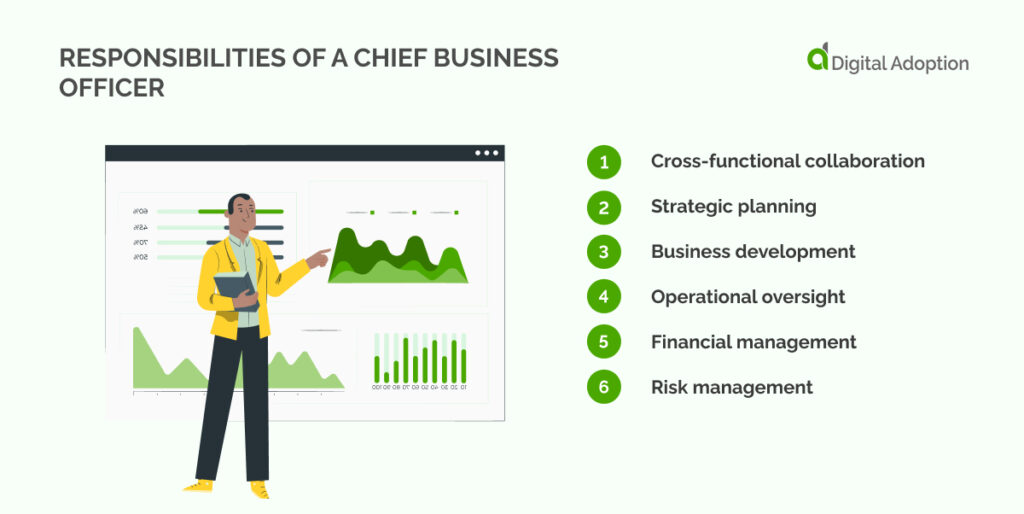
While the CFO manages the balance sheet, the CBO is responsible for growing the top line. This is a critical distinction in the era of “growth at all costs” versus “sustainable profitability.” A successful CBO balances the desire for aggressive expansion with the fiscal discipline required by shareholders.
Driving Top-Line Revenue and Market Penetration
The CBO is typically held accountable for the company’s revenue growth. This involves setting key performance indicators (KPIs) for revenue teams and ensuring that sales targets are synchronized with broader corporate objectives. Whether the company is focused on increasing Average Revenue Per User (ARPU) or penetrating an entirely new vertical, the CBO is the executive who converts these high-level objectives into executable quotas and performance incentives.
Managing Risk in Business Development
Growth inherently carries risk. Every merger, acquisition, or partnership involves a layer of financial and operational exposure. The CBO must possess a sophisticated grasp of business finance to conduct thorough due diligence. They must be able to weigh the cost of customer acquisition against the Lifetime Value (LTV) of the client base, ensuring that the company’s growth efforts are not cannibalizing its margins. By acting as the commercial gatekeeper, the CBO ensures that only high-quality, long-term profitable opportunities are pursued.
Why the CBO Role is Defining the Next Decade
As business models become increasingly complex—incorporating subscription revenue, platform ecosystems, and global supply chain integrations—the need for a dedicated executive to oversee the “business architecture” has never been greater.
Navigating Disruption and Pivot Points
In a volatile economic environment, the ability to pivot is a core competency. When market conditions shift—due to technological advancement, regulatory changes, or macroeconomic headwinds—the CBO is the first to analyze the impact and redirect the company’s resources. Their role is to ensure that the organization remains nimble enough to capture emerging opportunities while remaining robust enough to withstand shocks.
Talent and Culture Architecture
Beyond spreadsheets and strategy, the CBO also plays a pivotal role in shaping the culture of the commercial organization. A CBO who emphasizes a data-driven, customer-centric approach will inherently foster an environment where employees prioritize the “why” behind their tasks. By setting the standard for how the business interacts with the world, the CBO defines the brand’s reputation in the marketplace.
Essential Skills for the Modern CBO
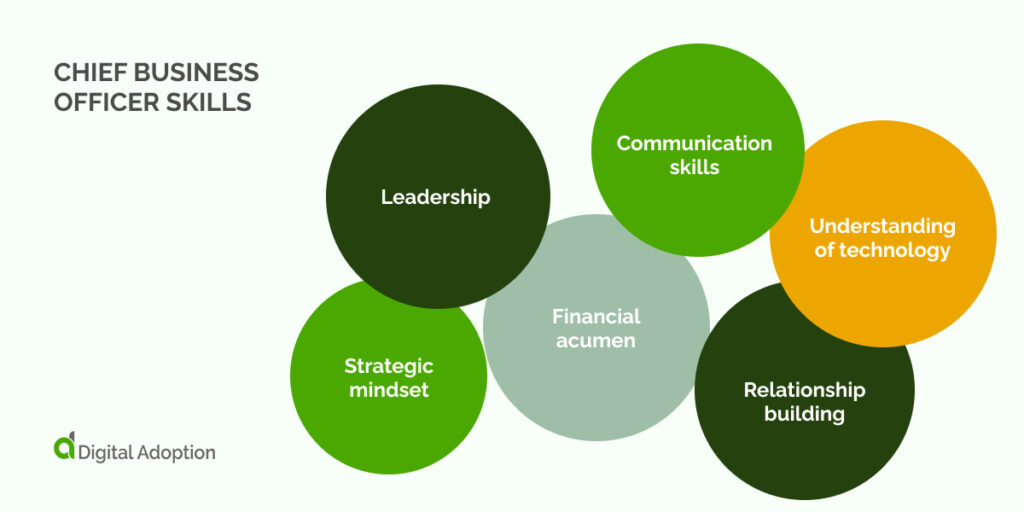
For those aspiring to the role or companies looking to hire one, it is clear that the CBO position requires a “T-shaped” skill set: deep expertise in commercial strategy combined with a broad understanding of every other facet of the business.
Analytical Rigor and Data Literacy
The CBO cannot rely on intuition alone. The role demands an advanced ability to interpret market data, financial statements, and customer behavior analytics. They must be able to tell a compelling story with data, convincing the board and the rest of the C-suite that a particular strategic direction is not just sound, but essential for future survival.
Communication and Influence
Much of the CBO’s success is dependent on influence rather than direct authority. Because they often lead cross-functional teams that report to other executives, the CBO must be a master negotiator and communicator. They must be able to sell the vision of the business to the engineering team, explain the importance of a partnership to the legal department, and justify the capital investment of an expansion to the finance team.

Intellectual Curiosity
Finally, the modern CBO must be a perpetual learner. As the global business environment shifts—whether through the adoption of new decentralized technologies or changing consumer expectations—the CBO must remain ahead of the curve. They are the company’s primary scouts, constantly scanning the horizon for the next big disruption or opportunity that will redefine the company’s place in the market.
Ultimately, the Chief Business Officer is the architect of the company’s future. By bridging the gap between internal capability and external reality, they ensure that an organization does not just survive, but thrives in an increasingly competitive, interconnected, and dynamic global marketplace. As companies scale, the question is not whether they need a CBO, but how soon they need to empower one to manage the growing complexity of their commercial future.
aViewFromTheCave is a participant in the Amazon Services LLC Associates Program, an affiliate advertising program designed to provide a means for sites to earn advertising fees by advertising and linking to Amazon.com. Amazon, the Amazon logo, AmazonSupply, and the AmazonSupply logo are trademarks of Amazon.com, Inc. or its affiliates. As an Amazon Associate we earn affiliate commissions from qualifying purchases.