
In an era where enterprise environments are shifting toward cloud-native architectures, the hardware sitting on an employee’s desk has undergone a radical transformation. The era of the “fat client”—a standalone machine burdened with local storage, heavy processing power, and complex OS maintenance—is rapidly being eclipsed by the thin client. A thin client is a lightweight computer that relies primarily on a central server to handle data processing and application execution. By stripping away unnecessary hardware overhead, thin clients offer a streamlined, secure, and highly manageable computing model. Understanding their core characteristics is essential for IT architects and business leaders looking to optimize their digital infrastructure.
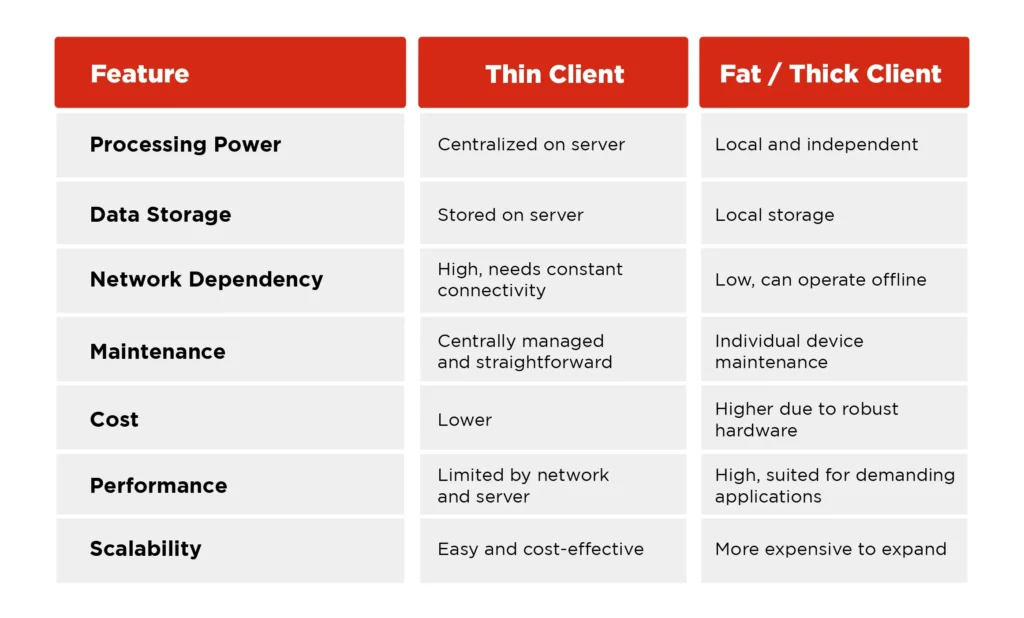
Centralized Resource Management and Minimal Local Footprint
The defining characteristic of a thin client is its lack of reliance on local resources. Unlike traditional workstations, a thin client is purposefully designed to be “stateless.” This means that the device itself contains no hard drive, local storage, or significant processing capabilities that are critical to the user’s workflow. Instead, all data, applications, and operating systems are hosted in a centralized data center or cloud environment.
The Stateless Architecture
Because a thin client is stateless, the user’s workspace is entirely virtualized. When a user logs into a thin client, they are essentially accessing a Virtual Desktop Infrastructure (VDI) instance. This architectural shift ensures that the device is merely a terminal—a gateway between the user’s input devices (keyboard, mouse, monitor) and the server. If a physical device fails or is lost, the business continuity remains untouched. A technician can simply hand the user a new terminal, and within seconds, they can log in to their exact desktop state as it existed moments prior.
Reduced Hardware Maintenance
By removing moving parts like hard drives, thin clients significantly reduce the “mean time between failures” (MTBF) compared to traditional PCs. With no local software to install, patch, or upgrade, the administrative burden on IT teams drops precipitously. Updates are managed at the server level, ensuring that every user in the organization receives security patches and software updates simultaneously, eliminating the “update drift” that plagues decentralized PC environments.
Enhanced Digital Security and Attack Surface Reduction
Security is often cited as the primary driver for thin client adoption. In a traditional computing model, the endpoint is the weakest link. Each desktop PC acts as a potential repository for sensitive data and a gateway for malware entry. Thin clients flip this paradigm by keeping the “crown jewels” locked away in a secure, centralized server room or a locked-down cloud environment.
Data at Rest Elimination
Because thin clients do not store data locally, the risk of data exfiltration through stolen hardware is virtually non-existent. If a physical device is stolen from an office, there is no corporate data on the drive to recover. This makes thin clients an ideal solution for industries with stringent regulatory requirements, such as healthcare (HIPAA), finance (GDPR/SOX), and government agencies.
Secure Lockdown and Immunity to Malware
Thin client operating systems—often stripped-down versions of Linux or proprietary embedded systems—are significantly more hardened than general-purpose desktop operating systems like Windows. They do not allow users to install unauthorized applications, preventing the “shadow IT” and malicious downloads that are common vectors for ransomware. By restricting the device to only communicate with authorized server protocols, the thin client effectively acts as a secure “bunker” for the end-user, drastically shrinking the potential attack surface.

Efficiency, Sustainability, and Operational Cost Optimization
Beyond technical specifications, thin clients represent a major shift in the economics of IT. By reducing the physical and power requirements of every workstation, organizations can achieve significant operational efficiencies.
Energy Efficiency and Heat Reduction
A traditional desktop PC can consume upwards of 100 to 200 watts of power under load. A typical thin client, by contrast, often draws between 10 and 20 watts. When scaled across a company of hundreds or thousands of employees, the reduction in electricity consumption for powering and cooling the office is substantial. Thin clients produce minimal heat and operate silently, which allows for denser workspace configurations and reduces the load on facility HVAC systems.
Extended Lifecycle Management
Traditional PCs are typically refreshed every three to four years because hardware becomes obsolete as software demands increase. Because the processing power in a thin client setup is handled by the server, the client hardware itself does not need to keep up with the latest software iterations. It is common for thin clients to have a usable lifespan of seven to ten years. This extended lifecycle drastically lowers the Total Cost of Ownership (TCO) and contributes to corporate sustainability goals by reducing electronic waste.
The Role of Network Dependency in Thin Client Environments
While the characteristics discussed above highlight the benefits of thin clients, they also point to a critical dependency: the network. Since the thin client is an extension of the server, the quality of the user experience is intrinsically tied to network performance.
Latency Sensitivity
Thin clients rely on protocols like PCoIP (PC-over-IP), HDX (High-Definition Experience), or Blast Extreme to transmit pixels to the screen and receive input commands. If the network suffers from high latency, packet loss, or jitter, the user experience can degrade quickly, manifesting as lag or screen tearing. This necessitates a robust, high-bandwidth local area network (LAN) or a well-optimized wide area network (WAN).
Business Continuity and Failover
Because the device is useless without a server connection, organizations must prioritize infrastructure redundancy. Implementing thin client architecture requires a resilient backend that includes load-balanced servers, high-availability clusters, and often a secondary failover site. While this sounds like a high bar, the consolidation of resources often makes this level of reliability easier to manage than attempting to maintain the same level of disaster recovery across hundreds of individual desktop machines.

Conclusion: Strategic Value of the Thin Client Model
The core characteristic of a thin client is its role as a vessel for centralized computing. By stripping away local processing power and storage, the thin client model replaces the unpredictable nature of endpoint-heavy computing with a predictable, secure, and sustainable framework.
For the modern enterprise, the thin client is more than just a piece of hardware; it is a strategic approach to digital transformation. It empowers IT departments to move away from “break-fix” cycles and toward high-level service orchestration. As businesses continue to prioritize data security, environmental sustainability, and operational efficiency, the thin client remains a cornerstone technology. Whether deployed in a clinical setting, a financial trading floor, or a high-security government office, the thin client demonstrates that in the world of computing, the most effective tools are often the ones that do the least locally, enabling the server to do the most for the user. Through centralizing management and hardening the endpoint, businesses create a computing environment that is not only easier to maintain but fundamentally more resilient in the face of modern digital challenges.
aViewFromTheCave is a participant in the Amazon Services LLC Associates Program, an affiliate advertising program designed to provide a means for sites to earn advertising fees by advertising and linking to Amazon.com. Amazon, the Amazon logo, AmazonSupply, and the AmazonSupply logo are trademarks of Amazon.com, Inc. or its affiliates. As an Amazon Associate we earn affiliate commissions from qualifying purchases.