
In the vast, interconnected landscape of the modern digital marketplace, visibility is the primary currency of success. For entrepreneurs and established corporations alike, the challenge is not merely providing a superior product or service, but ensuring that potential customers can locate them amidst the noise of millions of competing entities. This is where the business directory serves as a cornerstone of brand strategy. A business directory is a structured, searchable catalog of businesses, typically categorized by niche, location, or service offering. While they may seem like digital relics of the physical “Yellow Pages,” modern business directories are sophisticated hubs of brand identity and essential tools for marketing orchestration.

The Strategic Role of Business Directories in Brand Positioning
A business directory is far more than a simple list of names and addresses; it is a primary touchpoint for your brand. When a consumer searches for a specific service, the presence of your business in a reputable directory acts as a signal of legitimacy and authority.
Building Digital Trust and Credibility
In the era of information overload, trust is the most difficult asset to earn. When your brand appears in authoritative, niche-specific directories, it benefits from “association equity.” If your architecture firm is listed in a prestigious industry directory alongside recognized leaders, your brand inherits a portion of that established credibility. This external validation reassures potential clients that your business is recognized, vetted, and active within the professional ecosystem.
Centralizing Brand Messaging
Effective brand strategy requires consistency. A business directory provides a platform to standardize your brand’s “digital heartbeat.” By ensuring that your name, address, phone number, and professional bio are identical across various platforms—a concept known in marketing as NAP consistency (Name, Address, Phone)—you solidify your corporate identity. When every directory reflects the same core messaging and visual branding, you minimize friction for the consumer, creating a seamless transition from search to conversion.
Leveraging Directories for Targeted Marketing
Marketing is often a game of casting a wide net, but the most effective strategies rely on precision. Business directories allow brands to engage in surgical-level audience targeting without the heavy overhead of traditional advertising campaigns.
Geographical and Niche Segmentation
The power of the directory lies in its ability to filter the chaos of the internet into manageable segments. If you operate a localized retail store, local directories ensure that your brand appears only to users within your service radius. This prevents the waste of marketing spend on users who are geographically irrelevant. Conversely, if you operate in a specialized B2B sector, such as software development or industrial consulting, listing your company in an industry-specific directory connects you directly with professionals who are already in the market for your specialized solution.
Enhancing Search Engine Optimization (SEO)
While directories are distinct from search engines, they are deeply symbiotic. Search engine algorithms crawl directory sites to verify the existence and relevance of businesses. A listing in a high-authority directory acts as a backlink—a vote of confidence in the eyes of search engines. Furthermore, rich directory listings that include detailed descriptions, service lists, and images provide search engines with context-heavy data, making it easier for them to index your site for relevant keywords. By populating these listings with strategic, brand-consistent copy, you are essentially feeding the search engine the information it needs to rank your primary website higher.
Optimizing Directory Listings to Drive Conversions
Merely occupying space in a directory is insufficient; a brand must optimize its listing to function as a high-converting landing page. Each directory entry is an opportunity to guide a prospect through your sales funnel.
The Art of the Professional Bio and Value Proposition
Your directory description should not be a dry recitation of office hours. It must be a compelling value proposition that articulates why your brand is the superior choice. This is where your brand strategy comes into play. Use this space to highlight your unique selling point (USP), mention notable awards or certifications, and provide a clear call to action. Whether you are inviting them to visit your website, call for a quote, or sign up for a newsletter, the entry must provide a clear path forward for the reader.
Utilizing Visual Assets and Social Proof
Humans are inherently visual, and the digital marketplace rewards brands that communicate through imagery. High-quality photography of your office, your team, or your product portfolio can significantly increase click-through rates from a directory to your website. Furthermore, many modern directories allow for client reviews and star ratings. These reviews serve as potent social proof. A brand that proactively manages its directory presence—encouraging satisfied clients to leave feedback and responding professionally to queries—creates a virtuous cycle of positive perception that reinforces brand identity.
Managing Your Brand Ecosystem Across Multiple Platforms
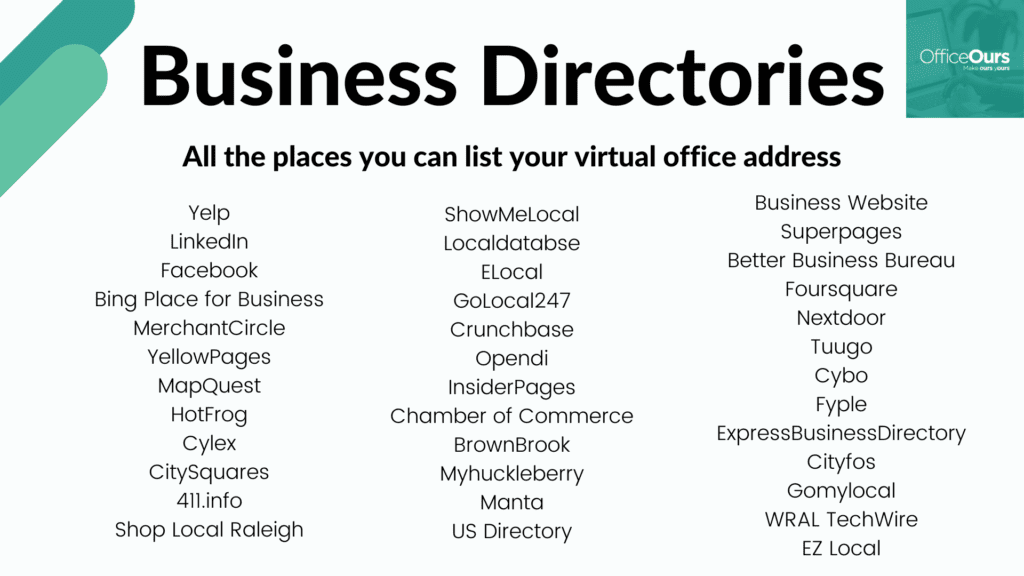
As a brand grows, managing presence across a fragmented digital landscape becomes a strategic imperative. There are hundreds of potential directories—ranging from general platforms like Google Business Profile and Yelp to hyper-niche industry portals.
The Risk of Disjointed Identity
A disorganized brand identity is a silent profit killer. If your directory listing on Platform A says you offer X, while Platform B claims you offer Y, or if your website link is broken, you are effectively hemorrhaging potential leads. This lack of cohesion creates doubt in the mind of the consumer. In a professional context, consistency is the bedrock of reliability. If you cannot maintain the accuracy of your own contact information, a client may wonder if you can maintain the quality of your professional services.
Adopting a Systematic Management Approach
To maximize the value of directories, brands must adopt a centralized management strategy. This involves periodically auditing all active directory listings to ensure that the content remains fresh, accurate, and aligned with current brand guidelines. Many businesses now utilize directory management software or third-party reputation management tools to push updates across multiple platforms simultaneously. This approach saves time and ensures that whenever a prospective client encounters your brand, they see a unified, professional image.
Measuring Return on Investment
Ultimately, like any other marketing channel, your directory presence must be measured. By using unique tracking URLs or specific phone numbers dedicated to particular directories, you can determine exactly which platforms are driving the most qualified traffic to your website. This allows you to shift your energy away from low-traffic, irrelevant sites and focus your resources on the directories that align most closely with your target demographic and brand objectives.
The Future of Business Directories
As AI and voice-activated search become the standard for how consumers find services, the role of the business directory is evolving. Voice assistants, such as Siri, Alexa, and Google Assistant, often pull their business data directly from verified directories and mapping platforms. This makes the accuracy and depth of your directory listings more critical than ever.
In this new era, your listing is the primary source of truth for the machines that guide your customers. If your data is structured, verified, and complete, you ensure your brand remains visible at the exact moment a customer asks for a solution. Business directories have transcended their role as simple address books; they have become the foundational infrastructure upon which a brand’s digital authority is constructed. By treating your directory strategy with the same rigor and creativity as you would your social media or advertising efforts, you secure your brand’s place in the digital marketplace and ensure that when potential clients come looking, they find a professional, consistent, and compelling version of your business.
aViewFromTheCave is a participant in the Amazon Services LLC Associates Program, an affiliate advertising program designed to provide a means for sites to earn advertising fees by advertising and linking to Amazon.com. Amazon, the Amazon logo, AmazonSupply, and the AmazonSupply logo are trademarks of Amazon.com, Inc. or its affiliates. As an Amazon Associate we earn affiliate commissions from qualifying purchases.