
In the traditional world of finance, ownership was often a binary state: you either owned an asset, or you didn’t. If a single share of a high-performing tech giant or a prestigious blue-chip company cost thousands of dollars, that asset remained out of reach for the average retail investor. However, the financial landscape has undergone a seismic shift. Today, the question “What is a fraction?” is no longer a matter of elementary mathematics; it is a fundamental concept in wealth building, portfolio management, and market accessibility.

In a financial context, a fraction represents a slice of an asset—be it a stock, a bond, a piece of real estate, or even a bar of gold—that has been divided to allow multiple stakeholders to own a portion of a single unit. This evolution has dismantled the “barrier to entry” that once preserved the most lucrative investment vehicles for the institutional elite, ushering in an era of inclusive capitalism.
The Evolution of Ownership: Understanding Fractional Shares
For decades, the unit of measurement in the stock market was the “round lot,” typically consisting of 100 shares. Even as odd-lot trading became common, investors were still required to purchase at least one full share of a company. As companies like Berkshire Hathaway or Amazon saw their share prices climb into the thousands of dollars, the “unit bias” became a significant hurdle.
Breaking the Barrier to Entry
Fractional shares allow investors to buy stock based on a dollar amount rather than a share count. If a stock is trading at $3,000 per share, an investor with only $30 can purchase 0.01% of that share. This shift is transformative for the “micro-investing” movement. By redefining what a fraction is—from a mathematical remainder to a tool for empowerment—financial platforms have enabled individuals with modest incomes to participate in the growth of the world’s most successful corporations. This democratization ensures that wealth accumulation is a factor of time and consistency, rather than a factor of high initial capital.
How Technology Enabled Precision Investing
The rise of fractional ownership is inextricably linked to the digitization of the brokerage industry. In the era of paper certificates, dividing a single share was an administrative nightmare. Today, sophisticated ledger systems managed by fintech firms and traditional brokerages can track ownership down to several decimal places. These platforms aggregate fractional orders from thousands of users, executing full-share trades on the open market while maintaining an internal sub-ledger that assigns precise portions to individual accounts. This technological leap has effectively turned “change” into “capital.”
The Mechanics of Fractional Investing
To understand how fractions function in a modern portfolio, one must look under the hood of how brokerages handle these transactions. While the investor sees a seamless interface showing “0.45 shares” of an ETF, the back-end process involves complex reconciliation and custodial responsibilities.
Direct vs. Indirect Fractional Ownership
In most retail brokerage environments, the broker-dealer holds the full share in a “street name” and allocates the fractional interest to the client. This is often referred to as a beneficial interest. While the investor enjoys the economic benefits of the stock, they are technically participating in a contractual agreement with the broker to receive the proportional value of that share. It is crucial for investors to understand that fractional shares are often not transferable (portable) between brokerages via the standard ACATS (Automated Customer Account Transfer Service) process. Typically, if you move your account, fractional holdings must be liquidated into cash.
Dividends, Voting Rights, and Market Execution
A common question regarding fractional assets is how they behave during corporate actions. Dividends are generally paid out proportionally. If a company pays a $1.00 dividend per share and you own 0.5 shares, you will receive $0.50, usually rounded to the nearest cent. Voting rights, however, are more complex. Many brokerages aggregate fractional votes and vote the whole shares, while others do not offer voting rights for fractional portions at all. Understanding these nuances is essential for the sophisticated investor who views their “fraction” as more than just a price ticker, but as a stake in corporate governance.
Fractional Reserve Banking: The Hidden Multiplier
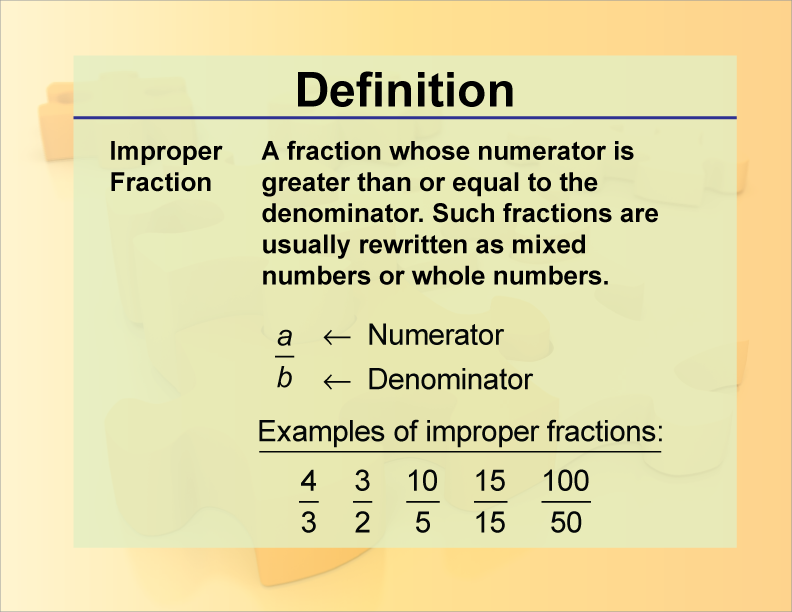
Beyond the stock market, the concept of a fraction is the very engine that powers the global banking system. This is known as fractional reserve banking, a system where only a small fraction of bank deposits are backed by actual cash on hand and available for withdrawal.
How Your Deposits Power the Economy
When you deposit $1,000 into a savings account, the bank does not keep that $1,000 in a vault. Under fractional reserve regulations, they might be required to keep only 10% (the “fraction”) as a reserve. The remaining 90% is lent out to businesses for expansion, to homeowners for mortgages, and to students for education. This process creates a “money multiplier” effect. The fraction, in this case, is the lever that controls the liquidity of the entire economy. By lending out the majority of their deposits, banks generate the credit necessary for industrial and personal growth.
Risks and Regulatory Safeguards
The “fraction” in banking is a delicate balance. If the reserve fraction is too low, the bank risks a liquidity crisis if too many depositors demand their money at once (a bank run). If the fraction is too high, credit tightens, and economic growth slows. Modern financial systems use central bank regulations and deposit insurance (like the FDIC in the United States) to ensure that even though the system operates on fractions, the public’s confidence in the “whole” remains unshaken.
Strategic Advantages of a Fractional Portfolio
For the individual investor, the ability to work with fractions changes the fundamental strategy of portfolio construction. It moves the focus from “what can I afford?” to “what is the optimal allocation?”
Dollar-Cost Averaging with Precision
Dollar-cost averaging (DCA) is the practice of investing a fixed dollar amount on a regular schedule, regardless of the share price. Without fractions, DCA is lumpy. If you want to invest $100 a week but a share costs $70, you can only buy one share, leaving $30 sitting idle. With fractional shares, you can invest exactly $100 every single week, purchasing 1.42 shares one week and 1.38 the next. This ensures your capital is always working for you, maximizing the power of compound interest and reducing the impact of market volatility through mathematical consistency.
Portfolio Diversification for Small-Scale Investors
The core tenet of risk management is diversification. Historically, a diversified portfolio required a large amount of capital to buy shares across various sectors (tech, healthcare, energy, etc.). Fractional shares allow an investor with $500 to build a diversified portfolio of 50 different companies, putting $10 into each. This level of granular control was once the exclusive domain of mutual fund managers. Now, the individual can act as their own fund manager, slicing their capital into the exact fractions that align with their personal risk tolerance and financial goals.
The Future of Fractional Assets: Real Estate and Alternative Markets
The “fractionalization” of finance is expanding far beyond the New York Stock Exchange. We are entering an era where almost any high-value asset can be broken down into tradable components.
Tokenization and the Blockchain Influence
The emergence of blockchain technology has introduced “tokenized” fractional ownership. In this model, a physical asset—such as a multi-family apartment complex or a rare piece of fine art—is represented by digital tokens on a ledger. Each token represents a fraction of the underlying asset’s value. This provides liquidity to traditionally illiquid markets. An investor can now own a 1/1000th fraction of a commercial warehouse and receive a proportional share of the rental income, all managed through smart contracts.

The Shift Toward Inclusive Wealth Building
As we look to the future, the concept of a “fraction” will continue to be the primary tool for financial inclusion. By lowering the cost of participation, we are seeing a shift in wealth demographics. The barriers are no longer the price of the asset, but rather the access to financial education. Whether it is owning a slice of a “Magnificent Seven” tech stock or a fraction of a vacation rental in a booming market, the ability to divide assets into manageable pieces is the ultimate equalizer in the pursuit of financial independence.
In conclusion, when we ask “What is a fraction?” in the modern world of money, we are asking about the building blocks of the new economy. Fractions represent the end of exclusivity and the beginning of a landscape where every dollar, no matter how small, has the potential to own a piece of the world’s most valuable assets. For the strategic investor, the fraction is not a small part of a whole; it is the entry point to a larger financial future.
aViewFromTheCave is a participant in the Amazon Services LLC Associates Program, an affiliate advertising program designed to provide a means for sites to earn advertising fees by advertising and linking to Amazon.com. Amazon, the Amazon logo, AmazonSupply, and the AmazonSupply logo are trademarks of Amazon.com, Inc. or its affiliates. As an Amazon Associate we earn affiliate commissions from qualifying purchases.