
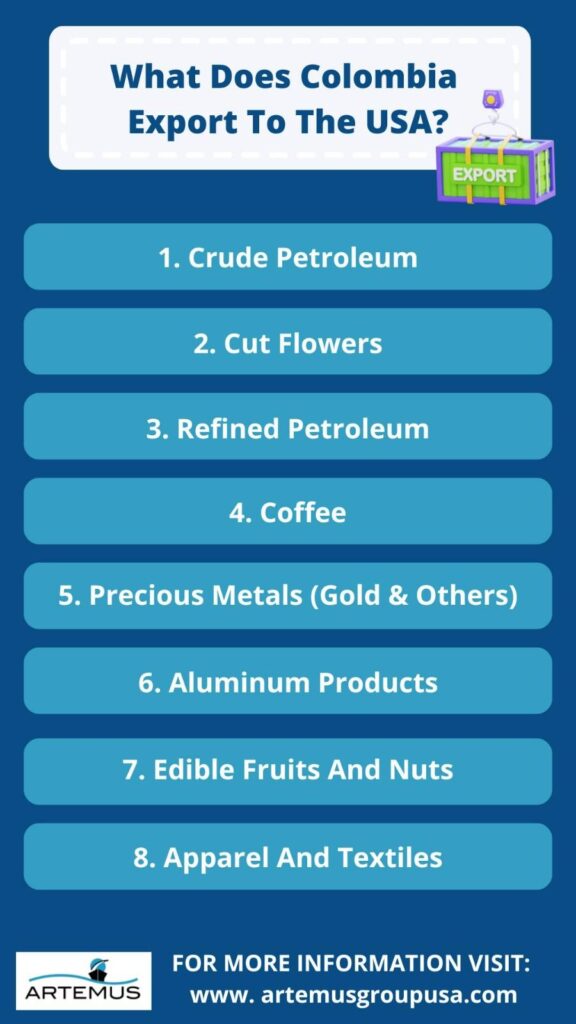
The economic partnership between the United States and Colombia is a cornerstone of regional trade, anchored by the United States-Colombia Trade Promotion Agreement (TPA). As the U.S. looks to diversify its supply chains and strengthen nearshoring initiatives, Colombia has emerged as an increasingly vital partner. By analyzing the flow of goods from Bogotá to Washington, investors and business analysts can identify key opportunities in commodity markets, agricultural supply chains, and emerging industrial sectors. Understanding these trade dynamics is essential for anyone looking to capitalize on the financial currents moving through the Western Hemisphere.
The Pillars of Agricultural Export and Commodity Trade
For decades, the backbone of Colombian exports to the United States has been rooted in its fertile land and favorable climate. These agricultural commodities are not merely staples; they represent a significant portion of the bilateral trade balance and offer stable, inflation-hedging assets for portfolios focused on soft commodities.
Coffee and Cocoa: The Gold Standards
Coffee remains the most recognizable Colombian export to the U.S. market. Beyond the consumer-facing brands, the financial mechanism behind this trade is sophisticated. U.S. coffee roasters rely on long-term supply contracts that mitigate price volatility for both farmers and domestic distributors. Similarly, the growing demand for specialty and single-origin cocoa has positioned Colombia as a premium supplier, allowing U.S.-based food and beverage conglomerates to secure high-quality raw materials that justify premium pricing strategies in the retail sector.
Cut Flowers and Perishables
Colombia is the second-largest exporter of cut flowers in the world, with the vast majority destined for U.S. florists and retailers. From a financial perspective, this trade is a masterclass in logistical efficiency and cold-chain management. The speed at which flowers move from Colombian greenhouses to U.S. distribution centers impacts the profit margins of major wholesalers. Investors in the logistics and transport sector often look at these patterns as a barometer for regional air freight demand.
Energy Resources and Extractive Industries
While the global conversation has shifted toward sustainability, the U.S. continues to source a significant volume of energy and mineral resources from Colombia. These imports represent a major capital flow and are critical for U.S. industrial stability.
Petroleum and Coal Exports
Crude oil remains a significant component of Colombian exports to the U.S. The financial implications here are twofold: they influence U.S. energy costs and serve as a primary revenue stream for the Colombian national budget. Coal, while controversial, continues to be exported to meet specific industrial needs in the American Southeast and Gulf Coast regions. For energy-sector investors, these trade volumes are vital indicators of the fiscal health of Colombian state-owned enterprises and their international partners.
Gold and Precious Metals
Colombia’s mining sector is a rising interest for foreign direct investment. Gold exports to the U.S. have grown as institutional investors look for geographically diversified sources of bullion. As the U.S. increases its demand for metals used in both jewelry and technology manufacturing, the trade relationship with Colombia provides a critical buffer against supply disruptions from other global markets.
The Shift Toward Manufacturing and Nearshoring
The most exciting financial development in the U.S.-Colombia relationship is the pivot toward high-value manufacturing. As U.S. companies seek to shorten their supply chains—reducing reliance on East Asian production—Colombia has positioned itself as an ideal nearshoring hub due to its proximity to the U.S. market and its alignment with Western time zones.
Textiles, Apparel, and Footwear
The Colombian textile industry has undergone a technological revolution. By leveraging modern machinery and sustainable production practices, Colombian manufacturers are increasingly competitive in the U.S. market. For fashion retailers, moving production to Colombia offers faster lead times and lower shipping costs compared to trans-Pacific routes. This shift is driving capital investment into regional hubs like Medellín, where specialized textile clusters are becoming hotspots for international business development.
Chemicals and Plastics
The chemical industry represents a nuanced but high-profit sector of U.S. imports. Colombia exports a variety of plastic resins, pharmaceutical precursors, and specialized chemical compounds. These products are inputs for a wide array of U.S. industries, from automotive manufacturing to healthcare. Because these goods require strict regulatory compliance, the trade in chemicals signifies a maturing manufacturing sector in Colombia that is capable of meeting high international standards—a key metric for risk-averse institutional investors.
Strategic Outlook for Trade Finance and Investment
For the investor, the trade of goods between Colombia and the U.S. is not just about the physical commodities; it is about the financial infrastructure that facilitates these exchanges. The future of this relationship lies in the continued integration of capital markets and the maturation of Colombian manufacturing.
Leveraging the Trade Promotion Agreement
The TPA has effectively eliminated duties on the vast majority of U.S. and Colombian goods. For businesses, this framework provides a predictable environment for long-term planning. Companies that effectively utilize the rules of origin under the TPA can significantly improve their net margins by sourcing inputs from Colombia while maintaining duty-free access to the American consumer base.
Risk Assessment and Regional Stability
While political and economic shifts are inevitable in any emerging market, Colombia maintains a strong track record of adhering to international trade law. Investors looking at the Colombian-U.S. trade corridor prioritize political stability and the rule of law. As Colombia continues to upgrade its infrastructure, particularly its ports and inland transportation networks, the “landed cost” of goods continues to drop. This makes Colombian exports an increasingly attractive proposition for U.S. firms looking to optimize their supply chain costs.
Looking Toward the Future
The trade of goods between the U.S. and Colombia is entering a new phase defined by value-added products rather than simple raw material extraction. As Colombia continues to develop its tech-enabled manufacturing sectors and sustainable agriculture, the volume of trade is expected to climb. For the financially savvy, the focus should remain on companies that are integrating these cross-border supply chains. By identifying where the demand for quality, proximity, and efficiency intersects, one can find the most lucrative avenues for growth in this vital trade corridor. The reliance on Colombian imports is not merely a byproduct of history; it is a calculated strategic move that provides the U.S. economy with the resilience needed to navigate an increasingly volatile global landscape. Tracking the specific goods that move across this border—from the coffee beans of the Andes to the manufactured textiles of Antioquia—remains one of the most reliable ways to monitor the pulse of U.S. business interests in Latin America.
aViewFromTheCave is a participant in the Amazon Services LLC Associates Program, an affiliate advertising program designed to provide a means for sites to earn advertising fees by advertising and linking to Amazon.com. Amazon, the Amazon logo, AmazonSupply, and the AmazonSupply logo are trademarks of Amazon.com, Inc. or its affiliates. As an Amazon Associate we earn affiliate commissions from qualifying purchases.